
The 9 best loft conversion companies in London for 2026, and how to choose

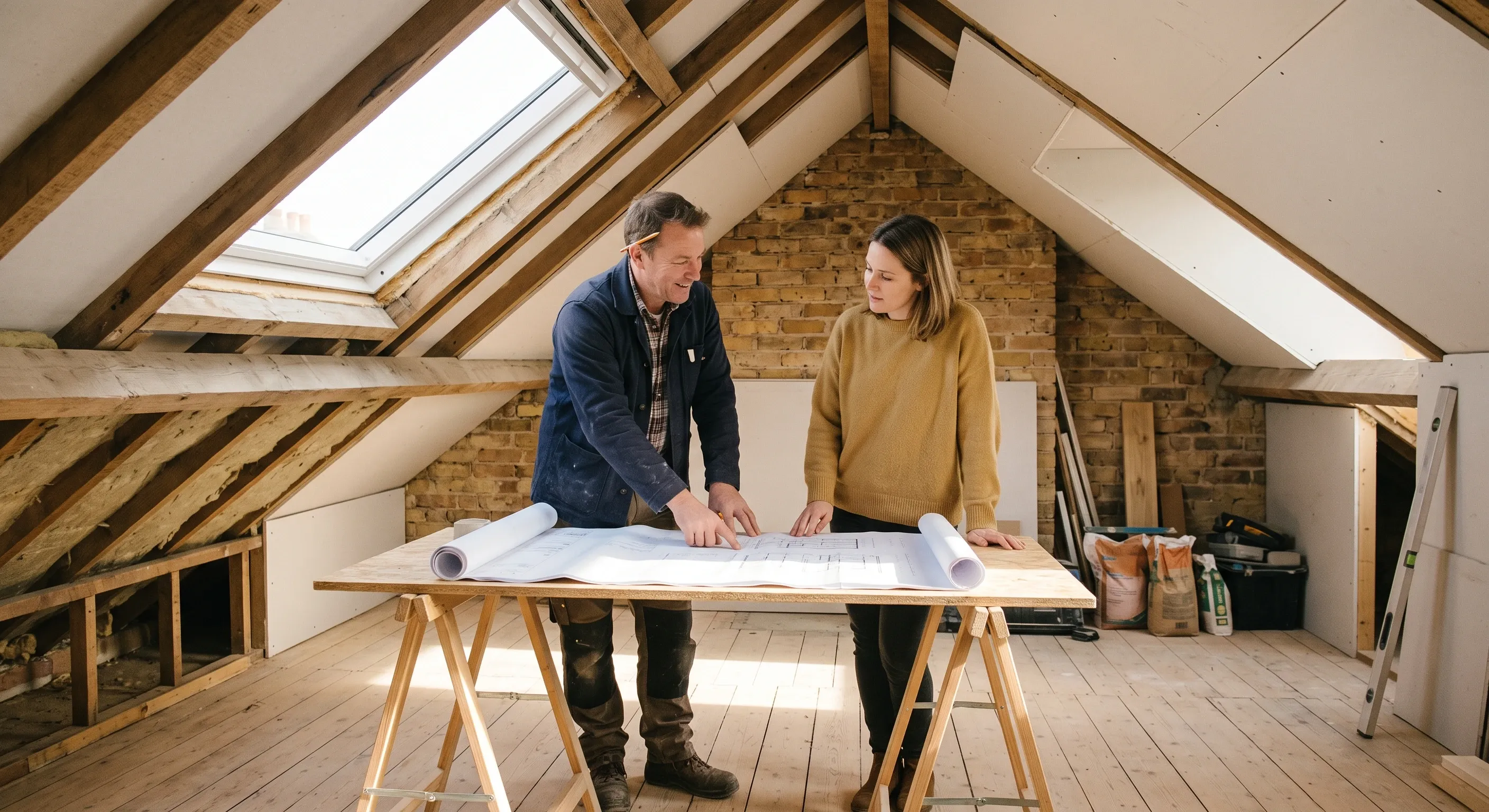
Beams is our pick for the best loft conversion company in London for 2026. We would say that, because we are Beams, so treat the ranking as a starting point and the rest of this page as the useful part: who owns the planning and party wall risk, the five questions that predict whether the job goes well, what a London loft conversion costs, and honest profiles of the other companies worth looking at.
There is no independent league table for London loft conversion companies. Nobody audits this category. Every "best of" list you will find, including this one, is written by someone with an interest, and the ones that do not admit it are the ones to be most careful with.
How we built this list
We started from the companies that appear repeatedly in London loft conversion searches and industry coverage, then read each one's own website in September 2026 and recorded only what they publish about themselves: how long they have traded, where they work, what they specialise in and how they describe their own service.
We have deliberately not scored the other companies against our five criteria. Their contract terms, vetting and warranty cover are not consistently published, they change, and we are not a neutral party. Publishing a grade we cannot stand behind would be worse than publishing nothing. So the criteria below are yours to apply, to us as much as to anyone else.
Planning permission, party walls and building regulations: what actually separates a loft company from a Velux fitter
Anyone with a ladder and a box of flashing can fit a rooflight. What separates a company that runs a proper loft conversion from one that does not is whether they take ownership of three things before a single joist is cut: the planning route, the party wall agreements with your neighbours, and the building regulations sign-off.
Most rear dormers in London fall within permitted development, so no planning application is needed, subject to volume limits of 40 cubic metres on a terraced house and 50 cubic metres on a semi-detached or detached one. Mansards, piggyback conversions, anything on designated land and anything on a listed building need a full planning application instead, and a company that tells you which route you are on before it quotes, rather than after, is telling you something useful about how it works.
Building regulations approval is required regardless of the planning route, and it is the one document you will be asked for when you come to sell. Building control signs off the structure under Part A, escape and fire safety under Part B, the new staircase under Part K and insulation under Part L. This is not optional and not negotiable, whichever company you use.
Party walls are the one most first-time renovators do not see coming. Almost every loft conversion in a London terrace or semi touches a shared wall, whether that is a new steel bearing on it or scaffolding going up against it, which triggers the Party Wall etc. Act 1996. A neighbour who consents in writing costs nothing. One who does not means a party wall surveyor, typically £1,200 to £3,000 per agreement, and a notice period that has to run before structural work can start. Our guide to whether you need a party wall agreement for a loft conversion sets out when the Act applies and how the notice process actually runs.
A good loft conversion company owns all three of these in writing before work starts. A cheap quote that is silent on all three has usually just left the risk with you.
The five checks that predict whether a loft conversion goes well
Most comparisons weigh up portfolios and star ratings. Both matter, and neither tells you what happens when a party wall notice gets ignored or the planning route turns out to be wrong, which is the thing a first-time renovator cannot work out from a website.
These five do a better job. The middle column is the part worth memorising, because most people know to ask about price and warranty and have no idea what a good answer sounds like, so they accept a vague one.
What to check | What to ask | A good answer sounds like | Why it matters |
|---|---|---|---|
Who is doing the work | How did you check the builder who will actually be on my job, and what did you find? | We met them in person, took references on recent jobs, inspected work they finished this year, and here is their public liability certificate. | A company that subcontracts to whoever is free that month has checked nothing on your behalf. |
Whether the price is fixed | Is this a fixed price or an estimate, and what happens if the roof structure or head height turns out to be a problem once you open it up? | Fixed, in writing, before the roof comes off, and anything found once it is open is priced and approved before it is done. | Once the roof is open, structural surprises surface. A fixed price decides whose problem that is. |
Where your money sits | When do I pay, and who holds the money between my payment and the work being done? | Staged payments tied to work you have signed off, held securely and released only on your approval. | Pay ahead of the work and you are an unsecured creditor of your builder. |
What happens if it fails | What is covered if the finish fails six months after handover, and who pays if the builder is no longer trading? | Twelve months on workmanship, in writing, with cover that still stands if that builder has gone. | A warranty is only worth as much as whoever is still standing behind it. |
Who owns the planning and party wall risk | Is this permitted development or does it need full planning permission, who handles the party wall agreements with my neighbours, and who is responsible for building regulations sign-off? | One named party takes this on in writing before work starts, with the planning route confirmed upfront and party wall agreements initiated before any structural work. | Loft conversions routinely stall on party wall disputes and planning or building regulations gaps that nobody owned. |
Ask all five. Most companies answer one or two well.
What a London loft conversion actually costs
Almost no "best loft conversion companies" page will tell you this, which is odd, because it is usually the second thing you want to know. Prices vary by company, but the job has a shape, and knowing it stops you being surprised by a quote or reassured by a cheap one.
The ranges below are London figures including VAT, taken from our own loft conversion cost guide, which also covers the UK-wide figures and the L-shaped, piggyback and modular variants.
Project | Typical cost including VAT |
|---|---|
£35,000 to £56,000 | |
£49,000 to £84,000, the most common type | |
Hip-to-gable loft conversion | £63,000 to £91,000 |
£77,000 to £112,000 and up |
These cover the conversion itself: structure, insulation, plastering, electrics, plumbing and finishing, and they include VAT at 20 per cent. Outside them sit a new staircase at £3,000 to £10,000, an ensuite at £5,000 to £12,000, a structural engineer at £550 to £1,500, and building control at £700 to £1,400 including VAT, with a dormer costing more to sign off than a rooflight conversion.
Add a party wall surveyor at £1,200 to £3,000 per agreement, unless a neighbour consents in writing, and a planning application at £548 for a householder application in England, or £274 for a Lawful Development Certificate confirming permitted development. Hold 10 to 15 per cent back as contingency on top: a loft conversion opens up the one part of the house nobody has looked at properly in decades.
The companies
1. Beams
Beams is not a builder, and that is the whole design of it. It sits between you and the trade, and you can take as much or as little of it as your project needs. Some people want the lot: a design produced in house, then a vetted builder matched to deliver it. Others arrive with drawings already done and want only the builder and the protections. Both are normal.
What stays constant is the structure around a managed loft conversion. Builders in the network have been met in person, had references taken and recent work inspected, and each carries at least £6m of public liability cover. Your build is priced and delivered on a fixed-price contract signed before anyone starts, and the builder runs it day to day rather than Beams. Your money moves in stages, held securely, released when you sign off the stage it belongs to. Workmanship is warranted for 12 months, and if that builder leaves the network inside the year, Beams puts up to £10,000 behind putting it right.
Beams is a certified B Corp and has delivered hundreds of London renovations across kitchens, bathrooms, extensions and whole houses. On Beams' own figures, once a design and scope are agreed, projects run an average of 1.8 per cent over budget and finish around 2 per cent ahead of schedule.
2. LCCL Construction
LCCL Construction is an award-winning design and build company trading for over 20 years, registered as House Extension Company London Limited. It works from Finchley across all of London and into Hertfordshire, naming Barnet, Hampstead, Highgate, Islington, Camden, Enfield, Putney, Chelsea, Fulham, Ealing, St Albans and Watford, and reports more than 350 completed projects. Loft conversions and extensions are the core, with basements and new builds alongside, and it offers architecture, planning and party wall services separately. It is an NFB member and an LABC Registered Partner, and won an LABC regional award in 2024.
3. NU Projects
Trading since 2010 and describing itself as a premium design and build service, NU Projects brings architecture, interior design, project management and construction under one roof, with mechanical and electrical work and bespoke joinery in house too. It works across Prime Central London and the south west, naming Fulham, Battersea, Wimbledon, Barnes, Chiswick, Richmond, Chelsea and South Kensington, and takes on renovations, extensions, basements, lofts and new builds. It displays NICEIC and Gas Safe registration.
4. houseUP
houseUP is a London construction company specialising in high-end residential and commercial work, offering design and build while partnering with architecture practices on the design side. It has offices in Covent Garden and Hackney, with projects named in Belgravia, Chelsea, Highgate, South Kensington, Shoreditch, Hammersmith, Chiswick and Greenwich. Alongside renovations, extensions, lofts and basements it lists conservation architecture, structural glass, soundproofing and sash window work, and says it has handled basements in listed buildings and conservation areas.
5. Simply Loft
Simply Loft is a London loft conversion specialist offering a fixed price and a fixed timescale, set out in a formal contract and backed by a 10-year guarantee. It is an FMB Master Bond member, which allows an optional insurance-backed guarantee on top of its own cover, and it manages the full planning process in house, from drawings and structural calculations through to submission and permitted development sign-off. On completion it issues a building control completion certificate alongside the rest of the project paperwork. Its stated coverage runs across South, South West, South East, West, Central, North and North West London.
6. Econoloft
Econoloft has been designing and building loft conversions since 1986, putting its collective team experience at more than 150 years. It offers dormer, hip-to-gable, L-shaped, mansard and Velux rooflight conversions, handles design, planning permission and building certificates in house, and reports constructing hundreds of conversions a year. It is a Federation of Small Businesses member and lists a 2020 Award for Best Loft Conversion from the Homebuilding and Renovating Awards. London coverage runs across North, South, South East, South West and West London, alongside Hertfordshire, Essex, Surrey, Buckinghamshire and Bedfordshire, from a head office now based in the North West of England.
7. The Loft Converter
The Loft Converter states 50 years of building experience in and around London, Essex and Hertfordshire, positioning itself as one of the leading specialist loft conversion companies, operating from Barnet in North London. Alongside loft conversions it takes on building extensions, home extensions and refurbishments, and it also offers a franchise model for builders who want to operate under its name elsewhere in the country.
8. Bespoke Lofts
Bespoke Lofts is a family run loft conversion and extension company with over 30 years of experience, working across London and Essex. It handles design and build end to end, from initial concept through to final completion, and its work has featured on the Channel 4 shows Double Your House for Half the Money, Raise the Roof, and Kirstie and Phil's Love It or List It. It holds FMB accreditation, is a member of the Guild of Master Craftsmen, carries TrustMark, and is a Velux-approved installer. Recent projects are named in Walthamstow, Forest Gate and Buckhurst Hill.
9. Visionary Lofts
Visionary Lofts has been serving London since 2012, taking loft conversions through design, drawing, planning, building and decoration under one roof. It has picked up Best of Houzz awards for design and for service across 2020, 2021, 2022 and 2023, and covers North, North West, South, South West, South East, West and East London, with named areas including Wimbledon, Richmond, Balham, Croydon, Barnet, Enfield and Walthamstow. Its stated process starts with a home visit and a free proposal before any commitment is asked for.
Every profile above is drawn from what the company publishes about itself, checked on 24th Sep 2026. None of it tells you how they contract, how they hold your money or what they warrant, because that is generally not published. Which is exactly why the five questions above are worth asking out loud.
When Beams is not the right choice for you
Worth saying, since we put ourselves first.
Beams is built for lofts with real scope: a proper conversion with a new floor, a new staircase and structural work. If all you want is a single rooflight fitted into a loft that already has the head height, with no structural change, a local loft specialist working on volume will likely be faster and cheaper, and the structure around a Beams project is overhead you do not need.
It is a London and surrounding area service. Outside that, we are the wrong call.
And if you actively enjoy running a build, holding your own contracts with each trade and carrying the risk yourself, including the party wall correspondence, you will find the fixed price and the staged sign-offs constraining rather than reassuring. Some people genuinely prefer to project manage. That is a legitimate way to renovate and it is not what we sell.
How to choose between them
Start with what your roof can actually take. A rooflight conversion, a dormer, a hip-to-gable rebuild and a mansard are different jobs with different structural work, different planning routes and different price points, and not every roof qualifies for all four. Our guide to the types of loft conversion covers head heights, roof structures and the planning position for each, and is worth reading before you get quotes rather than after.
Then be honest about how much you want handled. Design and builder together, or just the builder because the design, planning and party wall agreements are already sorted.
If the loft is one part of a bigger project, we have run the same exercise for whole-house work in our list of the best renovation companies in London for 2026.
Then put the five questions to everyone on your shortlist, including us. Ask to see an actual fixed-price contract rather than being told the price is fixed, and ask who is named as responsible for the party wall agreements before you sign anything. The answers will separate the shortlist faster than any portfolio.
FAQs
Is this an independent ranking?
No. Beams wrote this page and put itself first. There is no independent audit of London loft conversion companies, so any list you find is written by someone with a position. We have set out our criteria, dated our research and left the other companies ungraded rather than marking our own homework twice.
In what order does a loft conversion actually happen?
Design and structural drawings come first, then planning permission or a lawful development certificate, then party wall agreements with your neighbours, and only then does the roof come off. Our guide to how long a loft conversion takes sets out how those stages run together, and where a full planning application adds around eight weeks.
What should a loft conversion contract actually include?
A fixed price in writing before the roof comes off, payment stages tied to sign-off points, and named responsibility for the planning route, the party wall agreements and the building regulations sign-off. If what you have been given is an estimate rather than a fixed quote, the difference matters more on a loft than on almost any other job, because that is where the structural surprises live.
How do I check a loft conversion company is legitimate before signing?
Ask for references you can call, check the public liability insurance certificate yourself rather than taking their word for it, and be wary of a large deposit being asked for before any planning or party wall work has started. Those three checks catch most of it.
Do loft conversion companies offer payment protection?
Some do, most do not. Beams holds milestone payments securely and releases them when you approve each stage, behind a 12-month workmanship warranty. How the payment protection works is worth reading before you compare it with anyone else's terms.
Find out what your project will cost
Tell us about your loft and we will get you up to three comparable quotes from vetted London builders, with the planning route and party wall risk priced in rather than assumed.