
Why does renovating in London cost more?

London renovation costs run materially above the national figures, and the gap is largest on labour and access rather than materials. A finished 20 square metre extension is published at £53,000 to £79,000 including VAT across the UK and £72,000 to £120,000 in London. A dormer loft conversion is £42,000 to £72,000 nationally and £49,000 to £84,000 in London. Building control on the same extension runs £700 to £1,300 including VAT across most of England, and £1,875.55 in Camden.
Most explanations stop at "London is expensive". The more useful answer is that the site itself is the cost.
The gap, in published figures
Project | UK | London |
|---|---|---|
£53,000 to £79,000 inc VAT | £72,000 to £120,000 inc VAT | |
£42,000 to £72,000 inc VAT | £49,000 to £84,000 inc VAT | |
Building control, extension up to 40 m² | £700 to £1,300 inc VAT | Up to £1,875.55 in Camden |
Party wall agreed surveyor | No national figure published | £900 to £1,400 plus VAT |
Those are published market figures rather than a single index, and they are consistent in direction: roughly a third more on the build, and materially more on the statutory and professional fees around it.
The explanation nobody uses
The Building Cost Information Service publishes location factors, which adjust national costs for where the work is. The factor values themselves sit behind subscription, but the methodology is public, and it contains the most useful sentence available on this question.
Factors are set in relation to a UK mean of 100. And for London, BCIS states the factor can include a measure of prices arising from the equipment or methods needed to access constrained sites.
That is the real answer, and no page competing on this question uses it. London does not cost more because London costs more. It costs more because the site is harder to work on, and harder sites need different equipment and different methods.
Everything below is that principle in practice.
Access is the cost
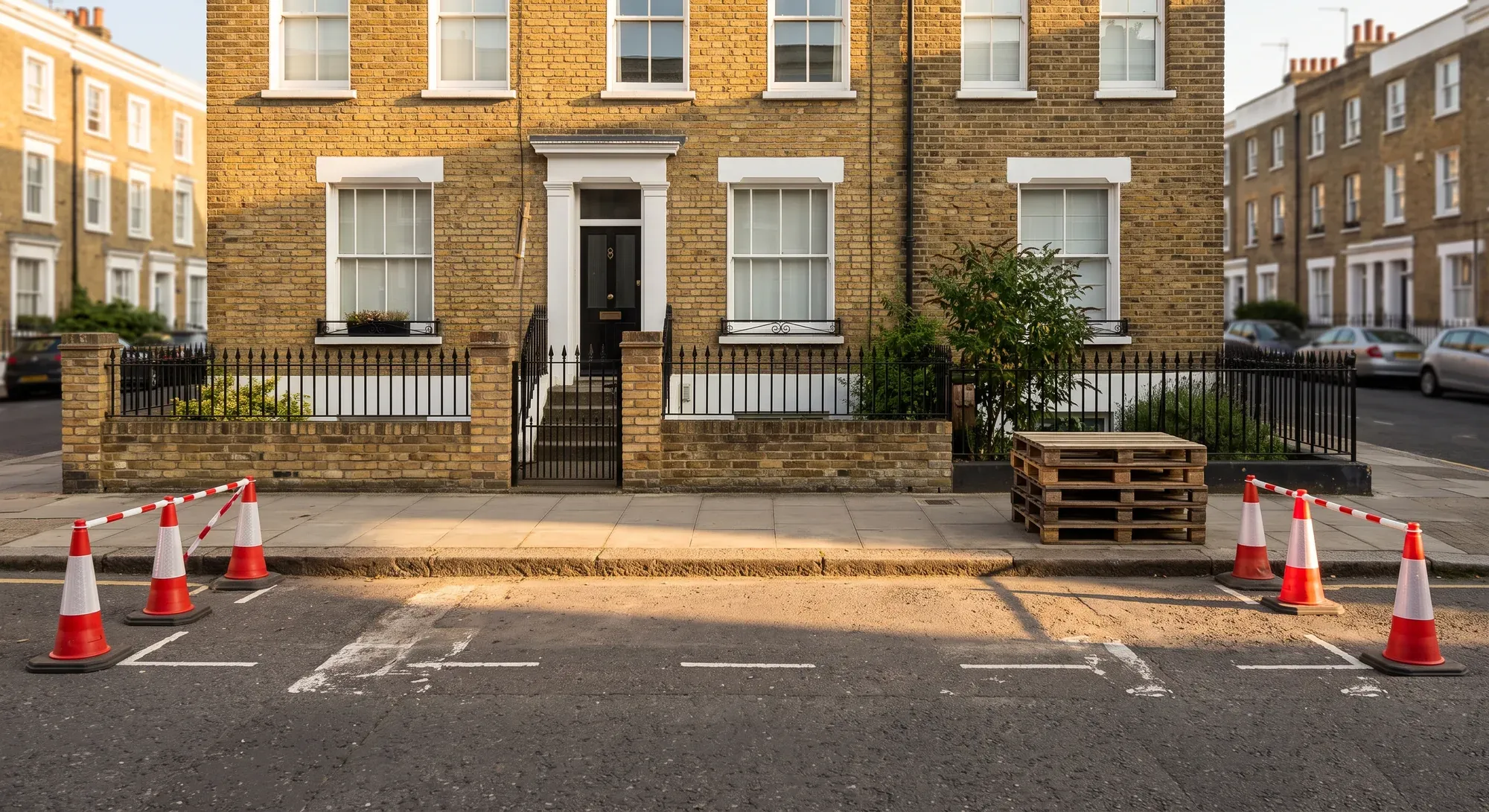
On a typical London terrace there is no side access, no driveway, and no space to store anything.
Materials come in by hand. Through the house, along a hallway, often around a dog-leg. A steel beam that would be craned into place on an open site is carried in by four people, and sometimes a window comes out to get it there.
Waste goes out the same way. And then into a skip that may need to stand on the public highway.
There is nowhere to stage. Deliveries have to arrive when they can be used rather than when they are cheapest, which removes a lot of the efficiency a builder would otherwise find.
None of that appears as a line on a quote. It appears as labour hours.
The council charges that only apply here
Waste is where the London premium becomes explicit and quantifiable.
A skip on the highway needs a permit, and the permit is the small part. The bay it occupies usually has to be suspended, charged per day. Camden's own published schedule produces £1,133.28 in council charges for a fortnight: £71.50 for the licence, £66.66 administration, and £995.12 for 14 days of bay suspension at £71.08.
Permit fees alone vary nearly fourfold across the city, from £37.60 in Wandsworth to £146 in Kensington and Chelsea, for the same piece of paper. Our guide to skip hire costs sets out the borough table and the alternatives.
Building control charges vary the same way. Councils set them under the Building (Local Authority Charges) Regulations 2010 on a cost-recovery basis, and inner London sits well above the rest of England: Tower Hamlets £1,551.60, Islington £1,584, Camden £1,875.55. Council tax is set locally too, and the spread there is wider still: Wandsworth's Band D bill of £1,020.35 for 2026/27 is the lowest in England.
The consents you would not need elsewhere
Three add cost in London specifically, and two of them are about how the housing stock is arranged.
Party wall, on both sides. A terrace has a party wall on each flank, so notifiable work happens twice, with two neighbours who respond independently. A published London agreed surveyor fee is £900 to £1,400 plus VAT, and that is per neighbour. Our guide covers what party walls mean in a London terrace, including the rear neighbour people forget.
Article 4 directions and conservation areas. Both remove permitted development rights, and both are common in inner London. Work that would need no application elsewhere needs a £548 householder application here, plus eight weeks. Our guide to renovating inside a conservation area sets out which rights survive.
Flats. A large share of London housing is flats, and flats have no permitted development rights at all, plus a freeholder whose consent is a separate process with no statutory timetable.
What does not vary much
Worth saying, because it sharpens where the money actually goes.
Materials are broadly national. Bricks, plasterboard, timber, sanitaryware and kitchen units cost roughly the same wherever they are delivered, with the difference being delivery and handling rather than the goods.
Statutory fees that are set nationally do not vary at all. A householder planning application is £548 in Camden and £548 in Cumbria. The Greater London Authority precept behaves the same way, at £510.51 for a Band D household in every borough, so the variation sits in the borough's own charge, and Kingston sets £2,097.61 of its £2,608.12 Band D bill itself.
So the London premium concentrates in labour, access, waste and the locally set charges. That is a useful thing to know when you are reading a quote, because it tells you which lines should look different from a national figure and which should not.
What to do about it
Four things genuinely reduce it.
Use off-street space if you have any. A skip on a driveway avoids the permit and the bay suspension entirely, and that alone can be a four-figure difference on a long project.
Consider a grab lorry or wait-and-load for heavy waste. Both avoid highway charges because they load and leave the same day.
Get the consents running in parallel. Planning, party wall and freeholder consent all have their own clocks, and running them in sequence rather than together is the most expensive scheduling mistake available.
Design to the permitted development limits where you can. A rear extension at 3 metres rather than 3.2 avoids an application, eight weeks and a designer's revision. Where the borough has withdrawn a right there is no limit left to design to, which is the position in the sixteen Bromley areas that lost upward extension rights in March 2022.
How Beams helps
The London premium is mostly the site rather than the specification, and the site is knowable before anyone prices the job.
So, through our home renovation service, we establish access, waste strategy, party wall exposure and the planning position before the design is fixed, and make sure builders price against the same understanding of those constraints. Three quotes that assume different access arrangements are not three quotes for the same job.
That is part of what a Beams fixed price covers: one agreed price, payments released against milestones, and 12 months on the workmanship.
Common questions
How much more does renovating in London cost?
Published figures put a finished 20 square metre extension at £72,000 to £120,000 including VAT in London against £53,000 to £79,000 across the UK, and a dormer loft at £49,000 to £84,000 against £42,000 to £72,000. That is roughly a third on the build.
Is it the materials?
Largely not. Materials are broadly national. The difference concentrates in labour, access, waste and locally set charges such as building control and skip permits.
Why do building control fees vary so much?
Councils set their own charges on a cost-recovery basis under the Building (Local Authority Charges) Regulations 2010, so there is no national fee. Inner London runs well above the rest of England.
Do planning fees cost more in London?
No. Planning application fees are set nationally, so a householder application is £548 everywhere in England.
What is the single biggest avoidable London cost?
Highway skip charges. A fortnight's bay suspension in Camden comes to £995.12 on top of the licence and administration fee. Using off-street space or a grab lorry avoids it.
Where these figures come from
Extension and loft conversion ranges: published market figures compiled in our own cost guides, which state their sources and VAT basis
Location factors set in relation to a UK mean of 100, and the London factor including a measure of prices arising from the equipment or methods needed to access constrained sites: Building Cost Information Service published methodology. The factor values themselves are subscription only and are not reproduced here
Building control charges: Building (Local Authority Charges) Regulations 2010, and published fee schedules for Camden, Islington and Tower Hamlets
Skip permit and bay suspension charges: published fee schedules for Camden, Wandsworth, Lambeth, Westminster, Southwark, Islington and Kensington and Chelsea
Party wall surveyor fees: published price lists from named London surveying practices, stated plus VAT
Planning fees set nationally: Ministry of Housing, Communities and Local Government planning fees indexation document, applying from 1 April 2026
Permitted development rights not applying to flats: Town and Country Planning (General Permitted Development) (England) Order 2015, Schedule 2, Part 1
We have not published a numeric London cost index, because the BCIS location factor values are not publicly available and no other source publishes a defensible single figure.
Find out what your project will cost
Tell us what you want to do and we will get you up to three comparable quotes from vetted London builders, priced against the same access and waste constraints.
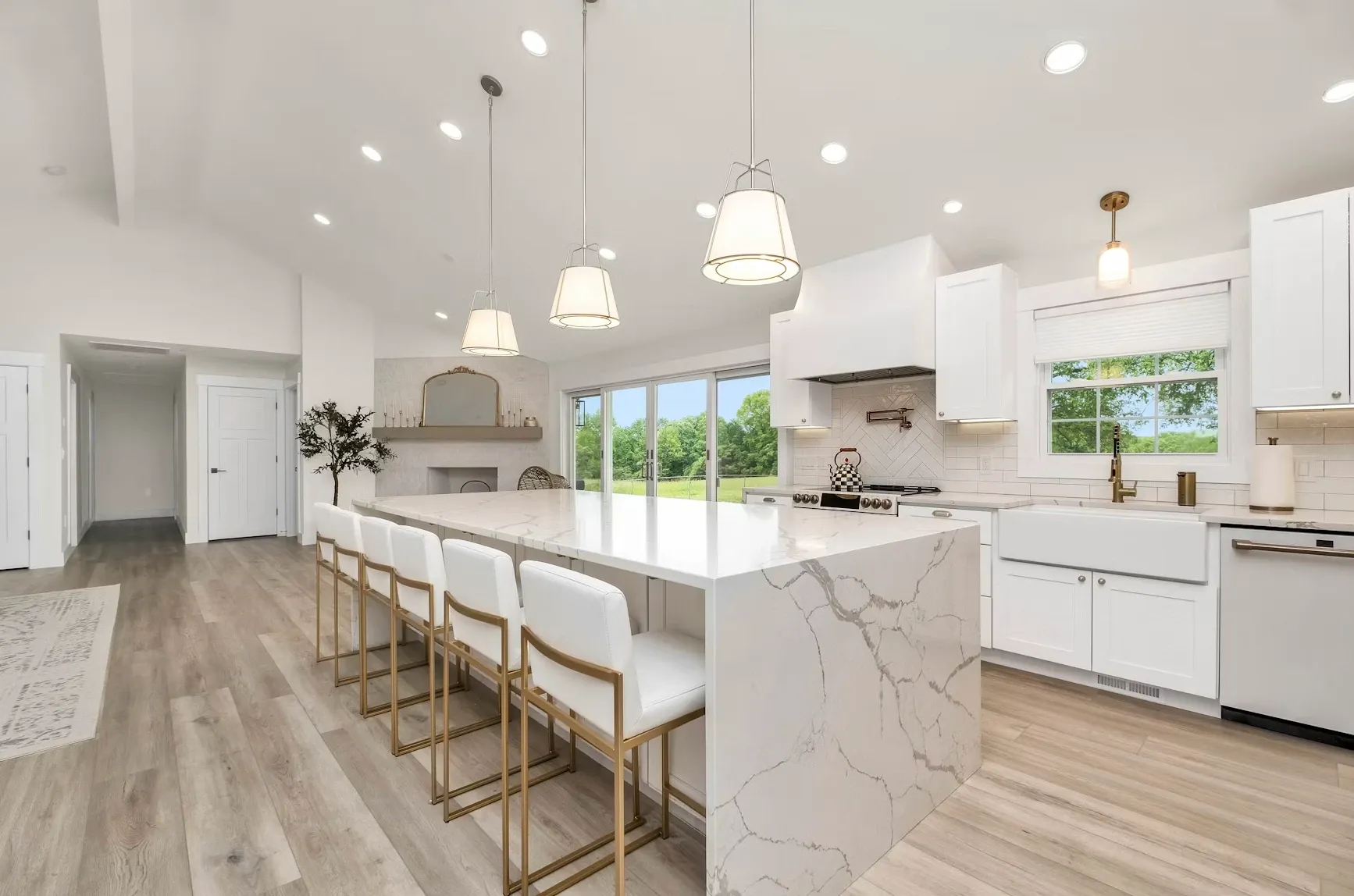
A finished 20m² extension costs £53,000 to £79,000 inc VAT, or £72,000 to £120,000 in London. Cost by type, per m² rates and the fees nobody quotes.
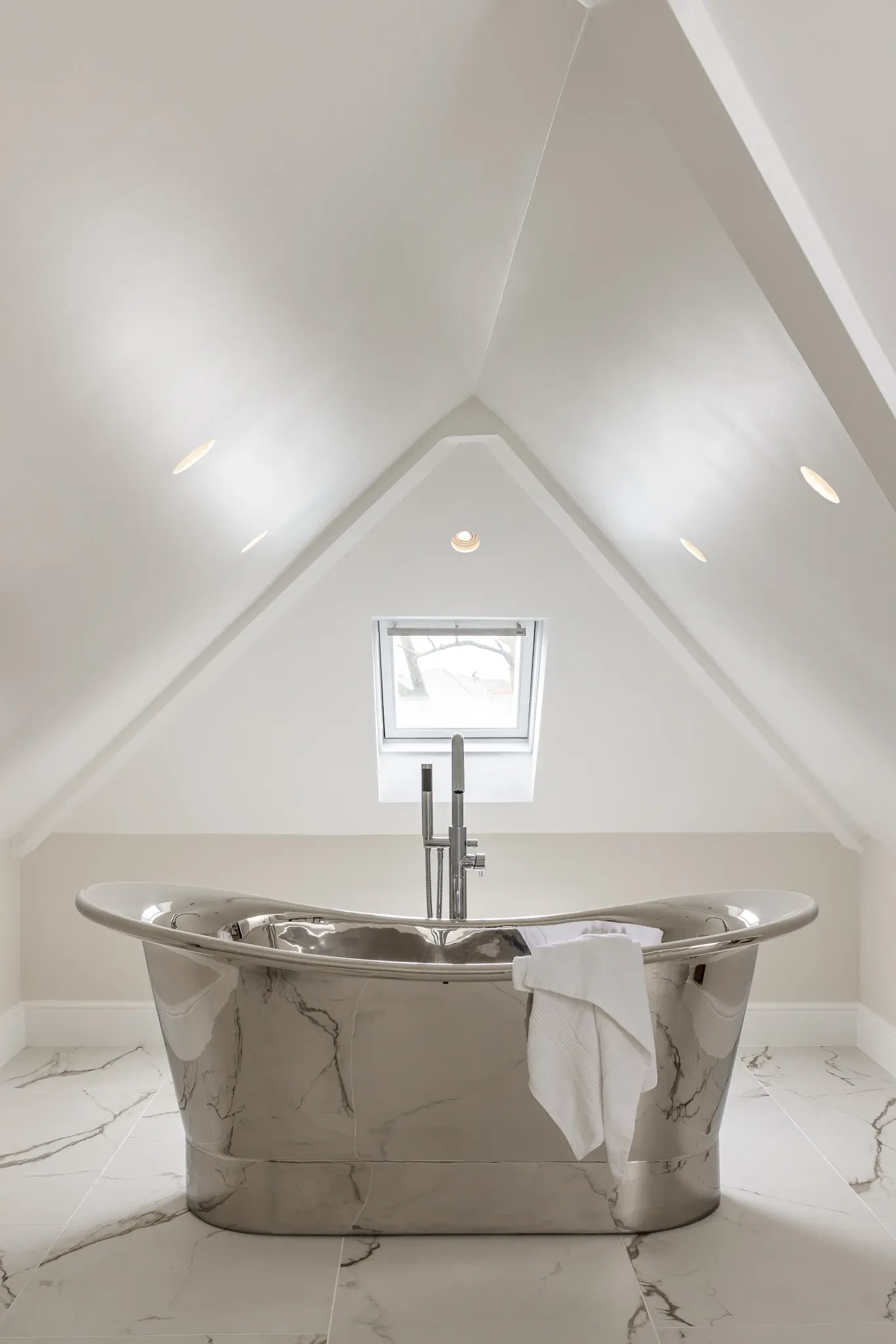
A dormer loft conversion costs £42,000 to £72,000 inc VAT, £49,000 to £84,000 in London. All seven types priced, plus what your roof decides.

A 6-yard skip in London runs £175 to £400, but a kerbside permit and bay suspension can add over £1,000. Borough fees compared, plus the Landfill Tax rise.