
The complete guide to living in Richmond

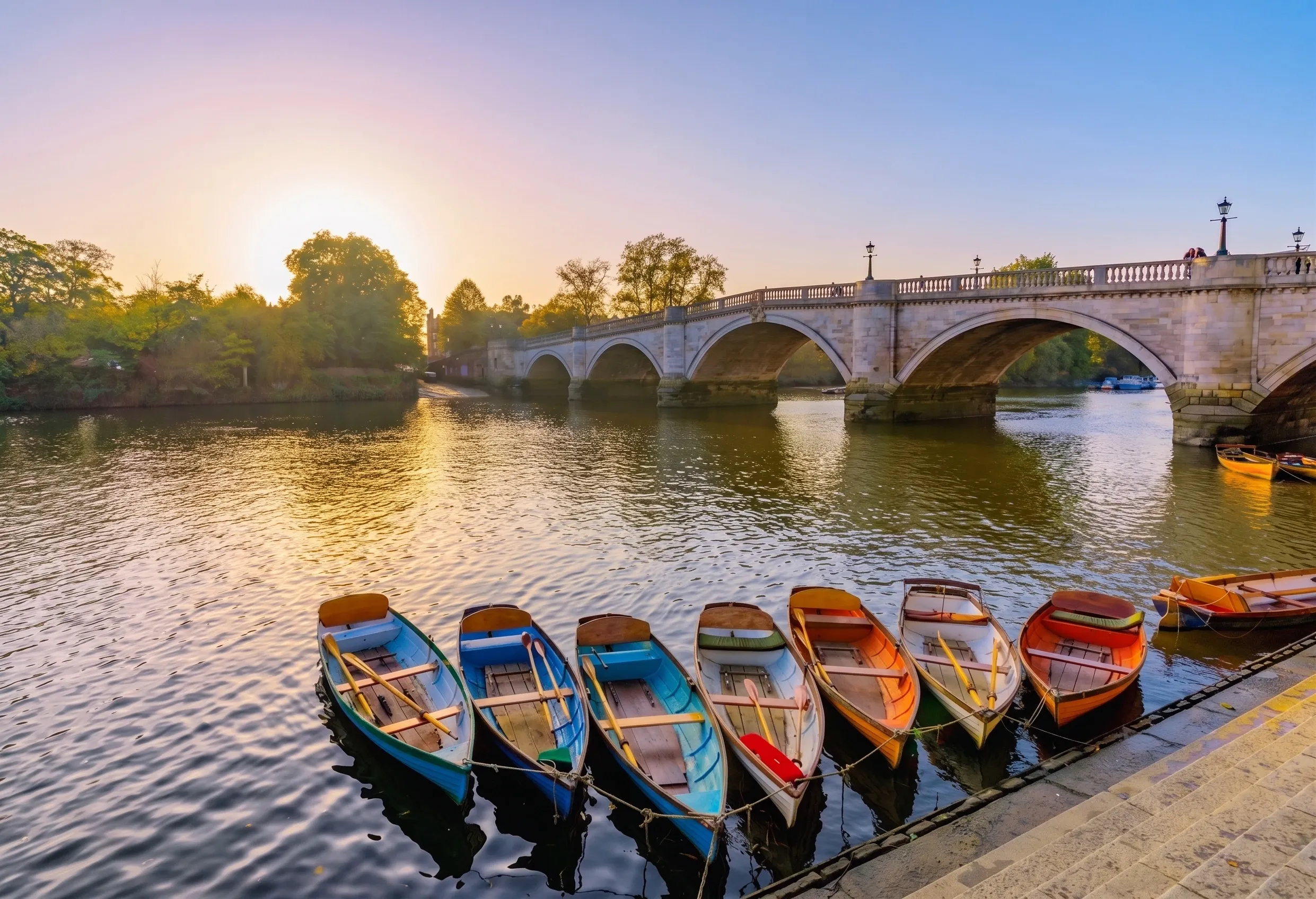
Richmond offers more green space than anywhere else in London, a Zone 4 fare with three separate rail operators from one station, and the highest council tax in the capital's south west. The catch is aircraft noise, which varies street by street and which almost no guide to the area mentions, and a planning regime among the most restrictive in London.
Most guides to Richmond are written by estate agents or removals firms, and they read like it. So here is the version that includes the things nobody selling you a house wants to lead with.
Richmond, or Richmond upon Thames?
Worth settling first, because it changes every number you'll read.
Richmond upon Thames is a borough stretching from Barnes to Hampton, taking in Twickenham, Teddington and East Sheen. Richmond is a town inside it, roughly TW9 and TW10. Almost every published "Richmond average house price" and "Richmond school list" is actually borough-wide, which is why some guides name Waldegrave and Orleans Park as top local schools when both are in Twickenham.
Within the town, TW9 covers the centre, Kew and North Sheen. TW10 covers Richmond Hill, Ham and Petersham. They differ on price, transport, flood exposure and, most of all, on planes.
The thing nobody tells you: aircraft noise
Heathrow operates on westerlies roughly three quarters of an average year, because that's where the wind comes from. On westerly operations, aircraft land over Barnes, Kew, Richmond and Sheen.
Heathrow runs runway alternation to give predictable respite: one runway for landings, the other for departures, swapping at 15:00 each day and switching fully at the end of each week, so you get morning quiet one week and afternoon quiet the next. That only applies on westerlies. On easterlies there is no daytime alternation, because the infrastructure for it doesn't exist yet.
What that means on the ground is that noise is not uniform, and residents are much more precise about it than the guides are. The consistent local account is that the approach comes in over Kew and Richmond Green before turning down the A316, that Kew is the worst affected, and that Richmond Hill and the eastern side of St Margaret's are noticeably better. Several long-term residents also say they stopped noticing it entirely after a year.
If you're buying, go and stand outside the house on a westerly afternoon. It's the cheapest piece of due diligence available to you, and no guide can do it for you.
Getting around
Richmond station is in Zone 4 and unusual in serving three operators: the District line, the Mildmay line on the Overground, and South Western Railway on the Waterloo to Reading route. North Sheen and St Margaret's are National Rail. Kew Gardens has the District and the Overground.
Residents are consistent that the District line is the backup rather than the main event. For a City commute the advice locally is the South Western train to Waterloo and then the Waterloo and City line. The District is slower and, at peak, crowded.
Ham and Petersham are the exceptions to Richmond's good transport reputation. Both are a genuine walk or a bus from any station, which is part of why they're quieter and greener than the rest.
Flooding, honestly
Richmond sits on a tidal stretch of the Thames, and this is where most guides either say nothing or imply something alarming. The Environment Agency's own assessment is more precise and more reassuring than either.
Under the Thames Estuary 2100 plan, the Richmond Policy Unit runs along both banks from Teddington to Kew and Isleworth. The Agency describes it as a narrow floodplain in an environmentally sensitive area, and states plainly that the main areas at risk of tidal flooding are parks and gardens, and that most residential and commercial property is not at tidal risk. The assets it lists in the flood zone are two schools, three electricity substations, Ham House, part of Kew Gardens and Richmond Lock.
Two things follow.
The first is that tidal defences in this stretch must be raised by 2050 to cope with sea level rise, and some of those defences are set back from the river in privately owned riverside gardens. If you buy a riverside property here, you may own a flood defence. That is not a hypothetical and it appears in no area guide anywhere.
The second is that the council's own flood priority is not the Thames at all. Richmond's flood risk strategy identifies surface water as the borough's greatest risk, with several hundred homes at high risk and many thousands at low to medium risk, and names South Richmond among the areas most susceptible. Those figures were published in 2013, so treat the exact numbers as indicative and check the council's current assessment. The direction is clear enough: the water that floods Richmond homes usually comes from the sky and the drains, not the river.
Schools
Richmond's schools are genuinely strong, and the way they're reported is genuinely out of date.
Ofsted stopped giving state schools a single overall grade in September 2024, and replaced the four-point scale with report cards under a new framework from 10 November 2025. So any guide telling you a school "is Outstanding" without a date is quoting a system that no longer exists. Some area guides still describe Marshgate Primary as an Outstanding school. Marshgate was reinspected on 7 and 8 May 2025 and came out Good for quality of education, Good for leadership and management, Good for early years, and Outstanding for behaviour and attitudes and for personal development, with no overall grade at all.
What we can say with dates: The Vineyard School was inspected in November 2023 and rated Good overall, with Outstanding for personal development. Grey Court in Ham was confirmed as continuing to be Outstanding in February 2024. Christ's CofE School received one of the new report cards in February 2026 and was assessed at strong standard across achievement, curriculum, inclusion, leadership, personal development and sixth form, with attendance and behaviour at expected standard.
Catchments are the constraint, as they are across south west London. Residents describe them bluntly as tiny. Check the published furthest distance offered for your target school before you offer on a house.
The park, and what living beside it actually involves
Richmond Park is 2,500 acres, the largest of the eight Royal Parks, a National Nature Reserve and London's largest Site of Special Scientific Interest. Around 600 red and fallow deer have been there since 1637.
It is not a municipal park, and the rules reflect that.
Pedestrian gates are open around the clock except during the two annual deer culls, in November to early December and February to early March, when they close from 8pm to 7:30am on most nights. Dogs must be on leads near deer at all times, around every lake and pond, in Isabella Plantation, and year-round in three skylark protection zones. During the deer birthing season from 1 May to 31 July, dogs must be on leads across the entire park. A dog chasing deer is a criminal offence and the owner can be prosecuted.
Through-driving has been restricted, so the park is no longer a shortcut. Parking is free.
Beyond it you have Kew Gardens, a UNESCO World Heritage Site since 2003, and Old Deer Park, which is Grade I registered and which the council's own conservation statement notes floods persistently. The view from Richmond Hill is protected by an Act of Parliament passed in 1902.
What you can and cannot do to a house here
This is the part that matters most if you're buying something to improve, and it's absent from most area guides.
Richmond upon Thames has 85 conservation areas, the highest count of any London borough. In the town alone that includes Richmond Green, Richmond Riverside, Richmond Hill, Central Richmond, St Matthias, Sheen Road, Kew Foot Road, Kew Road, Old Deer Park and Richmond Park, with Petersham, Ham Common and Ham House covering TW10. If you're buying a period house in Richmond, the odds are it sits inside one, and the rules that come with a conservation area will govern your windows, your render, your chimneys and your front garden.
On top of that the council maintains Article 4 directions, which strip out permitted development rights that apply everywhere else. Richmond's register is unusually granular, naming individual streets and in places individual house numbers: The Vineyard, Mount Ararat Road, Montague Road, Rosemont Road, Sheen Road and the streets around it, Old Palace Lane, Park Road, Willoughby Road, and a long list in Kew and Ham. Address-level checking is genuinely necessary here, not a formality. Our guide to what permitted development actually covers explains what you lose when a direction applies.
Basements are the sharpest constraint. Richmond made two Article 4 directions on 28 February 2017, confirmed on 12 April 2017 and in force from 1 April 2018, which together cover the whole borough: one for the areas at greatest flood hazard, one for everywhere else. The effect is that anyone considering digging out a basement in Richmond needs planning permission for it, wherever the house is.
Council tax, and the number that surprises people
A Band D property in Richmond pays £2,486.10 for 2026/27, made up of £1,975.59 to the council and £510.51 to the Greater London Authority. The council raised its share by 4.99%, and the overall bill went up 4.8%, or £114.03 on the 2025/26 figure.
That is high. It is well above Merton, Camden, Hounslow and Hackney, and it is roughly double what a Band D household pays in Wandsworth. If you're weighing Richmond against Barnes or Putney across the river, the council tax difference is real money every year and almost nobody factors it in.
What's changing
Two developments are large enough to matter.
The Stag Brewery site in Mortlake was allowed on appeal on 2 May 2025 after a decade of argument: 1,075 homes in blocks up to nine storeys, with a 1,200-place secondary school with sixth form, shops, offices, a cinema and space for a hotel. Of those 1,075 homes, 65 are affordable, which the inspector accepted at around 7.5% and which was the main ground of local objection. It is the borough's biggest development site. Check Richmond's planning pages for the current build programme before you buy nearby.
Closer to Ham, the Ham Close estate is being rebuilt, replacing 192 homes from the 1960s with 452, of which 221 are affordable, with the first phase due in 2026 on the council's published programme. Twickenham Riverside is also under construction, with completion scheduled for late 2027.
Who Richmond suits
Families who want green space and can afford both the house and the council tax. People who work in the City and don't mind changing at Waterloo. Anyone who values a genuine town centre rather than a high street.
It suits you less if you need to be in central London quickly and often, because residents are consistent that it feels further than the map suggests. It suits you less if you want to buy a period house and reshape it. Between 85 conservation areas, street-level Article 4 directions and a borough-wide basement restriction, Richmond will have opinions about almost anything you propose. And it may not suit you at all if you're noise-sensitive and end up under the approach.
Common questions about living in Richmond
Is Richmond in London or Surrey?
London. Richmond upon Thames has been a London borough since 1965. Postal addresses still read "Richmond, Surrey" because postal counties never caught up with local government reorganisation, which is why Ofsted records and official documents still use it.
Which is better, Richmond or Kew?
Kew is quieter, greener and has the Gardens on the doorstep. It is also, according to residents, the part of the area worst affected by aircraft noise. Richmond town gives you the station, the shops and the theatre. Richmond Hill gives you the view and the highest prices.
Is Richmond expensive?
Yes, on every measure, and the council tax is the part people miss. A Band D bill of £2,486.10 for 2026/27 is among the highest in London, and it is charged on 1991 property values, so a modest terrace can sit in a higher band than its current size suggests.
Do I need planning permission to extend in Richmond?
Very possibly. With 85 conservation areas in the borough and Article 4 directions applying at street and sometimes house-number level, permitted development rights are removed across large parts of Richmond and Kew. Basements need permission borough-wide. Check your specific address on the council's Article 4 register before assuming anything. Our planning guide covers the process.
Renovating in Richmond?
- Kitchen renovation in Richmond
- Bathroom renovation in Richmond
- House extensions in Richmond
- Loft conversions in Richmond
- Basement conversions in Richmond
- Home renovation in Richmond
- Interior design in Richmond
- Builders in Richmond
If Richmond is one of several areas on your list, you can read the planning position across twenty London areas side by side.
Sources and verification notes
All figures checked on 20 August 2026 unless another date is given.
Primary sources
- Council tax 2026/27: London Borough of Richmond upon Thames published band table. Band D £2,486.10, made up of £1,975.59 to the council and £510.51 to the GLA. Council share up 4.99%, overall bill up 4.8% or £114.03.
- Conservation areas: 85, Richmond upon Thames conservation areas pages.
- Basement Article 4 directions: Richmond upon Thames, Article 4 Directions, basements and subterranean developments. Two directions made 28 February 2017, confirmed 12 April 2017, in force from 1 April 2018, together covering the whole borough. Council page last updated 18 June 2026.
- Ofsted, Marshgate Primary School, URN 133728: inspected 7 and 8 May 2025. Good for quality of education, leadership and management, and early years. Outstanding for behaviour and attitudes and for personal development. No overall grade.
- Ofsted framework change: single overall grades withdrawn September 2024, report cards from 10 November 2025.
- Stag Brewery, Mortlake: allowed on appeal by the Planning Inspectorate on 2 May 2025. 1,075 homes, 65 affordable, 1,200-place secondary school with sixth form, blocks up to nine storeys.
Where sources disagree
- Tidal flood risk: Environment Agency, Thames Estuary 2100 plan, Richmond Policy Unit. Includes the finding that the main tidal risk is to parks and gardens rather than property, and the requirement to raise defences by 2050.
- Surface water flood risk: Richmond upon Thames local flood risk management strategy, 2013. Figures are dated and the guide says so.
- Ofsted: The Vineyard School, Good, November 2023. Grey Court, Outstanding, February 2024. Christ's CofE School, report card, February 2026.
- Richmond Park: The Royal Parks. 2,500 acres, National Nature Reserve, SSSI, around 600 deer since 1637, dog and gate rules, deer cull periods, birthing season restrictions.
- Kew Gardens UNESCO World Heritage inscription, 2003. Old Deer Park Grade I registered. Richmond Hill view protected by the Richmond, Ham and Petersham Open Spaces Act 1902.
- Article 4 street and house-number register: Richmond upon Thames Article 4 directions pages.
- Ham Close regeneration, 192 homes replaced by 452 with 221 affordable, first phase due 2026. Richmond upon Thames. Twickenham Riverside completion scheduled late 2027, same source.
- Richmond station operators and Zone 4 status: South Western Railway and Transport for London.
- Heathrow runway alternation, the 15:00 swap and the absence of daytime alternation on easterlies: Heathrow Airport and Department for Transport.
What we could not confirm
- Any average house price for "Richmond". Published averages are borough-wide and the guide explains why that matters instead of quoting one.
- A start date or construction status for the Stag Brewery site. The appeal decision is verified, the build programme is not, so the guide points readers to the council's planning pages.
- The site area of the Stag Brewery scheme in acres. Reported figures vary.
- Any crime rate or crime count for Richmond. Not confirmed against a primary source, so no safety claim is made.
How resident views were gathered
Resident sentiment on aircraft noise, the District line and catchment sizes comes from public forum accounts, not published data, and is described as resident account wherever it appears.
Find out what your project will cost
Richmond is one of the more constrained places in London to renovate: 85 conservation areas, Article 4 directions written street by street, and a borough-wide restriction on basements. Tell us about your project and we'll get you up to three comparable quotes from vetted London builders, all pricing from the same written scope.
Kingston has the Tiffin grammar schools, Richmond Park and a Band D council tax bill of £2,608.12 for 2026/27. No Underground station either.
A proper high street and Bedford Park, against a Heathrow approach path and the A4. What the police data actually says about crime in Chiswick.
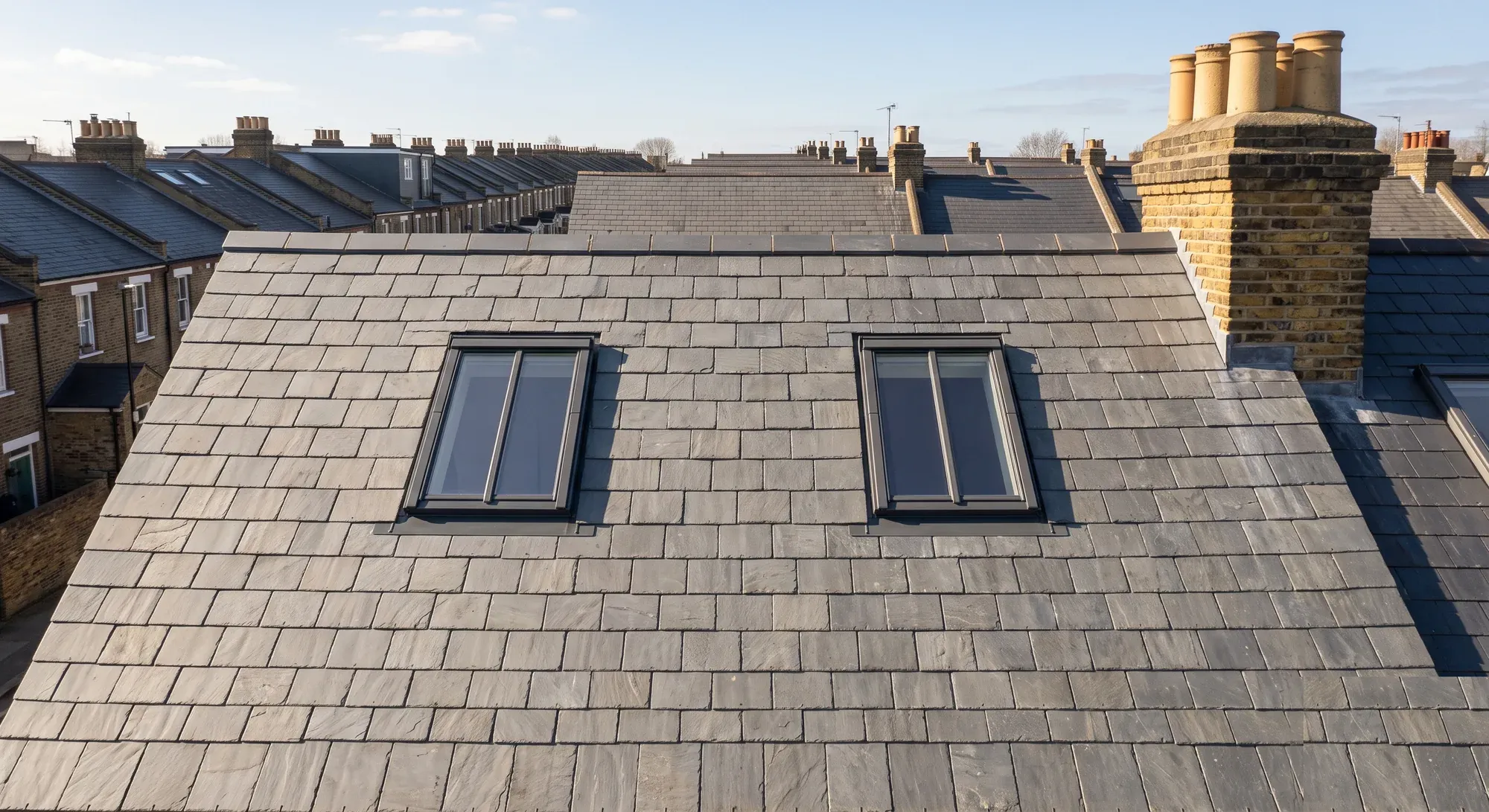
Dormers need permission, rooflights do not. Which permitted development rights survive on article 2(3) land, why Article 4 is separate, and what still applies.
Permitted development rights removed, party walls on both sides, nowhere to put a skip and borough charges that vary fourfold. What actually differs about renovating in London.