
How much does a basement or cellar conversion cost in the UK?

Converting a cellar you already have costs £1,080 to £1,680 per square metre including VAT, or around £32,400 to £50,400 for a 30 square metre cellar. Digging a new basement under a London house is a different order of project: £7,200 to £12,000 per square metre including VAT, which is £288,000 to £480,000 for 40 square metres.
That is a sevenfold difference in the rate, and it is the first thing to establish before any figure means anything. Most guides quote all three basement projects as though they were one job.
The three basement projects, and what each costs
Project | UK, inc VAT | London, inc VAT |
|---|---|---|
Cellar conversion, existing head height | £1,080 to £1,680 per m² | £1,250 to £1,950 per m² |
Floor lowering and underpinning | £1,800 to £2,400 per m² | £2,100 to £2,800 per m² |
New basement excavation | no reliable national figure | £7,200 to £12,000 per m² |
Those rates cover the structural work, waterproofing, first-fix electrics and plumbing, ventilation, the staircase and basic finishing. They include VAT at 20%, which almost every source quotes separately. Professional and statutory fees sit on top, and are set out further down.
The new-excavation row carries no national figure because the only current London-specific source is a London practice, and new domestic basements are overwhelmingly a London phenomenon. Newcastle University research published in Urban Geography in 2021 counted every London basement planning application between 2008 and 2019: over 7,000 built, concentrated in Hammersmith and Fulham, Kensington and Chelsea, and Westminster.
How much does a cellar conversion cost?
£1,080 to £1,680 per square metre including VAT, so £32,400 to £50,400 for a 30 square metre cellar, and £37,500 to £58,500 in London.
This is the cheapest route by a wide margin, because the hole already exists. What you are buying is waterproofing, a damp-proof floor build-up, insulation, ventilation, lighting, power and a compliant staircase. Nothing structural moves.
Most London cellars are Victorian or Edwardian, built as coal stores and sculleries rather than as rooms. They are typically dry-ish rather than dry, unventilated, and around 1.8 to 2.1 metres from floor to joist. The first two are solvable. The third decides everything.
How much does it cost to lower a basement floor?
£1,800 to £2,400 per square metre including VAT nationally, £2,100 to £2,800 in London, so £63,000 to £84,000 for 30 square metres in London.
Lowering means digging the floor down and underpinning the existing walls in sequenced bays, so the house stays up while you remove what it is standing on. It needs a structural engineer, it needs building control, and in most London boroughs it needs planning permission.
Roughly double a straight cellar conversion, for the same finished room.
How much does it cost to dig a new basement?
£7,200 to £12,000 per square metre including VAT in London, with £9,000 as the middle of that range. For a 40 square metre basement that is £288,000 to £480,000, and £360,000 is a realistic central figure.
There is no existing void, so the work is underpinning the house, excavating and carting away the spoil, forming new retaining walls and a reinforced concrete slab, then waterproofing the whole box. It is among the most expensive residential work there is, and the cost is dominated by structure and temporary works rather than by anything you will see when it is finished.
Head height decides which project you have
Measure before you do anything else. From the underside of the floor above down to the current cellar floor is the number that puts you in one row of that table rather than another, and it is the difference between £40,000 and £300,000.
Here is the part almost every guide gets wrong. There is no minimum ceiling height for a habitable room in England. Schedule 1 to the Building Regulations 2010 contains no room-dimension requirement at all.
Two figures circulate as though they were law. The 2 metre figure is headroom over a staircase under Approved Document K, measured from the pitch line. That one is real, it is a building regulation, and it will shape your design. The 2.3 metre figure is the nationally described space standard, which is planning policy rather than building regulation, applies only to new dwellings, only where a council has adopted it, and is measured across 75% of a whole dwelling rather than room by room. Neither sets a floor under your basement ceiling.
So you can legally finish a basement room at 2.1 metres clear. What actually pushes you deeper is the staircase headroom, the floor build-up that a drained cavity plus insulation plus screed demands, which is commonly 250mm to 400mm, and what a buyer will accept when you sell.
Work it backwards. If you have 2.1 metres now, you lose up to 400mm and finish at 1.7, which is not a room. If you have 2.5 metres you can probably convert without digging, and you are in the cheap row. Between those, you are lowering the floor and the cost roughly doubles.
Where the numbers do not work, price the alternatives before committing to a dig. A loft conversion adds a comparable room for a fraction of a new basement, and the constraint there is also structural rather than a matter of budget.
Why the figures online disagree by five times
Search this and you will find £1,275 per square metre on one page and £6,000 on another. Both are real numbers. Three things explain the gap, and none of them is that anyone is lying.
They price different projects. A cellar fit-out and a new dig are not the same job, as the table above shows. A guide quoting a single figure for "a basement conversion" has flattened three projects into one.
Many do not state a VAT basis. VAT is a fifth of your budget. Some ranking pages never mention it, and at least one quotes inclusive of VAT while its neighbours quote exclusive, so averaging them produces a number that describes nothing.
Some are older than they look. A good deal of page one traces back to one cost table attributed to a waterproofing trade body. You can date that table from the inside: it still lists the householder planning fee at £206, a figure superseded in December 2023, on a page showing a 2025 review date.
One propagated error is worth flagging, because copying it will distort your budget. Several sites state that a lightwell costs "£5,000 to £7,500 per square metre". It is a lump sum, not a rate. Take the rate literally on a four square metre lightwell and you will set aside £20,000 to £30,000 for something the other sources price at £5,000 to £7,500.
What depth actually does to the cost
You will read that every additional 100mm of excavation depth adds £5,000 to £10,000. This page used to say something close to it. It is not true, and the real behaviour matters, because it changes where the savings are.
The claim traces to a single page that contradicts itself three ways: £50 to £80 per linear metre per 100mm in one place, £5,000 to £10,000 in another, and £8,000 to £12,000 per 200mm in a third. Those are three to eight times apart. On the arithmetic, 100mm across a 40 square metre footprint is about four cubic metres, or roughly eight tonnes of London clay. That is hundreds of pounds of disposal, not thousands.
Depth drives cost in steps rather than smoothly.
Spoil is the cheap part, and it is getting less cheap. Extra depth adds volume in proportion to footprint, priced per tonne. One 2026 change to be aware of: HMRC's lower rate of Landfill Tax, which covers clean excavated clay, rose to £8.65 per tonne on 1 April 2026 from £4.05 the year before. That is a 114% increase in a single year on the tax component alone.
Underpinning is the expensive part, and it is priced per linear metre at a designed depth. Deeper pins mean more concrete, more sequencing and longer propping. The cost steps when the pin design changes, not per 100mm.
Temporary works escalate faster than depth. Earth pressure rises with the square of depth. Past a point, mass-concrete underpinning stops working and the scheme becomes piled, with a capping beam and propping. That is a change of method, not an increment.
The water table is a cliff edge. Crossing below it changes the job: dewatering during construction, a more onerous waterproofing specification, twin pumps with battery backup, and a materially higher risk premium. A hundred millimetres either side of that level can be the largest single cost step in the project.
The useful question is therefore not how deep, but whether the next 100mm crosses a threshold. If your cellar already has workable height, accepting it rather than digging for a taller ceiling is usually the biggest saving available to you.
What is not included in the quote
Basement quotes cover the conversion. These sit outside it, and on a basement they add up to more than on any other domestic project.
VAT at 20%, unless the quote says otherwise
Professional fees, 12% to 18% of construction cost for the architect, structural engineer and cost consultant together, per Architecture for London's published figure. That percentage excludes everything below
Building control, which varies more than you would expect. Camden charges £1,875.55 including VAT for a basement up to 60m², then £1,640.94 again for the first 10 metres of underpinning. Lambeth is £1,844, Tower Hamlets £1,417.02 up to 100m². Westminster prices a basement by project value instead, at £4,344 to £5,364
A Basement Impact Assessment where your borough requires one. No council or institution publishes a price for preparing one. Consultants advertise anywhere from £1,900 plus VAT to £5,000, and none of it is independently verifiable
An independent audit of that assessment in Camden, which you fund. Camden publishes the scale: £997.50 for a Category A audit and £3,045 for Category B, both excluding VAT, plus £51.67 plus VAT of council administration per invoice
Party wall surveyors, covered in its own section below
Planning, £548 for a householder application in England from 1 April 2026
Interior fit-out, meaning flooring, decoration, joinery and any bathroom
Hold 15% to 20% back as contingency. That is higher than we would suggest on any other project, because a basement involves the ground, the water table and the existing foundations at the same time.
Building control deserves a word, because the spread looks arbitrary and is not. Councils set their own charges under the Building (Local Authority Charges) Regulations 2010 on a cost-recovery basis, so no national figure exists or can. Several inner-London boroughs, Islington, Bromley, Wandsworth and Richmond among them, deliberately exclude basements from their published tables, and Kensington and Chelsea publishes no schedule at all. Anything over roughly 60m² is quoted individually. Ask your borough directly rather than working from a table you found online.
Do you pay VAT on a basement conversion?
Usually 20%, with one exception that is worth real money.
Converting a cellar or digging a basement inside an occupied family home is standard-rated. The reasoning is worth following, because it explains the exception. The reduced 5% rate for conversions depends on the number of dwellings changing, and one house before with one house after is not a change. HMRC's VAT Notice 708, section 7.3, is the relevant part.
Now the exception. If the basement becomes a self-contained flat, the number of dwellings has changed, and qualifying work on that part is charged at 5% instead of 20%. On £300,000 of qualifying work priced before VAT, that is £15,000 of VAT rather than £60,000.
Four conditions all have to be met. The new unit must be self-contained living accommodation with its own kitchen and bathroom. There must be no direct internal access between the flat and the house. Separate use must not be prohibited by any covenant or planning condition, and nor must separate disposal. Seal the connecting door and you gain the rate. Leave it in place and you lose it.
Two caveats worth stating plainly. Only the basement works get 5%, so concurrent work to the house above stays at 20% and your builder has to apportion it properly. And a granny annexe that cannot be used or sold separately from the main house does not qualify, which is the case HMRC specifically calls out.
Separately, if the property has stood empty for two years or more, renovation qualifies for 5% regardless of dwelling count. A letter from your council's Empty Property Officer confirming the two years is normally sufficient evidence on its own.
Professional fees are always standard-rated at 20%, whatever rate applies to the building work.
Planning permission, and the boroughs with their own basement rules
This is where basements differ most from every other project, and where generic guides are least useful.
Four London boroughs have removed permitted development rights for basements through Article 4 directions, so a full householder application is required whatever the scale: Camden, Kensington and Chelsea, Westminster, and Hammersmith and Fulham. Several boroughs also operate a dedicated basement policy that caps what you can build regardless of how good the design is.
Borough | Policy | The restrictions that bite |
|---|---|---|
Camden | A5 | One storey only; not under an existing basement; no more than 50% of each garden; no more than 1.5 times the host building footprint |
Kensington and Chelsea | CD11 | One storey only; no more than 50% of each garden; one metre of soil above; no excavation under a listed building at all |
Westminster | Policy 50 | One storey below the lowest original floor level; no more than 50% of garden land |
Hammersmith and Fulham | DC11 | Construction Method Statement required; permitted development removed since April 2018 |
Lambeth | Q27 | At least 70% of the rear garden must stay free of basement, the strictest garden test in London |
Three details catch people out.
The 50% garden tests are measured per garden, not in total. In Camden and in Kensington and Chelsea, front, rear and side gardens are assessed separately, and the remaining garden has to be one continuous area. Camden applies two further 50% tests simultaneously, on the depth of the host building and the depth of the garden, and your buildable area is the smallest of the three.
"There is already a basement" does not help you. Kensington and Chelsea's policy specifically bars additional basement floors where a basement has already been permitted or built under permitted development rights. The only carve-out is for basements that existed before 1 July 1948.
Camden charges you to check your own homework. Where a Basement Impact Assessment is required, Camden commissions an independent audit of it and the applicant pays. Camden's guidance is explicit that an application may be recommended for refusal if you decline to cover the audit cost.
Outside those boroughs, a Lawful Development Certificate for proposed use costs £274 and gets you written confirmation that permitted development covers your scheme. Inside them it is not an option.
A timing note: a draft instrument laid in July 2026 would raise the householder fee to £575 from 8 December 2026. It has not been made yet, so check the current figure if you are applying late in the year.
The party wall position, and one veto nobody mentions
Almost every London basement triggers the Party Wall etc. Act 1996, usually under more than one section. Section 6 catches any excavation within three metres of a neighbour's building that goes below the level of their foundations, and within six metres where the work would cut a 45-degree plane drawn down from those foundations. On a terrace that is close to automatic.
Notice has to be served at least one month before excavating, and the sequence from there is set out in our guide to party wall notices and surveyor fees. If the neighbour does not consent within 14 days, a dispute is deemed to have arisen and surveyors get appointed. Fourteen days of neighbourly silence is what generates the fees.
There is no statutory fee. Section 10(13) refers only to "reasonable costs" as the surveyors determine, and the government's own explanatory booklet is blunt: there are no set charges. What can be said is that the firms publishing fixed party wall fees expressly exclude basements from those prices. Published basement figures run around £1,500 to £2,200 plus VAT for the neighbour's own surveyor per neighbour, plus £1,200 to £1,500 for an independent checking engineer, with movement monitoring from about £1,000. You normally pay all of it, including the neighbour's surveyor. Architecture for London suggests budgeting £2,000 to £15,000, and the width of that range is the honest answer.
One provision deserves attention before you design anything. Section 7(4) gives your neighbour an absolute written veto over placing special foundations on their land, and reinforced concrete basement foundations are special foundations. If your scheme depends on them extending under next door, a single neighbour can stop it, and there is no appeal.
Waterproofing decides the project
Waterproofing is the one element where getting it wrong costs more than everything else combined, and it is designed rather than bought.
The standard is BS 8102:2022, which superseded the 2009 edition in March 2022. It sets out three types of protection. Type A is an applied barrier or membrane, internal or external, which is what most people mean by tanking. Type B is where the structure itself is watertight reinforced concrete. Type C is a drained cavity that accepts water behind an internal membrane and takes it to a perimeter drain and a sump pump. Most London retrofits end up Type C, or a combination.
Two consequences people do not expect. A Type C system is a maintained system, because it has pumps, and the 2022 edition added a clause on servicing and maintenance precisely because that is where these installations fail. It is a small running cost attached to a very large capital one, and almost nobody mentions it before you sign. Second, the standard recommends appointing a waterproofing design specialist as part of the design team, suitably qualified and experienced for the size of project. One way to evidence that is the CSSW qualification, developed and delivered by the Property Care Association and awarded through ABBE.
BS 8102 is a code of practice rather than a specification, so it recommends where a regulation would require. Building control will still expect a designed system.
Ventilation is the other technical constraint, and one paragraph of guidance settles it. Approved Document F notes that where a basement has only one exposed façade, the guidance on natural ventilation is not appropriate and expert advice should be sought. A typical London basement has one lightwell or none. In practice that means mechanical ventilation, which in turn means a commissioning notice to building control.
Is a basement conversion worth the money?
This is the hardest question on the page, because nobody publishes a reliable answer to it.
You will read that a basement adds 10% to 20% to a property's value. This page said it until now. We have taken it out, because we could not find a source. No lender, no surveying body and no statistical agency publishes a basement-specific uplift, and neither the ONS nor the Land Registry records whether a house has a basement, so the figure cannot be derived even in principle. Every percentage circulating online traces back to other contractors and cost sites rather than to any dataset.
What can be said is narrower, and more useful.
Nationwide's house price research, based on hedonic regression across its own mortgage lending, found that a 10% increase in floor space adds around 5% to price, that an extra double bedroom on a two-bedroom house adds around 13%, and that an extension delivering both a bedroom and a bathroom adds up to 24%. Those findings are about floor area and room count rather than about basements, but a basement that adds a bedroom and a bathroom is the same kind of change.
The complication is that below-ground space has historically been valued below above-ground space per square foot. Analysis of London listings by Propcision in January 2017 put the gap at 15% to 20%, widening by a further 5% in the market of the time, with the largest gaps in Kensington and Chelsea and in Westminster. Buying agent Black Brick, quoted in The Times in 2014, described basement space outside prime central London as historically valued at around half the rate of upper floors. Both are dated, and both are asking prices or practitioner observation rather than achieved-price research. Treat them as a caution rather than a measurement.
The defensible way to work it out for your own house is arithmetic rather than a percentage: the floor area you would add, multiplied by what lower-ground space actually achieves on your street, minus the full cost including VAT, fees, party wall and contingency. Get two local agents to value the finished scheme before you commit. On a new dig especially, the honest position is that a basement is a decision about how you want to live rather than an investment.
If what you want is space rather than specifically below-ground space, price the alternatives properly. Our guide to what a house extension costs covers the route that is usually cheapest per square metre, where you have the garden to give up.
How long does it take?
A cellar fit-out can be six to eight weeks. A new excavation under an occupied London house runs to nine or twelve months once design, planning, party wall agreements and the dig itself are counted.
Planning alone takes eight weeks from validation, longer in the boroughs with basement policies, and party wall agreements can add two months where a neighbour dissents. Our guide to how long a basement conversion takes sets out the stages.
How Beams helps
Basements punish vagueness more than any other project. Which of the three projects you actually have, what your borough's policy permits, where the water table sits, whether your neighbours' foundations put you inside section 6. All of that is established before a price means anything, and all of it is cheap to find out relative to the cost of getting it wrong.
So we establish it first, then set a realistic cost expectation, match you with builders who do this work regularly, and line up as many as three site visits. Every builder quotes from the same information, which is the only way three numbers become comparable.
That is what a managed basement conversion with Beams looks like: one agreed price, payments released against milestones, and a 12-month workmanship warranty behind it.
Common questions about basement conversion costs
What does it cost to tank a basement?
Tanking is Type A protection under BS 8102:2022, an applied membrane or barrier, and it is part of the conversion rate rather than a separate purchase. It is not usually the right answer on its own for a London retrofit, because a barrier system has to resist the full water pressure with no margin for a defect. Most schemes end up Type C, a drained cavity with a sump and pump, or a combination of the two. A waterproofing design specialist should be specifying which.
Do I need planning permission for a basement conversion?
In Camden, Kensington and Chelsea, Westminster and Hammersmith and Fulham, yes, because Article 4 directions have removed permitted development rights for basements. Elsewhere a conversion within the existing footprint may fall within permitted development, but lightwells, extending beyond the footprint, and anything on a listed building will need an application. Building regulations approval is always required.
Does a basement need a separate fire escape?
Not necessarily. Approved Document B gives two alternatives for a basement habitable room: an escape window or external door meeting minimum dimensions, or a protected stairway running from the basement to a final exit. It is either or, not both. Where there is no suitable window, which is the normal London situation, it is the protected stair, and that means fire-resisting construction at every storey rather than only at basement level.
Will my neighbours be able to stop it?
On planning they can object but not veto. On party wall, mostly no, with one absolute exception: section 7(4) means a neighbour can refuse in writing to allow special foundations on their land, and reinforced concrete basement foundations are special foundations. Design so that you do not need their land.
Is a damp cellar a problem or just a cheaper starting point?
Neither, quite. Damp in an unconverted Victorian cellar is normal and tells you little about cost, because you are going to install a designed waterproofing system regardless. What does change the cost is where the water is coming from and how high the water table sits, which is what a site investigation establishes. Standing water or a spring is a different conversation from general dampness.
If you are choosing who actually does the work, our roundup of the 9 best basement conversion companies in London for 2026 covers what to check before you commit to a fixed price.
Where these figures come from
There is no primary UK price source for domestic basement conversion, and that is worth saying plainly. Neither the ONS nor the Building Cost Information Service prices a domestic basement, and Costmodelling has no basement line item. The Basement Information Centre is a genuine industry body but publishes no rate at all, and its cost material is updated only to 2016 prices. So every basement figure in circulation, ours included, originates with builders and practices rather than with a statistician. Treat the rates as the going market rate, which is what they are.
New London basement: Architecture for London, a RIBA Chartered Practice, £6,000 to £10,000 per m² plus VAT, page updated 7 January 2026. Inc-VAT figures calculated at 20%
Professional fees of 12% to 18%: the same source, covering architect, structural engineer and cost consultant only
Cellar conversion and floor lowering: cost table published by HomeOwners Alliance and attributed to the Basement Waterproofing Association, net of VAT. This is the weakest source on the page and we would rather flag it than hide it. The table's own planning fee figure dates the underlying data to before December 2023
London uplift on those two rows: Costmodelling Limited location factors, Inner London 117 against a UK average of 100
Planning fees: Planning Portal, A guide to fees for Planning Applications in England, applying from 1 April 2026. The £575 figure comes from a draft instrument not yet made
Building control: published council schedules for Camden (2026), Lambeth (2024), Tower Hamlets and Westminster (2026), set under the Building (Local Authority Charges) Regulations 2010
Camden BIA audit fees: LB Camden, BIA Audit Service Terms of Reference, still in use per 2023 to 2025 audit instruction forms
Borough policies: adopted Local Plans. RBKC Local Plan 2024 (Policy CD11), Westminster City Plan January 2026 (Policy 50), Camden Local Plan 2017 (Policy A5) with Camden Planning Guidance: Basements, January 2021, Hammersmith and Fulham Local Plan 2018 (Policy DC11), Lambeth Local Plan 2021 (Policy Q27)
Party wall: Party Wall etc. Act 1996 sections 6, 7 and 10, and the MHCLG explanatory booklet
VAT: HMRC VAT Notice 708, sections 7 and 8
Waterproofing: BS 8102:2022. Ventilation, escape and stair headroom: HM Government Approved Documents B, F and K
Landfill Tax: HMRC published rates, updated 26 November 2025
London basement counts: Baldwin, Holroyd and Burrows, Urban Geography, 2021
Value: Nationwide house price research; Propcision analysis, January 2017; Black Brick in The Times, 2014
Every basement prices differently once the ground, the water table, the existing foundations and your borough's policy are known. These figures are a starting point for a conversation rather than a quote.
Find out what your basement conversion would cost
Answer a few questions about your project and we'll give you a realistic range. No commitment, no sales pressure.
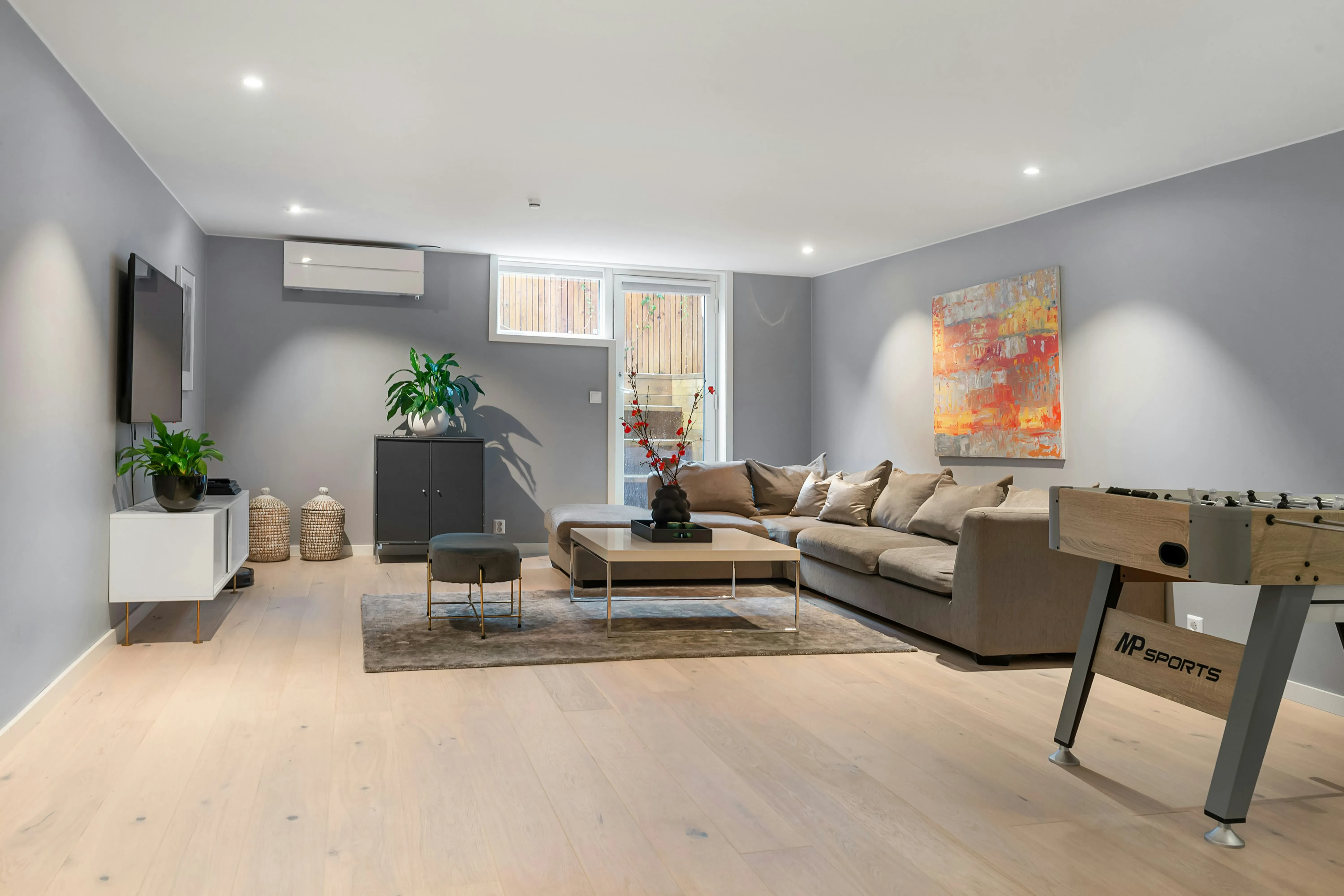
Basement conversion timelines by project type — 6 weeks for a cellar fit-out to 12 months for a new excavation. Plus what happens before work starts.
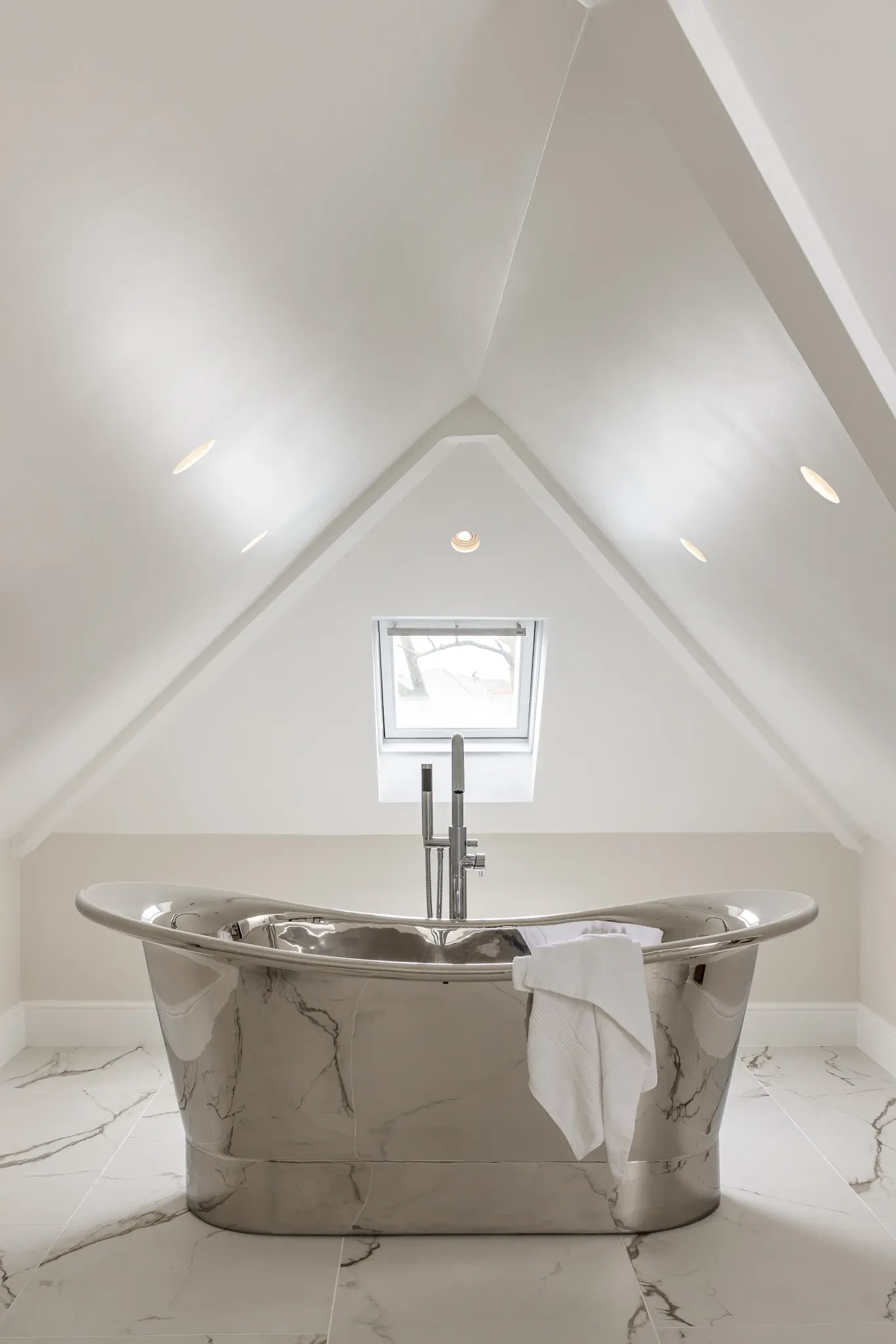
A dormer loft conversion costs £42,000 to £72,000 inc VAT, £49,000 to £84,000 in London. All seven types priced, plus what your roof decides.
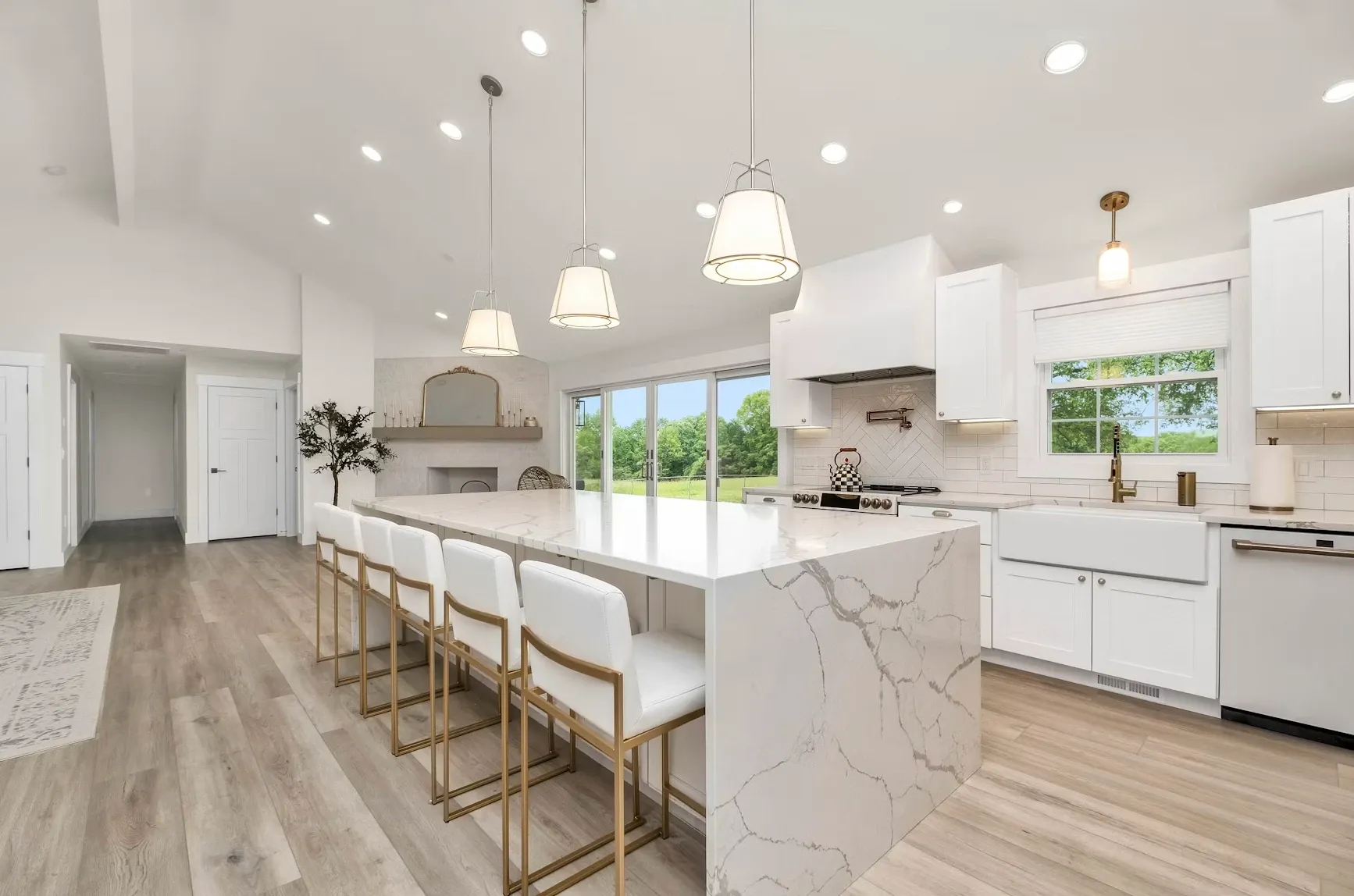
A finished 20m² extension costs £53,000 to £79,000 inc VAT, or £72,000 to £120,000 in London. Cost by type, per m² rates and the fees nobody quotes.

What a UK house renovation costs in 2026, room by room and per square metre, with a calculator to price your own project. Figures include VAT.