
Should you replace your staircase or just renovate it?

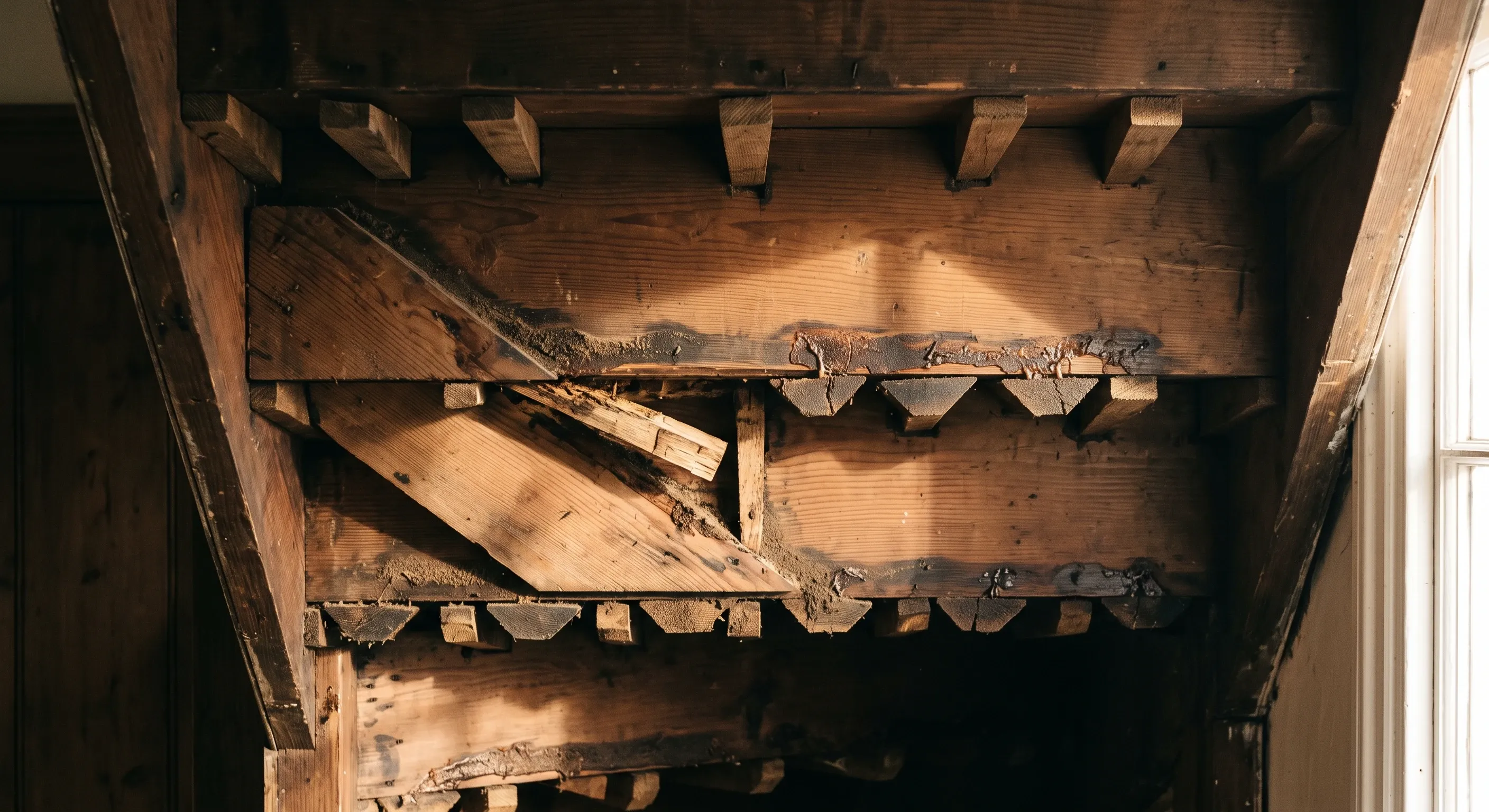
Renovate if the geometry works and only the surfaces are tired. Replace if the rise and going fall outside Approved Document K, if a string is split or pulling away from the treads, or if the balustrade cannot be made to pass the 100mm sphere rule. Creaks, worn nosings, dated spindles and carpet coming up for timber are all refurbishment work.
The cost guides ranking for this query will tell you refurbishment runs to a few thousand and replacement runs to rather more. True, and useless. The decision is not about budget. It is about whether the thing wrong with your stair is fixed in the geometry, because geometry is the one thing a refurbishment cannot touch.
What tells you a staircase needs replacing rather than renovating?
Five things, and only five. Everything else is a repair. If none of these apply to your stair, you are looking at a refurbishment and should stop pricing replacements.
Trigger | Why it forces replacement |
|---|---|
Rise above 220mm or going below 220mm | Geometry is set by the strings and the floor-to-floor height. It cannot be altered in place. |
Pitch steeper than 42 degrees | Same reason. Changing pitch means changing the run, which means a new stair and a new opening. |
Split string, or strings pulling away from treads | The string is the structural member. A split one is not repairable to a standard you would rely on. |
Headroom under 2m at any point | Fixed by the position of the trimmer in the floor above, so this is structural work, not stair work. |
Rot or woodworm in the carriage or strings | Usually found under a stair against an external or cellar wall. Localised rot spreads along the grain. |
A balustrade that fails the 100mm sphere rule is a sixth candidate, and it is the one people get wrong in both directions. It does not force a new stair. A new balustrade is a retrofit on almost any sound flight, and it is one of the highest-value jobs you can do to an old stair. The exception is a stair with a cut string where the spindles are housed into the treads themselves and the treads are too worn to take new housings.
Can you correct a stair's rise and going without replacing it?
No. The rise is the floor-to-floor height divided by the number of risers, and both numbers are fixed the moment the strings are cut. The going is set by the tread spacing housed into those strings. Changing either means new strings, and new strings are a new staircase however you describe the invoice.
This matters because the most common complaint about old stairs, that they feel steep and short in the foot, is exactly the complaint a refurbishment will not solve. Plenty of older stairs sit at 43 or 44 degrees with a going nearer 200mm. They are not illegal, because existing stairs are not required to be retrofitted to current standards, but they will never feel comfortable and cladding them makes them marginally worse. If the stair feels wrong underfoot rather than looking wrong, measure it before you spend anything: rise, going and pitch on a spirit level and a tape will tell you in five minutes which conversation you are having.
Is the creak the wedges or the boards?
Almost always the wedges. A traditional closed string stair is built with treads and risers housed into grooves in the strings and held tight by tapered timber wedges driven in from underneath, with glue blocks in the internal angles. Those wedges dry, shrink and work loose over sixty or eighty years, and the tread starts to move against the riser. That is the creak.
The good news is that it is a repair, not a replacement, and it is cheap when the soffit is open. If the underside of your stair is exposed, in a cellar or an open understairs space, a joiner knocks the old wedges out, re-glues and drives new ones, and replaces the glue blocks. A day's work transforms a stair that felt unsafe. The bad news is that most terraced stairs have a plastered soffit or a cupboard lined out beneath them, so access means taking the plaster down and making it good afterwards. Screwing treads down from above is the DIY answer and it is the wrong one: it pulls the tread onto a riser that has already shrunk, and the creak comes back in a year with screw heads to show for it.
Does your balustrade actually comply, and does it need to?
Under Approved Document K, guarding is required wherever there is a drop of more than 600mm, gaps must not allow a 100mm sphere to pass in any home where children under five might be present, and the handrail should sit between 900mm and 1000mm above the pitch line. Horizontal rails and wide-spaced Georgian-style spindles both fail the sphere test, as do the open sides of many 1960s and 1970s open-tread stairs.
Here is the part the cost guides skip. Existing stairs are not required to be brought up to current standards simply because they exist. But the moment you replace the balustrade, that new balustrade must comply, and if you are selling, a surveyor will flag non-compliant guarding whether or not it is enforceable. So the question is not whether you are obliged to fix it. It is whether you want to hand a buyer a reason to negotiate. A new balustrade on a sound stair is a clean job that changes the look of a hall more than anything else on this list, and it is worth understanding which alterations are notifiable before you start, because replacing guarding on its own generally is not, while replacing a whole flight is.
Is your stair original joinery worth keeping?
If it is a Victorian or Edwardian stair with a moulded closed string, turned newel posts and a continuous hardwood handrail, keep it. That stair was made by hand from slow-grown pine at a density you cannot buy now, and a replacement of equivalent quality costs considerably more than a standard softwood flight. The same applies to Georgian cut-string stairs with scrolled tread ends, which are a genuine feature and a significant part of a period house's character alongside the other original joinery in a Victorian terrace.
Two warnings before you strip one back. Paint on anything pre-1980 should be assumed to contain lead until tested, which rules out dry sanding and rules out hot air stripping, both of which put lead into the air you are breathing. And stripped pine stairs disappoint people constantly: the treads on an original stair were always meant to be covered, so they are often a different and cheaper timber than the strings and newels, they carry nail holes from a century of carpet, and the nosings are worn hollow. Renovating one for a painted finish works beautifully. Renovating one for a natural timber finish frequently does not.
What renovation can genuinely achieve
More than people assume, and it stacks. Cladding over existing treads and risers with oak or engineered overlays converts a carpeted stair to a timber one without touching the structure. New spindles and a new handrail change the entire read of a hallway. Re-wedging and re-gluing removes the movement. Repainting strings and risers with a floor-rated paint and leaving the treads in a contrasting finish is the cheapest visual transformation available.
Cladding carries one constraint worth knowing before you commit. Overlays add 10mm to 20mm to each tread, and unless you add the same thickness to the top and bottom landings, you have just made the first and last riser different from the rest. Approved Document K expects rise and going to be consistent throughout a flight, so the detail at both ends needs designing, not improvising. Overlays also reduce headroom very slightly and change the nosing overhang, which matters on a stair already close to the 2m limit.
Refurbishment work | Published cost | Source and basis |
|---|---|---|
Typical staircase renovation, all in | £1,500 to £2,500 | MyJobQuote, Jan 2026. VAT basis not stated. |
Balustrade removed and replaced | £700 to £800 | MyJobQuote, Jan 2026. VAT basis not stated. |
Stair cladding, standard staircase | £600 to £900 | MyJobQuote, Jan 2026. VAT basis not stated. |
Painting a staircase, minor prep | £350 to £450 | MyJobQuote, Jan 2026. VAT basis not stated. |
Handrail, supply and fit | £100 to £200 | Checkatrade, May 2024. Stated as cost plus VAT. |
Carpenter or joiner, per day | £200 to £300 | Checkatrade, May 2024. Stated as cost plus VAT. |
Replacement softwood stair, unit only | £250 to £4,850 | Checkatrade, May 2024. Stated as cost plus VAT. |
Measure, build, install, remove old stair | £2,000 to £4,000 | MyJobQuote, Jan 2026. VAT basis not stated. |
Treat that table as a shape rather than a quote, and treat the headline figures on these guides with suspicion. MyJobQuote's own page opens by saying the average staircase renovation costs around £140, then states a typical range of £1,500 to £2,500 further down the same article. Two numbers, one page, an order of magnitude apart. It is a reasonable illustration of how much of this data is templated rather than measured, and it is why the VAT basis column above matters: Checkatrade states its figures include VAT, MyJobQuote does not say either way, and on a £4,000 job that is £800 of ambiguity.
When renovation isn't enough
Work back through the five triggers. If the geometry is outside Part K, if a string has gone, if there is rot in the carriage, then what you need is a new flight designed around the opening you already have. That design work is the whole job: the rise has to divide the exact floor-to-floor height into equal steps, the going has to fit the run while keeping the pitch under 42 degrees, and the winders, if the space demands a turn, have to satisfy the tapered tread rules. On a period house where no two floor levels match, this is measured survey work before it is manufacture.
That is the case for a new staircase made to the opening you have rather than a stock flight cut to fit on site. A stock flight assumes a floor-to-floor height your house probably does not have, and the gap gets absorbed by an uneven top or bottom riser, which is the exact defect building control looks for.
Two related jobs are worth separating out in your head before you commit. If the reason you are unhappy is where the stair sits rather than what it is, you are looking at moving the stair to a different part of the house, which means trimmer joists, a likely steel and a rebuilt ceiling below. Different project, different cost base, and one that no staircase quote will cover.
And if what you need is a second flight going up rather than a better version of the one you have, the rules shift again. Stairs serving a loft conversion run under a partial relaxation of the 2m headroom requirement that applies nowhere else in the house, which is why a loft stair can legally land in a position a replacement main stair could not.
Frequently asked questions
Do you need building regulations approval to renovate a staircase?
Not for cosmetic work. Painting, carpeting, cladding over existing treads and replacing spindles like for like do not require approval. Replacing the whole flight does, because it is a material alteration affecting Part K, and building control will check rise, going, pitch, headroom and guarding on completion.
How long does a staircase renovation take?
Two to three days for painting or cladding a straight flight, three to four for a full balustrade replacement with newel posts. A whole new flight is a week on site, but manufacture is commonly four to six weeks from the final site measure, so order early.
Can you replace just the treads on a staircase?
Rarely worth it on a closed string stair, because the treads are housed into the strings and wedged from beneath, so removing them means dismantling the flight. Cladding over the existing treads achieves the same look for a fraction of the work, which is why it has become the default.
Does a new staircase add value to a house?
Not measurably as a standalone job. What it does is remove an objection. A stair that creaks, has gaps a toddler could fall through, or a worn carpet on it gives a buyer something concrete to point at, and buyers price objections generously in their own favour.
Find out what your project will cost
The gap between refurbishing and replacing comes down to a judgement about your strings and your geometry, and any quote that skips that judgement is a guess dressed up as a price. Get up to three comparable quotes from vetted London builders, all priced from the same written scope, so you can see who has actually looked at the stair.
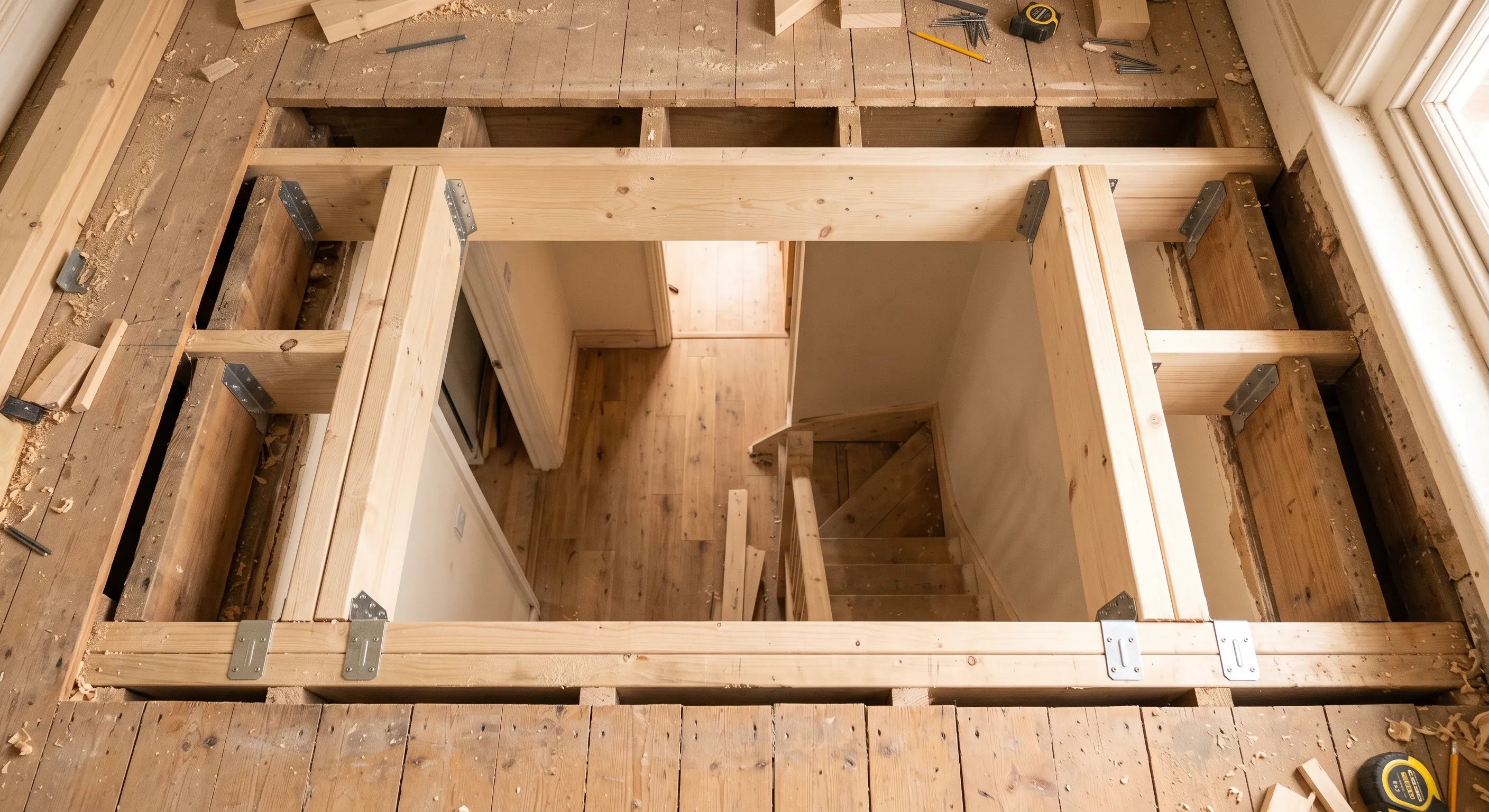
Moving a staircase in a terraced house is a structural job, not joinery. What has to happen, the headroom that decides it, and when it isn't worth it.
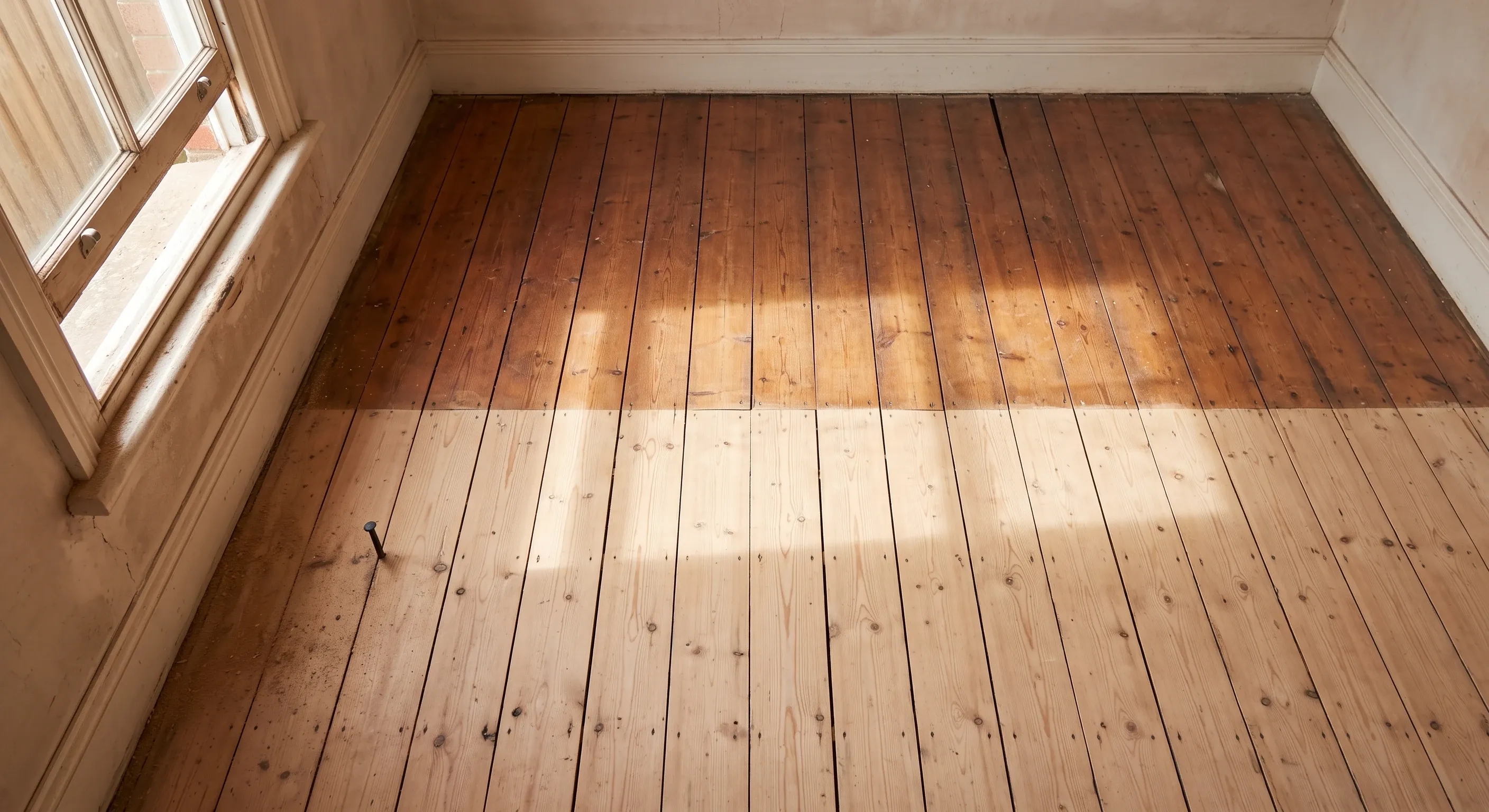
Restoring Victorian boards costs less but stays draughty. Checkatrade sanding rates, gap filling options, board thickness limits and the leasehold trap.
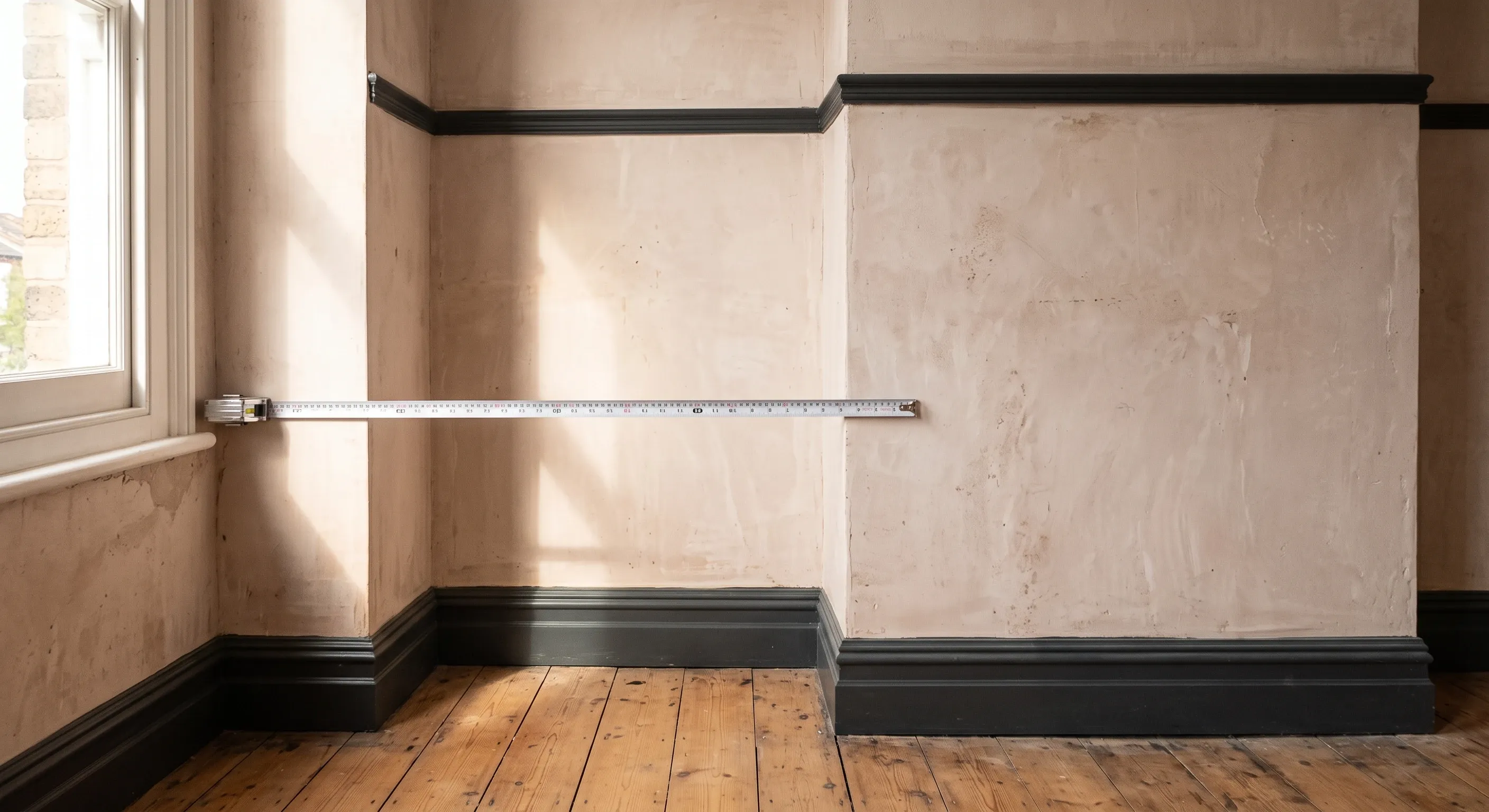
The real numbers: minimum carcass depth for front-facing hanging, rail heights for long and short hang, and why Victorian alcoves are never equal.