
Draught proofing, secondary glazing or slim double glazing: what actually warms a sash window

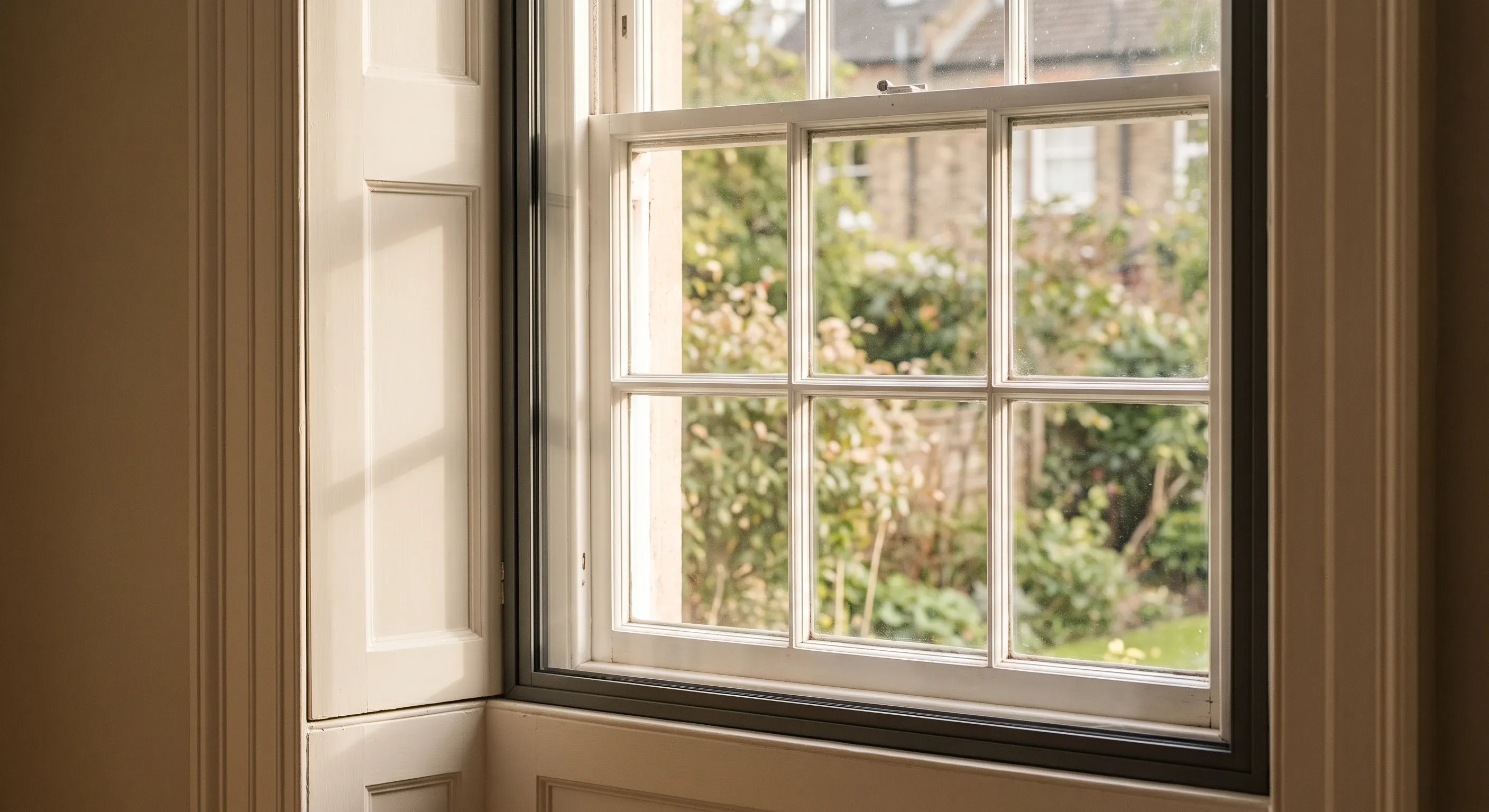
Draught proofing. It is the highest-value intervention on a sash window and Historic England says so plainly: it delivers the biggest energy saving for the lowest financial and environmental cost. Most of the heat leaving a sash escapes around the sashes, not through the glass. Fix that first, then decide about glazing.
The second decision is harder, because the two glazing routes are good at opposite things and no product does both. Secondary glazing beats slim double glazing on noise, decisively, and it is not close. Slim double glazing beats secondary glazing on appearance, also decisively. If you live on the Holloway Road you want one of them. If you live on a quiet square and cannot bear a second frame in the reveal, you want the other.
Why does draught proofing beat everything else?
Because the heat is going round the glass, not through it. Historic England's figures are blunt: older buildings lose around 15 to 20% of their heat through draughts, about one fifth of a home's heating escapes through windows, and most of that leaves through air gaps rather than the glass itself. Its research found that air infiltration through a sash window in good condition can be cut by as much as 86% with draught proofing. No other intervention on this list comes near that ratio of result to cost.
It also does something the glazing options do not. A proper draught proofing job is an overhaul: parting beads and staff beads replaced with sealed versions, sash cords renewed, sashes eased so they slide and, crucially, so they close tight against the meeting rail. Rattle disappears. Historic England is direct about the consequence for everything after it, noting that improvements beyond repair and draught sealing may not be cost effective in financial or carbon terms. That is the sentence the double glazing salesman does not read out. It does not mean never glaze. It means glaze second, for a reason you can name.
The four routes compared on heat, noise and consent
Overhaul and draught proof | Secondary glazing | Slim double glazing retrofit | New double-glazed sashes into existing boxes | |
|---|---|---|---|---|
Heat | Biggest gain per pound spent (Historic England) | Reduces heat loss by over 60%, as effective as double glazing (Historic England) | Comparable to secondary glazing on paper | Best of the four, whole window upgraded |
Noise | Real improvement from sealing rattles and gaps | Best of the four by a wide margin | Modest | Modest to good |
Appearance inside | Unchanged | A second frame in the reveal, visible and openable | Invisible | Invisible |
Appearance outside | Unchanged | Unchanged | Slightly heavier bar if the rebate is deepened | Depends entirely on the joinery |
Consent | None needed anywhere | Generally none, including listed buildings | Usually needs consent where controls apply | Almost always needs consent where controls apply |
Service life | Original window can exceed 100 years | 60 to 100 years (Historic England) | Around 25 years for the sealed unit (Historic England) | Around 25 years for the units, longer for the joinery |
Read the bottom two rows together, because that is where most comparisons fall apart. A route that performs marginally better but needs consent you will not get is worse than a route that performs slightly less well and can start next month. And a sealed unit with a 25 year service life inside a frame designed to last a century means you are buying a maintenance liability, not a permanent fix.
Does secondary glazing really beat slim double glazing on noise?
Yes, and the physics is not subtle. Historic England's research concluded that secondary glazing reduces heat loss as effectively as double glazing, particularly with low emissivity glass, and is even better than double glazing at reducing noise. The reason is the cavity. Selectaglaze's product guidance puts it in numbers: a well-sealed secondary window with a cavity of at least 100mm can deliver noise reduction in excess of 45dB, with performance improving up to an optimum of roughly 200mm. A slim double glazed unit has a cavity of a few millimetres. It physically cannot do this.
Two details separate a good acoustic installation from a mediocre one. The secondary glass should be a different thickness from the primary glass, or the two panes resonate sympathetically and you lose much of the benefit. And you still need the draught proofing underneath: SPAB's guidance pairs secondary glazing with draught proofing precisely because they attack different parts of the spectrum, the glazing handling low frequency rumble and the seals handling the high frequency leak around the sashes. On a London main road, bus and lorry noise is exactly the low frequency problem the wide cavity solves. This matters most where the sashes sit two metres from a bus route, which in London is common enough that traffic noise belongs alongside the recurring faults in a Victorian terrace.
So when does slim double glazing win?
When you have to look at it every day. Secondary glazing is a second window. However well made, it sits in the reveal, it has its own frame, you open two things to get air, and it interferes with working shutters. Slim double glazing disappears into the sash and the room looks exactly as it did. For a front room in a period house, that is not vanity, it is the whole point of keeping sash windows.
It has one genuine performance advantage too. The inner glass surface runs warmer, so you get less condensation and less of the cold-radiant feeling near the window. That is the same mechanism that drives the argument for thicker units generally, and if you want the U-value and unit-depth side of it, how triple glazing compares on U-values and unit depth covers that ground properly. The catch is structural. Historic England flags it directly in HEAG039: fitting thicker glazing into an existing sash can require renewal of the frame to accommodate it. Once the rebate is deepened the glazing bar thickens, the sightline coarsens, and you have quietly changed the thing you were trying to preserve.
What about new sashes into the existing boxes?
This is the route nobody markets and it is often the right one. The box frame, the pulleys and the opening stay. The sashes are made new, deep enough to carry a proper sealed unit without the compromises of squeezing a slim unit into a Victorian rebate, and detailed to match the originals. You get better thermal performance than a retrofit, a joinery quality you can specify, and you keep the part of the window that is actually structural and actually historic.
It is also the usual landing point under an Article 4 direction, because the conservation officer can see that the frame survives and the elevation is unchanged. The trade-off is cost and lead time: it is bespoke joinery, made to measure, and it is the route where the quality of the maker shows up most. In a flat, there is a further layer, because the windows are often demised to the freeholder or the works need a licence to alter, which is a separate conversation from planning and one that catches people out when renovating a London flat.
Which one should you choose?
Start with the noise. If road, rail or flight path noise is the thing keeping you awake, secondary glazing with a cavity of 100mm or more, over a properly draught proofed window, is the answer and nothing else is close. Accept the second frame. If noise is not the problem and the room needs to look right, and the sash has already lost its historic glass, slim-profile retrofit is the sensible choice. If the sashes themselves are decayed rather than just draughty, go straight to new sashes into the existing boxes and stop paying to patch.
And if the windows are sound and the house is simply cold, overhaul and draught proof, then spend the difference on the loft and the floors. Historic England's whole-building position is that windows are often a small share of total heat loss, and that some alterations cost more in carbon than they save over their service life. A sash window is rarely the cheapest kilowatt-hour in a London house. It is just the most visible.
The consent position narrows the list before performance does
Before any of this matters, find out what you are allowed to do. Draught proofing needs no consent anywhere, including listed buildings, where Historic England confirms that self-adhesive strips do not require listed building consent. Reversible secondary glazing generally needs none either, the exceptions being where fixing it would damage the frame, shutters or panelling. Both glazing replacement routes usually need permission wherever an Article 4 direction or a listing applies, which in inner London is most period streets.
That ordering is the useful bit. The two routes that need no paperwork are also the two that perform best per pound, which is an unusually convenient piece of luck. Conservation area status, an Article 4 direction and listing are three separate tests with three different answers, so work out whether your sash windows need planning permission in London before you shortlist anything on performance.
Then compare properly. The only honest way to do it is to have all four routes specified and quoted together against one written scope, because a restoration firm and a replacement firm will each quote the single route they sell and both will sound entirely reasonable while doing it.
Frequently asked questions
Is draught proofing sash windows worth it?
Yes, and it is the clearest value on this list. Historic England's research shows air infiltration through a sash in good condition can be reduced by as much as 86%, and it describes draught proofing as delivering the biggest energy saving for the lowest financial and environmental cost. It needs no consent, anywhere.
Is secondary glazing better than double glazing for sash windows?
On noise, yes, comfortably. On heat, Historic England found it reduces heat loss as effectively as double glazing and by over 60%, and it lasts far longer, 60 to 100 years against roughly 25 years for a slim sealed unit. On appearance, no, because you can see it.
Will slim double glazing fit my existing sashes?
Sometimes. It depends on the depth of the rebate and whether the glazing bar can take the unit without being deepened. Where the frame has to be altered to accept the glass, Historic England treats that as harm to the window, and a conservation officer usually will too.
Does secondary glazing cause condensation?
It can, if the cavity is not ventilated to the room and the primary window is airtight. The usual fix is to draught proof the secondary unit tightly and leave the outer window slightly less sealed, so moist internal air cannot reach the cold outer glass.
Can I do draught proofing and secondary glazing together?
You should. SPAB recommends the combination specifically, because the seals and the cavity deal with different frequencies of noise and different routes of heat loss. Draught proofing first is the correct order, since secondary glazing over a rattling sash wastes most of its acoustic benefit.
Find out what your project will cost
Every sash window firm quotes the one route it sells, which makes draught proofing, secondary glazing, slim retrofit and new sashes impossible to compare. Get up to three comparable quotes from vetted London builders, all priced from the same written scope.
Conservation area, Article 4 direction and listed building consent are three separate things. Work out which applies to your London sash windows.
Exterior painting is permitted development under Class C of the GPDO. An Article 4 direction removes that, and listed building consent is stricter still.
Internal wall insulation on solid brick: the Part L trigger, the 0.30 W/m2K target, why the dew point matters, room depth lost, and where it goes wrong.