







The Beams team removed all the stress and matched me with a wonderful contractor.
Teresa
Queen's Park

On time and on budget. A real pleasure.
Eleanor
Stoke Newington
Completed our renovation project within budget and on time.
Evelyn
Bow East
London's sash window specialists
Sash window replacement in London runs to four routes, not one: overhaul the existing sashes, retrofit slim-profile glazing into them, make new sashes for the original boxes, or renew box and sashes together. The condition of the box frame decides which, and the box is what has to be inspected before anyone can price the work.
Every sash window company sells one of two things: restoration or replacement. One pays several times better than the other, which is why you rarely get a straight comparison. Beams scopes both, then up to three vetted specialists quote against the same specification.

Both routes priced, not just the profitable one
Overhaul and draught-proof, retrofit slim glazing, or full replacement, compared on the same windows.
Vetted specialists
Personally vetted: visited in person, references checked, recent work inspected. You meet up to three before committing.
Fixed-price contracts
Milestone payments held securely until you approve each stage, plus a 12-month workmanship warranty.
Recent London sash window projects
Explore completed window and joinery work across London.
Sash window replacement and repair costs in London
There are four routes and the decision between them matters more than the rate. We publish per window and let you count your own windows.
Published 2026 figures, per window:
- Timber replacement: £1,000 to £3,000 per window, average £1,300 (Checkatrade, updated June 2026, column header "Cost + VAT", so VAT included)
- Conservation area or listed building: £1,500 to £3,000 and above per window (Checkatrade, updated June 2026, VAT included)
- Refurbishment: £620 to £920 per window, average £770 (Checkatrade refurbishment guide, VAT status not stated on that page)
A second publisher prices the cheaper routes Checkatrade does not separate out:
- Draught-proofing only: £150 to £350 per window nationally, £250 to £450 in inner London (BestBuilders, VAT status not stated by the source)
- Repair or full overhaul: £150 to £1,200 per window, covering anything from a snapped cord to timber splicing and full draught-proofing (BestBuilders, VAT status not stated by the source)
- Slim-profile double glazing retrofitted into the original frames: £600 to £1,500 per window, with secondary glazing at £180 to £400 (BestBuilders, VAT status not stated by the source)
- Full replacement: £600 to £3,500 per window fitted, with uPVC at £600 to £1,200, softwood timber at £1,200 to £2,500 and hardwood heritage at £1,800 to £3,500, and London and the South East running 20 to 30% higher (BestBuilders, VAT status not stated by the source)
Checkatrade's replacement scope is supply and fit. It excludes scaffolding, making good, decoration and disposal, and those exclusions are exactly where two quotes for the same windows stop being comparable.
One thing you should know about those numbers. Checkatrade publishes two sash window guides and they contradict each other: draught-proofing appears as £200 to £400 in one and £248 to £388 in the other, and restoration as £80 to £488 in one and £620 to £920 in the other. We use the replacement guide because it states its VAT position, and where a refurbishment figure is needed we use the £620 to £920 band. We would rather show you the disagreement than pick one quietly.
Two London specialists publish their own prices with VAT stated, which is unusual and useful. Read both as one supplier's own published pricing rather than a market rate. New bespoke softwood double-glazed sashes start from £2,400 per window in London, with Accoya adding 30 to 40%, and a Victorian terrace with eight sashes fully restored and draught-proofed starts from £15,600, both excluding VAT (Golden Ratio Sash Windows). A complete box sash renewal starts from around £2,000 per window plus VAT, and a four-window listed cottage runs £10,000 to £18,000 plus VAT (Wandsworth Sash Windows).
Those supplier prices and BestBuilders' inner London draught-proofing band are the only London-specific figures published for this work. None of them is a market survey, so treat the national ranges as the firmer basis and London as the upper end of them.
There are two published whole-property figures and both belong to one of those suppliers: an eight-sash Victorian terrace fully restored and draught-proofed from £15,600 excluding VAT (Golden Ratio Sash Windows), and a four-window listed cottage at £10,000 to £18,000 plus VAT (Wandsworth Sash Windows). Those are price lists rather than surveys, so also count your own windows and multiply the per-window range.
Repair or replacement?
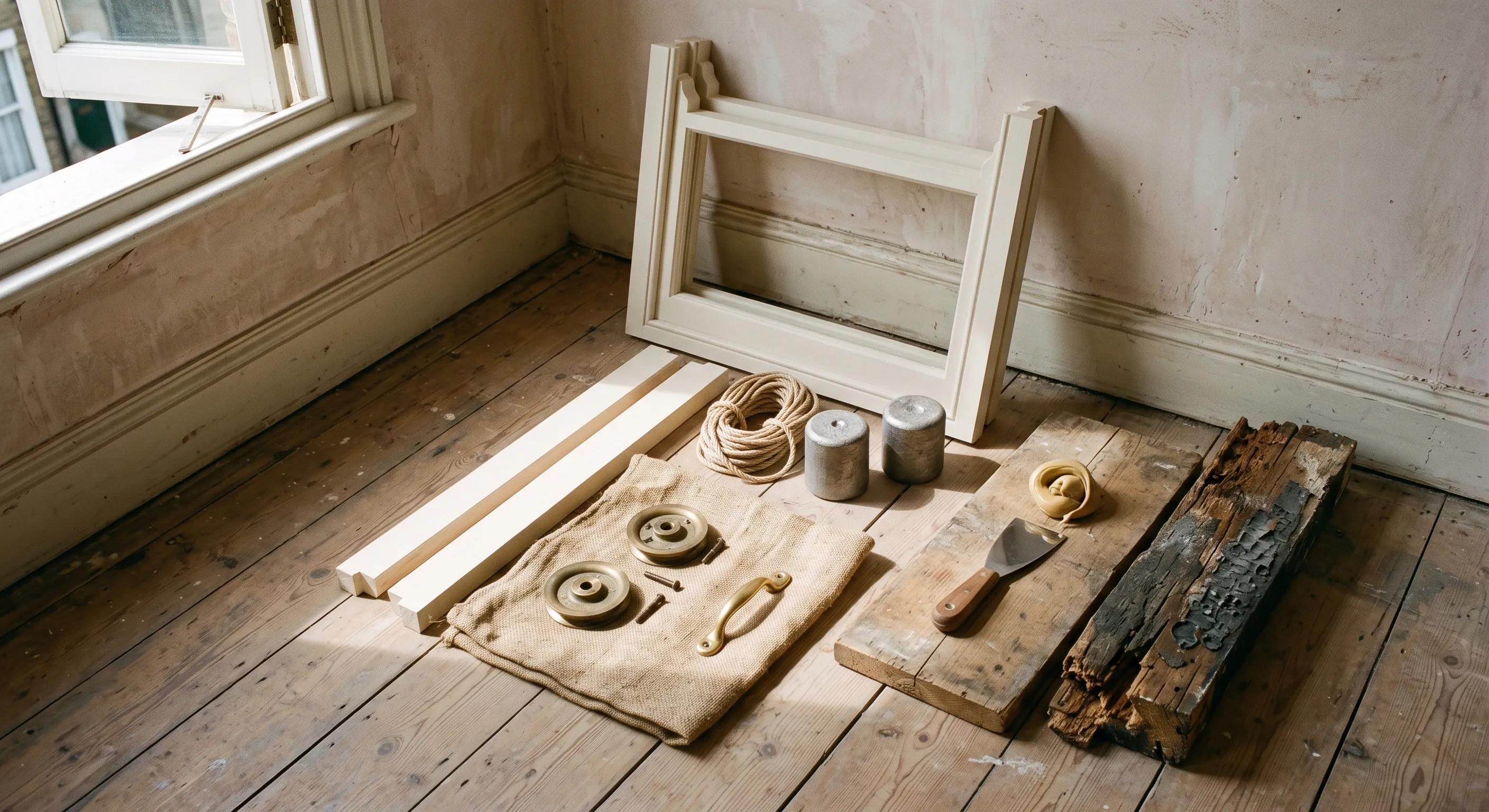
The honest answer is that original box frames often outlast their replacements, and the deciding question is the condition of the box, not the sashes.
If the box frame is sound, you have three cheaper options before replacement: overhaul the existing sashes with new cords, weights and a draught-proofing system; retrofit slim-profile double-glazed units into the existing sashes; or have new double-glazed sashes made to fit the original boxes. Full renewal, where the box and sashes are all replaced, is the most expensive and is really for frames that are structurally beyond repair.
Two heritage bodies state the direction plainly, and neither attaches a price to it. Historic England, in HEAG039 "Traditional Windows: their care, repair and upgrading", 8 February 2017, says on page 5 that traditional windows can often be simply and economically repaired, usually at a cost significantly less than replacement. Page 6 of the same document adds that in many older buildings the windows are small relative to the wall area, so the cost of double glazing will seldom be recovered through energy savings within the lifetime of the sealed units. HEAG039 is flagged as guidance under review, so read it as direction rather than settled policy. The SPAB, in its "Repair of Wood Windows" technical advice note of December 2019, records a strong presumption in favour of repairing old single-glazed windows and adding secondary glazing where necessary, rather than replacing them with double-glazed units.
Homeowners regret both directions, which is worth knowing. Some wish they had replaced everything rather than doing a mix. Others baulked at a quote and wished they had accepted it years earlier, having lived with draughts in the meantime. One was quoted £16,000 to restore three windows, one of them a bay. Another restored eleven for £6,000. Those are individual accounts rather than market rates, and the spread between them is why the specification has to be written down before anyone prices it.
There is also a value argument. Replacing original sashes with uPVC can put buyers off a period house, and in a conservation area it may not be permitted at all. Changing the windows also changes the ventilation of the room, and a sealed replacement in a house that previously breathed through its windows can produce condensation and mould where there was none.
What a conservation area actually permits
This is the most confused subject in London window work, and the confusion costs people money.
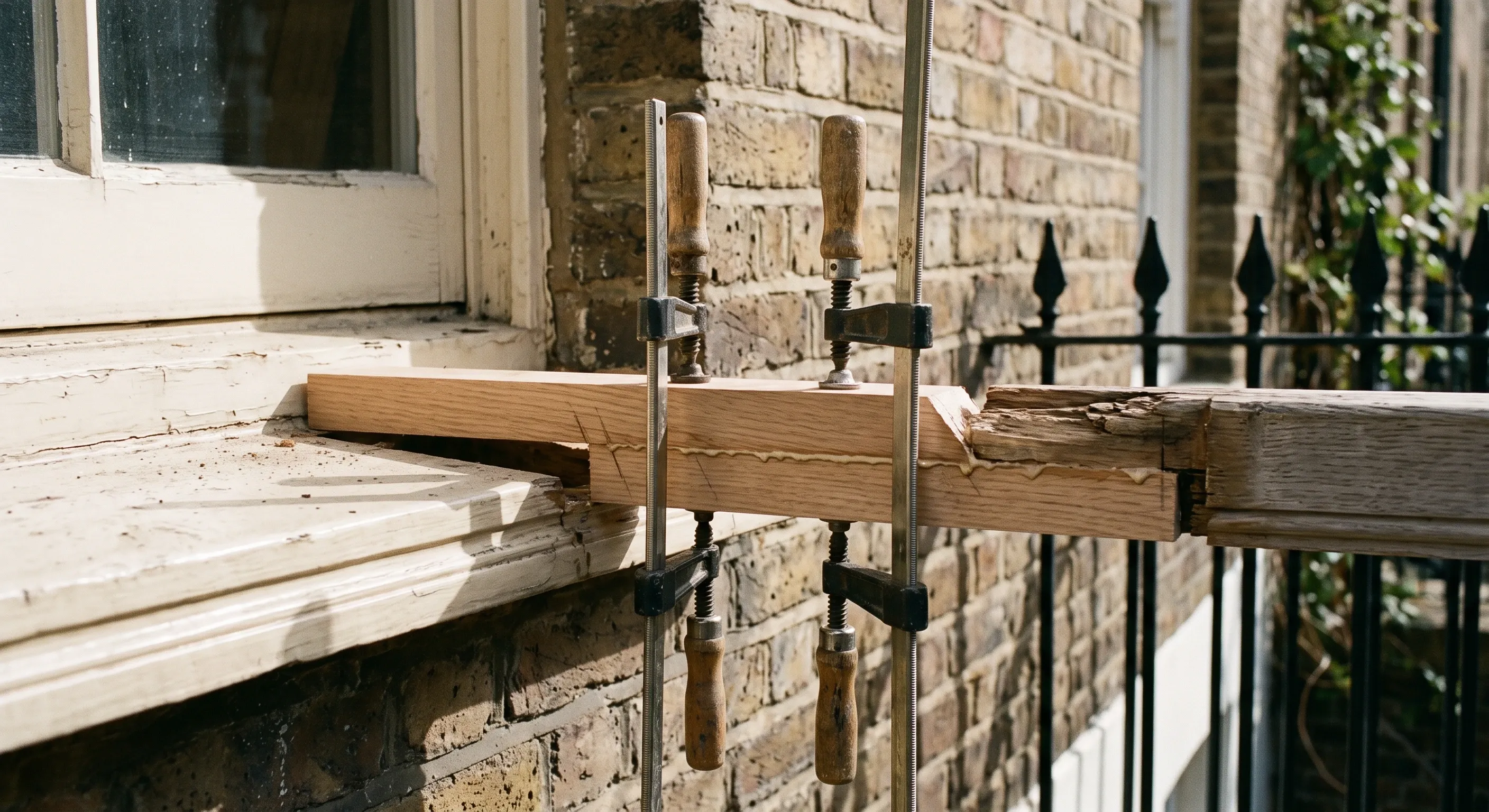
A conservation area and a listed building are not the same thing, and the rules differ. In a conservation area, replacing windows is often permitted development, but the council can restrict it through an Article 4 direction, and the design will usually need to match the original: the same glazing bar profile, the same sightlines, and slim spacer bars of around 6mm or less. Listed buildings need listed building consent for the windows themselves, whatever the material.
Homeowners report being told flatly by one council that wood-finished uPVC was unacceptable, while others in conservation areas have fitted uPVC sashes without objection. Both can be true, because it depends on the borough, the Article 4 position and the street. Neighbours also police this: one homeowner noted that people on her road would report any work to the council without hesitation.
The practical answer is to establish the position for your specific address before ordering anything, and to keep the option of slim-profile glazing in the original frames, which is frequently the only route a conservation officer will accept.
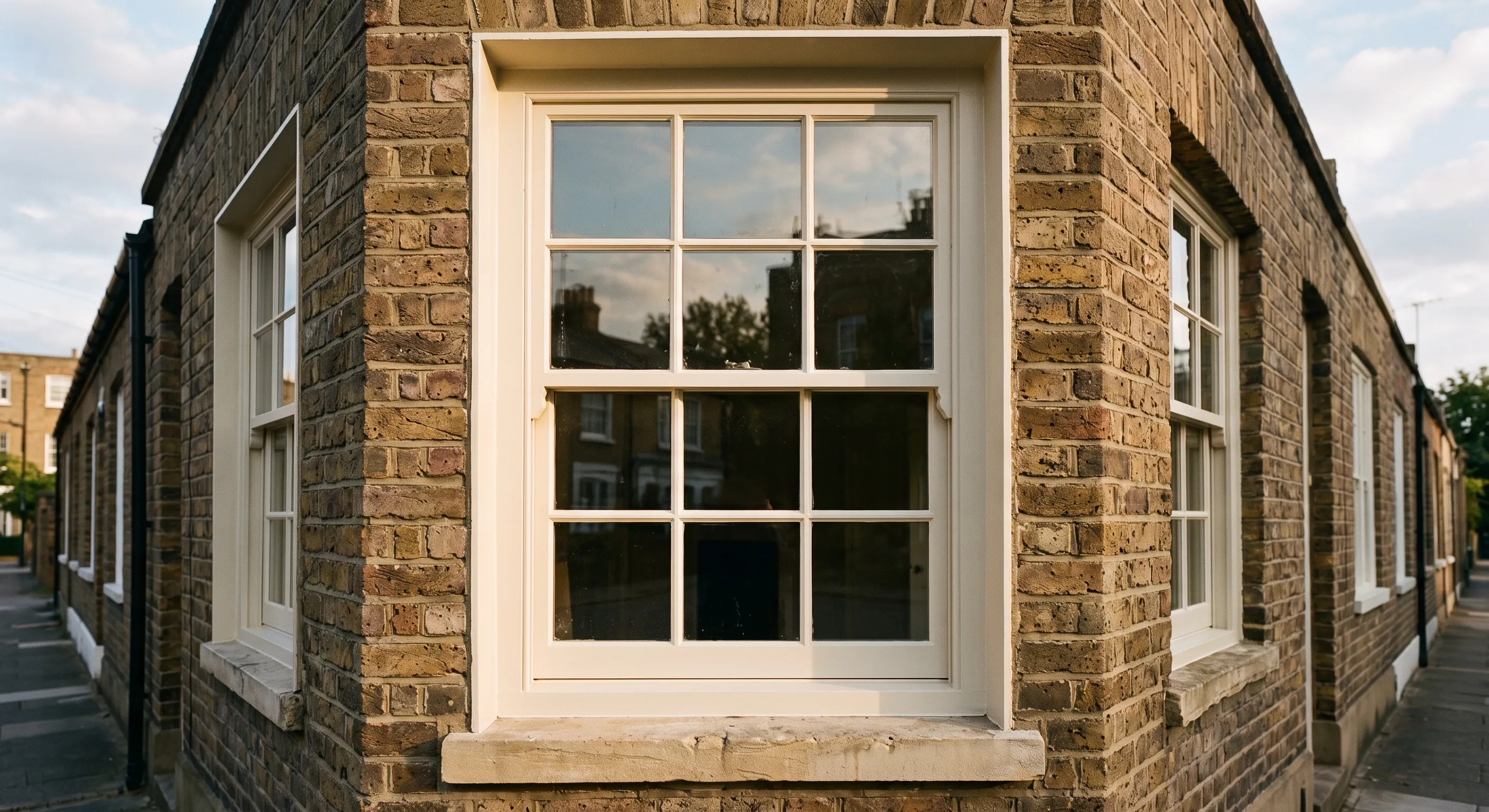
What a sash window quote should contain
- Which windows, and for each: overhaul, new sashes into existing boxes, or full renewal
- Timber species and grade: softwood, hardwood, or Accoya
- Glazing specification, including spacer bar width if slim-profile units are being used
- Draught-proofing system, and whether cords, weights and pulleys are being renewed
- Timber splicing and repairs to the box frame, priced or excluded
- Paint finish, and how many coats
- Making good internally to plaster, architrave and sill
- Scaffolding, decoration and disposal, which published replacement rates exclude
- FENSA or equivalent certification on replacement, and Part L compliance
- Whether planning or listed building consent is included or your responsibility
Ask specifically what happens if the box frame turns out to be worse than it looks once the sashes are out. That is the most common variation on this work.
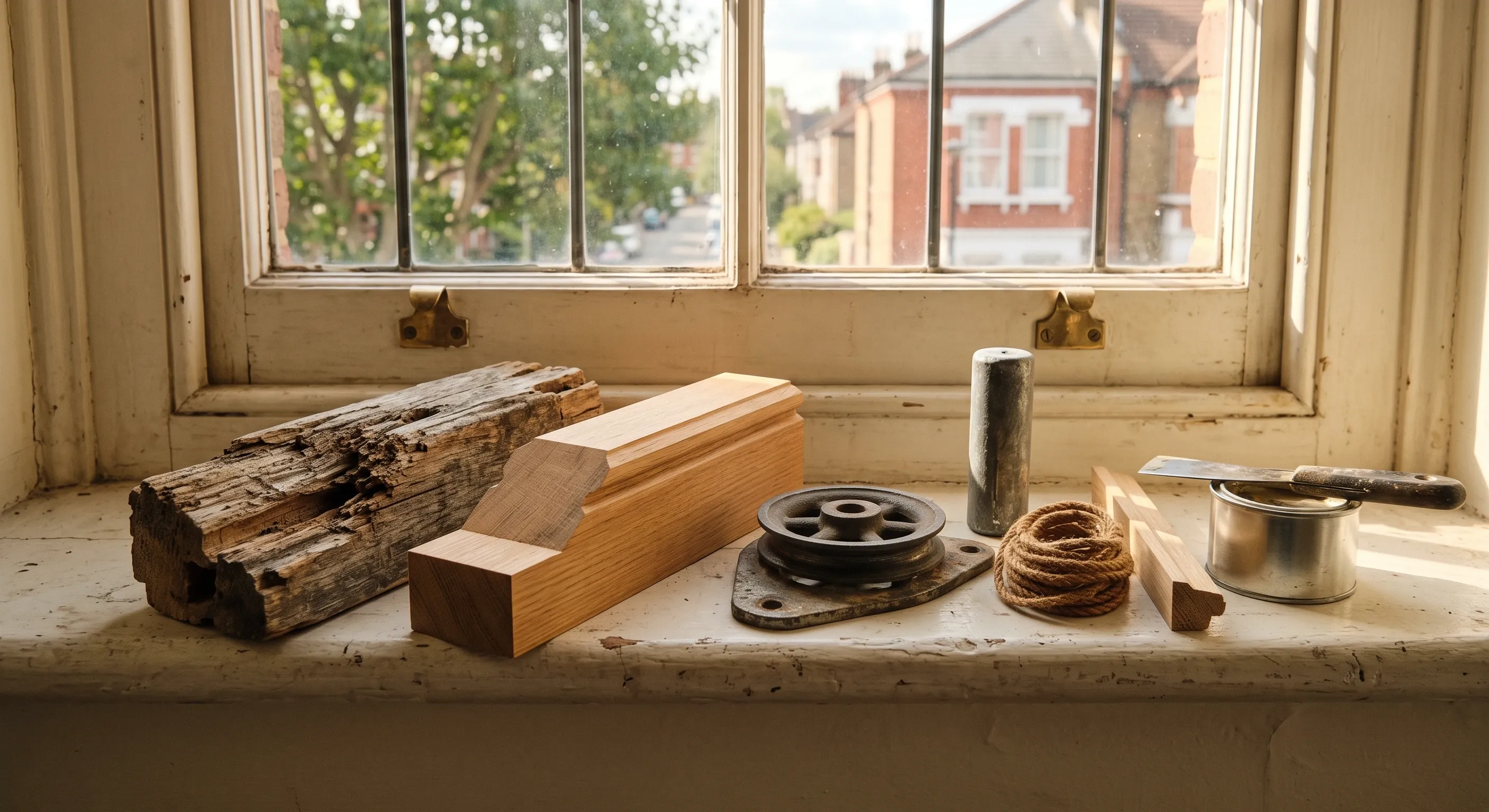
How a Beams window project works
Step 1: Get your estimate
Tell us the property, the number of windows and whether you are in a conservation area. Your planner gives you an estimate range before any commitment.
Step 2: Agree the specification
Route per window, timber, glazing, draught-proofing and consents. Written down, so the quotes are comparable rather than three different jobs.
Step 3: Built by your vetted specialist
Manufactured, fitted and finished under a fixed-price contract, with milestone payments held securely. 12-month workmanship warranty included.
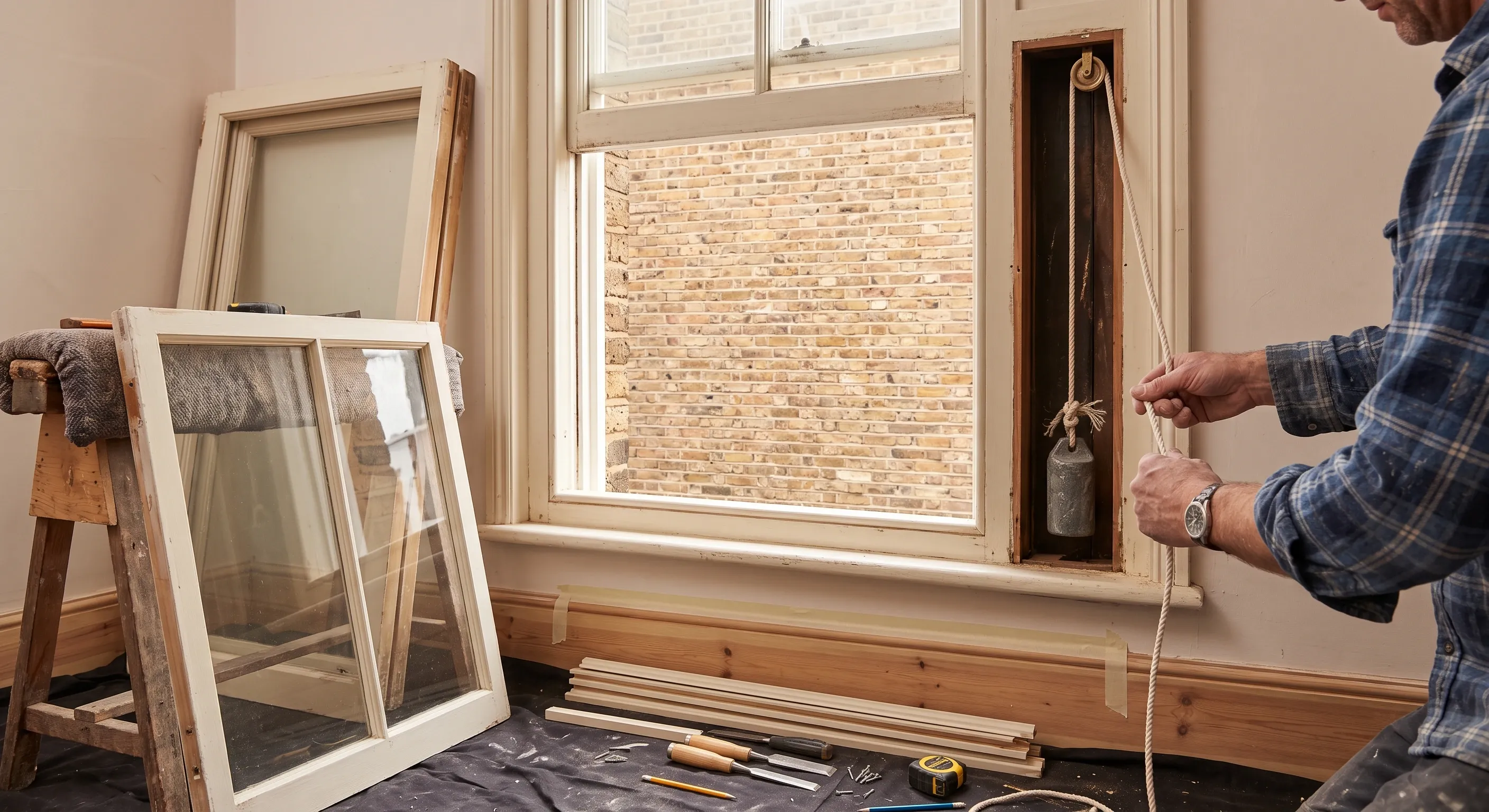
Sash windows across London
We work with vetted specialists across all London postcodes, in North, South, East and West London. London has an unusually high density of conservation areas and period housing, which is why timber and slim-profile glazing are the norm here rather than a premium option.
Windows are frequently part of a wider period property project, and it is cheaper to do them while scaffolding or decoration is already in hand.
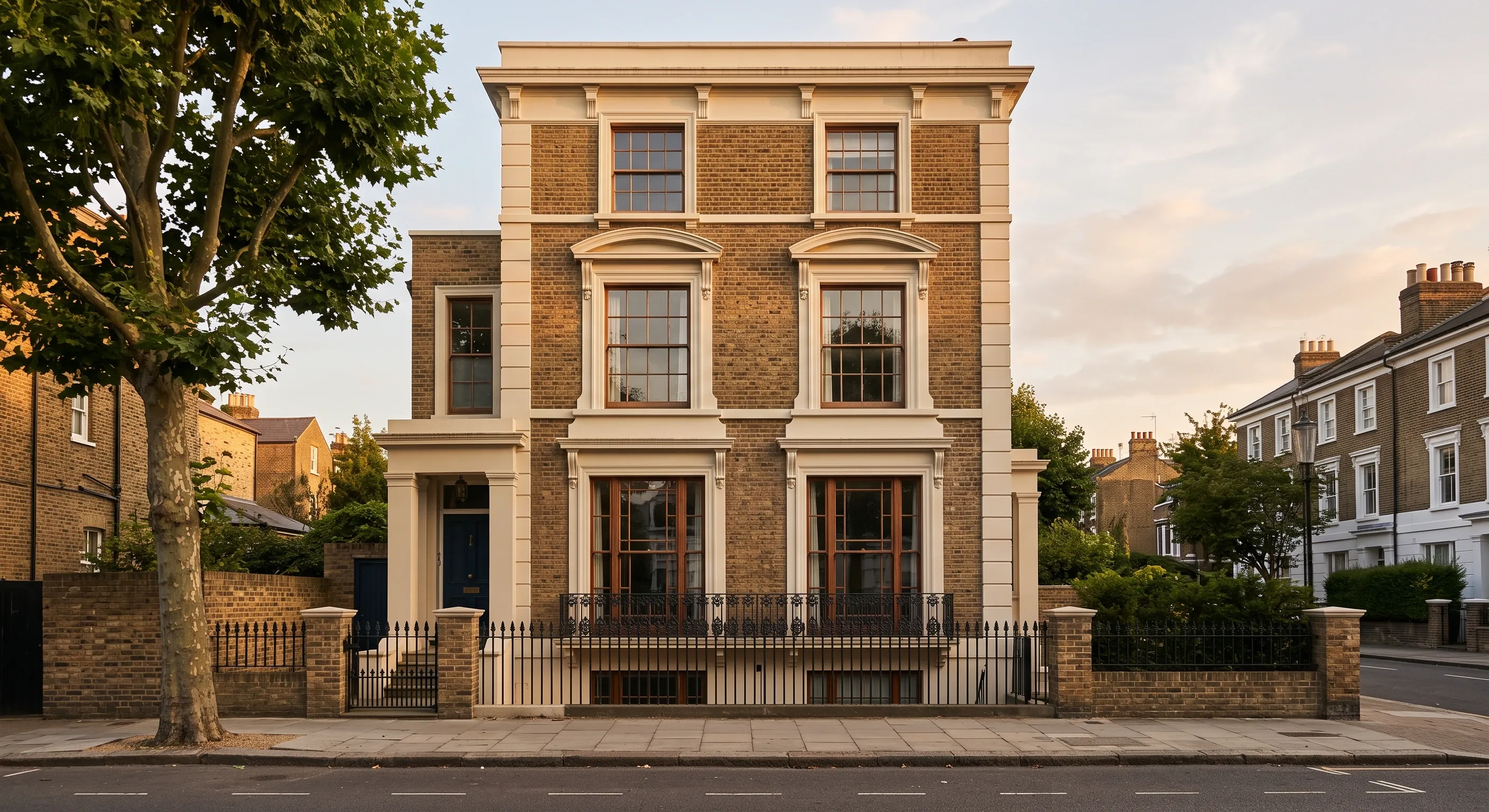
Price the repair and the replacement, side by side
Get an estimate with the box frames inspected first, so repair and replacement are priced side by side. No commitment, no sales pressure.