
Pros and cons of living in Hammersmith

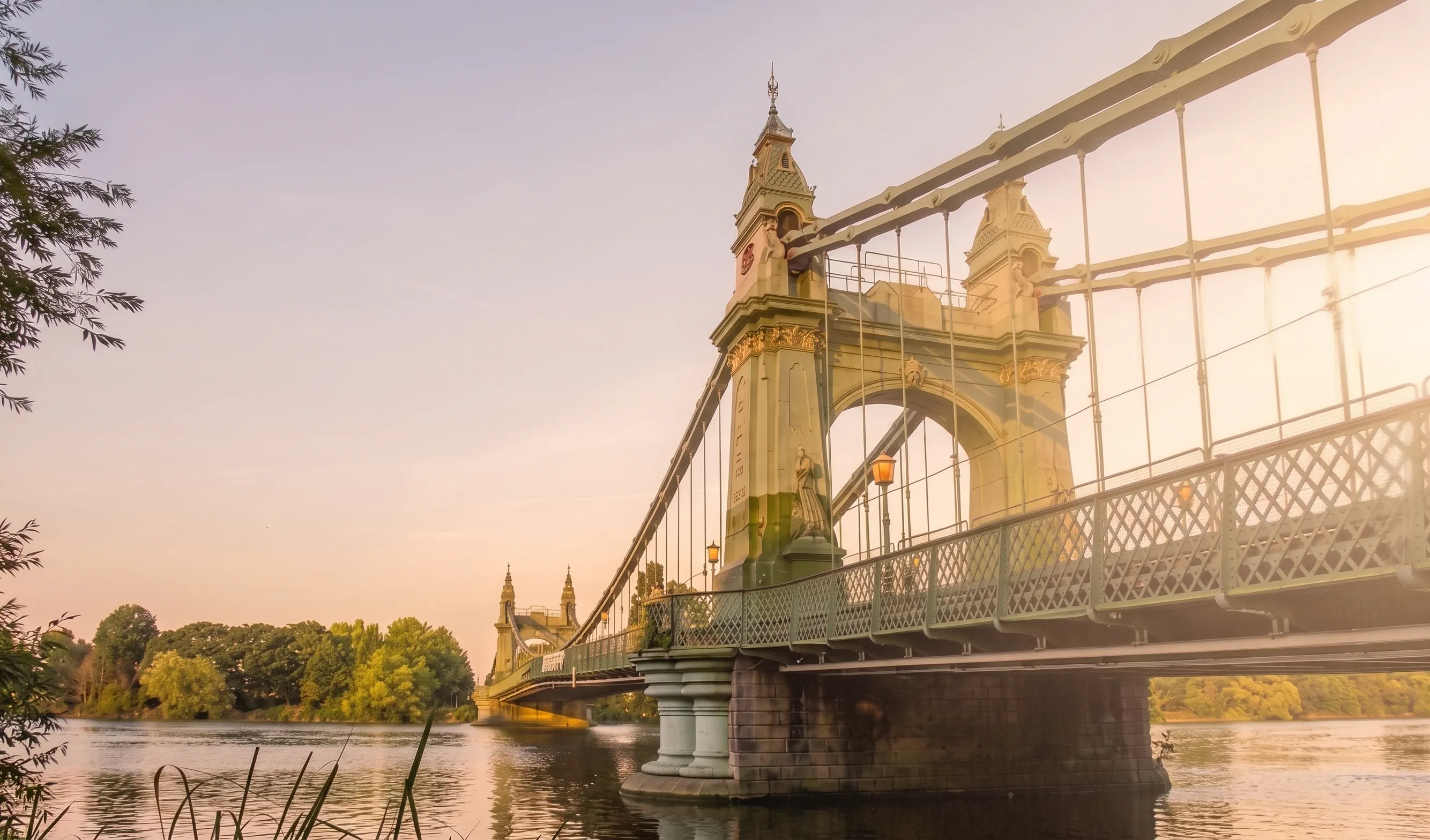
Yes, for most people. Four Underground lines across two stations, Ravenscourt Park, the Thames path from Furnivall Gardens, the Lyric and the Apollo, all in Zone 2. The catch: the A4 flyover runs through the middle of it, and Hammersmith Bridge has been closed to motor vehicles since 10 April 2019 with no funded plan to reopen it to cars.
The connections are as good as anywhere in west London
Hammersmith has the Piccadilly, District, Circle and Hammersmith & City lines. Four lines is more than almost anywhere outside Zone 1 manages, and it explains the mix of people who live here: City workers, civil servants, Heathrow crews, hospital staff, and a large contingent who chose W6 precisely because they never have to plan a journey.
Here is the part the area guides skip.
Those four lines are split across two separate stations, both called Hammersmith, and they are not connected underground. The Piccadilly and District station sits on the south side of Hammersmith Broadway, wrapped inside the shopping centre and the bus station. The Circle and Hammersmith & City station is on the north side, across the gyratory. To change between them you come up to street level, cross at the lights and go back down. It takes a few minutes and it is not a barrier, but it catches out everyone who assumes the shared name means one building. Check which station a flat is actually near before you fall in love with the commute.
The bus station is the other half of the story and it does more work than it gets credit for. It puts Chiswick, Putney, Fulham, Shepherd's Bush and Kensington within a single ride, and several routes run through the night. If you do not want to own a car in London, Hammersmith is one of the easiest places to not own one.
Hammersmith Bridge is the biggest thing wrong with living here
The Department for Transport's own record is unambiguous. The bridge was closed to all motor vehicles on 10 April 2019 after micro fractures were found in the four cast iron pedestals, and it has carried no cars, no buses and no emergency vehicles since. It reopened to pedestrians, cyclists and river traffic in July 2021.
Money has gone in. In March 2024 the DfT granted £2.9m for temporary resurfacing of the carriageway, and Hammersmith and Fulham opened the main carriageway to pedestrians and cyclists in April 2025, so cyclists can now ride across rather than dismount and push along the narrow footway. Counting that grant, DfT funding to March 2024 totalled roughly £13m: about £4m on emergency exploratory works, £2.93m on stabilisation in May 2022, £2.5m on geotechnical works in March 2023 and £2.9m on the resurfacing.
Then came July 2026. Hammersmith and Fulham's cabinet approved a bid for £128m from the government's £1bn Structures Fund, after a report concluded there was no financial route to the roughly £300m needed for full restoration inside the fund's 2030 deadline. The DfT had recommended a phased repair that keeps the bridge open for pedestrians, cyclists and river traffic rather than for cars, buses and blue light services.
The neighbouring boroughs are not happy about it. On 1 July 2026 Councillor Alexander Ehmann, Richmond's Deputy Leader and Chair of its Transport and Air Quality Committee, said the proposal "is not good enough and shows a poverty of ambition". On 22 July 2026 Wandsworth Council called for responsibility for the bridge to be transferred to the Mayor of London, with the powers and funding to restore it properly. Wandsworth then declined to support Hammersmith and Fulham's bid, reported on 18 August 2026.
Read that plainly, because most area guides will not. There is no funded plan to put cars back on Hammersmith Bridge. The borough that owns it has bid for money to keep the bridge open in its current form instead. If you have family, a school run, a job or a rowing club in Barnes, Mortlake or East Sheen, your car journey goes via Chiswick Bridge or Putney Bridge, and it has done since April 2019. Assume it stays that way.
On foot or on a bike it is a beautiful crossing and a genuinely pleasant route into Barnes. In a car, it does not exist.
The river, the parks and the culture are the reason people stay
Walk south from the Broadway, under the flyover, and Hammersmith changes completely. Furnivall Gardens opens onto the Thames path, and from there you can walk towards Chiswick in one direction and Fulham in the other without leaving the water. The riverside pubs along Upper and Lower Mall are the real thing rather than a tourist strip, and on Boat Race day the whole stretch is impassable in the best way.
Ravenscourt Park does the heavy lifting for families: playground, paddling pool, tennis courts, a walled garden, and a Tube station on its edge. Brook Green is smaller and quieter, a long green wedge between Shepherd's Bush Road and Hammersmith Road, and the streets around it are among the most sought after in the postcode.
For culture, Hammersmith punches well above a Zone 2 high street. The Lyric produces its own work and runs a serious young company programme. Riverside Studios sits on the water with cinema, theatre and television studios under one roof. The Eventim Apollo is one of the best mid-size rooms in the country. Olympia, at the eastern edge of the borough, has come back into use in stages after redevelopment, with a live music venue, a public square and a year-round exhibition calendar. Check its own listings rather than ours, because the programme changes.
You are not short of things to do on a Tuesday.
The A4 and the flyover decide what your street is actually like
The thing that makes Hammersmith connected is the same thing that makes parts of it unpleasant. The A4 comes through at first floor height on the flyover, splits the town centre from the river, and generates constant traffic noise across a band of streets either side.
The council's own monitoring shows how sharply this varies. Hammersmith and Fulham runs a network of automatic air quality monitoring stations, and two of them tell the local story. The Hammersmith Town Centre station is classified as urban traffic. The Riverwalk station sits in Frank Banfield Park, off the main road network. On a single reading at noon on 15 August 2026, the town centre station recorded nitrogen dioxide at 27 µg/m3 and Riverwalk recorded 8 µg/m3. That is one hour, not an annual mean, so treat it as an illustration of the gap rather than a score for either street. The gap is the point.
The practical lesson follows from it. In W6 the difference between a good street and a hard one is measured in hundreds of metres, not miles. Brackenbury Village, the grid north of King Street around Dalling Road, is quiet enough that people genuinely call it a village. Addresses hard against the Great West Road are not. Visit at 8am on a weekday and again at 11pm on a Friday before you commit to anything.
The schools are strong, and the way you judge them has changed
There is real quality here. Sacred Heart High School on Hammersmith Road was inspected on 14 and 15 November 2023 and found to be continuing as an outstanding school, in a report published on 20 December 2023. The West London Free School on King Street was inspected on 21 June 2022 and rated Good, published 12 October 2022. Brackenbury Primary School on Dalling Road was inspected in December 2022 and rated Good, in a report published on 7 February 2023. The independent sector is dense too, with Latymer Upper on King Street and Godolphin and Latymer a few streets north.
One thing to understand before you start comparing schools. Ofsted stopped issuing single-word overall effectiveness grades for state-funded schools inspected from September 2024, and moved to report cards from November 2025. West London Free School Primary on Cambridge Grove shows what that looks like in practice: it was inspected in February 2025, the report was published in March 2025, and it carries individual judgements but no overall grade. A school with no headline grade has not failed. It has been inspected under the newer system. Any listing still leaning on an old "Outstanding" badge is quoting a report that may be several years old, so check the inspection date on Ofsted's own site.
Crime is concentrated, and the borough average tells you nothing
This is where the "Hammersmith is very safe" line in most area guides falls apart, in both directions.
Metropolitan Police ward data published on police.uk records 3,019 offences in Hammersmith Broadway ward in the twelve months to June 2026. In Ravenscourt ward, immediately to the west, the figure for the same period is 1,022. Roughly three times as much recorded crime in the town centre ward as in the residential ward next door.
The composition matters as much as the total. In June 2026, the most reported categories in Hammersmith Broadway were anti-social behaviour, violence and sexual offences, shoplifting and public order. That is a night-time economy and retail centre profile: a busy interchange with bars, a shopping centre and a very large number of people passing through. In Ravenscourt the same month, the leading categories were anti-social behaviour, shoplifting, violence and sexual offences and vehicle crime, at a fraction of the volume.
Two cautions. These are counts, not rates, and the Met publishes no population denominator alongside them, so any per-thousand figure you see has had its denominator invented. And ward boundaries are not neighbourhoods. The honest answer is that residential W6 is quiet and the Broadway at midnight is not. Anyone quoting you a single borough-wide safety score is selling you a number that describes neither.
Beautiful houses, and a tighter rulebook than most buyers expect
The housing stock is the classic west London mix: late Victorian and Edwardian terraces through Brackenbury and Brook Green, larger stucco-fronted houses near the river, mansion blocks along the main roads, and a growing number of flats in converted commercial buildings. Most of it is well over a century old, which means solid brick walls, suspended timber floors, original single-glazed sashes and, very often, no meaningful insulation. The common problems and costs in a Victorian terrace renovation are exactly the ones you will meet in W6: damp at the rear return, undersized services, and a ground floor laid out for a household that had staff.
Two planning realities shape what you can do. First, large parts of Hammersmith sit within conservation areas, where the usual permitted development rights are curtailed and even window replacement can need consent. If your target street is designated, read up on what changes when you renovate in a conservation area before you draw anything. Second, do not assume the national rules apply as written. Councils in this part of London use Article 4 directions to strip out rights that exist elsewhere, so check the designation on the specific address with Hammersmith and Fulham rather than relying on a general summary of permitted development rights.
The practical consequence is that the standard west London extension playbook needs adjusting here. A rear or side return extension is still the most sensible way to fix a Victorian ground floor. On a designated street it becomes a full planning application rather than a notification, and the detailing gets scrutinised. Budget for the delay as well as the build.
Who Hammersmith suits, and who it does not
It suits people who commute across London rather than into one fixed point, who want a river and two decent parks on the doorstep, who go out midweek, and who are happy to trade a rough-edged town centre for four Tube lines and a bus station. It suits families who intend to use the state secondaries here rather than looking south of the river.
It does not suit anyone whose life runs through Barnes, Richmond or Putney by car. It does not suit people who want a quiet high street, because King Street is a working thoroughfare and not a boutique parade. And it does not suit anyone buying a period house who expects to start work three months after completion, because on a designated street the planning position will not allow it.
Common questions about living in Hammersmith
Is Hammersmith Bridge open?
It is open to pedestrians, cyclists and river traffic. It has been closed to all motor vehicles since 10 April 2019. In July 2026 Hammersmith and Fulham's cabinet approved a £128m funding bid focused on keeping the bridge open for those existing users, rather than on the roughly £300m full restoration needed for cars, buses and emergency vehicles.
Why are there two Hammersmith stations?
Because they were built by different companies. One serves the Piccadilly and District lines from the south side of Hammersmith Broadway, the other serves the Circle and Hammersmith & City lines from the north side. They share a name but not a ticket hall, and you cross at street level to change between them.
Is Hammersmith noisy?
It depends entirely on the street. The A4 and the flyover cut through the middle of the district and traffic noise carries a long way. Streets in Brackenbury, around Brook Green and along the river are markedly quieter than anything close to the main road network.
Are Hammersmith's schools good?
Several are strong. Sacred Heart High School was found to be continuing as outstanding in a report published in December 2023, and both The West London Free School and Brackenbury Primary hold Good judgements from inspections in 2022. Check inspection dates carefully. Ofsted stopped issuing overall grades for inspections from September 2024 and moved to report cards in November 2025, so newer reports carry no headline word at all.
Renovating in Hammersmith?
- Kitchen renovation in Hammersmith
- Bathroom renovation in Hammersmith
- House extensions in Hammersmith
- Loft conversions in Hammersmith
- Basement conversions in Hammersmith
- Home renovation in Hammersmith
- Interior design in Hammersmith
- Builders in Hammersmith
If you are weighing up Hammersmith against other parts of London, our London area guides set out the position for twenty neighbourhoods in one place.
Sources and verification notes
All figures checked on 20 August 2026 unless stated otherwise.
Primary sources
- Bridge closure date, cause and current user status: Department for Transport, Hammersmith Bridge taskforce collection on GOV.UK, and London Borough of Hammersmith and Fulham, Hammersmith Bridge pages. Closed to all motor vehicles 10 April 2019, micro fractures in the four cast iron pedestals, reopened to pedestrians, cyclists and river traffic July 2021.
- £2.9m DfT grant for temporary carriageway resurfacing, March 2024, and the opening of the main carriageway to pedestrians and cyclists: Hammersmith and Fulham news release, April 2025.
- DfT funding total to March 2024 of roughly £13m, and its four components: DfT and Hammersmith and Fulham published records.
- £128m bid to the government's £1bn Structures Fund approved by Hammersmith and Fulham cabinet, July 2026, with the DfT's phased repair recommendation and the approximately £300m cost of full restoration against the fund's 2030 deadline: Hammersmith and Fulham cabinet report, July 2026, and contemporaneous reporting.
- "Poverty of ambition": Councillor Alexander Ehmann, Deputy Leader and Chair of the Transport and Air Quality Committee, London Borough of Richmond upon Thames news release, 1 July 2026.
- Wandsworth's call for transfer to the Mayor of London: Wandsworth Borough Council news release, 22 July 2026. Wandsworth's refusal to support the Hammersmith and Fulham bid was reported on 18 August 2026.
- Ofsted, Sacred Heart High School, URN 137935: inspected 14 and 15 November 2023, continues to be outstanding, published 20 December 2023.
- Ofsted, West London Free School, URN 136750: inspected 21 June 2022, Good overall, published 12 October 2022.
- Ofsted, Brackenbury Primary School, URN 100324: inspected December 2022, Good, published 7 February 2023.
- Ofsted, West London Free School Primary, URN 139546: inspected February 2025, report published March 2025, individual judgements only and no overall grade.
- Ofsted framework change: single-word overall effectiveness grades ended for state-funded school inspections from September 2024, report cards from November 2025. Ofsted guidance on GOV.UK, "Understanding Ofsted report cards and grades".
- Station and line allocation, and the absence of an underground link between the two Hammersmith stations: Transport for London station pages.
Where sources disagree
- Nitrogen dioxide readings of 27 µg/m3 at Hammersmith Town Centre and 8 µg/m3 at Riverwalk, both at noon on 15 August 2026: Hammersmith and Fulham automatic air quality monitoring network. These are single-hour readings, not annual means, and the article says so. The total number of monitoring stations the council operates is not stated.
- Ward crime counts of 3,019 in Hammersmith Broadway and 1,022 in Ravenscourt for the twelve months to June 2026, and the June 2026 category rankings: Metropolitan Police ward data published on police.uk. Counts only. The article states explicitly that no population denominator is published.
What we could not confirm
- Any crime rate per 1,000 residents for Hammersmith. No official denominator is published at ward level.
- Specific journey times from either Hammersmith station. Not confirmed against a primary timetable.
- Named events in the Olympia programme. Listings change, so the article points readers to Olympia's own calendar.
- Any figure for the number of Hammersmith and Fulham conservation areas, or a list of which W6 streets are designated. The article tells readers to check the specific address with the council.
- Any claim that a named Article 4 direction in Hammersmith and Fulham covers basements. The general point that Article 4 directions are used in this part of London stands, but the scope of any specific direction is not confirmed against a primary source, so no basement claim is made.
Find out what your project will cost
Renovating in W6 usually means a solid-wall Victorian house on a narrow plot, with conservation area constraints on the elevation and a party wall on both sides. That combination changes the sequencing and the cost, and it is the difference between a realistic figure and a guess. Tell us the address and what you want to do, and we will price it against the actual constraints of the street.
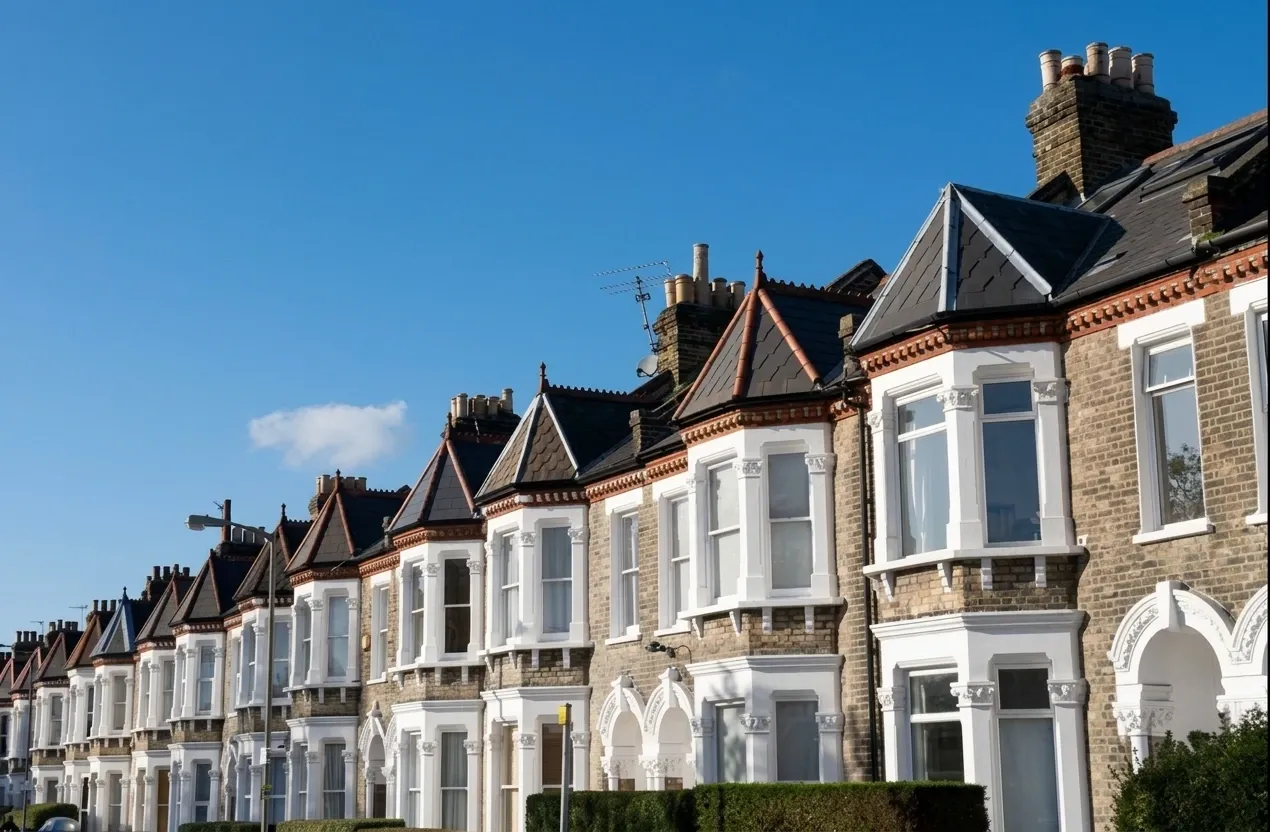
Fulham has the third lowest council tax in England, three District line stations and no big park. Match days, basements and which pocket to buy in.
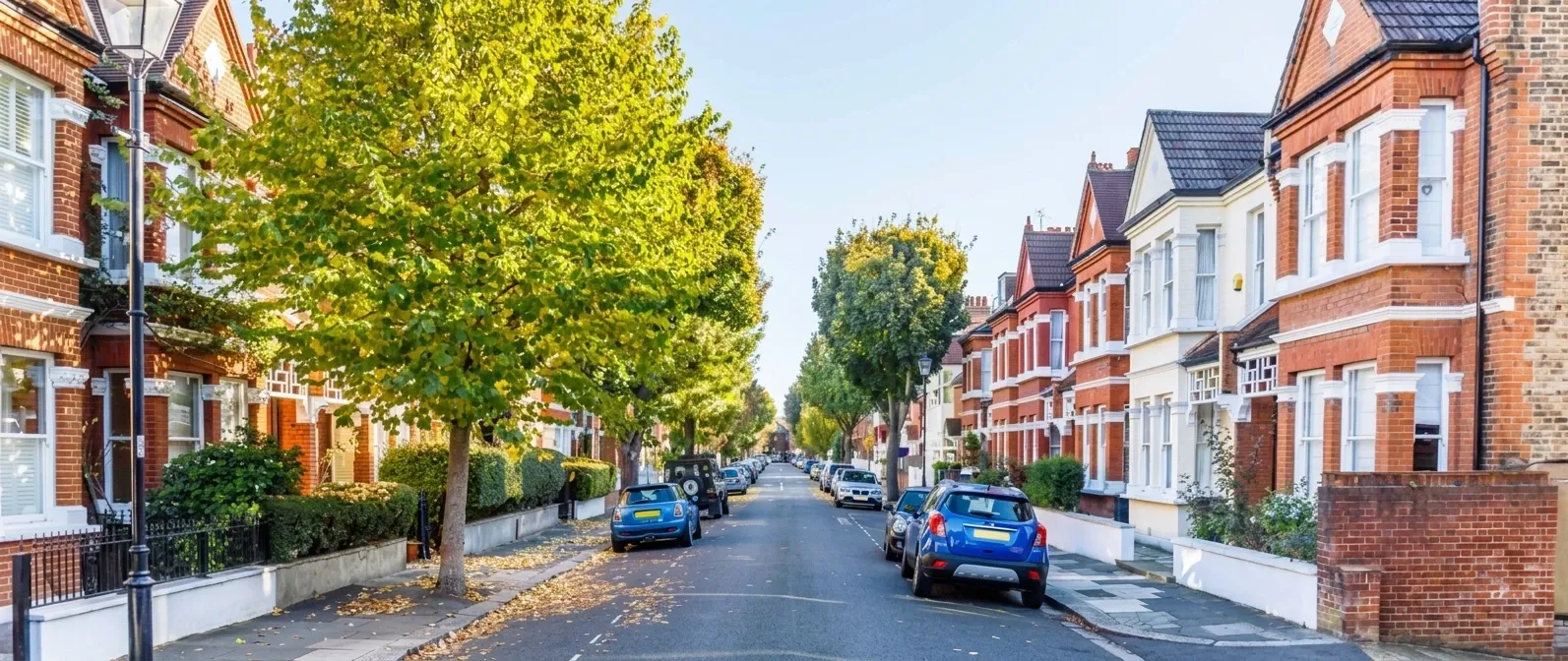
A proper high street and Bedford Park, against a Heathrow approach path and the A4. What the police data actually says about crime in Chiswick.
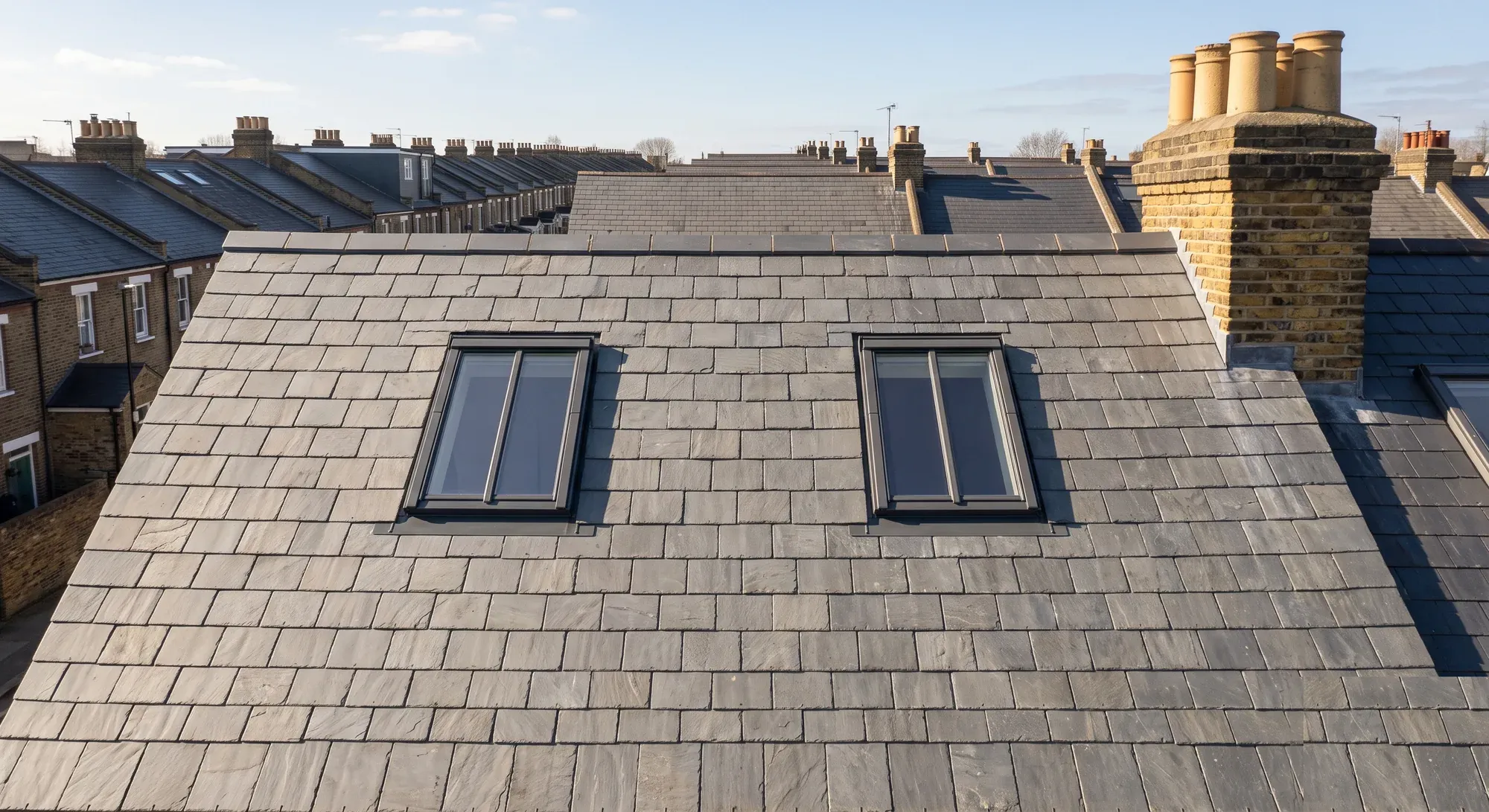
Dormers need permission, rooflights do not. Which permitted development rights survive on article 2(3) land, why Article 4 is separate, and what still applies.
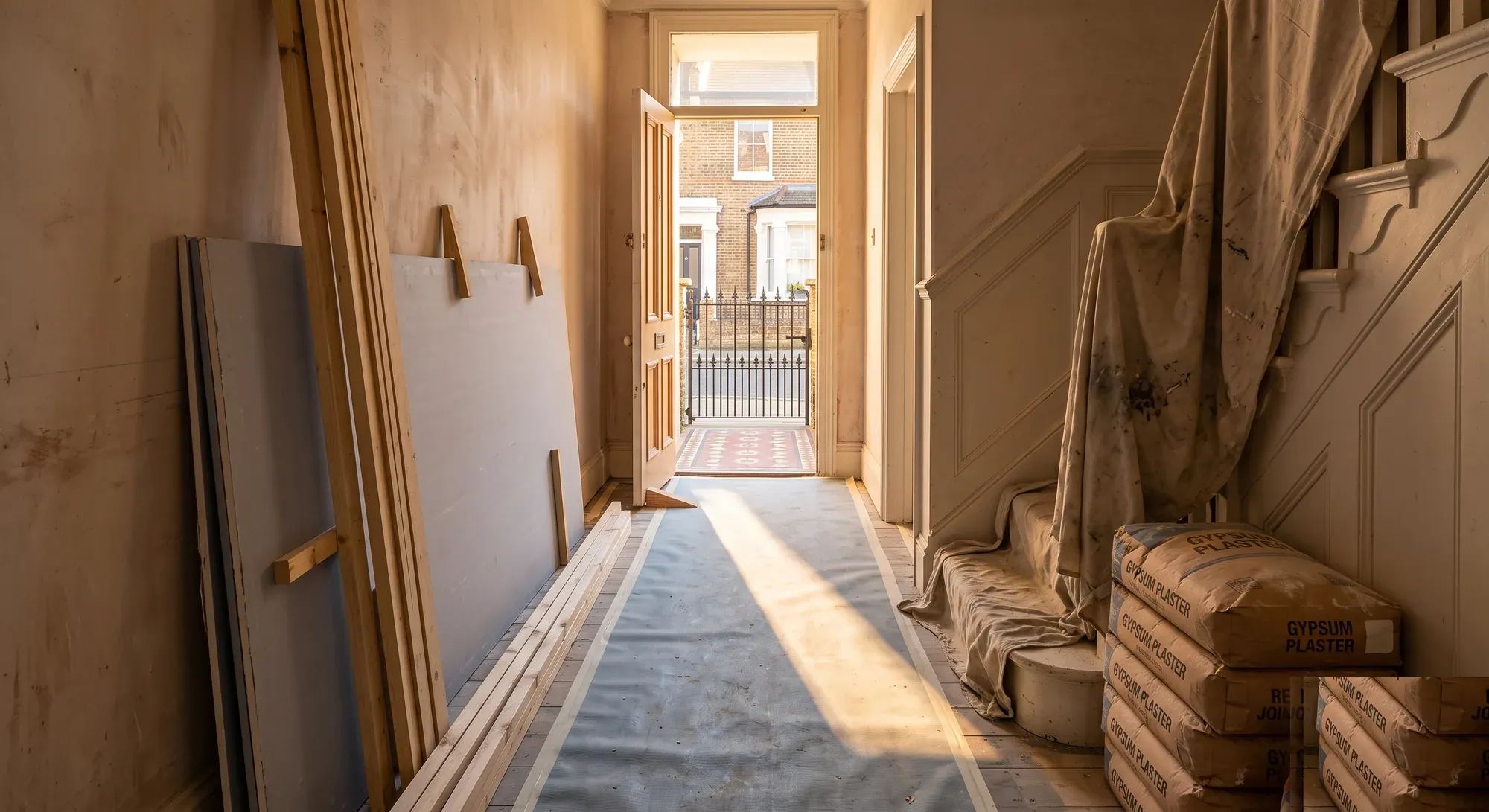
Permitted development rights removed, party walls on both sides, nowhere to put a skip and borough charges that vary fourfold. What actually differs about renovating in London.