
How much does damp treatment cost?

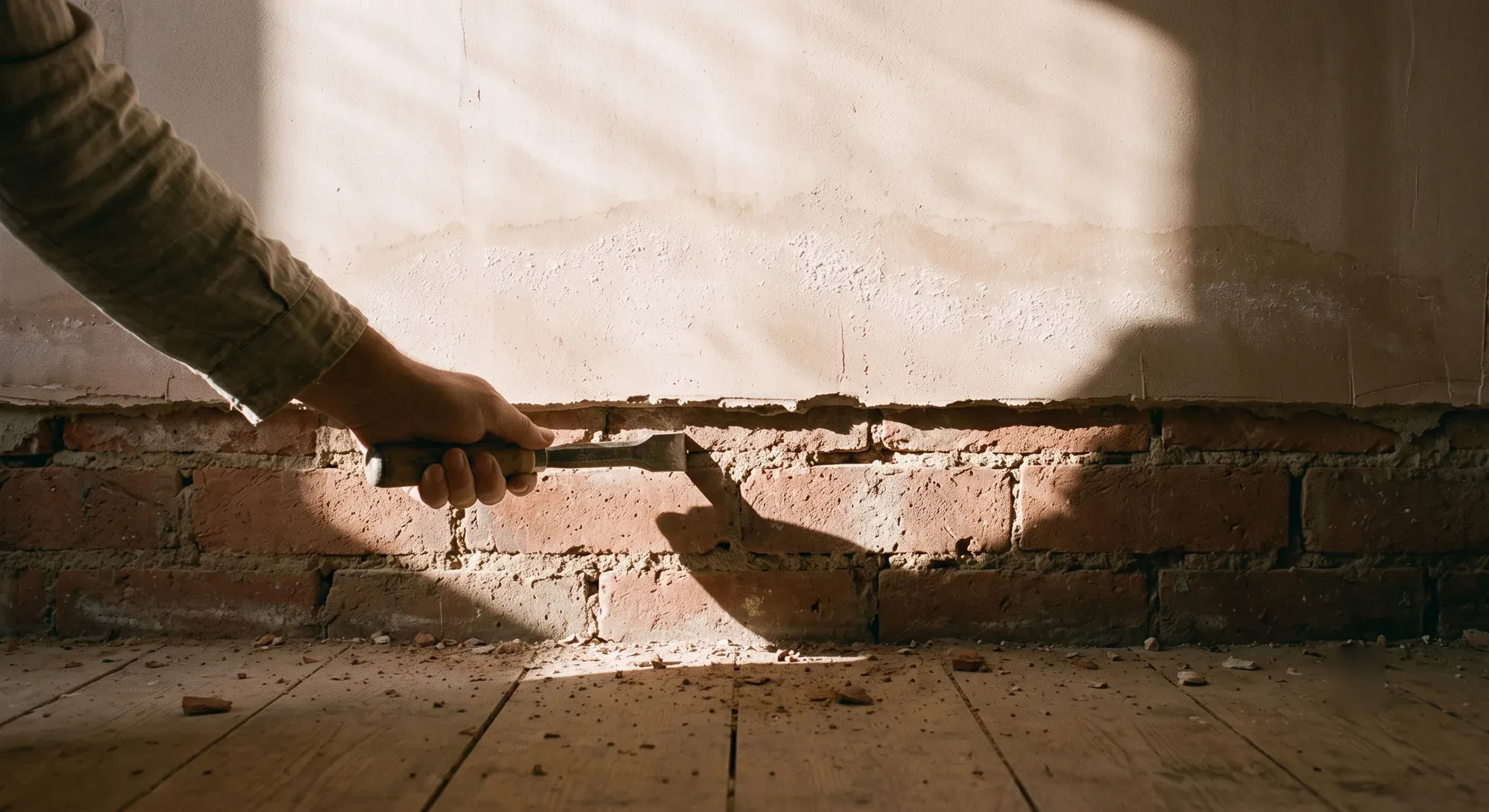
Damp treatment runs from a few hundred pounds to five figures, and the range is that wide because the three types of damp have almost nothing in common. Published UK figures put a chemical damp-proof course at £60 to £90 per linear metre, a whole-house injection job at £1,000 to £3,000 excluding VAT, and below-ground waterproofing at £80 to £150 per square metre excluding VAT.
The number moves less than you would expect. What moves the outcome is the diagnosis, and that is where money gets wasted.
The three types, and how to tell them apart
Almost all domestic damp is one of three things, and each has a different cause, a different fix and a different price.
Condensation is warm moist air meeting a cold surface. It shows as black spotting in corners, behind furniture, around window reveals and on the cold side of external walls. It is the most common by a wide margin and the cheapest to resolve, because the answer is ventilation and heating rather than building work.
Penetrating damp is water coming through the building fabric from outside. It shows as a defined patch that gets worse after rain and dries out between. The cause is almost always something you can point at: a failed gutter, cracked render, a slipped tile, a blocked cavity, defective pointing, a leaking pipe. Fix the defect and the damp goes.
Rising damp is groundwater drawn up through masonry by capillary action. It shows as a tide mark up to roughly a metre from the floor, with salting on the surface as the water evaporates and leaves minerals behind. It needs a damp-proof course, or the repair of one that has failed.
Here is the part that matters commercially, and it is not us saying it.
The Royal Institution of Chartered Surveyors published consumer guidance in June 2025, written with Professor Michael Parrett, which states that rising damp is often misdiagnosed, that rising damp is not a conclusion in itself, and that failure of an original damp-proof course is extremely rare.
Read that last point again, because a great deal of money changes hands on the opposite assumption. Most houses built after the 1870s have a damp-proof course. If it almost never fails, then a diagnosis of rising damp in a house that has one is a claim that needs evidence rather than a meter reading.
A chemical damp-proof course injected into a wall that actually has condensation will not work, and you will have paid for it.
Why the survey is the thing worth paying for
The cheapest mistake in damp work is skipping diagnosis, and it is easy to make because most damp surveys are free.
Free surveys are usually carried out by companies that also sell the treatment. That is not automatically a problem, but the incentive runs one way.
The instrument matters too. RICS is direct about this: the handheld meters used on most damp inspections are only reliable when used on timber. Held against plaster they respond to electrical conductivity, which salt in the wall raises whether or not there is any current moisture. So a wall that dried out years ago can still read wet, and be treated again.
RICS names the conflict itself, describing the value of a report prepared to the Joint Position Statement as an unbiased professional opinion from someone who does not have a commercial interest in selling you a product. That Joint Position Statement, published in September 2022, is the closest thing to a settled industry view, and it is worth knowing who signed it: RICS, Historic England and the Property Care Association, which represents the treatment industry. The signatories disagree about how common rising damp is. They agree about how it should be diagnosed.
So the practical move is to separate diagnosis from cure. An independent damp survey costs money and has no product attached. On a wall where the cause is unclear, or where a previous treatment did not work, it is the better spend.
Two questions separate a diagnosis from a sales visit. What is the moisture source, and what evidence points to it? Anyone confident about the answer will tell you which of the three it is, and how they ruled out the other two.
Treating the cause, not the wall
The pattern across renovation projects is consistent: damp that comes back was treated at the surface rather than at the source.
Condensation responds to ventilation. Extract fans that actually vent outside rather than into a loft, trickle vents, and enough background heat to keep surfaces above dew point. Insulation helps by warming the internal surface, though badly detailed insulation creates cold bridges and moves the problem rather than solving it. Where the cold surface is a solid wall, insulating a solid brick wall from the inside is the usual answer, and the detailing decides whether it helps or makes it worse.
Penetrating damp responds to repair. Clear the gutter, repoint the wall, replace the tile, fix the pipe. Then let the wall dry, which takes months rather than weeks on a thick solid wall, before making good the plaster. Where the faces of the bricks have crumbled away as well, you are looking at spalling brickwork, and repointing over it will not hold.
Rising damp responds to a damp-proof course and then replastering, because the old plaster is contaminated with salts that will keep drawing moisture whatever you do to the wall behind it. That replastering is often the larger half of the bill, so it is worth checking the cost of plastering a house against whatever the damp quote allows for it.
Which raises a question the industry has never satisfactorily answered. Chemical injection is codified: BS 6576 covers its installation and BRE Digest 245 sets out the diagnostic method, so this is established practice rather than snake oil. But injection is essentially never carried out without salt-retardant replastering at the same time, and replastering alone would stop a damp patch reappearing. So the contribution of the injection itself has never been isolated in an independent trial that we could find.
That is not a reason to refuse treatment where a wall genuinely needs it. It is a reason to be sure the diagnosis came first.
Which is why damp and plastering are so often the same job. Read our guide to renovating plaster for the replastering side, including why the material you use on a solid wall matters.
Old walls behave differently
On a period property with solid brick or stone walls, damp is not a defect. It is how the wall works.
Solid walls have no cavity and often no damp-proof course. They absorb moisture and then release it, and they depend on being able to breathe. Lime plaster, lime mortar and permeable paint let that happen.
Seal that wall with cement render, gypsum plaster or modern masonry paint and the moisture has nowhere to go. The Society for the Protection of Ancient Buildings is direct about it: cement render is incompatible with the construction of most old buildings and can cause or accelerate serious decay. It traps water, it is more rigid than the wall so it cracks, and the cracks let water in without letting it out.
So on an older house the damp you are looking at is quite often the result of a previous repair. Injecting a chemical damp-proof course into a solid wall that was never built to have one, then sealing it with waterproof render, is a treatment that creates the next problem.
The honest answer on many period walls is to remove what is trapping the moisture, improve the drainage and ventilation around the building, and let it dry. That is cheaper than injection and it lasts. Our guide to what to watch out for in a Victorian terrace renovation covers the other places where period construction changes the right answer.
Below ground is a different discipline
Damp in a cellar or basement is not damp-proofing, it is waterproofing, and it works to a different standard.
BS 8102:2022 is the code of practice for protecting below-ground structures against water ingress. It sets out three types of protection: Type A, an applied barrier or membrane, which is what most people mean by tanking. Type B, where the structure itself is watertight reinforced concrete. Type C, a drained cavity that accepts water behind an internal membrane and takes it to a perimeter drain and a sump pump.
Most conversions of existing cellars end up Type C, or a combination, because a barrier alone has to resist the full water pressure with no margin for a single defect.
The standard also recommends appointing a waterproofing design specialist as part of the design team. One way to evidence that is the CSSW qualification, developed and delivered by the Property Care Association and awarded as a Level 3 qualification through ABBE.
A Type C system has pumps, which means it has a maintenance requirement for the life of the building. That is a small running cost attached to a large capital one, and it belongs in the decision. Our guide to what a basement or cellar conversion costs in the UK covers waterproofing as part of the wider project.
What damp treatment costs
No UK public body publishes damp treatment rates, so every figure below comes from a commercial source. Most do not state whether VAT is included, which is the first thing to check on any quote you receive.
Work | Published cost | VAT basis |
|---|---|---|
Independent damp survey | £200 to £600 | Not stated |
Chemical damp-proof course, per linear metre | £60 to £90 | Not stated |
Chemical damp-proof course, whole job | £1,000 to £3,000 | Excluding VAT |
Physical damp-proof course retrofit | £2,500 to £7,500 | Excluding VAT |
Replastering after a damp-proof course, per room | £450 to £800 | Not stated |
Repointing brickwork, per square metre | £50 to £60 | Not stated |
Extract fan, new installation | £250 to £350 | Excluding VAT |
Positive input ventilation unit, installed | £763 to £1,750 | Not stated |
Type C drained cavity waterproofing, per square metre | £80 to £150 | Excluding VAT |
Sump and pump installation | £1,500 to £4,000 | Excluding VAT |
Cellar or basement tanking, per square metre | £100 to £200 | Excluding VAT |
The shape of that table matters more than any single row. A defined penetrating damp problem with an identifiable cause sits at the bottom: repair the defect, let it dry, make good. A wall needing a damp-proof course and full replastering sits in the middle. Below-ground work with a designed waterproofing system sits at the top, and it is a different order of cost entirely.
Two rows deserve a warning rather than a figure. Published prices for positive input ventilation do not agree at all: one source puts an installed unit at £763 to £1,750 and another at £200 to £500, and the ranges do not overlap. Extract fans span £80 to over £500 across four sources for what is nominally the same job. On both, get two quotes rather than trusting a published range.
The wider caveat is provenance. One of the largest sources states outright that its figures come from homeowner-submitted quotes. Others are directories that never say how their numbers were derived. None is a measured price book, because those sit behind paywalls. So treat the table as the shape of the market rather than a price anyone can be held to.
Damp is also rarely in the original budget, because you cannot see it until the wallpaper comes off and the furniture moves. That is one of the reasons we suggest holding 10% to 15% back as contingency on any renovation.
How Beams helps
Damp is the area of renovation where the diagnosis and the sale most often come from the same person, and where the wrong treatment is both expensive and ineffective.
So we establish the cause before anyone prices a cure, then match you with builders who deal with the source rather than the symptom. Where a wall genuinely needs specialist waterproofing design, that gets specified properly rather than treated as a coat of something.
That is what the protections on a Beams project give you: one agreed price, payments released against milestones, and 12 months on the workmanship.
Common questions about damp
How do I know if it is rising damp or condensation?
Look at where it is and when it appears. Rising damp shows as a tide mark up to about a metre from the floor, often with salt deposits, and it is there year round. Condensation shows higher up, in corners and behind furniture, on cold external walls, and it is worse in winter and after showering or cooking. If black mould is the main symptom, it is almost certainly condensation.
Is a free damp survey worth having?
As a first look, yes, but understand who is paying for it. Most free surveys come from firms that sell the treatment, and RICS notes that the handheld meters used are only reliable on timber. If a report recommends injection without identifying a moisture source, get a second opinion from someone with nothing to sell. Worth knowing too that "damp surveyor" is not a protected title and the activity is not statutorily regulated, so qualifications and membership are worth checking.
What does a damp-proofing guarantee actually cover?
Less than most people assume. A long guarantee from the contractor is only worth what the contractor is worth, which is why insurance-backed guarantees exist. Those are bought separately, they only honour the terms of the original guarantee, and they typically pay out only where the contractor has ceased trading as defined in that specific policy. Ask who underwrites it and read what triggers it.
Do I need to replaster after a damp-proof course?
Usually yes, and it is often the larger cost. Plaster on a wall that has been damp holds salts, and those salts keep attracting moisture from the air long after the wall itself has dried. Leaving the old plaster is the most common reason a treated wall appears to fail.
Will damp stop me getting a mortgage?
It can affect a valuation, and a surveyor who sees damp will normally recommend a specialist report, which lenders sometimes make a condition of the offer. It is more often a negotiating point than a refusal. What matters is whether the cause is identified and repairable.
Can I treat damp myself?
Condensation, largely yes: better ventilation, extract fans that vent outside, keeping surfaces warmer. Penetrating damp depends on the defect, and clearing a gutter is very different from repointing a gable. Rising damp and anything below ground needs specialist work, because both involve getting the design right rather than applying a product.
Where these figures come from
The cost figures on this page are published market rates rather than Beams project data. No UK public body publishes damp treatment rates, so all pricing comes from commercial sources, and where a source does not state a VAT basis that is shown in the table. Our projects are in London and the surrounding area.
Damp survey, chemical damp-proof course, tanking, repointing and extract fan rates: Checkatrade, updated April and June 2026, quoted excluding VAT
Damp survey and remedial damp-proof course figures: HomeOwners Alliance, March 2026, VAT basis not stated
Per linear metre injection rates and replastering after treatment: MyJobQuote, July 2026, derived from homeowner-submitted quotes, VAT basis not stated
Type C drained cavity, sump and pump, and tanking rates: MPS Concrete, 2026, quoted excluding VAT
Positive input ventilation: Checkatrade, May 2024
Diagnosis and misdiagnosis of rising damp: Royal Institution of Chartered Surveyors consumer guidance, June 2025, written with Professor Michael Parrett FRICS
Industry consensus on diagnosis: Joint Position Statement on the investigation of moisture in traditional buildings, September 2022, signed by RICS, Historic England and the Property Care Association
Chemical damp-proof courses: BS 6576, installation of chemical damp-proof courses, and BRE Digest 245, rising damp in walls, diagnosis and treatment
Below-ground waterproofing: BS 8102:2022, Protection of below ground structures against water ingress
Waterproofing design qualifications: Property Care Association, with the CSSW awarded through the Awarding Body for the Built Environment
Breathability and cement render on historic buildings: Society for the Protection of Ancient Buildings
Every wall prices differently once the source of the moisture and the construction of the wall are known. These figures are a starting point for a conversation rather than a quote.
Find out what your project will cost
Tell us what you are dealing with and we will get you up to three comparable quotes from vetted London builders, with the moisture source established before anyone prices a cure.