
8 reasons families love East Dulwich (and 3 they don't)

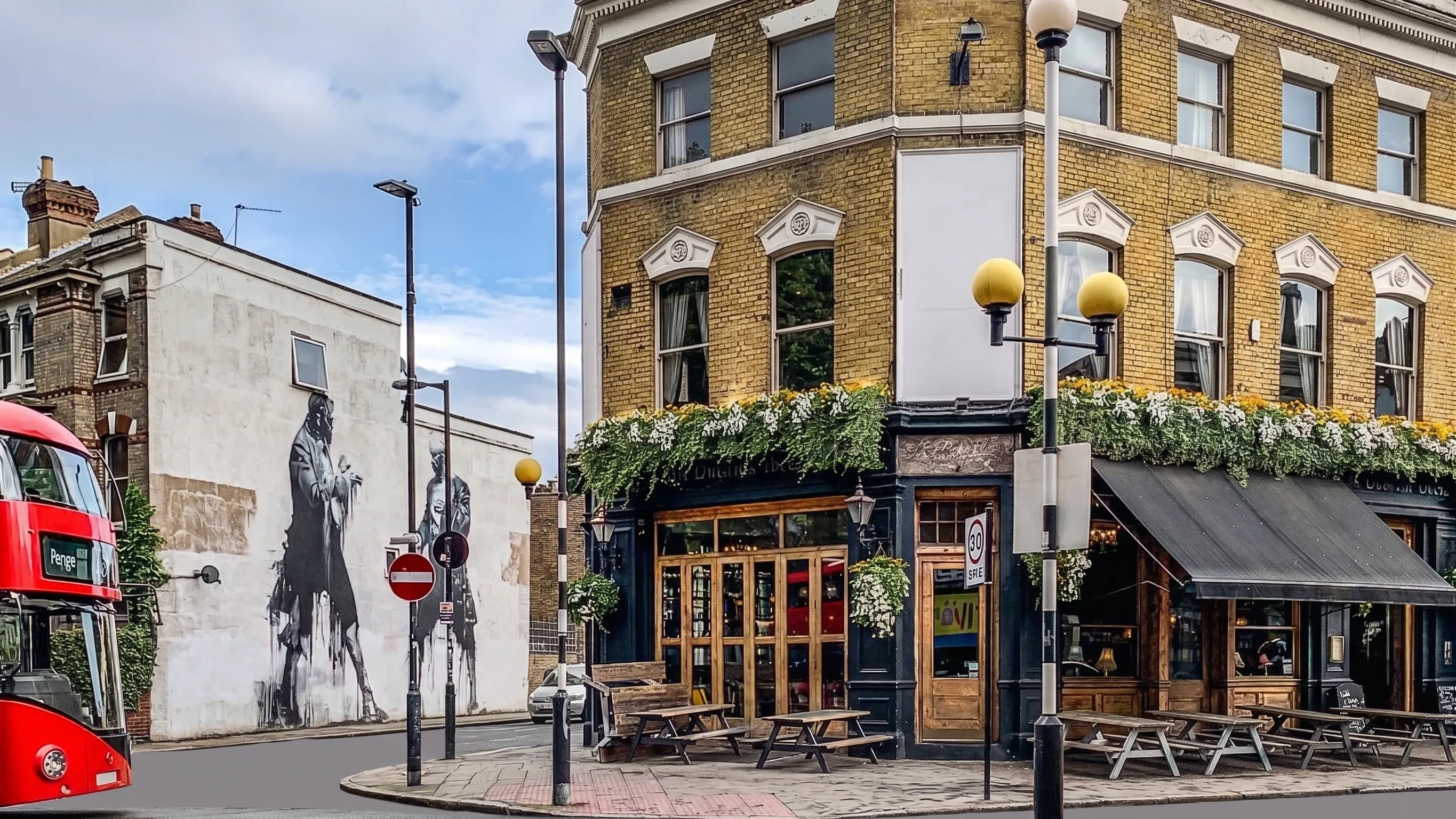
Yes, for families who want a Victorian terrace, a National Rail commute and three serious parks within a mile. East Dulwich is a Southwark postcode with no Underground station, a Band D council tax bill of £1,967.26 for 2026/27, and roughly 4,000 Dulwich homes bound by a private consent regime most buyers have never heard of until their solicitor mentions it.
That last point is the one nobody writes about. We will get to it.
1. Lordship Lane is a working high street, not a parade of estate agents
Most London "villages" have four decent shops and a Gail's. Lordship Lane runs for the better part of a mile and carries genuine trading density: East Dulwich Picturehouse, Dulwich Library, independent food shops, and the North Cross Road market street hanging off it. Harris Primary Academy East Dulwich sits at 173 Lordship Lane, which tells you something about how the street is used. It is not a destination strip. It is where people buy dinner.
You can read the retail density in the crime figures, oddly enough. In June 2026 the Goose Green ward recorded 149 offences, and the single largest category was shoplifting at 45. Violence and sexual offences accounted for 33. A high street busy enough to be shoplifted is a high street with stock on the shelves.
2. Three genuinely different green spaces, all walkable
Dulwich Park covers 29 hectares and has a boating lake, a bowling green, tennis courts, an outdoor gym and a playground for children up to 14. The land came from the governors of the Dulwich College Estate, was transferred by Act of Parliament in 1885, and the park was laid out by the Metropolitan Board of Works and opened in June 1890 by Lord Rosebery, the first chairman of the London County Council, which is why the Rosebery Gate carries his name. The gates open at 7.30am daily.
Peckham Rye Park and Common is the other flank. The Common is open at all hours, and the Park has a Japanese Garden that opened in 1908, an arboretum, a skate park and an adventure playground.
Then there is Sydenham Hill Wood and Cox's Walk, 11 hectares managed by London Wildlife Trust, designated a Local Nature Reserve and part of a Site of Metropolitan Importance. The Trust describes it as part of the largest remaining tract of the old Great North Wood. It became the Trust's first nature reserve in 1982, and a disused railway tunnel inside it is a registered bat roost.
Southwark counts 93 sites of importance for nature conservation across the borough and 7 local nature reserves, according to its ecology page updated on 4 February 2026.
3. The state schools, with the dates you actually need
The Ofsted position changed twice in two years, and it matters for how you read any school's page.
The Department for Education stopped Ofsted issuing single-word overall grades on 2 September 2024. A school given a full graded inspection after that date gets judgements on the individual areas but no overall word. A school given an ungraded inspection keeps whatever overall grade it already had, and Ofsted still displays it. From 10 November 2025, inspections produce report cards instead, with no old-scale grades at all. So check the inspection date and the inspection type, not the badge.
The Charter School East Dulwich, on East Dulwich Grove, had an ungraded inspection on 8 and 9 May 2024, published 13 June 2024, which confirmed no change to its Good. That Good dates from an inspection in October 2018, and the 2024 report noted the evidence suggested it might be outstanding if graded then. Harris Girls' Academy East Dulwich on Homestall Road was rated Outstanding at a graded inspection on 5 and 6 December 2023, published 30 January 2024. Harris Boys' Academy East Dulwich was rated Outstanding at a graded inspection on 28 and 29 November 2023, published 19 January 2024.
On the primary side, Goodrich Community Primary School on Dunstans Road had a full graded inspection on 15 and 16 July 2025, published 11 September 2025, and came out Good in all five areas with no overall grade, up from Requires improvement in March 2023. Heber Primary School had an ungraded inspection on 11 and 12 March 2025, published 30 April 2025, which produced no new grades at all; its Good dates from October 2019 and still stands. Goose Green Primary and Nursery School had an ungraded inspection on 17 and 18 June 2025, published 21 July 2025, and likewise keeps the Good it has held since January 2020.
4. The independent cluster is ISI territory, not Ofsted
Dulwich College, James Allen's Girls' School and Alleyn's School are independent and inspected by the Independent Schools Inspectorate, not Ofsted. Dulwich College had a routine ISI inspection on 18 to 20 March 2025, James Allen's on 26 to 28 November 2024 and Alleyn's on 15 to 17 October 2024. All three met the Independent School Standards. Do not go looking for an Ofsted grade for the schools themselves, because there is not one, though Ofsted does hold early years childcare registrations linked to Dulwich College's kindergarten.
One detail matters even to families with no intention of going private. The Dulwich Estate is a charity, registered number 312751, and its stated purpose includes supporting students at seven schools through means-tested bursaries. The independent sector here is not a sealed compartment.
5. The housing stock is consistent, and that makes it predictable
SE22 is overwhelmingly late Victorian and Edwardian terraces built in a short burst as the railways arrived, with grander villas towards the Dulwich Village boundary. Consistency matters more than it sounds. When 40 houses on a street share a construction date, a builder who has done one has effectively done all of them, and you can price a job with far more confidence.
It also means you inherit the same set of problems: lath and plaster, single-skin rear additions, original sashes, and the common faults that come with a Victorian terrace such as failed pointing, bridged damp-proof courses and shallow foundations at the back. None of that is a reason to walk away. It is a reason to budget properly.
6. The buses do the work the Underground doesn't
Seven routes serve East Dulwich station at Goose Green: the 37, 40, 42, 176, 185, 484 and P13. Between them, according to Transport for London's onward travel map for the station, they reach Victoria, Liverpool Street, Tottenham Court Road, Trafalgar Square, Waterloo, Elephant and Castle, Clerkenwell Green, Clapham Junction, Camberwell Green, Denmark Hill, Peckham Rye, Herne Hill, Brixton, Lewisham, Forest Hill and Streatham. That map is the current published version but is marked as correct from June 2022, so check TfL before you plan a commute around a specific route.
That is an unusually wide net for a place with no tube. It is also why residents here talk about bus routes the way people in Zone 1 talk about lines. The East Dulwich Forum has running threads on the 42's curtailment and on a proposed Camberwell Green to East Dulwich station service.
7. Council tax is transparent, and lower than people assume
Southwark's charge for 1 April 2026 to 31 March 2027 puts Band D at £1,967.26. That splits into £1,456.75 for Southwark Council and £510.51 for the Greater London Authority precept. Band E is £2,404.43, and Band G, which catches a lot of the larger Dulwich villas, is £3,278.77. The figures come from Southwark's own bands and charges page, last updated 5 March 2026.
Band | Total 2026/27 |
|---|---|
Band D | £1,967.26 |
Band E | £2,404.43 |
Band G | £3,278.77 |
8. Most of East Dulwich is not in a conservation area
This surprises people. Southwark puts its conservation area count at 48, though its own published list names 53, and the ones near here are Dulwich Village (designated 27 September 1968, extended in September 1971 and again on 15 March 2005), Dulwich Wood (designated 30 September 1985) and The Gardens off Peckham Rye Common (designated 22 June 1988, covering Oakhurst Grove and Kelmore Grove).
There is no conservation area called East Dulwich. The great terraced grid between Lordship Lane and Peckham Rye is largely outside all three. For a homeowner that is a real advantage, because it usually leaves permitted development rights intact for rear extensions and loft conversions, where a conservation area designation would strip several of them away. Check your specific address on Southwark Maps before you plan anything, because the boundaries do not follow postcodes.
The three things that put people off
Drawback 1: there is no Underground station, and the rail offer is thin
SE22 has no tube. East Dulwich station sits on Grove Vale in Zone 2, is managed by Southern, has step-free category B2 access, no lifts and no car park. North Dulwich, despite the name, is in SE24 on Red Post Hill, and its step-free category is C, meaning there is no step-free access to the platforms at all. It has no car park either.
If you use a buggy, a wheelchair or a heavy suitcase, that is not a footnote. It is the defining constraint of daily life here, and it is why so many households end up bus-first rather than train-first.
Drawback 2: The Dulwich Estate scheme of management
This is the single biggest thing most area guides miss, and it costs real money.
The Dulwich Estate holds a scheme of management, approved in January 1974 by the High Court under powers created by the Leasehold Reform Act 1967, over just over 4,000 Dulwich properties. If your freehold sits inside it, you need the Estate's written consent before you alter the external appearance of your property, make significant changes to your garden including putting up a shed, or fell or prune a tree. Estate consent sits on top of the planning system, so check separately whether you need planning permission to landscape a garden.
That consent is separate from and in addition to Southwark's planning permission. The Estate is explicit that the two are not connected: getting one does not mean you will get the other, and changes that need no council approval at all can still need the Estate's.
The fees are published. The minimum application fee is £142. A loft conversion carries a minimum charge of £865, which lands on top of everything else in a loft conversion budget. Extensions are charged at a minimum of £50 per square metre. Replacement windows and doors cost £348, a dormer £341, a rooflight £148, solar panels £142. A final consent inspection is £123. Retrospective applications are charged at double the scale fee, so do not start first and ask later.
Dulwich Estate consent | Published fee |
|---|---|
Minimum application fee | £142 |
Loft conversion (minimum) | £865 |
Extensions (minimum, per square metre) | £50 |
Replacement windows and doors | £348 |
Dormer | £341 |
Rooflight | £148 |
Solar panels | £142 |
Final consent inspection | £123 |
Every application goes through a three-week consultation with neighbours and the Estate's advisory committee, and the Estate states the process takes approximately 8 to 10 weeks. There is also a two-stage licence: a permit once plans are agreed, then a licence after an Estate surveyor inspects the finished work.
On top of that sits an annual scheme of management charge, calculated by council tax band, which the Estate says works out at between £6.13 and £18.40 a month. It funds the upkeep of 28 amenity areas, of which Dulwich Woods is the largest.
Drawback 3: the traffic politics are relentless
Southwark's Streetspace programme lists "Dulwich Village, East Dulwich and Champion Hill" as one of eight borough schemes, introduced under Experimental Traffic Orders with filters such as bollards, planters and cameras.
Introduced in 2020, it is still the defining local argument in 2026. The East Dulwich Forum's thread on the campaign group One Dulwich has run for years and was still active in August 2026, and the tone is genuinely bitter, with both sides accusing the other of intimidation. Parking is the newer flashpoint, with long-running threads on spaces being removed and on the Melbourne Grove controlled parking zone consultation.
Who this does not suit. If you need a tube for a Zone 1 commute, if you drive everywhere and expect to park outside your own house, or if you want to buy a period property and start work on it within three months, East Dulwich will frustrate you. If you want a terrace, a park, a primary school within walking distance and no intention of moving again for fifteen years, it is close to ideal.
Common questions about living in East Dulwich
Does East Dulwich have an Underground station?
No. SE22 has no London Underground station. East Dulwich station on Grove Vale is a National Rail station in Zone 2 managed by Southern, and North Dulwich, which is actually in SE24, is also Southern. Seven bus routes serve East Dulwich station at Goose Green.
How do I know if my house is in the Dulwich Estate scheme of management?
Ask the Scheme of Management Office directly, or have your solicitor check before exchange. Just over 4,000 Dulwich properties are covered and the boundary does not follow postcode districts. If you are inside it, you need the Estate's written consent for anything affecting the external appearance of the house.
Is East Dulwich safe?
The Met Police recorded 149 offences in the Goose Green ward in June 2026, of which 45 were shoplifting and 33 were violence and sexual offences. Neighbouring Dulwich Hill recorded 72 in the same month and Dulwich Wood 66. For scale, the Rye Lane ward covering central Peckham recorded 301.
Is East Dulwich really "nappy valley"?
The family reputation is fair but overdrawn, and residents bristle at the caricature. What actually dominates local conversation is roads, parking, buses and the state of the Lordship Lane Post Office. Not prams.
Renovating in East Dulwich?
- Kitchen renovation in East Dulwich
- Bathroom renovation in East Dulwich
- House extensions in East Dulwich
- Loft conversions in East Dulwich
- Basement conversions in East Dulwich
- Home renovation in East Dulwich
- Interior design in East Dulwich
- Builders in East Dulwich
If more than one area is on your shortlist, we have area guides for twenty London neighbourhoods in one place.
Sources and verification notes
All figures checked 20 August 2026.
Primary sources
- Council tax 2026/27: Southwark Council bands and charges page, last updated 5 March 2026. Band D £1,967.26 (£1,456.75 Southwark plus £510.51 GLA), Band E £2,404.43, Band G £3,278.77. GLA precept cross-checked against the Mayor of London's decision MD3472 of 26 February 2026.
- Dulwich Estate scheme of management: The Dulwich Estate's own applications and fees pages, and the scheme document's explanatory note recording approval in January 1974 by Mr Justice Walton in the High Court, Chancery Division, under section 19 of the Leasehold Reform Act 1967. Just over 4,000 properties. All nine fees confirmed as published. Three-week consultation, advisory committee, approximately 8 to 10 weeks, two-stage permit then licence. Annual charge £6.13 to £18.40 a month by band, funding 28 amenity areas with Dulwich Woods the largest. Charity number 312751 and the seven schools with means-tested bursaries confirmed on the Charity Commission register and the Estate's own pages.
- Conservation areas: Southwark Council list of conservation areas. Dulwich Village designated 27 September 1968, extended September 1971 and 15 March 2005; Dulwich Wood 30 September 1985; The Gardens 22 June 1988 covering Oakhurst Grove and Kelmore Grove. No conservation area called East Dulwich. The council's overview says 48 while its own list names 53.
- Dulwich Park: Southwark Council park page for 29 hectares, the facilities, the playground up to age 14 and the 7.30am opening. Historic England list entry 1000416 and Parks and Gardens records for the 1885 Act of Parliament, the land coming from the Dulwich College Estate governors, the Metropolitan Board of Works laying it out and the June 1890 opening by Lord Rosebery.
- Peckham Rye Park and Common: Southwark Council park page, including the Common being open at all hours and the Japanese Garden opening in 1908.
- Sydenham Hill Wood and Cox's Walk: London Wildlife Trust reserve page for 11 hectares, Local Nature Reserve status, Site of Metropolitan Importance, the Great North Wood, the 1982 first-reserve status and the tunnel bat roost.
- Nature conservation sites: Southwark Council ecology and wildlife page, updated 4 February 2026, for 93 sites of importance and 7 local nature reserves.
- Stations: National Rail. East Dulwich, Grove Vale SE22 8EF, managed by Southern, step-free category B2, no lifts, no parking. North Dulwich, Red Post Hill SE24 7BX, step-free category C with no step-free access to platforms, no parking. East Dulwich in Zone 2 per its onward travel poster. Bus routes: TfL spider map for East Dulwich station and Goose Green lists exactly the 37, 40, 42, 176, 185, 484 and P13.
- Crime: Met Police and police.uk ward pages for Goose Green, Dulwich Hill, Dulwich Wood and Rye Lane, June 2026.
- Streetspace: Southwark Council Streetspace page, updated 11 October 2024, listing eight schemes with Dulwich Village, East Dulwich and Champion Hill first and confirming Experimental Traffic Orders.
- Ofsted: The Charter School East Dulwich (URN 142178), ungraded inspection 8 to 9 May 2024 published 13 June 2024, Good carried from October 2018. Harris Girls' Academy East Dulwich (URN 132711), graded inspection 5 to 6 December 2023 published 30 January 2024, Outstanding. Harris Boys' Academy East Dulwich (URN 135816), graded inspection 28 to 29 November 2023 published 19 January 2024, Outstanding. Goodrich Community Primary School (URN 100790), graded inspection 15 to 16 July 2025 published 11 September 2025, Good in all five areas, no overall grade, previously Requires improvement in March 2023. Heber Primary School (URN 100793), ungraded inspection 11 to 12 March 2025 published 30 April 2025, Good carried from October 2019. Goose Green Primary and Nursery School (URN 145130), ungraded inspection 17 to 18 June 2025 published 21 July 2025, Good carried from January 2020. Harris Primary Academy East Dulwich (URN 140937) confirmed at 173 Lordship Lane, SE22 8HA.
- Ofsted framework: single headline grades removed 2 September 2024 (Department for Education); report cards from 10 November 2025 (gov.uk).
- Independent schools: Independent Schools Inspectorate reports. Dulwich College inspected 18 to 20 March 2025, James Allen's Girls' School 26 to 28 November 2024, Alleyn's School 15 to 17 October 2024, all Standards met.
What we could not confirm
- Reply and view counts for East Dulwich Forum threads. The threads are long-running, but no published figure is reliable enough to quote, so the article describes them without numbers.
- The currency of the bus route list. The TfL spider map is the current published poster linked from the live station page but is marked as correct from June 2022, which the article states.
- Any house price or value-uplift figure. None is published by a primary source such as Nationwide, so none is stated.
Find out what your project will cost
East Dulwich renovations carry two constraints that catch owners out. If your freehold sits within the Dulwich Estate scheme of management, you need the Estate's written consent as well as Southwark's planning permission, with a minimum £142 application fee, a three-week neighbour consultation and an 8 to 10 week timeline before you can start. And if your address falls inside the Dulwich Village, Dulwich Wood or The Gardens boundaries, the extra conservation area rules will shape what you can build before you draw a single line.
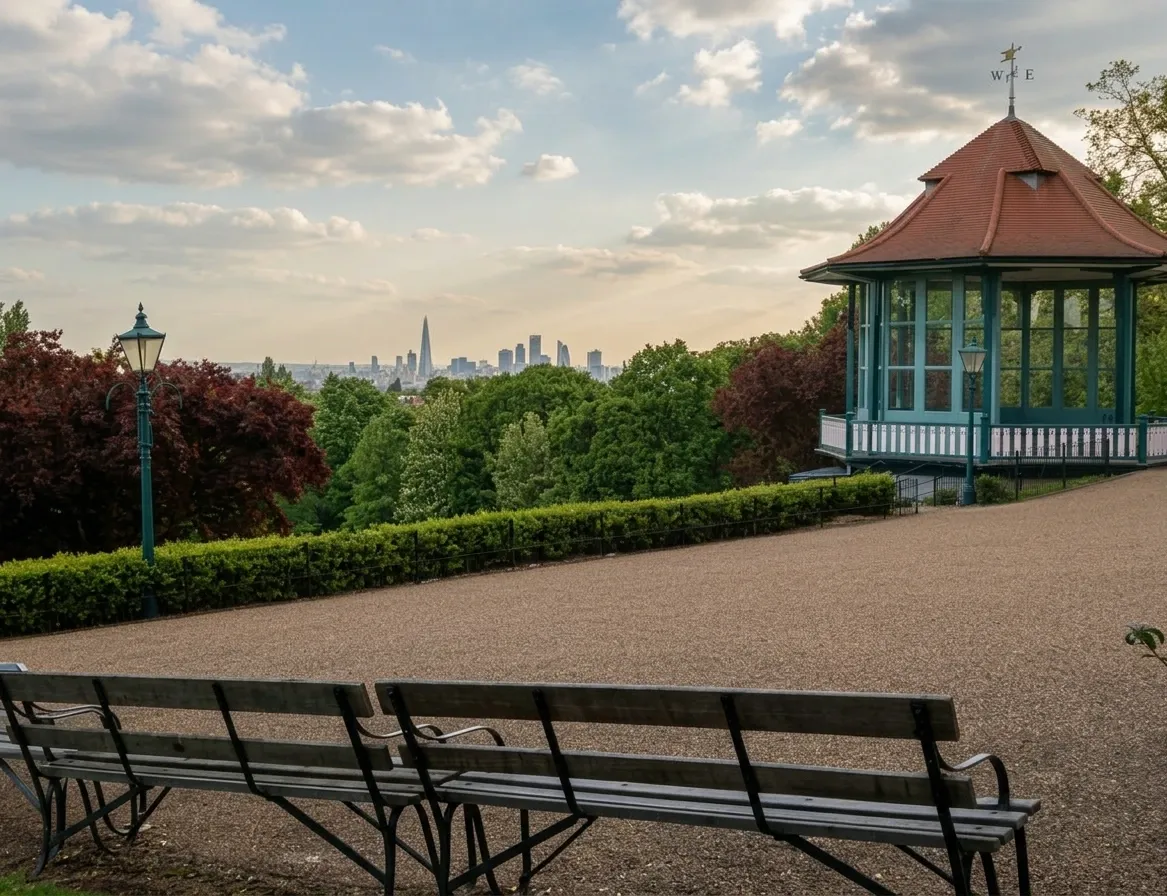
Big Victorian houses, a free museum that won Museum of the Year, and London Bridge in under 20 minutes. The hills and the Article 4 direction included.
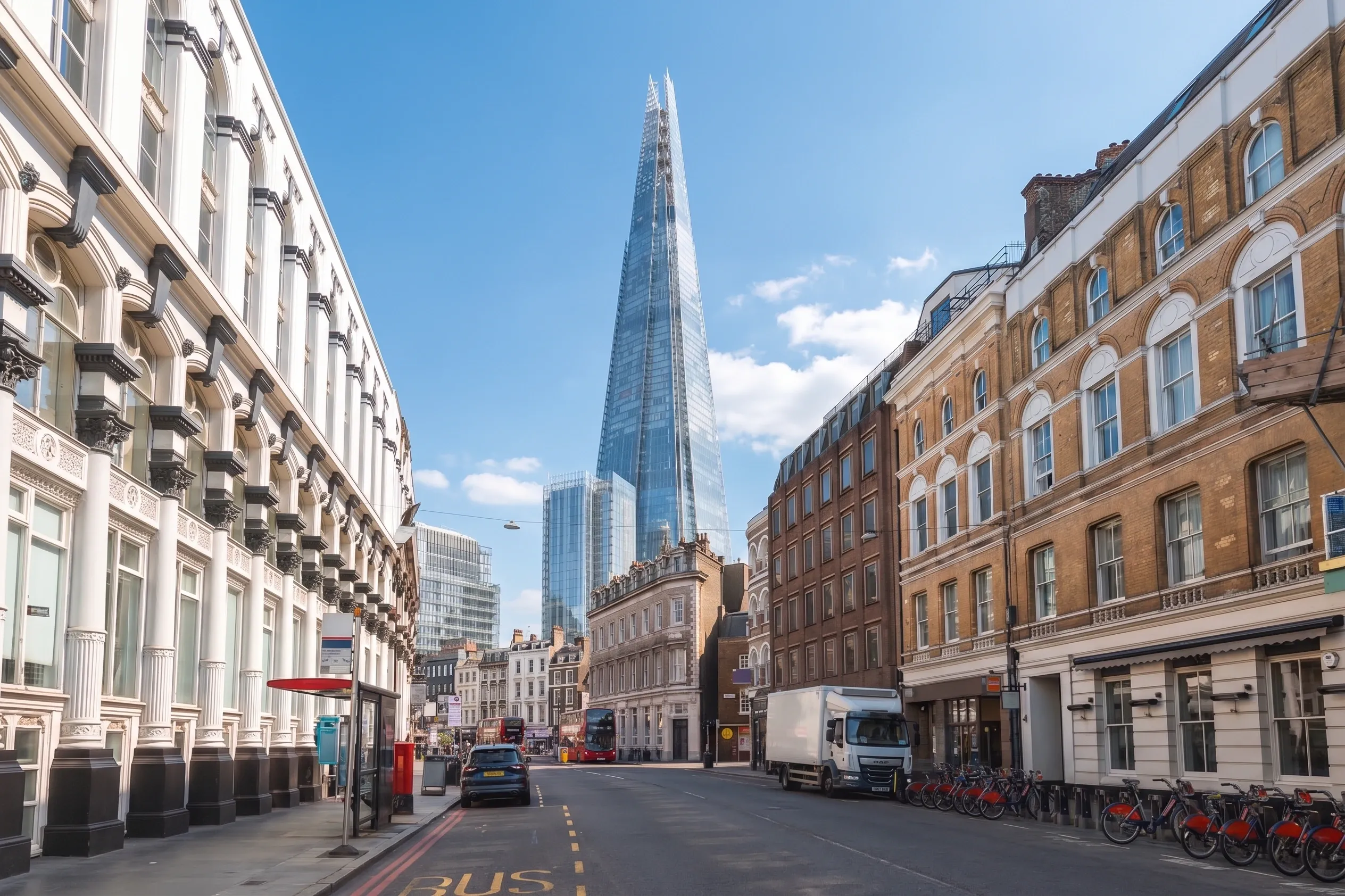
Central London on an inner-London bill, with a decade of construction attached. Transport, leasehold service charges and what SE1 to SE17 really means.
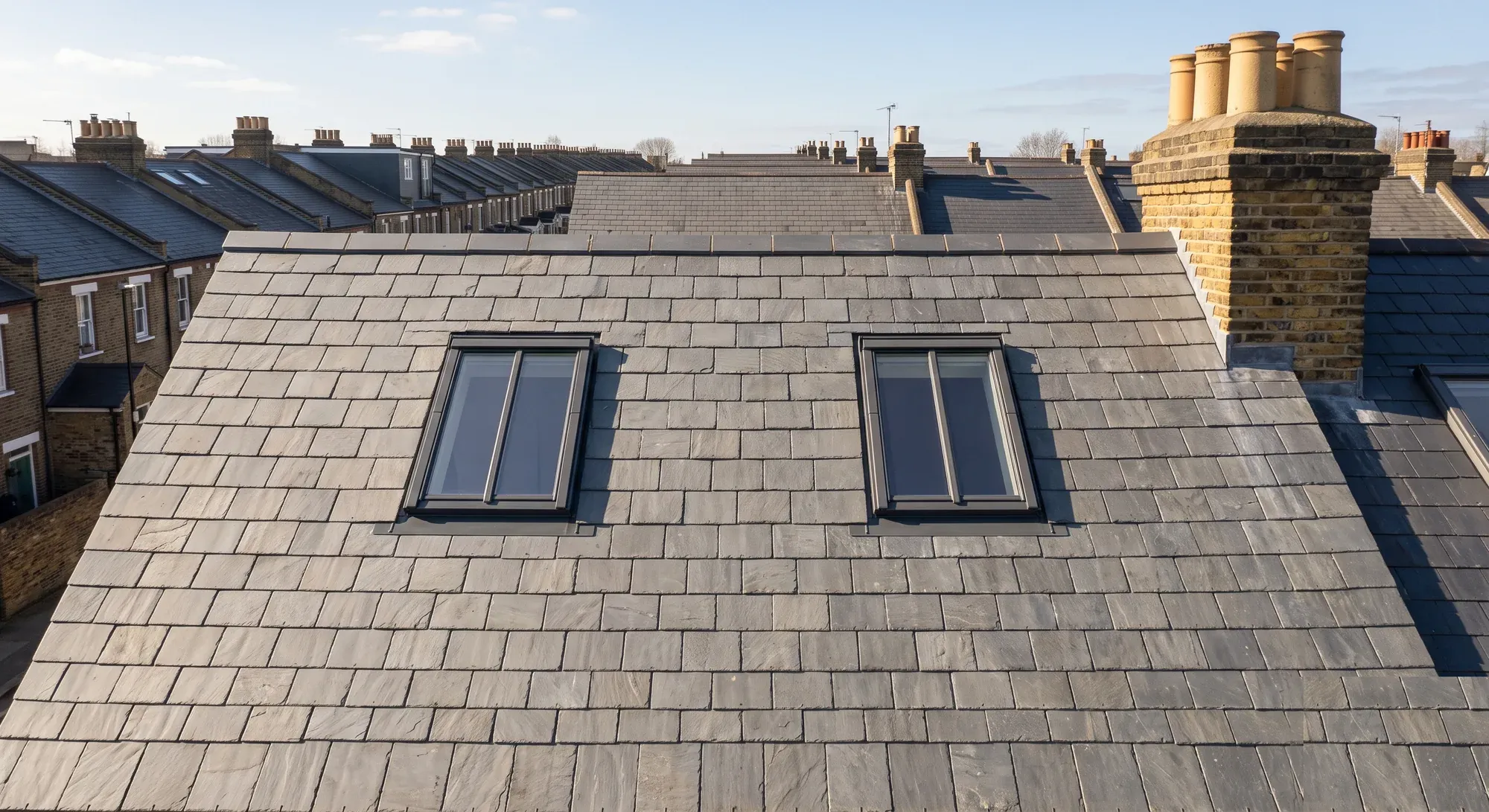
Dormers need permission, rooflights do not. Which permitted development rights survive on article 2(3) land, why Article 4 is separate, and what still applies.
Permitted development rights removed, party walls on both sides, nowhere to put a skip and borough charges that vary fourfold. What actually differs about renovating in London.