
Is Wimbledon a good place to live?

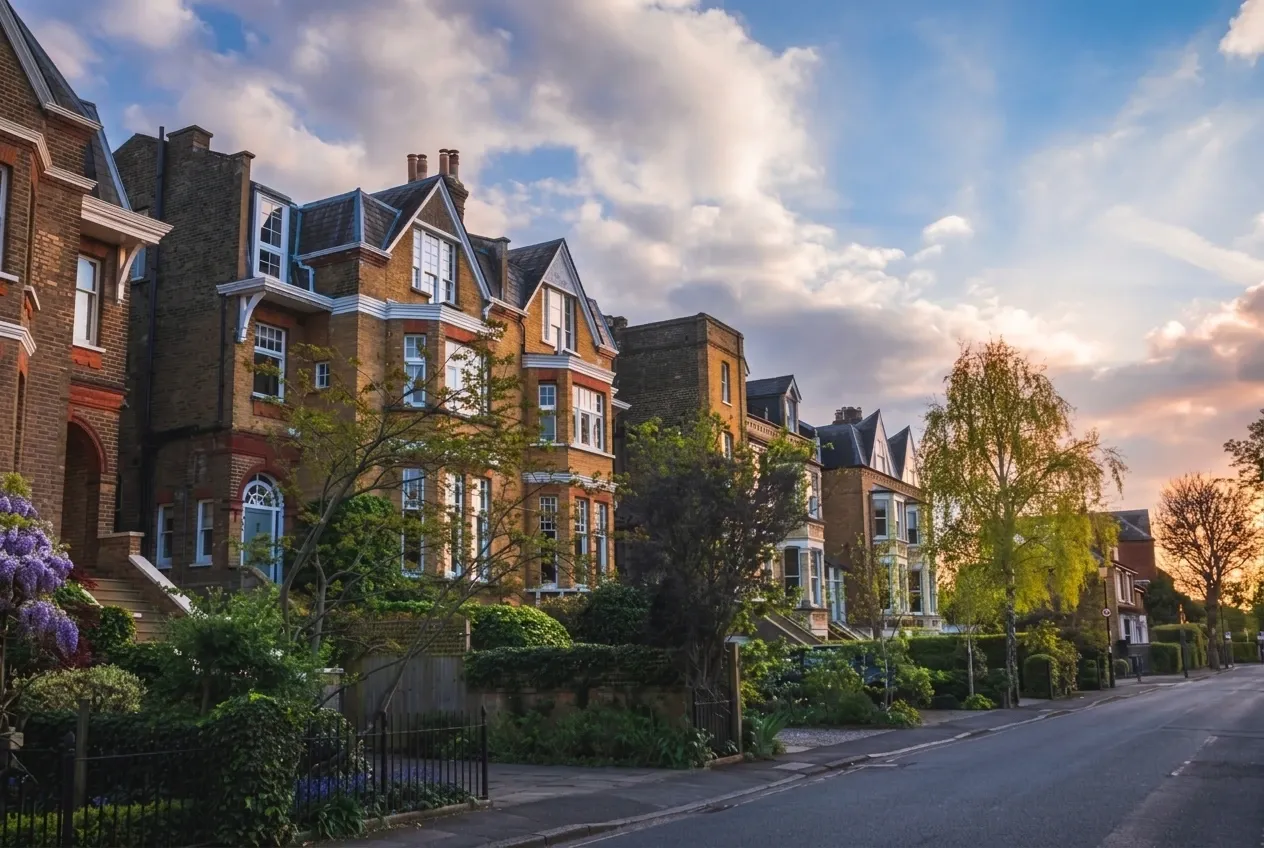
Wimbledon suits families and commuters who want proper green space, four rail modes from one station and a low crime rate, and who can afford SW19 prices. The trade-offs are school catchments measured in hundreds of metres, a quiet evening scene for somewhere this affluent, and a fortnight each summer when roads near the Championships shut daily.
Most guides to Wimbledon are written by estate agents, and they read like it. Common, tennis, good schools, done. What follows is the version with the friction left in, because the friction is what decides whether you should actually move here.
Wimbledon is five places, not one
The single biggest mistake people make is treating Wimbledon as one address. It isn't, and the differences are large enough to change which house you should buy.
Wimbledon Village sits up the hill: Georgian and early Victorian houses, the Common on the doorstep, boutiques and horse riding stables, and prices that bear almost no relation to the rest of SW19.
The Broadway, down the hill, is the working town centre. Theatre, cinema, Centre Court shopping, the station, and most of the new flats.
South Wimbledon is Northern line rather than District, cheaper, more terraced, and the part of SW19 most people have never walked through.
Wimbledon Park wraps around the lake and the athletics track, and is the area most affected by the All England Club's expansion plans.
Wimbledon Chase and Merton Park are quieter and more suburban, bay-fronted 1930s semis in the Chase, and the John Innes garden suburb at Merton Park, which is one of the most tightly protected pockets in the borough.
When you see an average house price for "Wimbledon", check which of those five it's actually describing. Published averages for the Village and for Wimbledon as a whole can differ by several hundred thousand pounds, and neither figure describes the other.
Getting in and out
Wimbledon station is in Travelcard Zone 3 and has eleven platforms, which is unusual for anywhere outside a terminus. It's served by the District line, South Western Railway, Thameslink and Tramlink, with direct trains to Waterloo and Clapham Junction and services on into Surrey.
It's also the only station in London where you can change between the Underground and a tram.
Beyond the main station you have South Wimbledon on the Northern line, Wimbledon Park on the District, and Wimbledon Chase and Haydons Road on National Rail. Tramlink runs east to Mitcham and Croydon, which matters more than people expect if you work in that direction. The A3 gives road access to central London one way and the M25 the other.
Most of SW19 works without a car. Wimbledon Village is the exception, since it sits at the top of a genuinely steep hill and the bus is the only sensible way up it with shopping.
Schools, and the catchment problem
Wimbledon's schools are the reason a lot of families move here, and the reason a lot of them end up disappointed.
The quality is real. Bishop Gilpin CofE Primary was inspected on 25 and 26 June 2024 and rated Outstanding, outstanding in all five sub-judgements. Ricards Lodge High School holds an Outstanding judgement from its 2023 inspection. Wimbledon College was rated Good in March 2023. In the independent sector you have King's College School, Wimbledon High School GDST, Willington and Hall School Wimbledon.
Ofsted stopped issuing a single overall grade for state schools in September 2024, and replaced the old four-point scale with report cards under a new framework from 10 November 2025. Any guide quoting a bare one-word rating without a date is describing a system that has been retired.
The problem is geography. Catchments for the strongest Merton primaries are measured in hundreds of metres, not miles, and in the tightest years parents report furthest-distance-offered figures barely longer than a single street. Being in Wimbledon is not the qualification. Being on the right side of one specific road is.
So before you offer on a house, look up the published furthest distance offered for your target school for the most recent admissions round, on Merton's own admissions pages rather than a property portal. Portal school data goes stale quickly. Some area guides and property portals still show an Ofsted judgement for Bishop Gilpin from 2013, more than a decade out of date.
Two other things. Faith schools apply faith criteria first, so a non-Anglican family at a CofE school competes on a much shorter effective distance. And Merton primaries do not prepare children for grammar school entrance exams, because Merton has no grammar schools. Tiffin and the Sutton grammars sit in other boroughs.
The Common, and the levy that comes with it
Wimbledon and Putney Commons covers around 1,140 acres across Wimbledon Common, Putney Heath and Putney Lower Common. It's the largest expanse of heathland in London, and it's designated as a Site of Special Scientific Interest and a Special Area of Conservation.
It isn't council land. It's held by a Board of Conservators under the Wimbledon and Putney Commons Act 1871, with a statutory duty to preserve and protect it for exercise and recreation. That's why it has never been built on and never will be.
Here's the part nobody mentions.
Living near it costs extra, formally. Households within three quarters of a mile of the Commons pay a Wimbledon and Putney Commons levy on top of council tax. In Merton's published band table for 2026/27 that levy is £41.38 at Band D, taking a Band D bill in that zone from £2,140.52 to £2,181.90. It's a small sum against SW19 prices, but it's a real line on a real bill, and it applies to precisely the addresses people most want.
Beyond the Common you have Wimbledon Park with its lake and athletics track, Cannizaro Park behind the Village, South Park Gardens, Dundonald Recreation Ground, and Richmond Park and Morden Hall Park within easy reach.
What the fortnight is actually like
Every area guide describes the Championships as a seasonal buzz. Here is what it means if you live inside the cordon.
Merton Council closes defined lengths of road to motor vehicles from 08:30 to 23:30 on Championship days. The council's traffic order plan dated April 2025 listed twenty such lengths. Church Road was severed in three separate segments and Somerset Road in three more, with Marryat Road, Bathgate Road, Oakfield Road, Seymour Road, Beltane Drive and Castle Way also covered. No-entry restrictions applied turning into Marryat Road from the High Street, and bus route 493 was diverted for the duration. Merton republishes the order for each tournament, so check the current plan rather than assuming last year's applies to your street.
Residents inside the restricted area need a permit, and it comes from the All England Club rather than the council. Guest access at short notice is handled by emailing the club directly.
Across the boundary in Wandsworth, Southfields parking zones are merged into a single tennis event zone, with controls running 08:30 to 20:30 daily in the arrangements Wandsworth published in June 2025. Wandsworth's own communications have referred to complaints from residents about antisocial behaviour and litter during the tournament.
None of that makes Wimbledon a bad place to live. Plenty of residents describe the disruption as minor, and a fair number let their driveways or their whole house for the fortnight and treat it as income. But if you're buying on Church Road or Somerset Road, you are buying a house that is on the wrong side of a road closure for two weeks a year. Better to know that before you exchange than after.
Is Wimbledon safe?
Merton comes out as one of the safest-feeling boroughs in London. In the GLA's State of London 2026 reporting, 82% of Merton residents said they feel safe, the highest figure of any London borough, and 82% expressed trust in the Metropolitan Police, again the highest.
A word of caution on the numbers you'll find elsewhere. Search for Wimbledon crime rates and you'll be given confident figures per thousand residents from various aggregator sites. Those figures contradict each other badly, with some placing Merton well below the London average and others above it, and none of them is an official source. The GLA perception data above is the figure worth quoting.
What the houses are like, and what you can do to them
The building stock is unusually varied for one postcode. Georgian and early nineteenth century around the Village and the Ridgeway. Large detached villas on generous plots along Copse Hill, Drax Avenue and Bathgate Road. Victorian and Edwardian terraces and villas through Wimbledon North, Leopold Road, Pelham Road and South Park Gardens. Arts and Crafts influenced garden suburb housing at Merton Park. Bay-fronted 1930s semis in the Chase and Raynes Park. New flats around the town centre and the Plough Lane development. If you want the story of how that mix came about, we've written about how tennis and the garden suburb movement shaped Wimbledon's housing.
Two practical consequences for anyone planning work.
The first is conservation area coverage, which in SW19 is dense. Merton's published list includes seven conservation areas carrying the Wimbledon name alone: Wimbledon Village, Wimbledon West, Wimbledon North, Wimbledon Hill Road, Wimbledon Broadway, Wimbledon Chase and Wimbledon Windmill. Add Copse Hill, Bathgate Road, Leopold Road, Pelham Road, South Park Gardens, Merton Hall Road, Vineyard Hill Road and the two John Innes areas and a large share of the housing stock sits inside one. The John Innes areas at Merton Park and Wilton Crescent also carry Article 4 directions, which remove permitted development rights that apply elsewhere. If that applies to you, our guide to what changes when your home sits in a conservation area covers what still needs consent.
The second is the ground. Much of the area sits on London Clay, which shrinks and swells with moisture and brings subsidence risk into any structural work, particularly near mature trees. It's the main reason foundation design here is worth taking seriously, and why a structural engineer's involvement tends to be money well spent rather than a box tick. If you're buying a period terrace, our guide to the problems that surface in Victorian houses is worth reading before you budget.
What's changing
Two things to watch.
The All England Club has consent for a major expansion onto the former Wimbledon Park Golf Club land, adding 39 grass courts including an 8,000 seat show court, alongside lake restoration and publicly accessible parkland. Merton refused the application and the Mayor of London granted it. Campaigners have been through the courts since. A judicial review was dismissed in July 2025 and a separate case about the land's covenants went the club's way, but permission to appeal was granted. As at 20 August 2026 the position was not final. If you're buying near Wimbledon Park, check where the litigation stands on the day you offer.
Merton adopted the Wimbledon chapter of its Local Plan in November 2024, and a town centre masterplan has been through committee, with reduced building heights and phased delivery.
One correction while we're here. Some area guides state that AFC Wimbledon's Plough Lane stadium opened in 2024. It opened on 3 November 2020, with a 2-2 draw against Doncaster Rovers.
Who Wimbledon actually suits
It suits families who can buy inside a catchment and want the Common, the parks and the schools. It suits commuters who value four rail modes and a Zone 3 fare. It suits anyone who wants suburban calm without leaving London.
It suits you less if you want a strong evening scene. This is the most consistent complaint from people who live here: for an area this affluent, the restaurant and bar offering is thin, and a big night out usually means going into town. It also suits you less if your budget is stretched to the limit. SW19 asks for a premium, then asks again through conservation area constraints when you want to change something.
Common questions about living in Wimbledon
Is Wimbledon Village or Wimbledon town better to live in?
They're different propositions rather than better and worse. The Village gives you the Common, period houses and quiet, at a significant premium and up a steep hill from the station. The town centre gives you the transport, the shops and the theatre, with more flats and more noise. Families with school-age children often choose neither and go to Merton Park or the Chase.
What council tax will I pay in Wimbledon?
On Merton's published band table for 2026/27, a Band D property pays £2,140.52 including the GLA precept. If you're within three quarters of a mile of the Common, add the Conservators' levy of £41.38, giving £2,181.90. Compare that with Southfields across the boundary: Wandsworth's council tax is among the lowest in the country and the same band costs considerably less there.
Is there aircraft noise in Wimbledon?
Rarely. Wimbledon sits away from the main Heathrow approach paths that affect much of west and south west London, and residents consistently say noise is not an issue. Train noise near the lines and the depot is a more realistic consideration.
Do I need planning permission to extend in Wimbledon?
It depends where you are. Much of SW19 sits within one of Merton's conservation areas, and the John Innes areas carry Article 4 directions that remove permitted development rights. Outside those, normal permitted development limits apply, though building regulations approval is separate and always required.
Renovating in Wimbledon?
- Kitchen renovation in Wimbledon
- Bathroom renovation in Wimbledon
- House extensions in Wimbledon
- Loft conversions in Wimbledon
- Basement conversions in Wimbledon
- Home renovation in Wimbledon
- Interior design in Wimbledon
- Builders in Wimbledon
If you are weighing up several places at once, we also publish area guides for twenty London neighbourhoods.
Sources and verification notes
All figures checked on 20 August 2026 unless another date is given.
Primary sources
- Council tax 2026/27: Merton Council published band table. Band D £1,630.01 plus GLA precept £510.51, total £2,140.52. Wimbledon and Putney Commons levy £41.38 at Band D, total £2,181.90.
- Ofsted, Bishop Gilpin CofE Primary, URN 102666: Outstanding, inspected 25 and 26 June 2024.
- Ofsted framework change: single overall grades for state schools withdrawn September 2024, report cards under the new framework from 10 November 2025. Ofsted and Department for Education.
Where sources disagree
- Championship road closures, permits and the bus 493 diversion: Merton Council, road access restrictions during the Wimbledon Championships, traffic order plan dated April 2025. Reissued each year.
- Southfields tennis event zone and resident complaints: Wandsworth Borough Council, June 2025.
- Ofsted, Wimbledon College: Good, inspected 21 March 2023.
- Ofsted, Ricards Lodge High School: Outstanding. Published sources place the graded inspection in 2023 but disagree between September and November, so the guide gives the year only.
- Wimbledon and Putney Commons Act 1871, Board of Conservators, SSSI and SAC designations. Acreage given as "around 1,140 acres" because it is not confirmed against the Conservators' own published figure.
- Crime perception: GLA State of London 2026. Merton highest London borough on both feeling safe and trust in the Met, 82% each.
- Conservation areas and Article 4 directions: Merton Council official list.
- Plough Lane stadium opened 3 November 2020, capacity 9,215.
- Wimbledon station: Zone 3, eleven platforms, District line, South Western Railway, Thameslink and Tramlink. South Western Railway station page.
- All England Club expansion consent, the July 2025 judicial review dismissal and the covenants case: court and Greater London Authority records. The appeal position can change, which is why the guide tells readers to check.
What we could not confirm
- Any crime rate per 1,000 residents. Every available figure comes from unofficial aggregators and they contradict each other.
- A specific Wimbledon to Waterloo journey time. Found only in estate agent guides, not confirmed against a National Rail timetable.
- Named catchment distances in metres. The tightness is well evidenced from parent accounts, but the specific figures available were from 2013 and 2024 forum posts, so the guide states the principle and points readers to Merton's current published figures.
- A Primark opening at Wimbledon Quarter, and reported changes in short-let demand. Single source, unconfirmed.
How resident views were gathered
Resident sentiment in this guide comes from public parenting forums and council consultation material rather than a structured survey, and is described as resident account rather than data wherever it appears.
Find out what your project will cost
Wimbledon homes carry more constraints than most: conservation areas across much of the stock, Article 4 directions at Merton Park, and London Clay under a lot of it. Tell us about your project and we'll get you up to three comparable quotes from vetted London builders, all pricing from the same written scope.
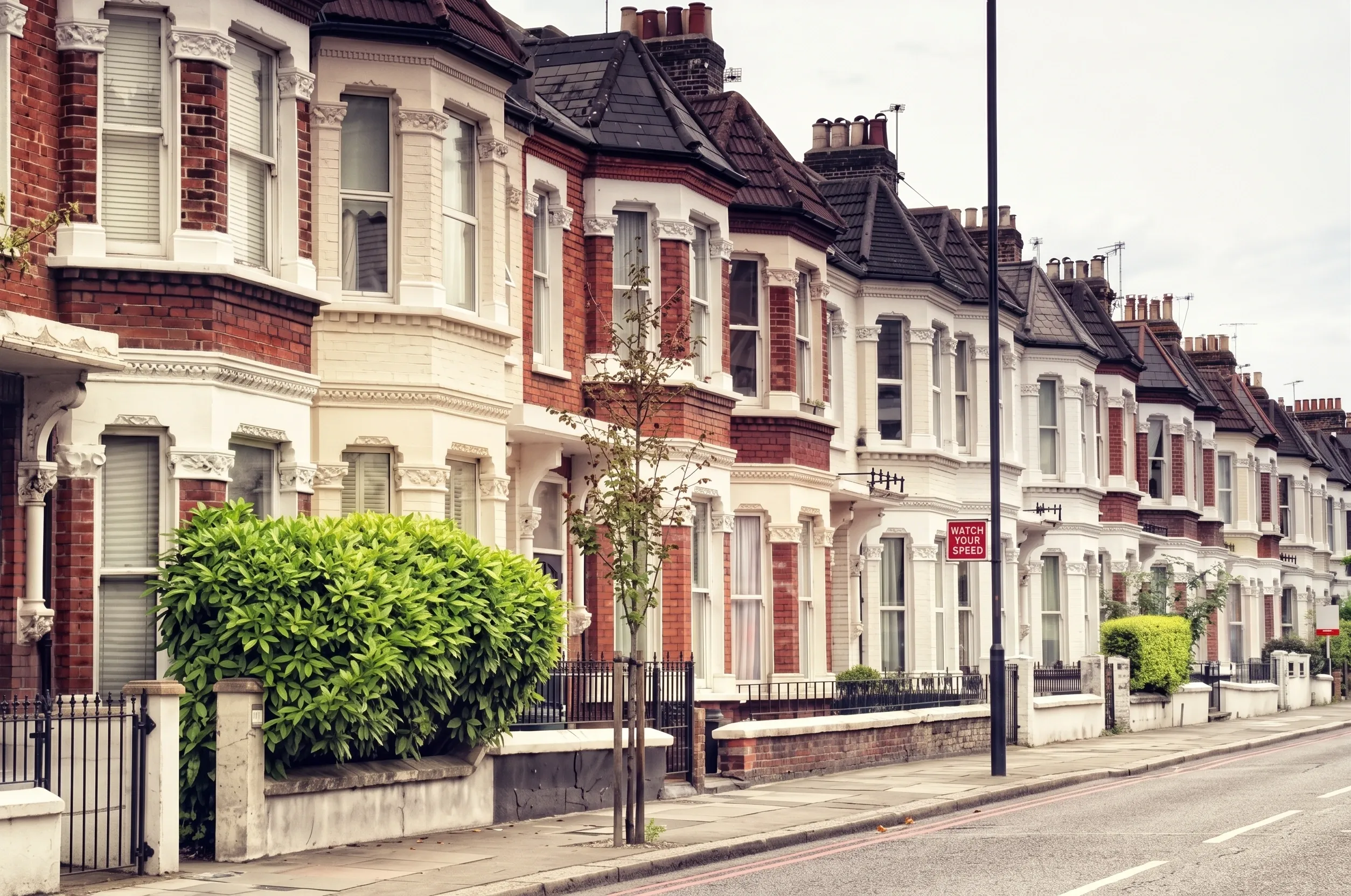
Wandsworth has the lowest Band D council tax in England at £1,020.35. Trains to Waterloo, the common, and what a Victorian maisonette really means.
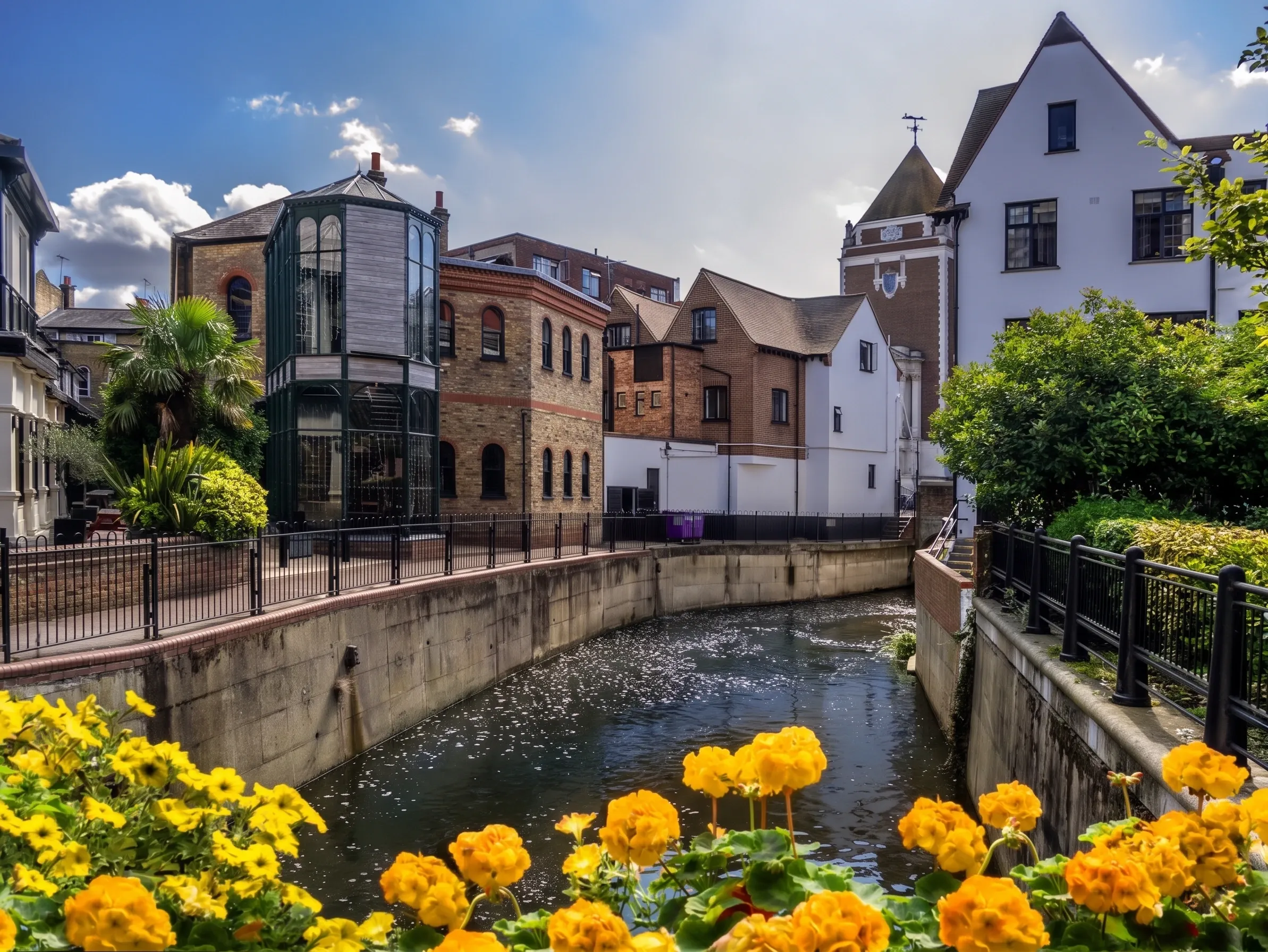
Kingston has the Tiffin grammar schools, Richmond Park and a Band D council tax bill of £2,608.12 for 2026/27. No Underground station either.
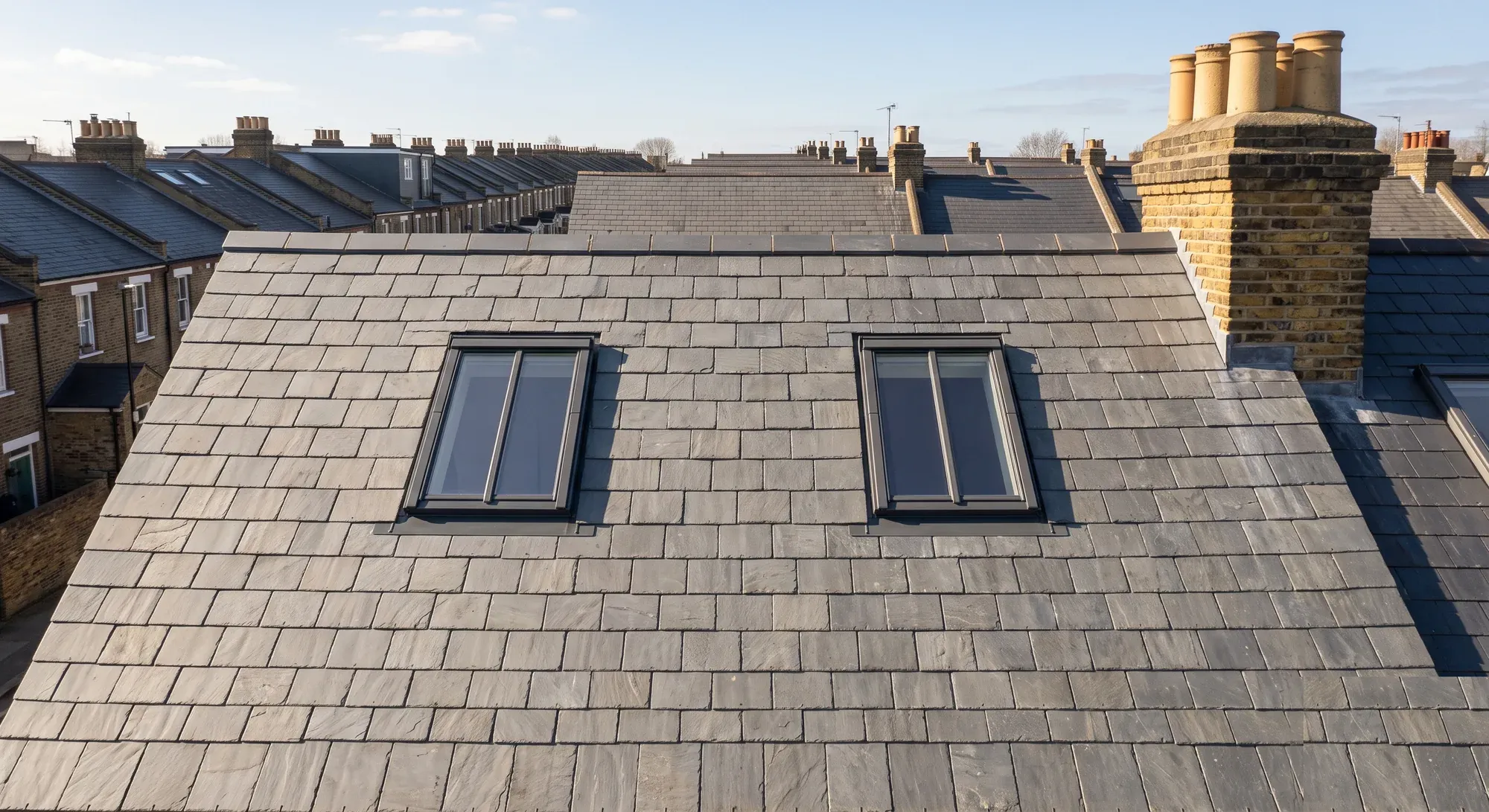
Dormers need permission, rooflights do not. Which permitted development rights survive on article 2(3) land, why Article 4 is separate, and what still applies.
Permitted development rights removed, party walls on both sides, nowhere to put a skip and borough charges that vary fourfold. What actually differs about renovating in London.