
How much does a new boiler cost in the UK?

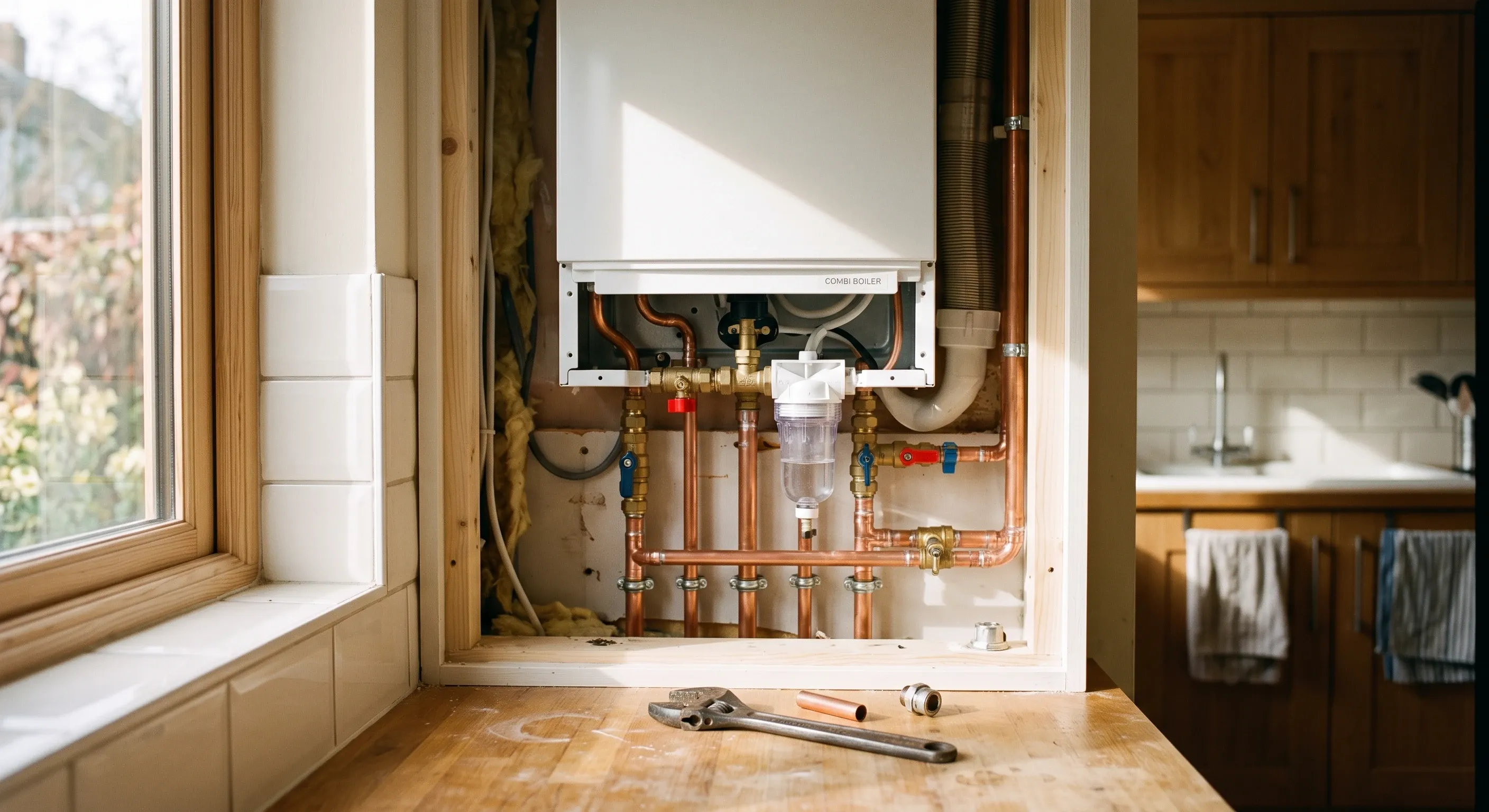
Checkatrade puts a like-for-like combi replacement at £2,500 to £4,000 for supply and installation in 2026. MyJobQuote gives a UK average of £2,400. Neither states whether those figures include VAT, and on a gas boiler that matters: gas boiler installation is standard-rated at 20%.
That gap between £2,400 and £4,000 is not a brand difference. It is the difference between a boiler that lifts off one wall and goes back on the same wall, and a boiler that arrives to find 8mm microbore, sixteen-year-old radiators and a condensate run with nowhere to go. The price you were quoted on a comparison site assumes the first house. Most London houses are the second.
How much does a new boiler cost in the UK in 2026?
Every published figure below comes from a named source, with the VAT basis stated where the publisher gives one. Most do not, which is the first thing worth knowing about boiler pricing.
Item | Published figure | Source | VAT basis |
|---|---|---|---|
Like-for-like combi replacement, supply and install | £2,500 to £4,000 | Checkatrade, new boiler cost guide, 2026 | Not stated |
UK average boiler installation, supply and install | £2,400 | MyJobQuote, boiler installation cost guide, 2026 | Not stated |
Mid-range gas combi, supply and install | £1,800 to £2,800 | MyJobQuote, 2026 | Not stated |
Boiler supply only, all types | £1,200 to £10,000 | Checkatrade, 2026 | Not stated |
Labour only, straightforward swap | £600 to £1,900 | MyJobQuote, 2026 | Not stated |
Labour only | £1,000 to £2,000 | Checkatrade, 2026 | Not stated |
Regular or system converted to combi | around £4,000 | Checkatrade, 2026 | Not stated |
London and the South East premium | £250 to £700 above northern prices | MyJobQuote, 2026 | Not stated |
Two sources, two methodologies, and a £1,600 spread on the same job. Checkatrade's number is a range built from its trade network. MyJobQuote's £2,400 is an average drawn from quotes given through its platform, which is why it sits below Checkatrade's floor: averages get dragged down by simple swaps in small houses. If you live in a London terrace or a converted flat, use the top of Checkatrade's range as your starting point, not the average.
What does a headline boiler price actually include?
A headline price buys three things: the appliance, a Gas Safe registered engineer for roughly a day, and the flue. Checkatrade prices a simple installation at four to six hours. That is the job the number describes.
It does not buy pipework replacement, radiator changes, a system flush, a magnetic filter, new controls, any moving of the boiler, or the plastering and decorating after a floor comes up. Those are priced separately if they are priced at all, and on a fixed-price online quote they are usually discovered on the day. Here is what each one costs when it appears.
Extra | Published figure | Source | VAT basis |
|---|---|---|---|
Power flush before installation | around £1,000 | Checkatrade, 2026 | Stated as inc VAT |
Magnetic system filter | £60 to £160, plus £50 to £150 to fit | Checkatrade, 2026 | Not stated |
Magnetic system filter | £120 to £250 | MyJobQuote, 2026 | Not stated |
Remove and replace one radiator | around £200 | Checkatrade and MyJobQuote, 2026 | Not stated |
Thermostatic radiator valves | £70 to £140 per radiator | MyJobQuote, 2026 | Not stated |
Smart thermostat | around £265 | MyJobQuote, 2026 | Not stated |
Upgraded controls | around £150 supply only | Checkatrade, 2026 | Not stated |
Boxing in the boiler | around £335 | MyJobQuote, 2026 | Not stated |
Add a flush, a filter, TRVs on ten radiators and a smart control to a £2,800 boiler and you are at roughly £5,000 before anyone has lifted a floorboard. None of that is upselling. A new boiler pushed into a dirty system without a flush and a filter will have its warranty questioned the first time the heat exchanger blocks, and manufacturers including Worcester Bosch tie extended guarantees to a system filter being fitted.
Why do two quotes for the same boiler differ by £2,000?
Because the boiler is the cheap, predictable part and the pipework is neither. Four conditions decide almost the entire spread, and none of them are visible in a photo of your existing unit.
Microbore is the big one. Plenty of houses built or reworked between the 1970s and early 1990s run 8mm or 10mm microbore feeds to the radiators instead of 15mm. Microbore silts up, restricts flow and makes it very difficult for a modern condensing boiler to run at the low return temperatures it needs to actually condense. An engineer who spots it will either price to replace the feeds or, more commonly, walk away from a fixed-price job. The second condition is the gas supply pipe: older properties are often fed in 15mm, and a higher-output combi can need 22mm run back to the meter. Third is the flue route, which changes entirely if the boiler is moving or if the old flue terminated somewhere current regulations no longer allow. Fourth is the condensate, because a condensing boiler produces acidic water that needs a fall to a drain, and in a first-floor flat or an internal cupboard there often isn't one.
Victorian and Edwardian stock brings its own version of this, alongside the usual Victorian terrace surprises that turn up once floors are open. Lifting boards in a period house to chase pipework is rarely a clean job.
When does a boiler swap become a system job?
When the radiators can no longer do what the new boiler is asking of them. A modern condensing boiler only reaches its advertised efficiency when it returns water below about 55°C, and older radiators were sized for 80°C flow. Run a new boiler at 80°C to compensate and you have bought an efficient appliance and thrown the efficiency away.
At that point you are not replacing a boiler, you are replacing a system, and the honest answer is to price it as one: heat loss calculation room by room, radiators resized to the flow temperature you intend to run, pipework replaced where it restricts, then the whole thing balanced. That is a full central heating installation, not a swap, and it is a different scope, a different programme and a different quote.
It is also the moment to settle which boiler type your house actually needs, because changing from a system to a combi halfway through is the most expensive change of mind available to you. Checkatrade prices that conversion at around £4,000 for supply and installation, VAT basis not stated, and it is a different job from the one you originally asked for.
What does moving the boiler add?
Checkatrade puts the labour to relocate a boiler at around £1,000. MyJobQuote gives around £750 on average, and notes it varies with the pipework, the flue and the distance. Neither figure states a VAT basis.
Both are labour only. Moving a boiler from a kitchen wall to a loft or an airing cupboard means new gas, water and heating pipe runs, a new flue penetration, a new condensate route, and an electrical supply at the new position. It also means holes in finished rooms. The cost people forget is not the plumbing. It is the plasterer and the decorator afterwards, which is priced by the day like everything else: see what trades charge per day in London for the going rates. Two days of making good on top of a £750 relocation is not unusual, and it is almost never in the boiler quote.
Do you pay VAT on a new boiler, and can a grant help?
Yes, at 20%. Gas boilers were deliberately left out of the zero rate for energy-saving materials, and HMRC's VAT Notice 708/6 confirms the relief covers qualifying energy-saving materials and heat pumps at 0% from 1 May 2023 to 31 March 2027, reverting to 5% from 1 April 2027. A gas boiler is standard-rated throughout.
The Boiler Upgrade Scheme does not help either, and it is worth being precise about why. Energy Saving Trust states the scheme is for replacing a fossil fuel system with low carbon heating, not for replacing a boiler with another boiler: £7,500 towards an air source, ground source or water source heat pump, £2,500 towards an air to air heat pump, £5,000 towards a biomass boiler, with a temporary £9,000 grant for eligible off-gas-grid oil and LPG properties from 21 July 2026 to 31 March 2027. It applies in England and Wales, the installer must be MCS certified, and they apply on your behalf and take the value off the quote. On the new build side, the Future Homes Standard sets carbon targets that a gas boiler cannot meet, but that governs new homes in England. Nothing requires you to remove a working gas boiler from an existing house, and no date has been set that would.
Who is legally responsible for the paperwork?
The engineer must be on the Gas Safe Register, and after installing a heat producing appliance they must notify it so the local authority can issue a Building Regulations Compliance Certificate. Gas Safe Register states this notification has to happen within 30 days of installation.
You should also expect the installation to meet Boiler Plus, the standard that sits under Part L in England: a minimum 92% ErP efficiency, time and temperature control, and for a combi one additional measure from flue gas heat recovery, weather compensation, load compensation or smart controls. Ask for the certificate, not a promise of one. It belongs to the property, a buyer's solicitor will ask for it, and chasing an engineer for it two years later is one of those costs homeowners rarely budget for when the paperwork has to be regularised instead.
Frequently asked questions
Is a fixed online boiler price ever genuine?
Sometimes, and only for a true like-for-like swap in the same position with sound pipework. Read the exclusions rather than the headline. Most fixed prices exclude pipework replacement, radiator work, flushing beyond a chemical clean, and all making good.
How long should a boiler replacement take?
Checkatrade puts a simple installation at four to six hours. Checkatrade also puts a regular-to-combi conversion at about two days and a system-to-combi conversion at up to three. If your quote says one day and you are changing type, question it.
Do I need a power flush or will a chemical clean do?
It depends on what comes out of the system. A chemical clean and a magnetic filter is often enough on a reasonably clean system. If the radiators are cold at the bottom or the water runs black, the flush is not optional and Checkatrade prices it at around £1,000 inc VAT.
Should I replace the radiators at the same time?
If you are changing boiler type or intend to run lower flow temperatures, yes, and price it in from the start. Retrofitting radiators after the floors are back down costs far more than doing it while they are up.
Does a new boiler add value to the house?
Treat it as maintenance rather than an investment. It removes a buyer's objection and it lowers running costs. We would not put a resale figure on it, because nobody publishes one that stands up.
Find out what your project will cost
Worried the boiler quote you have does not cover the pipework, the radiators or the making good? Get up to three comparable quotes from vetted London builders, all priced from the same written scope, so you can see exactly where they differ.
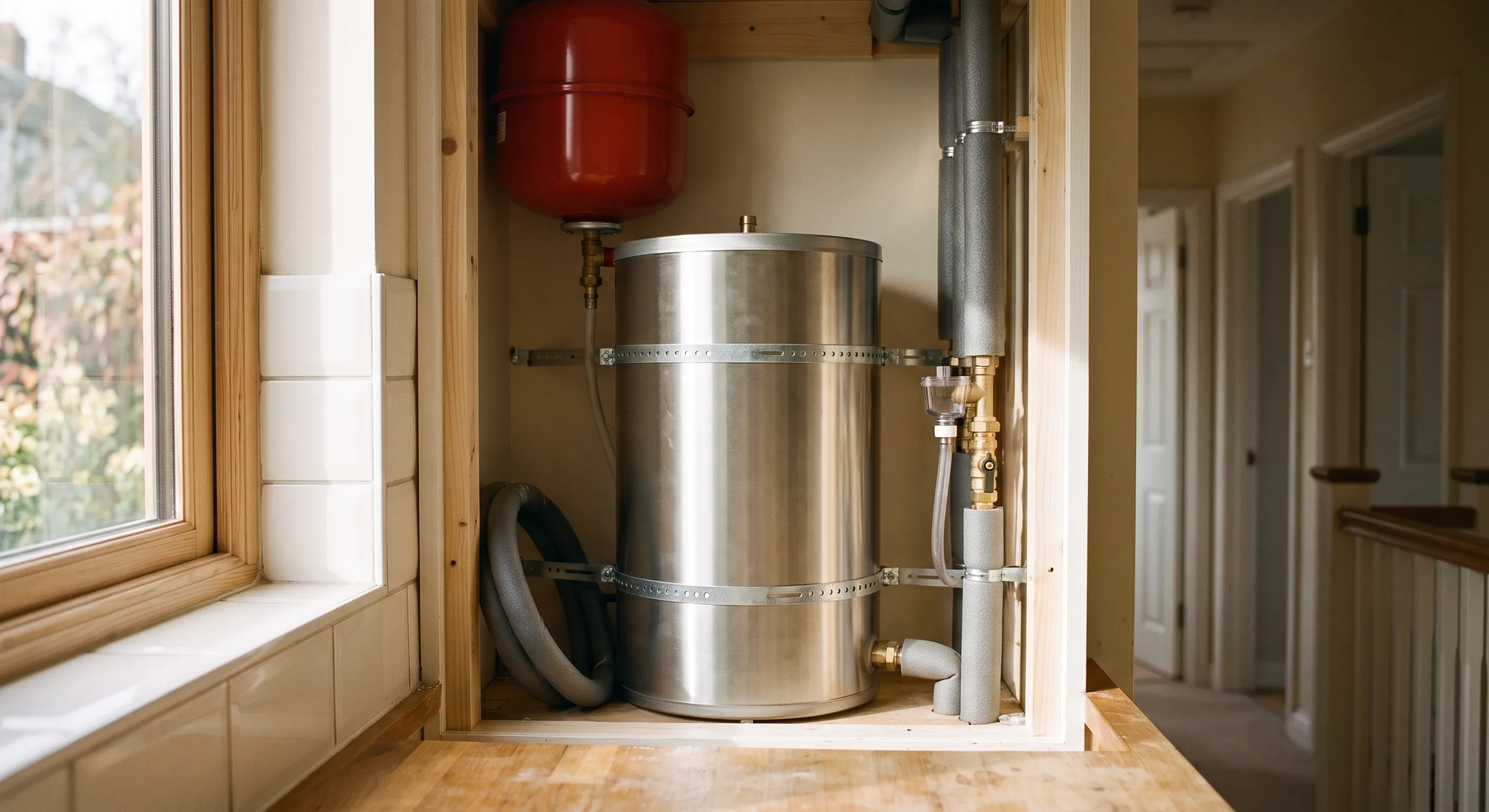
Bedroom count does not decide your boiler type. Mains flow rate, simultaneous bathrooms and the airing cupboard do. How to test your flow rate first.
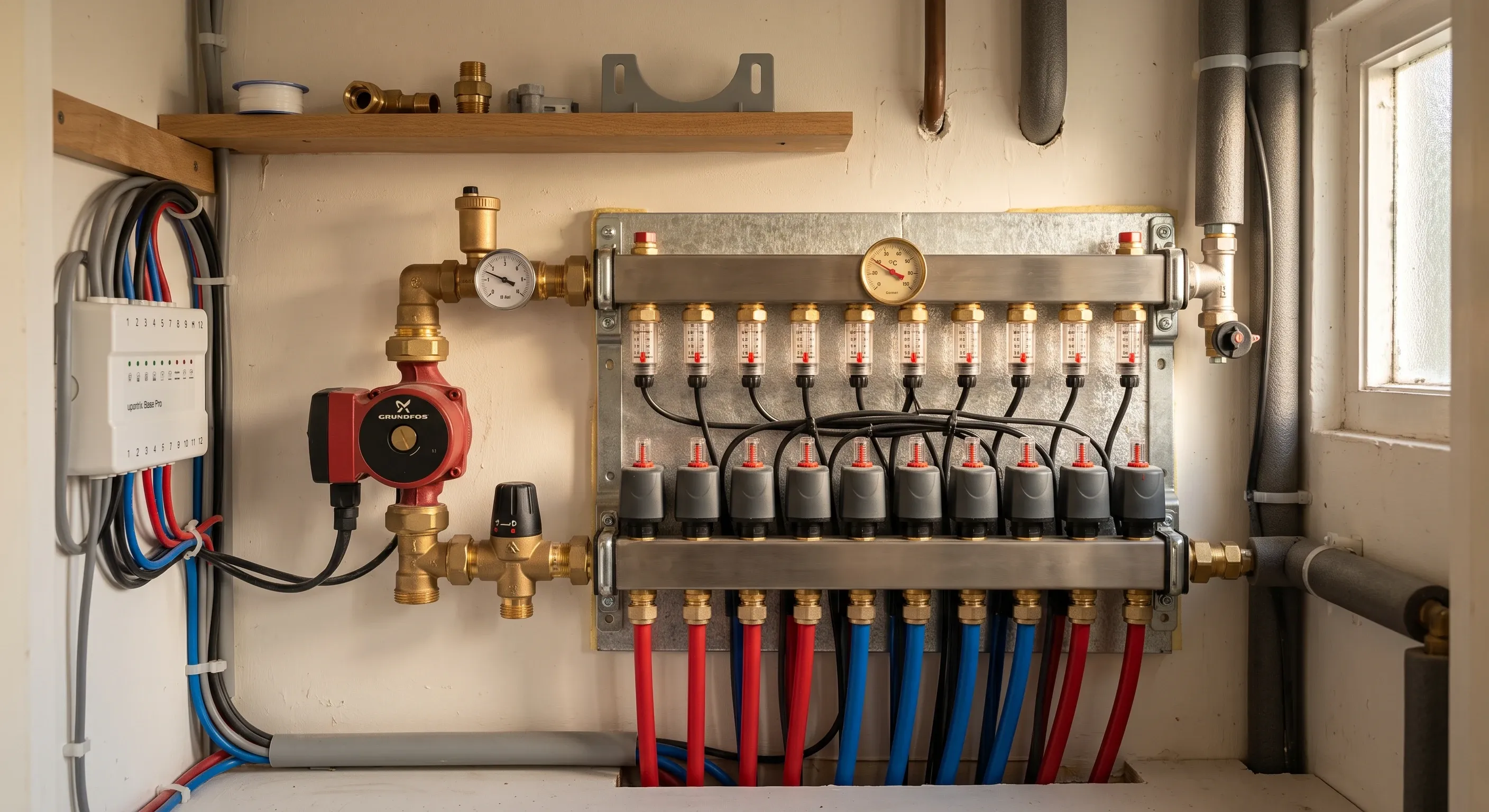
Yes, with a blending valve, manifold and zone valves. The real question is whether your combi modulates low enough to run a low-temperature circuit.
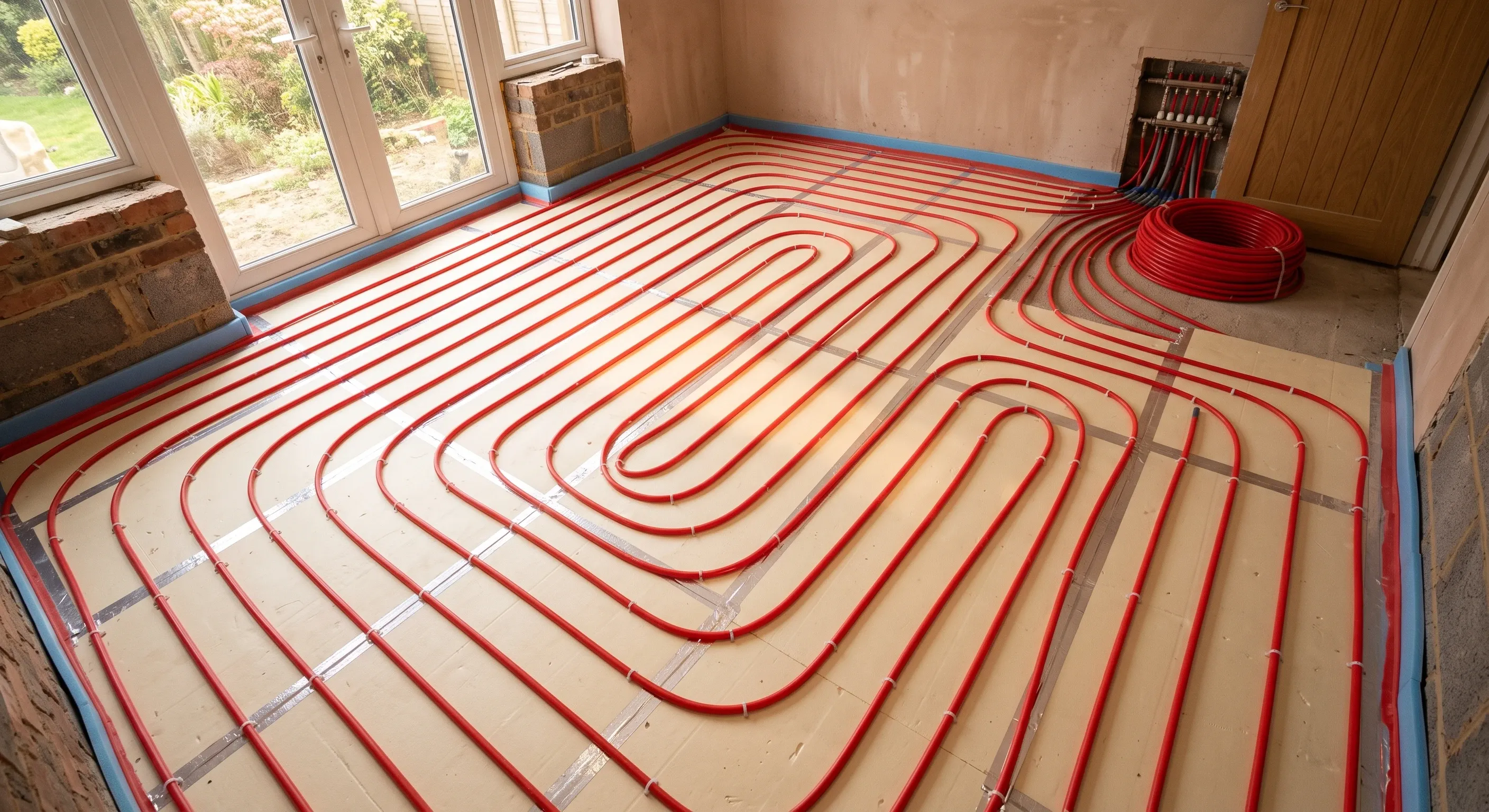
Published figures say 25% cheaper and also say parity. The variable is flow temperature and floor insulation. What that means for a London terrace.