







The Beams team removed all the stress and matched me with a wonderful contractor.
Teresa
Queen's Park

On time and on budget. A real pleasure.
Eleanor
Stoke Newington
Completed our renovation project within budget and on time.
Evelyn
Bow East
London's central heating specialists
Central heating installation in London means a new boiler, radiators, pipework, controls and a system flush. A complete gas system in a typical three-bed home is published at £4,000 to £5,500, VAT included (BestBuilders, 2026). Whether the existing pipework can be reused is what moves that figure most.
The same house can be quoted at £4,000 or £15,000 depending on whether the radiators stay where they are. Add making good afterwards, which almost every quote excludes, and the final bill moves again. Beams scopes the pipework and the making good together, then up to three vetted London builders quote against it.

Pipework scoped, not assumed
Reusing existing runs or a full first fix, decided before anyone prices it.
Making good included
Floors, chased walls and decoration priced alongside the heating, not left for you to arrange.
Vetted builders
Personally vetted: visited in person, references checked, recent work inspected. You meet up to three before committing.
Fixed-price contracts
Milestone payments held securely until you approve each stage, plus a 12-month workmanship warranty.
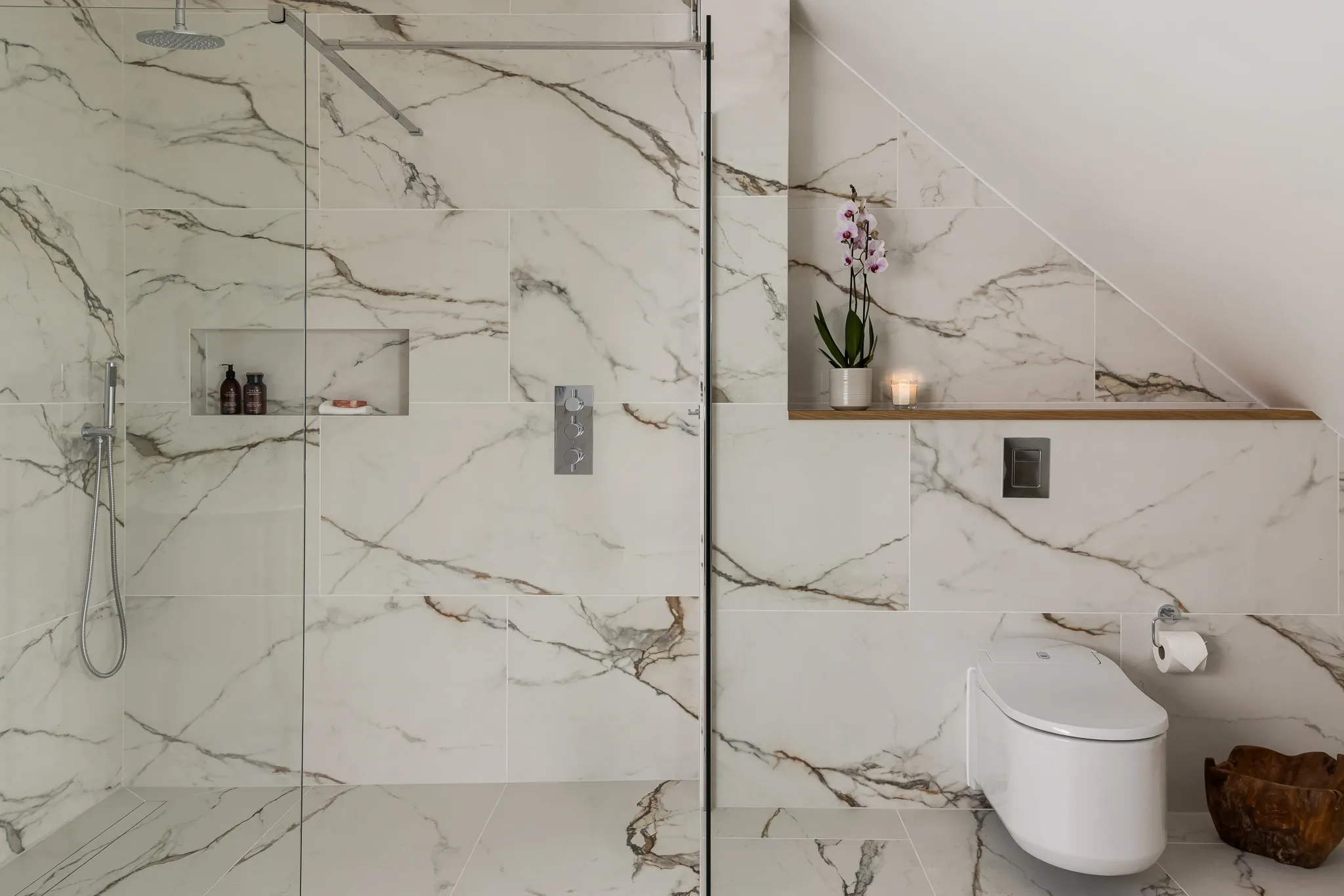
Recent London central heating installations
Explore completed heating and plumbing work across London.
Central heating installation costs in London
Published 2026 figures:
- A complete gas system in a typical three-bed UK home, covering a new combi or system boiler, seven to ten radiators, pipework, controls and a full system flush: £4,000 to £5,500. A one or two bed flat from about £3,000, and a four or five bed detached £7,000 to £10,000 and above. Adding heating to a property with none adds roughly £1,000 to £3,000 on top. From BestBuilders' 2026 quote data across 519 UK towns, and their calculator states figures include VAT at 20%
- Full central heating installation averaging £4,250, with a typical range of £3,430 to £5,050 (MyJobQuote, VAT status not stated by the source). Boiler around £2,400, radiators around £200 each, power flush around £400
- Overall system cost typically £5,000 to £10,000 depending on specification (BookaBuilderUK, VAT status not stated by the source)
- Radiators £150 to £400 each fitted, with designer or column radiators at £250 to £800 and above (BestBuilders, whose calculator states figures include VAT at 20%). A like-for-like swap in the same position is £150 to £350 per radiator including labour (BookaBuilderUK, VAT status not stated by the source)
- Copper pipework replacement across a full house £500 to £1,500 (Anglian PHE, stating VAT included at 20% where applicable)
- Labour typically accounts for 40 to 50% of the total (BoilerCoverUK, 2026)
No published source gives a London-specific rate for this work. London sits at the upper end of the national ranges above, and we would rather tell you that than publish a number we cannot source.
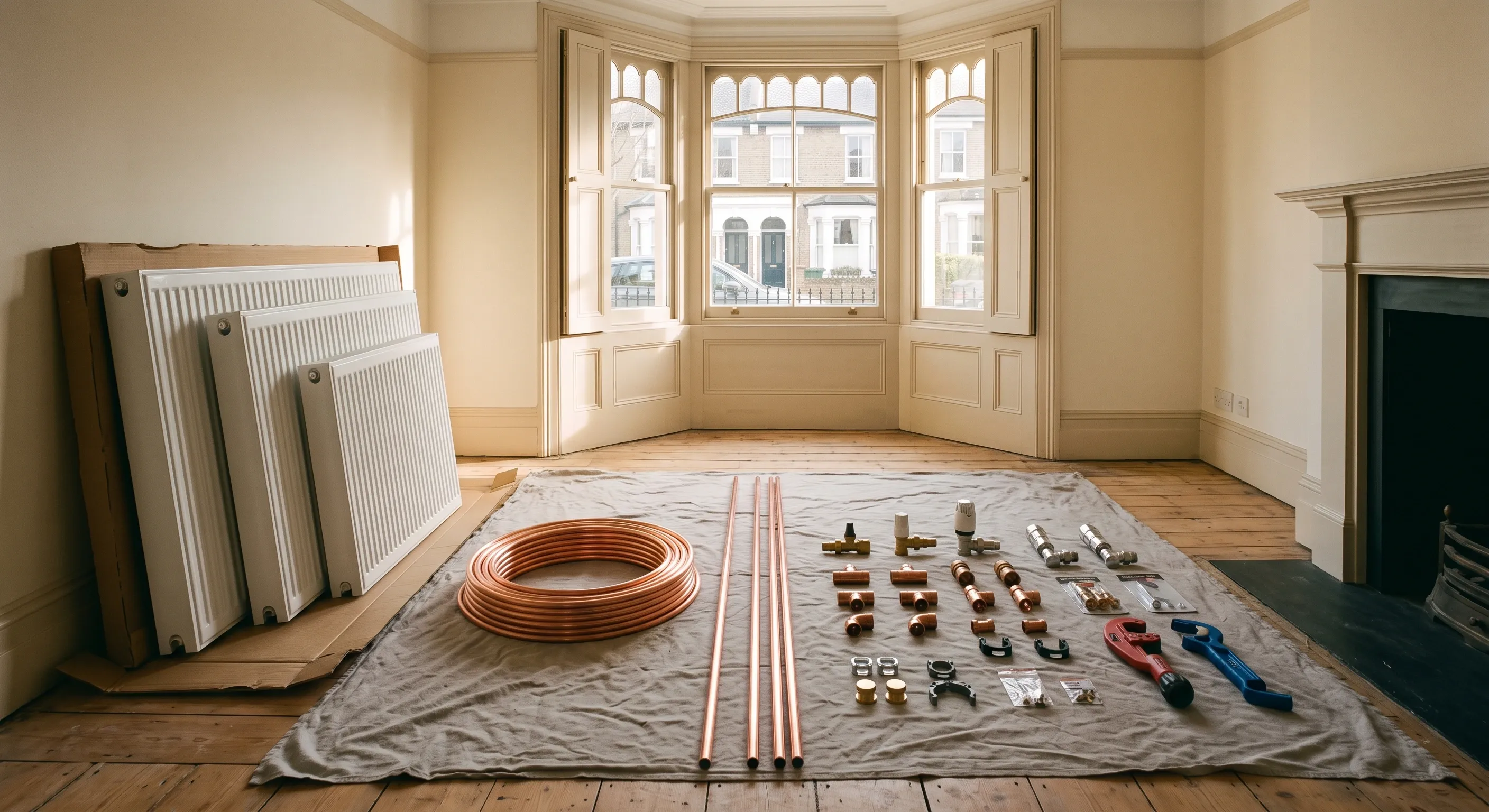
Pipework is the whole question
One published guide puts it more plainly than most contractors will: reusing sound existing pipe keeps a system change close to a boiler swap, while a full first fix means floors up throughout and is a different job entirely.
That is the single biggest variable in a heating quote, and it is why two quotes on the same house can differ by thousands. If the radiators stay in their existing positions and the pipework is sound, you are paying for a boiler, radiators and a flush. If radiators are moving, or the existing pipework is microbore, corroded or badly laid, then floors come up across the house and the labour multiplies.
Microbore is worth understanding. Many houses from the 1970s and 1980s were plumbed in narrow-bore pipe, which restricts flow, blocks more easily, and often has to be replaced rather than reused. Upgrading to 15mm or 22mm copper is common in older homes and it is a first-fix job.
Ask any quote to state whether radiator positions are changing and whether the existing pipework is being reused, tested or replaced.
If the floors are coming up anyway, this is the moment to deal with the cabling under them at the same time.
Boiler sizing, and getting it wrong
Bigger is not better, and oversizing is the most common technical mistake in a domestic heating quote.
A boiler that is too powerful for the system it serves will short cycle, firing and stopping repeatedly instead of running steadily. That wastes gas and wears the boiler out faster. On a forum thread about a 30kW combi proposed for a house with eight radiators, the technical response was that it would very likely short cycle, because the boiler's minimum output was too high for the heat the system could actually absorb.
The number that prevents this is a heat loss calculation, room by room, which then sizes both the boiler and the radiators. A full system quotation should state the design flow temperature, radiator outputs, pipe sizes, control strategy and water treatment. If a quote states none of those, it has not been designed, it has been guessed.
Flow temperature is worth thinking about even if you are not considering a heat pump yet. Sizing radiators for a lower flow temperature now means the system will work with a heat pump later without replacing them again. It costs a little more today and saves a great deal later.
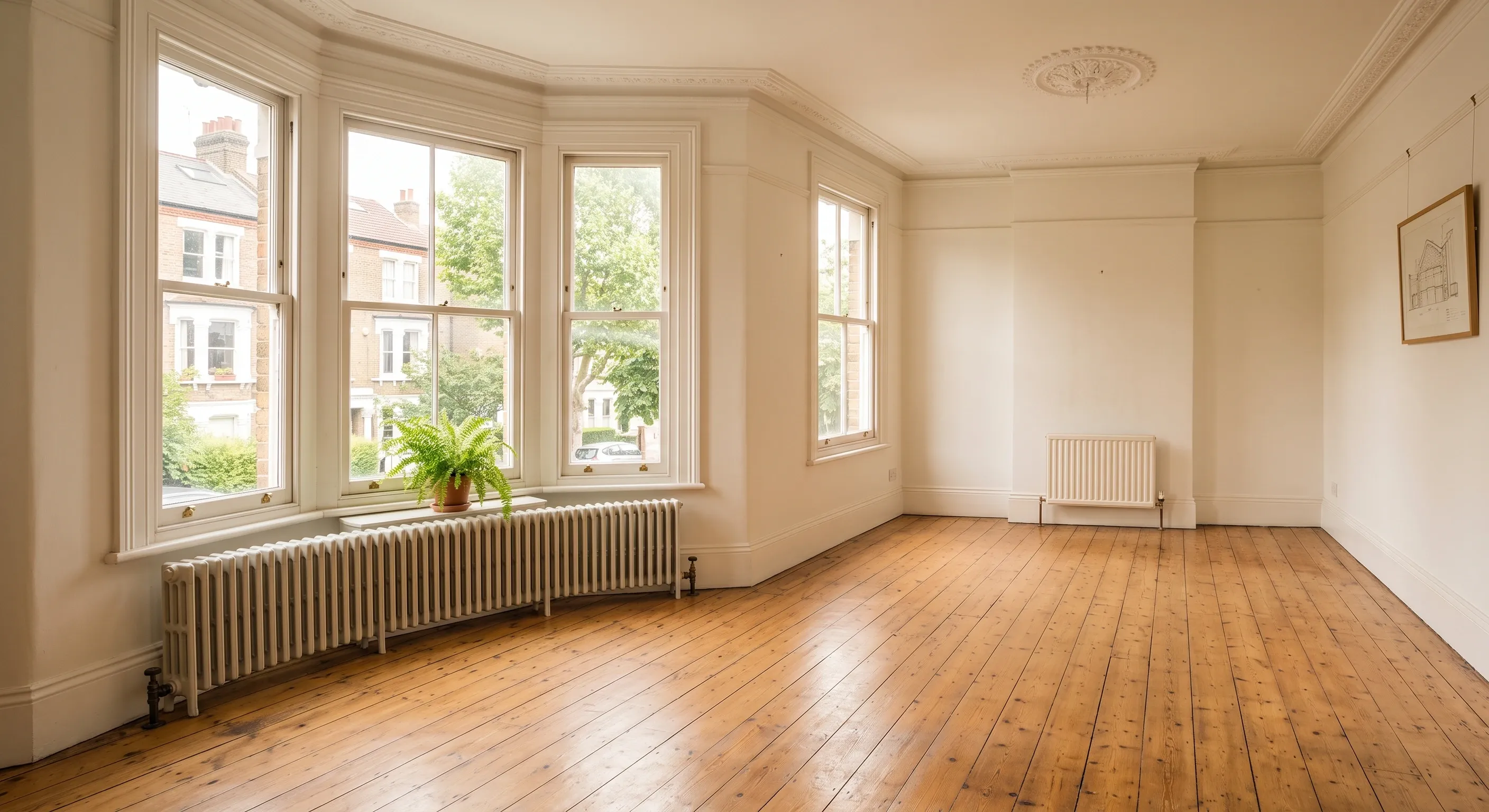
Making good is excluded, and nobody tells you
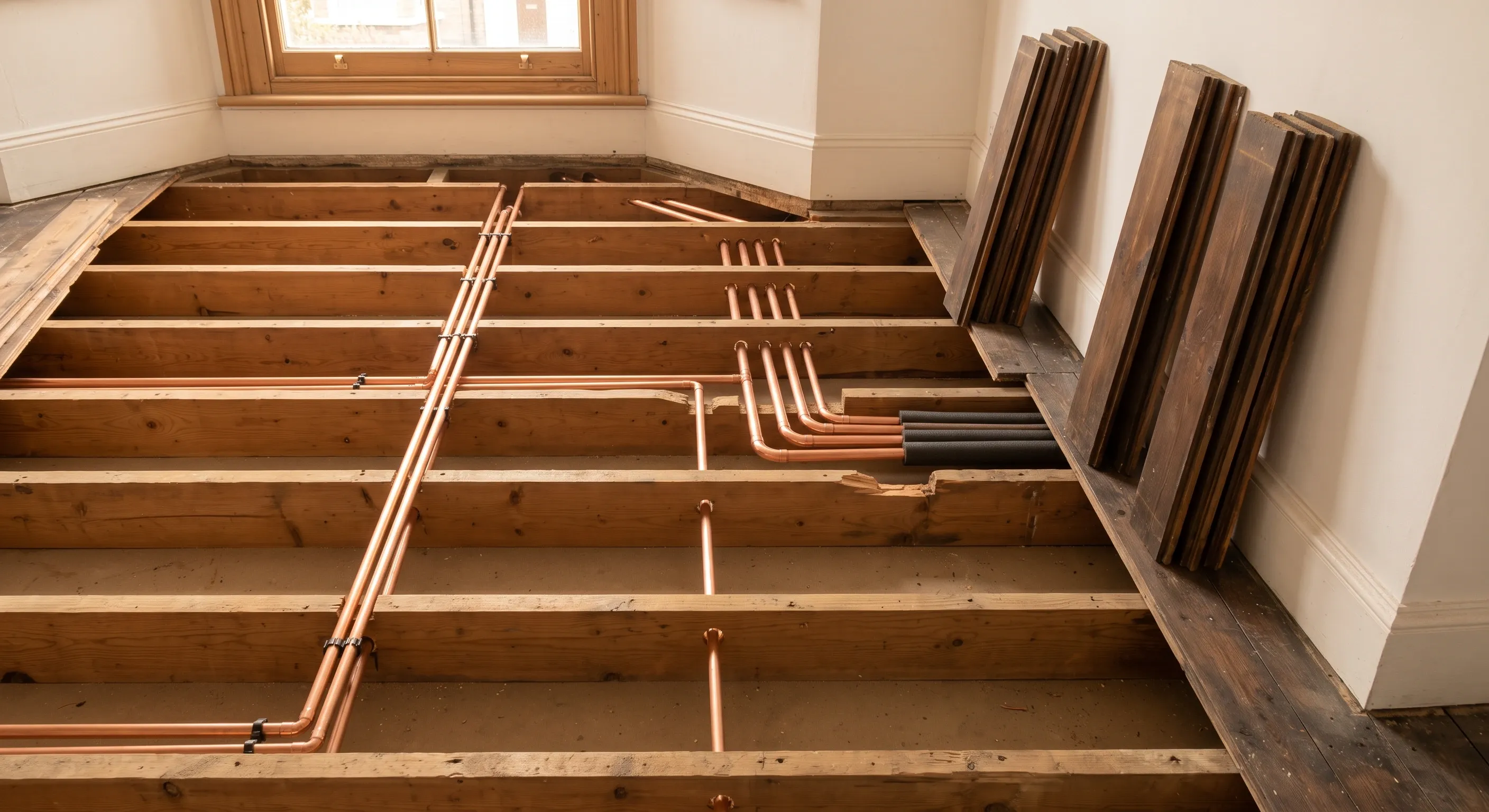
Running new pipework means lifting floors and chasing walls. Once the heating engineer has finished, someone has to put all of that back.
A published cost guide states it directly: making good floors and decoration after a full first fix is normally excluded, and it advises confirming before you sign. That is the same gap as a rewire, and it catches people the same way.
So a heating quote and a heating bill are different numbers unless the making good is priced with it. Floorboards have to be relaid and, where they were cut, replaced. Chased walls need filling and skimming. Decoration follows once the plaster has dried.
There is one way to avoid it entirely. If the heating work happens during a wider renovation, before flooring goes down and before anything is decorated, the reinstatement cost largely disappears, because the floors were coming up and the walls were being replastered anyway.
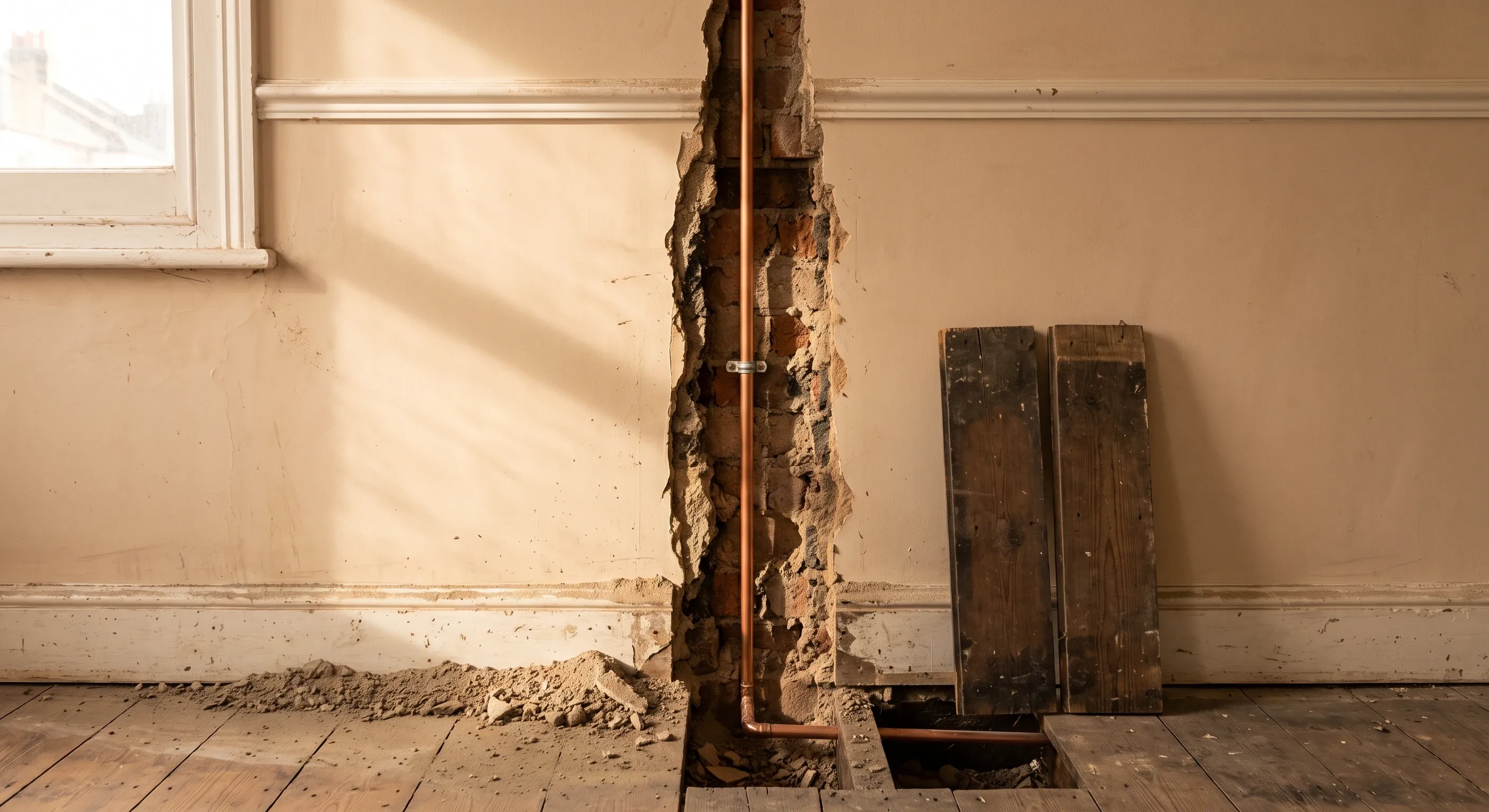
Certification and what a quote should contain
Boiler work is notifiable under the Building Regulations. Your Gas Safe registered engineer registers it and you should receive a compliance certificate within about 30 days. Keep it, because a conveyancer will ask for it.
A quote you can check names all of this:
- Boiler make, model and output, and why that output
- Whether a heat loss calculation has been done
- Radiator schedule: how many, what size, what output, and whether positions change
- Pipework: reused, part-replaced or full first fix, and the pipe sizes
- Power flush or chemical clean, and inhibitor
- Controls, and whether zoning or smart controls are included
- Design flow temperature
- Making good: floors, walls and decoration, priced or explicitly excluded
- Gas Safe registration, Benchmark commissioning and the compliance certificate
- Warranty on the boiler and on the installation
Items that commonly appear as extras rather than in the headline price: an additional radiator, smart controls, relocating the boiler from the ground floor to the loft, and a consumer unit upgrade if the electrical supply needs it. We have no published rate for any of them, so ask for each to be priced in the quote rather than added later.
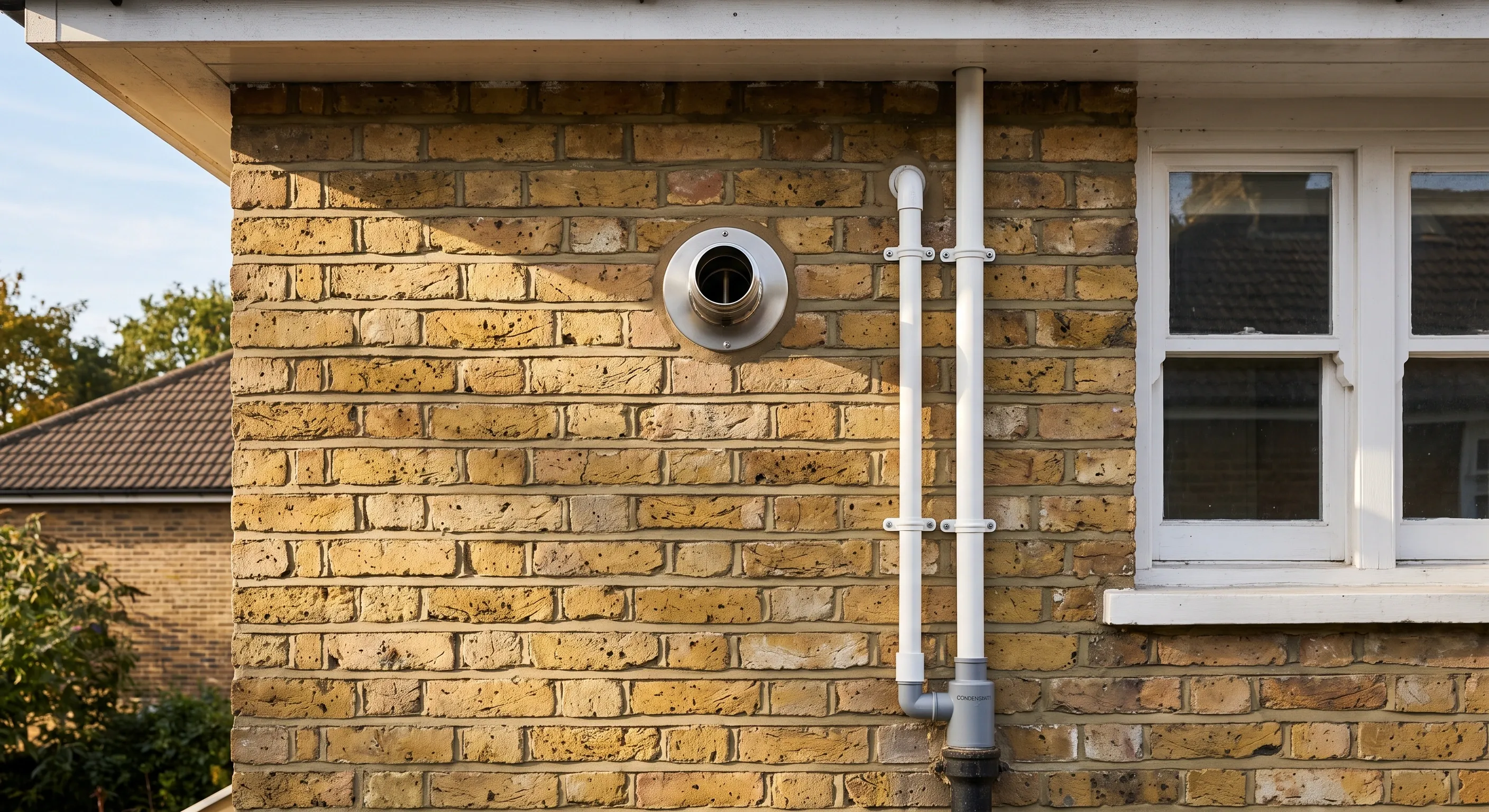
How a Beams central heating project works
Step 1: Get your estimate
Tell us the property, what heating is there now, and whether you want radiators moved. Your planner gives you an estimate range before any commitment.
Step 2: Design and specification
Heat loss calculated, boiler and radiators sized, pipework scope decided, and making good priced alongside.
Step 3: Installed by your vetted builder
Heating and making good under one fixed-price contract, with milestone payments held securely until you approve each stage. 12-month workmanship warranty included, plus the manufacturer's boiler warranty.
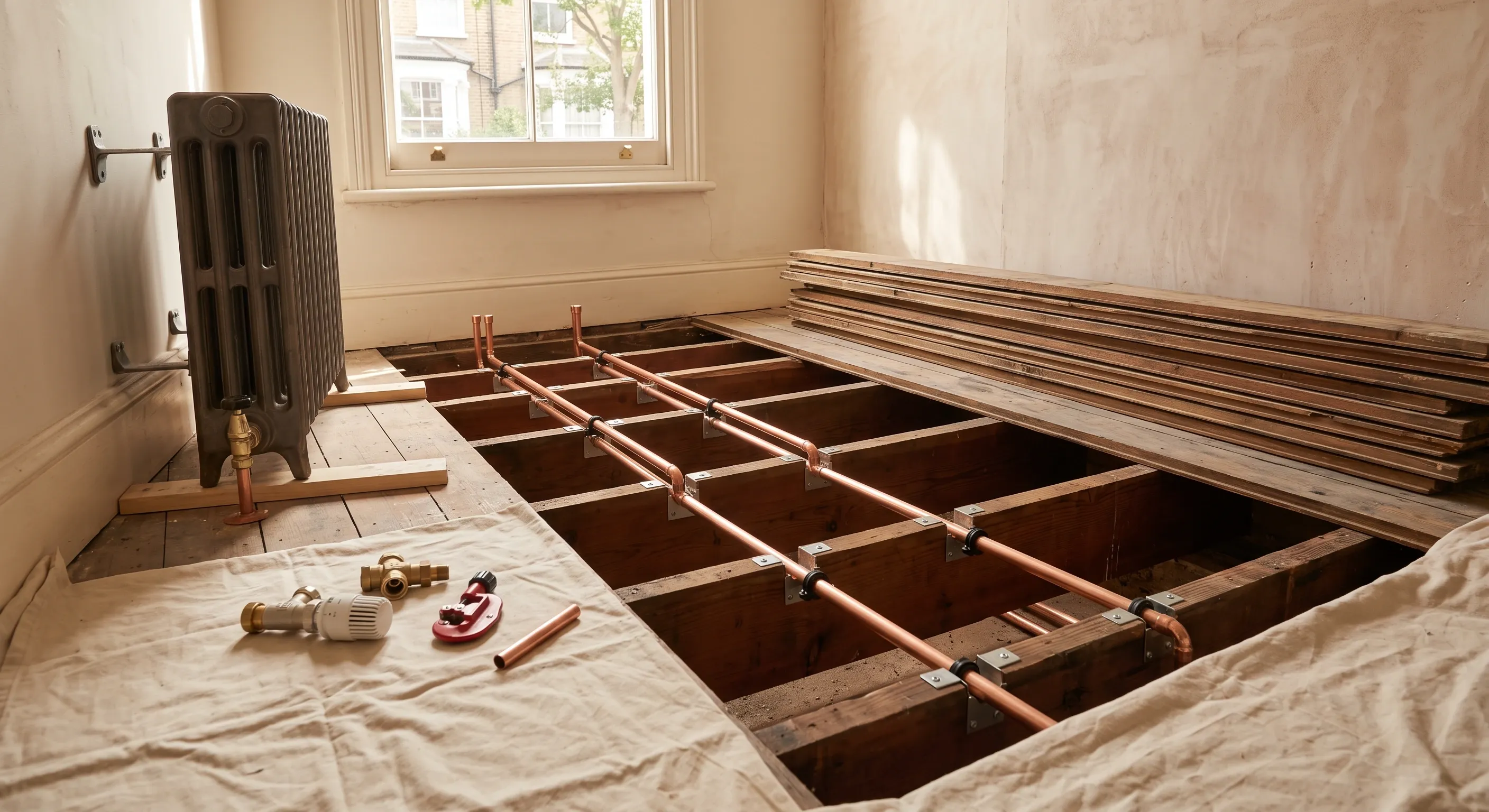
Central heating across London
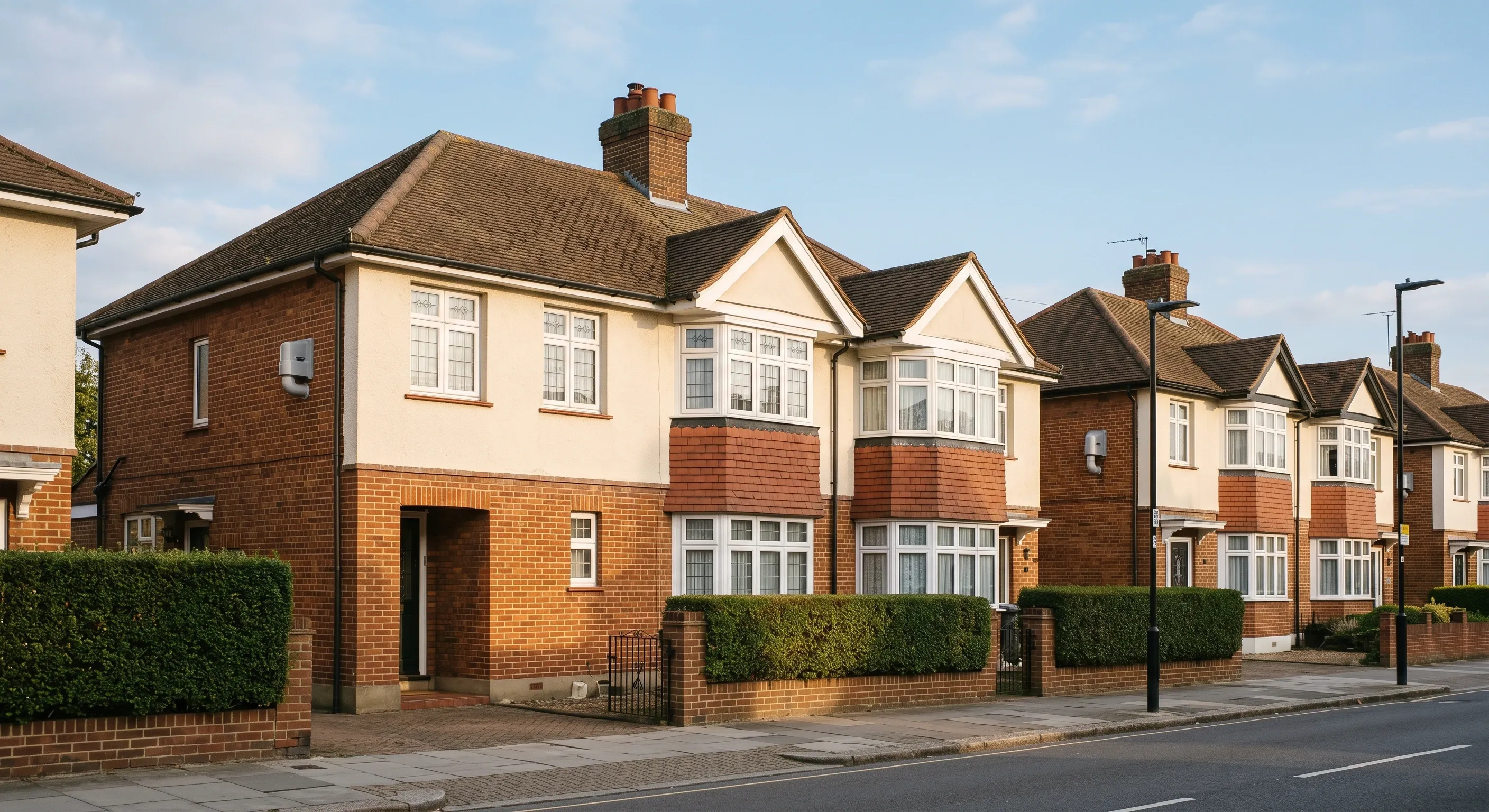
We work with vetted builders and Gas Safe engineers across all London postcodes, in North, South, East and West London. Period London stock brings its own problems: suspended timber floors that have to come up in every room, solid walls that limit where pipe can run, and lath and plaster that does not chase cleanly.
Once those floors are up, a wet underfloor system run off the same boiler is worth pricing in the same specification rather than as a separate job later.
Find out what a new heating system costs in your house
Get an estimate that says whether the pipework is being reused, and who is putting the floors back. No commitment, no sales pressure.