
Can you sand an engineered wood floor? What the wear layer thickness tells you

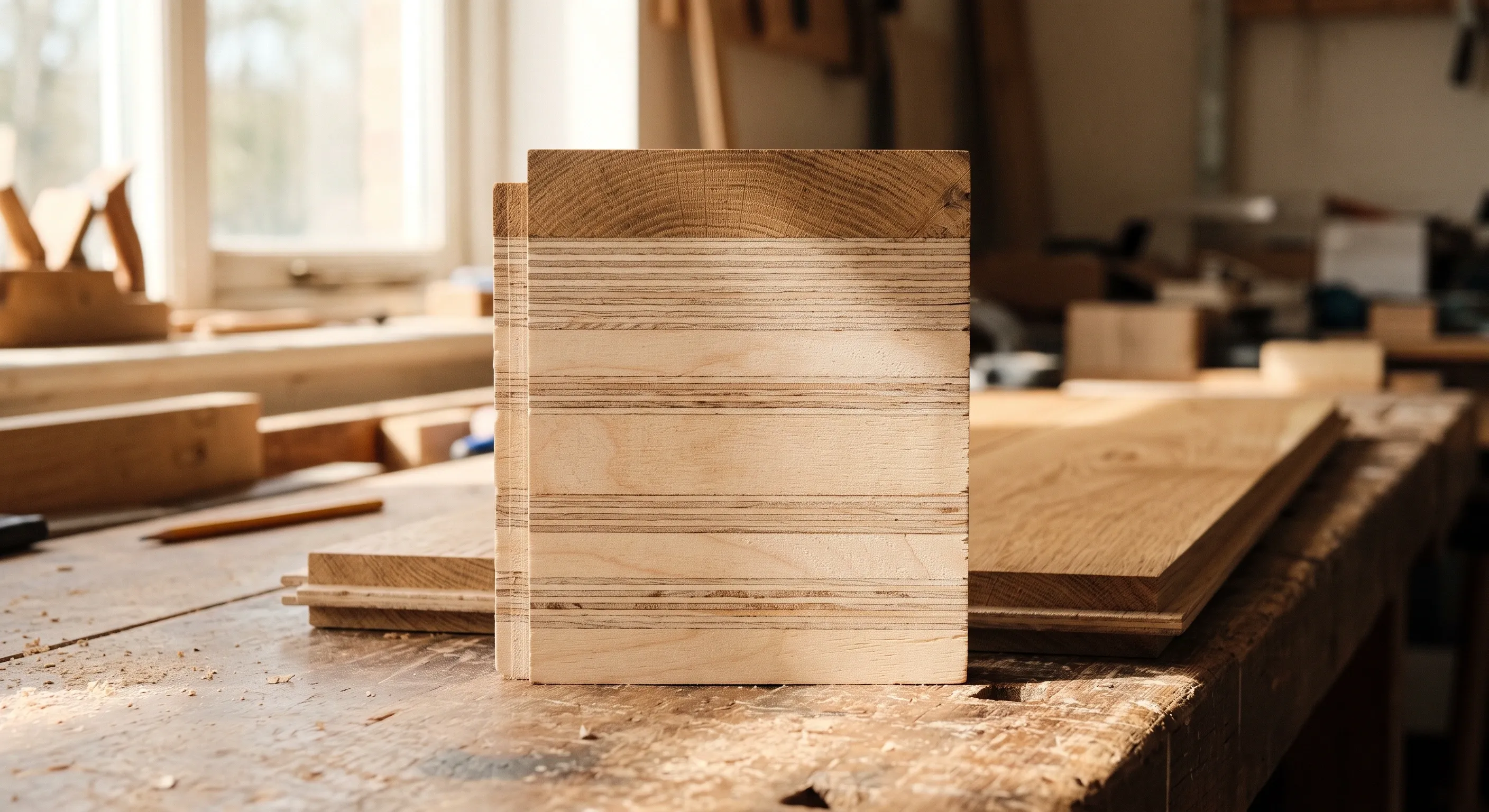
Yes, provided the wear layer is thick enough. The National Wood Flooring Association's sand and finish guidelines are blunt about the cut-off: if the wear thickness is less than 2.5mm, the floor should not be sanded. At 2.5mm to 3mm you get one careful pass. At 4mm, around two. At 6mm and above, an engineered board behaves much like solid oak.
Almost every page that answers this question says "yes, depending on the wear layer" and then stops, which is useless if you are standing in a showroom deciding between a 2mm board and a 4mm one. The thresholds exist, they are published, and the arithmetic behind them is simple. One professional sanding cycle removes roughly 0.75mm to 1mm of timber. Divide, subtract the minimum you have to leave behind, and you have your answer before you buy.
How many times can you sand an engineered wood floor?
Work from the wear layer, never the board thickness. A 20mm board with a 2mm top layer is less refinishable than a 14mm board with a 4mm one, and the total thickness on the packaging tells you nothing about either.
Wear layer (top layer) | Full sands to plan for | What that means |
|---|---|---|
Veneer on an HDF core, typically under 1.5mm | None, ever | Kährs states plainly that its 7mm HDF-core veneer floors should not be re-sanded. Screen and recoat is the only option |
2 to 2.5mm | None | Below the NWFA's 2.5mm threshold. One pass leaves too little timber to survive the next deep scratch, and the one after goes into the core |
2.5 to 3mm | One | One pass, by a professional, on a floor that has never been sanded before. Treat it as a single use of a one-shot asset |
4mm | Around two | The common specification for a family house. Two sands across 40 or 50 years is a realistic plan |
6mm and above | Three to four | Refinishing behaviour close to solid oak, at a price close to it too |
Manufacturers are more generous than the trade guidelines. Kährs says the surface layer on both its two-layer and three-layer constructions can be re-sanded three to four times, which is a higher number than the NWFA arithmetic supports for a 3mm top layer. Both can be true. A manufacturer counting light sands on a floor that stays flat and is looked after will get more cycles than a floor sander levelling a cupped board in a Victorian front room. Plan around the lower number and treat anything extra as a bonus.
How much wood does one sanding cycle actually remove?
Less than a millimetre, if it is done well. NOFMA's guidelines, published before that body merged into the NWFA, set the target at less than 1/32 of an inch, which is 0.8mm. Wood Floor Business puts a standard professional sand and refinish at 0.5mm to 1.0mm. That is the number the whole decision turns on.
The NWFA's own worked example is the clearest illustration. Start with an unfinished engineered floor carrying a 3.2mm wear layer. The initial site sand and finish takes off about 0.8mm. What you are left with is a 2.5mm wear layer, which is exactly the minimum the guidelines say you need before a floor can be sanded at all. In other words, a factory-finished 2.5mm board arrives at your door with precisely one sand left in it. Not two.
How do you find your own wear layer thickness?
Look at the specification sheet first, and look for the words "wear layer", "top layer" or "lamella". Retail listings love to lead with total board thickness because 15mm sounds more substantial than 3mm, and the two numbers have nothing to do with each other. If the listing gives only the total thickness, that is usually a tell.
If the floor is already down and the paperwork is gone, you can measure it. The cut end of a board at a threshold, at a doorway, or at a pipe cut-out by a radiator will show the layers in section, and a 150mm rule against it gets you close enough to know which row of the table you are in. Worth doing before you commit either way, because the answer changes what you should be asking for. Board specification, including wear layer thickness in millimetres, is one of the lines we tell people to check in what a wood flooring quote should contain, and it is the single item most commonly left off a supply-and-fit price.
One useful European shortcut: for around 20 years, the Federation of the European Parquet Industry has only allowed a product to be sold as "parquet" if its real wood top layer is at least 2.5mm. If a board is marketed as parquet by a manufacturer signed up to that definition, the top layer clears the NWFA's sanding threshold. If it is marketed as "wood effect" or "veneer", it does not.
Why does a bevelled edge limit how far you can sand?
Because sanding a bevelled floor either changes the bevel or eats the wear layer. Most factory-finished engineered boards have a micro-bevel or an eased edge along each plank, milled in partly for looks and partly because it hides the small height differences between boards. Pass a drum sander over that floor and the bevel profile changes. It becomes shallower, wider and uneven from board to board, and on a floor where the bevels were the design feature, that reads as damage rather than renewal.
Removing them properly is worse. Wood Floor Business puts the cost of sanding bevels out entirely at the top 1/8 of an inch, or 3.2mm, which it estimates diminishes the life of the floor by around 40 per cent. On a 4mm wear layer that single decision consumes everything you had and leaves you under the threshold. So if your floor is bevelled and you want a flat, square-edged look, you are not refinishing. You are replacing.
Sanding, screening and buffing are not the same job
Screening, also called a screen and recoat or a buff and coat, abrades only the top few microns of lacquer to give a new coat something to key into. It never touches the timber. That distinction matters enormously, because a screen and recoat can be repeated many times over a floor's life without using up any of your finite sanding cycles, and it fixes the thing most people are actually unhappy about: a dull, scuffed, traffic-worn finish.
The test is whether the damage is in the finish or in the wood. Scratches you can feel with a fingernail but not see a colour change in are finish damage, and a screen will deal with them. Grey or black staining, water marks that have darkened the grain, dents, and gaps that need filling are wood damage, and only a full sand touches those. If you have a 2.5mm wear layer, get very disciplined about this distinction. Screening is free in wear-layer terms. Sanding is not.
Why a factory UV-cured lacquer changes the calculation
Factory finishes are cured under ultraviolet light and usually reinforced with aluminium oxide, which makes them harder and more abrasion-resistant than anything that can be applied in your house. That is the point of buying prefinished board. It also means the day you sand that floor, you permanently trade the best finish it will ever carry for a site-applied lacquer or hardwax oil that will not last as long.
Those same finishes cause a practical problem at the screening stage. An aluminium-oxide topcoat is hard enough to resist a standard screening pad, and adhesion failure between the old finish and the new coat is a real and common outcome. Any competent floor finisher will do an adhesion test patch and follow the finish manufacturer's own bonding protocol rather than assuming a light abrade will do. If someone quotes you for a recoat without mentioning a test area, that is a reason to ask another firm.
Does underfloor heating change which wear layer you should buy?
It changes the board more than the sanding maths. Over a heated floor the timber sits at a lower moisture content than it would otherwise, and every wood flooring supplier and TRADA's guidance on timber movement point the same way: narrower boards, a species classified as small movement under BS 8201, glued down rather than floating, and a floor surface temperature that never exceeds 27 degrees Celsius. Engineered construction handles all of that far better than solid, which is why it is effectively the default specification over a heated floor.
Wear layer still matters, but the thicker options work against you slightly, since more timber over the pipes or mats means more thermal resistance and slower response. A 3 to 4mm wear layer on a 14 or 15mm board is the usual compromise, and it is worth settling the board and the heating system together rather than in sequence. Decide the underfloor heating installation and the floor finish at the same meeting, because the heat output calculation depends on what is going on top of it.
When is a thicker wear layer worth paying for?
When the floor is going somewhere that will actually wear. A hallway in a family house, a room with a dog, a stair run, a rental you intend to hold for 20 years. In those places the difference between a 2.5mm and a 4mm board is the difference between one refinishing and three, and the price gap between the two is smaller than the cost of ripping the floor out and starting again.
Where it is rarely worth it is a room where the flooring decision is being made on moisture and cleaning rather than longevity, which is usually the kitchen. That is a genuinely different comparison, because it puts wood against materials that cannot be sanded at all and do not need to be, and we treat it separately when comparing tile, LVT and engineered wood for a kitchen. The question in a kitchen is what survives a dishwasher leak. The question everywhere else is what you can bring back in 15 years.
What if there are original boards underneath?
Then you have a third option, and it is worth pricing before you order anything. London period stock is full of pine and Baltic fir boards that have never been lifted, and a sound original floor can be sanded, filled and finished for a fraction of what a new engineered floor costs supplied and fitted. It also comes with real drawbacks that nobody selling either service will volunteer, including draughts, seasonal movement and sound transmission in a flat.
We have set out the honest version of that trade-off, including how to tell whether your boards have already been sanded too many times, in our guide to sanding the original floorboards or laying a new floor. Lift a floorboard at the edge of the room and look before you commit to a supplier.
Frequently asked questions
Can you sand an engineered wood floor yourself?
On a 6mm wear layer and a flat subfloor, an experienced DIYer with hired equipment can manage it. Below 3.5mm, do not. A drum sander left stationary for two seconds takes a visible dish out of the floor, and on a thin wear layer that dish goes through to the plywood. The cost of the repair exceeds the saving on the labour.
How do I know if my engineered floor has been sanded before?
Compare the board thickness at the room's edge, under a radiator or inside a cupboard, with the thickness in the middle of the traffic route. If there is a step at the threshold where a previously sanded room meets an unsanded one, that is your answer. Bevels that are shallower in the middle of the room than at the perimeter point the same way.
Can you sand an engineered floor that has been fitted floating over underlay?
Yes, but there is more risk of deflection under the machine, which produces chatter marks and uneven removal. Glued-down floors sand better. A floating floor with any hollow spots should be checked and, if necessary, the loose area addressed before anyone starts sanding.
What happens if you sand through the wear layer?
You reach the plywood or HDF core, and the floor cannot be repaired cosmetically. There is no filler, stain or finish that hides it. The affected boards have to be lifted and replaced, which on a floor that has been down for 15 years means a colour and batch match that will not be perfect.
Is a thicker wear layer always better?
No. Over underfloor heating a thicker top layer slows the response of the system, and on a stable floor in a low-traffic room you may never use the second or third sanding you paid for. Match the wear layer to the traffic, not to the budget.
Find out what your project will cost
Wear layer thickness is the line most often missing from a supply-and-fit flooring quote, which makes the prices in front of you look comparable when they are not. Get up to three quotes from vetted London builders, all priced against the same written specification, so you can see exactly what board you are being sold.
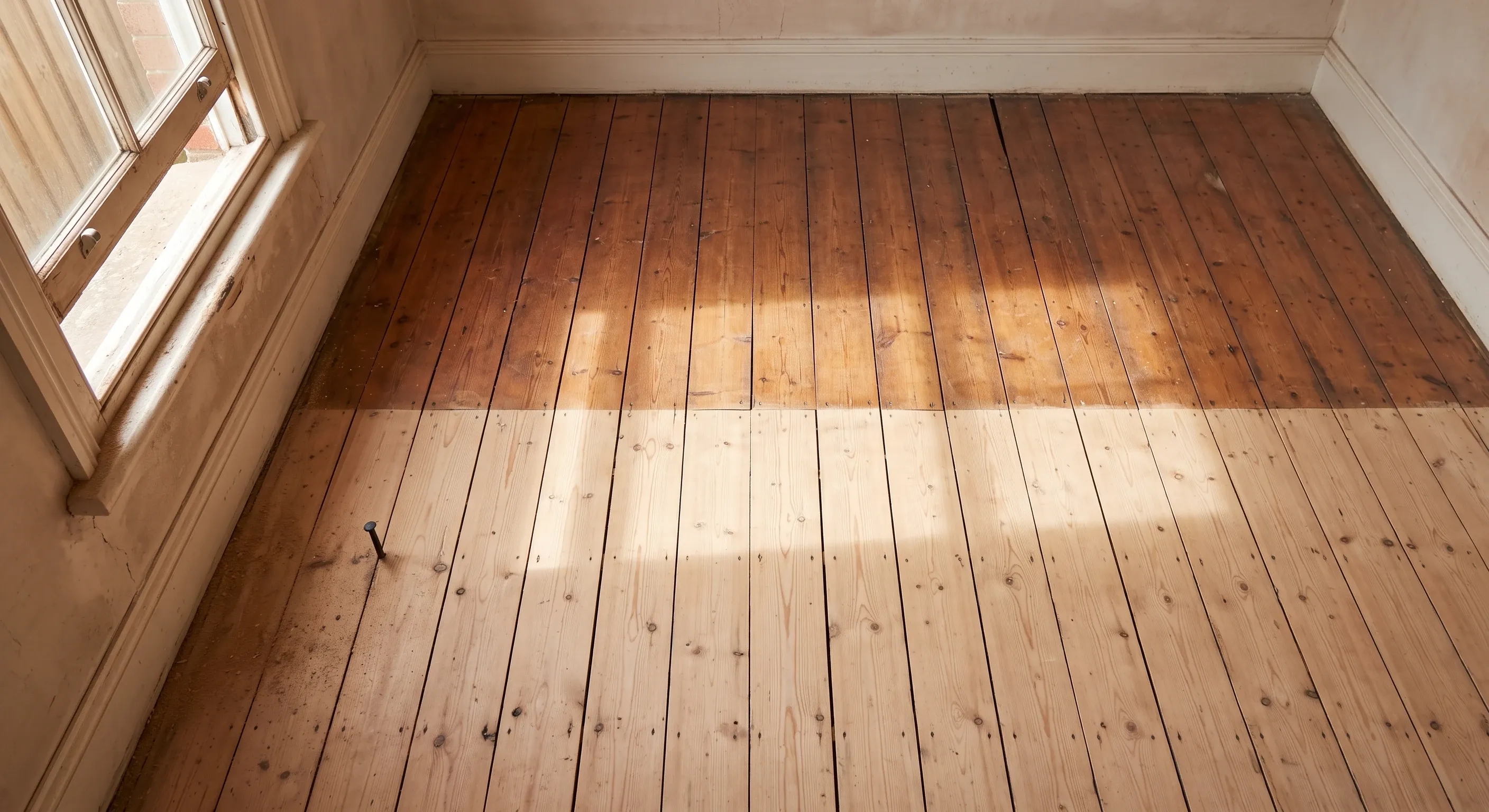
Restoring Victorian boards costs less but stays draughty. Checkatrade sanding rates, gap filling options, board thickness limits and the leasehold trap.
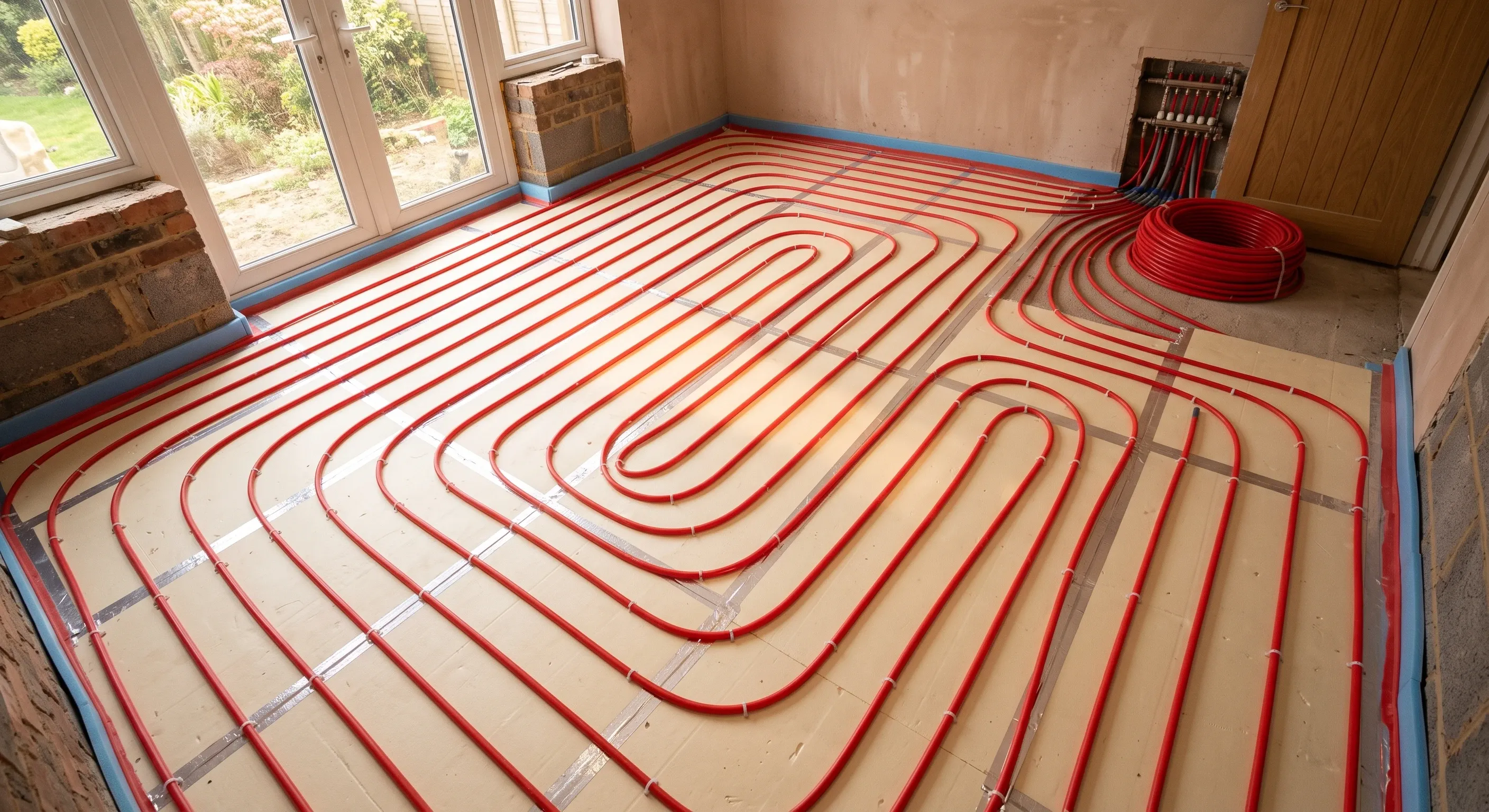
Published figures say 25% cheaper and also say parity. The variable is flow temperature and floor insulation. What that means for a London terrace.
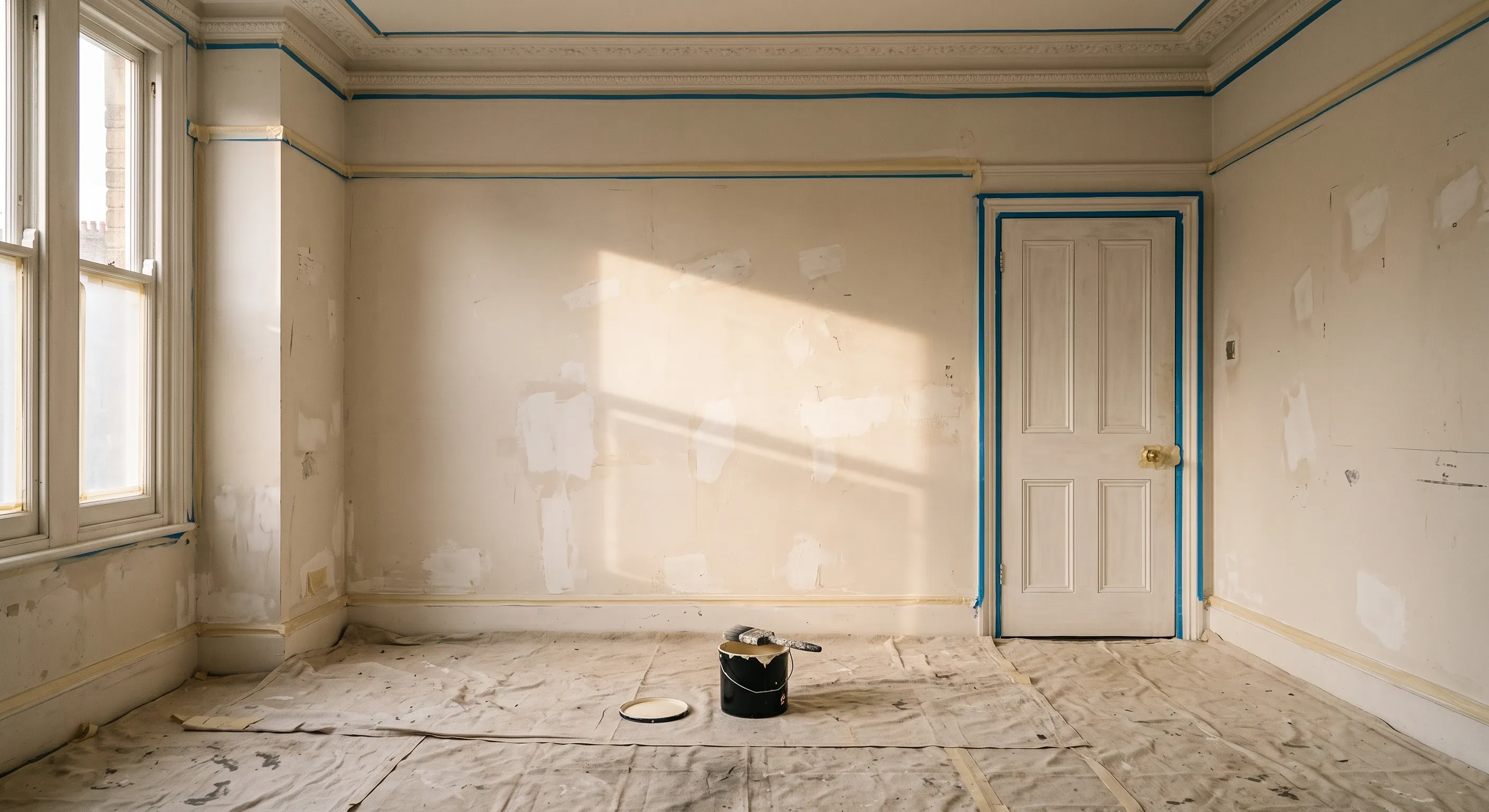
What Checkatrade, MyBuilder and MyJobQuote publish per room, where they contradict each other, and what really moves the price in a London period room.