








The Beams team removed all the stress and matched me with a wonderful contractor.
Teresa
Queen's Park

On time and on budget. A real pleasure.
Eleanor
Stoke Newington
Completed our renovation project within budget and on time.
Evelyn
Bow East
London's painters and decorators
Painters and decorators in London are priced by the day or by the job. Checkatrade puts the national average at £325 a day, within a range of £250 to £400 (Checkatrade, June 2026, VAT status not stated by the source). Read that as labour, and confirm who supplies the paint.
Decorating is the least comparable trade in a renovation. One homeowner had two quotes for identical work at £2,100 over twelve days and £1,400 over five, and could not tell whether the cheaper one was competent or fast. Another found her decorator had not cut in at all and finished it herself. Beams writes what is included before anyone prices it.

Scope written down, line by line
Coats, cutting in, filling, who supplies paint, woodwork in or out.
Vetted decorators
Personally vetted: visited in person, references checked, recent work inspected. You meet up to three before committing.
Fixed-price contracts
Milestone payments held securely until you approve each stage, plus a 12-month workmanship warranty.
Recent London decorating projects
Explore completed decorating across London, from single rooms to whole houses.
What London decorators charge
Decorating is priced by the day or by the job, and the day rate is the figure you can actually compare.
Checkatrade puts a painter and decorator at an average of £325 a day, within a range of £250 to £400, and at £32 an hour (Checkatrade, painter and decorator prices guide, updated June 2026, VAT status not stated by the source).
Treat that as a labour rate, and ask your decorator to confirm in writing whether paint is included. Checkatrade contradicts itself on the point, quoting "£325 per day (plus the cost of paint)" in one place and saying on the same guide that labour, materials, preparation and clean-up are normally all included. Those cannot both be true, so get it in the quote.
No published source gives a London-specific rate for this work. London sits at the upper end of the national ranges above, and we would rather tell you that than publish a number we cannot source.
There is no credible per square metre rate for decorating either. The one in circulation carries no dataset and no VAT position, and the page it sits on publishes three different day rates, so we are not repeating it.
If you want to know why day rates move at all, the Federation of Master Builders publishes the BATJIC wage rates, with the 2026/27 rates effective from 10 August 2026 and carrying a 3.2% increase. Those are employed wage rates, not charge-out rates, so they explain the direction of travel rather than what you will be charged.
We are not publishing a whole-house figure, and here is why. No published cost guide prices decorating a whole house. The homeowner accounts we found range from £2,000 to £13,750 for jobs described in broadly similar terms. That is not regional variation, it is the absence of a defined scope. A number in that range would be meaningless to you, and a number that sounded confident would be worse.
What is useful instead is knowing that labour is nearly all of the cost, that preparation is most of the labour, and that a quote which is 30 to 40% below the others is usually a different job rather than a better price.
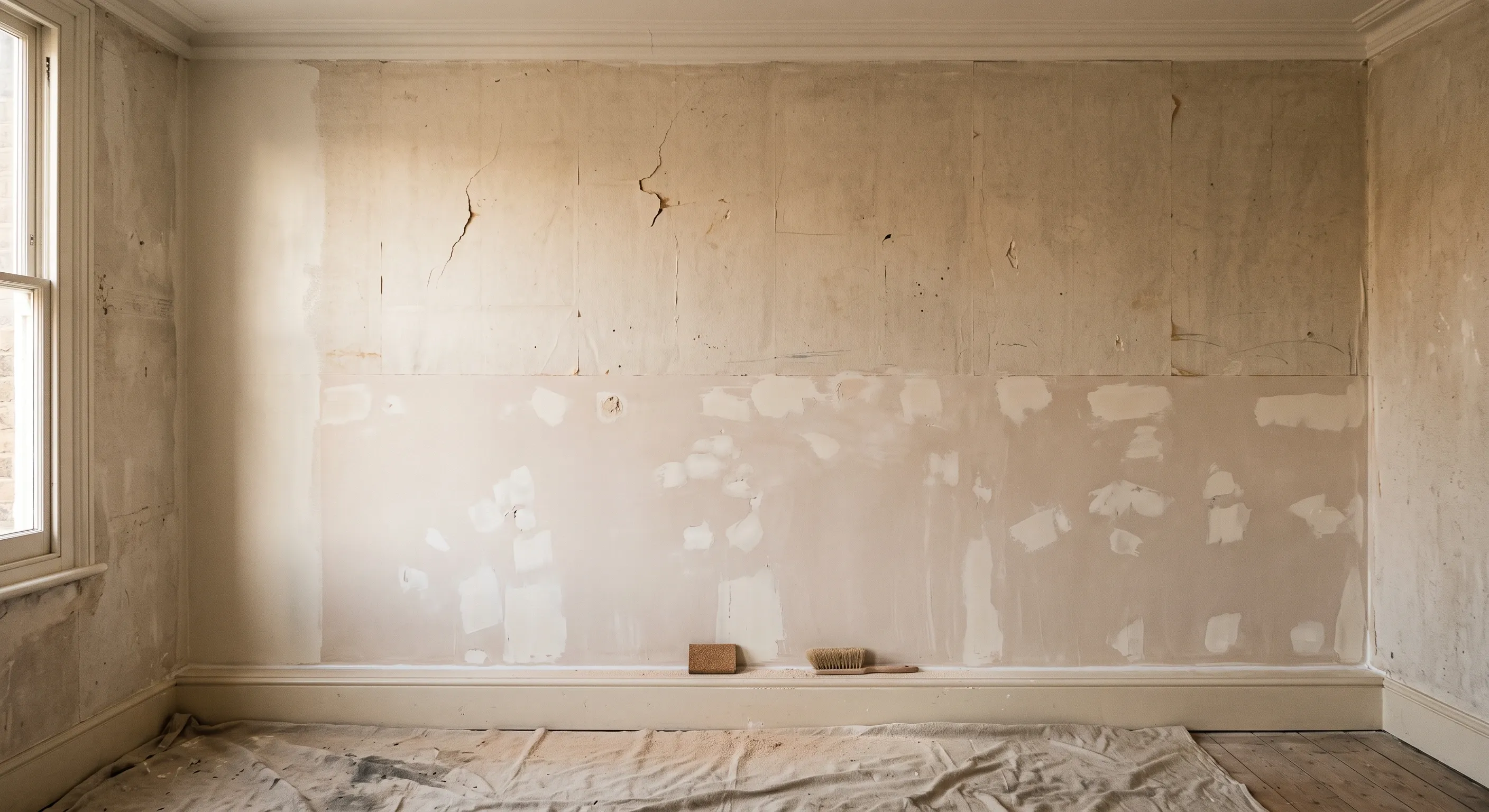
The scope checklist that makes quotes comparable
Ask every decorator the same eleven questions and the quotes become comparable for the first time.
- How many coats on walls, and on woodwork?
- Is cutting in included? Cutting in means the neat brushed line where a wall meets a ceiling, a cornice or woodwork. It is slow and skilled, and it is sometimes quietly excluded
- Is filling and caulking included, and to what standard?
- Is wallpaper removal included, and repair to whatever is underneath?
- Is new plaster being mist coated first?
- Is woodwork included: skirting, architrave, doors, window frames?
- Is cornice and ceiling rose work included, and is it being cleaned back or painted over?
- Who supplies the paint, and which paint?
- Are dust sheeting and furniture moving included?
- Are stairs and landings included, and priced realistically?
- How many people, for how many days?
Eggshell versus satin on woodwork is the one worth settling in writing. Eggshell is the lower sheen of the two and satin the glossier, and they look noticeably different on the same skirting and doors. Neither is more correct, but the quote should name the finish rather than leave it to be decided on the day.
The two that most often separate quotes are cutting in and preparation. One homeowner's decorator skipped cutting in and she went back over it with the colour afterwards. Another found that "just a lick of paint" took far longer than expected once filling and priming were done properly.
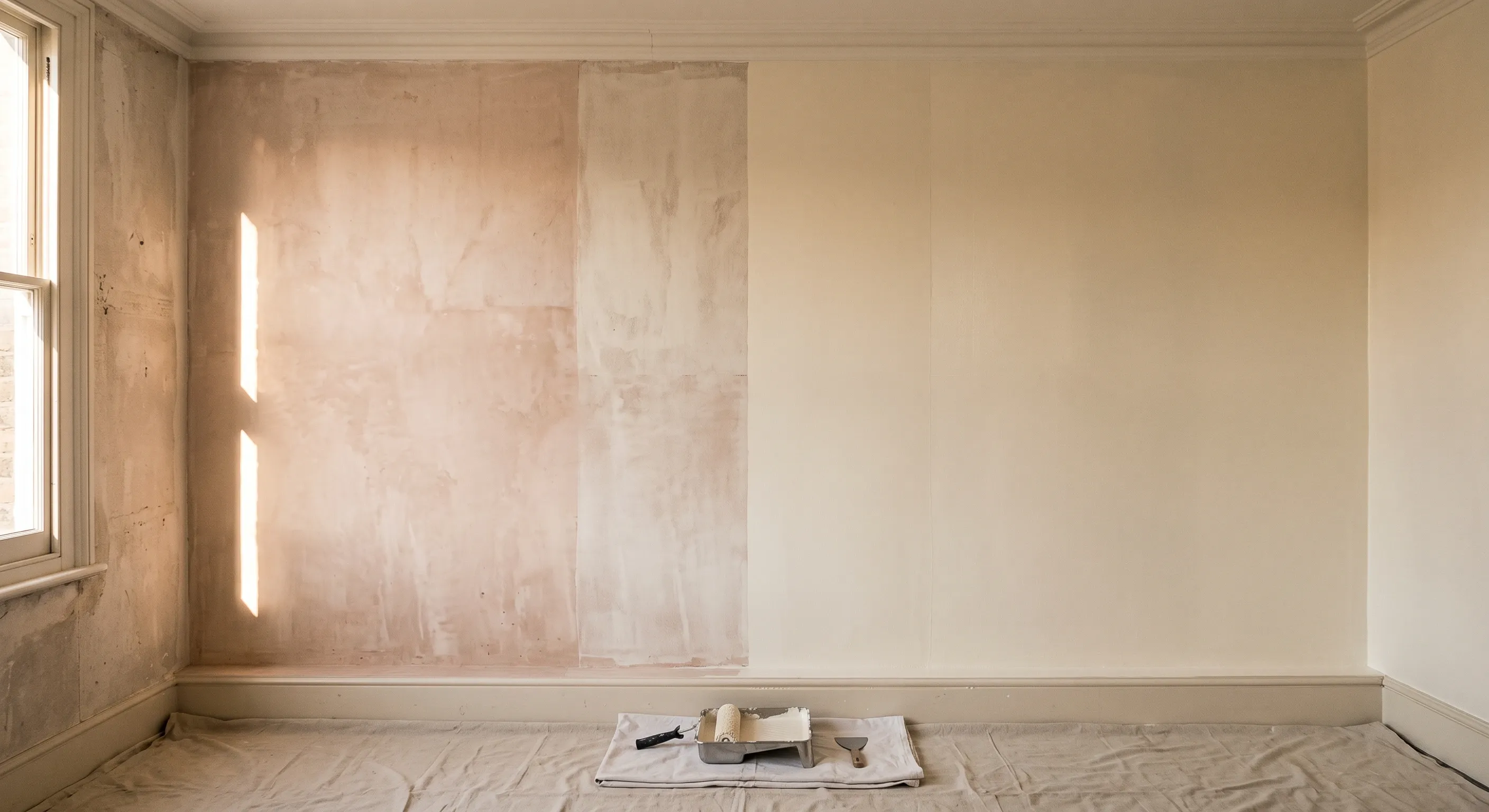
Why period London houses cost more to decorate
Every cost guide prices a plain rectangular room. Almost no London period room is one.
Cornice and ceiling roses have to be cut in by hand and, if they have been painted over repeatedly, cleaned back before they look like plasterwork again. Panelled doors take several times as long as flush doors, because each panel, bead and edge is brushed separately. Sash windows are the slowest item of all: glazing bars, meeting rails and beads, with the sashes needing to be movable afterwards rather than painted shut. Picture rails, dado rails and deep skirting all add linear metres of brushwork.
New plaster brings its own requirement. It needs a mist coat, a watered-down emulsion, before proper paint, and it has to be fully dry first. Sealing damp plaster with ordinary emulsion is how you get flaking a month later.
Exterior work on a terrace usually needs scaffolding rather than ladders, which changes both the price and the programme. Masonry paint on a solid wall also raises the same breathability question as lime plaster and lime mortar: a non-breathable coating on a wall that needs to dry outwards traps moisture in the brick.
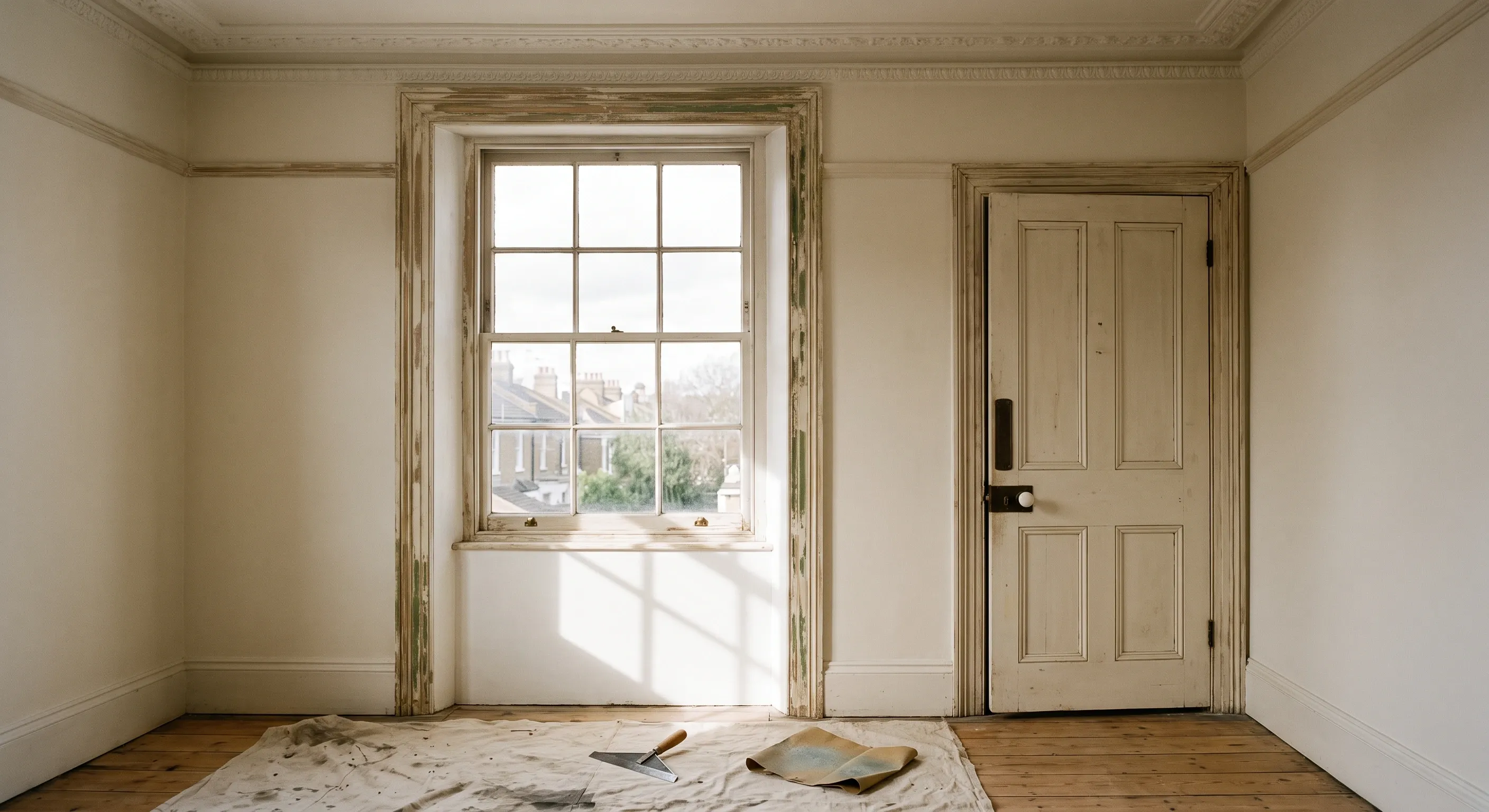
When decorating happens
Decorating is nearly last, and that is what makes it vulnerable.
It follows plastering, and new plaster needs to dry. It follows first and second fix, so that chased walls have been made good. It comes before flooring, because paint drips and dust ruin a new floor, though final coats on skirting often wait until after the floor is in.
That position at the end of the programme means decorating is the item that absorbs every earlier delay, and the item people cut when a budget has run out. Scope it at the start even though it happens at the end, and if something has to give, reduce the number of rooms rather than the standard of preparation.
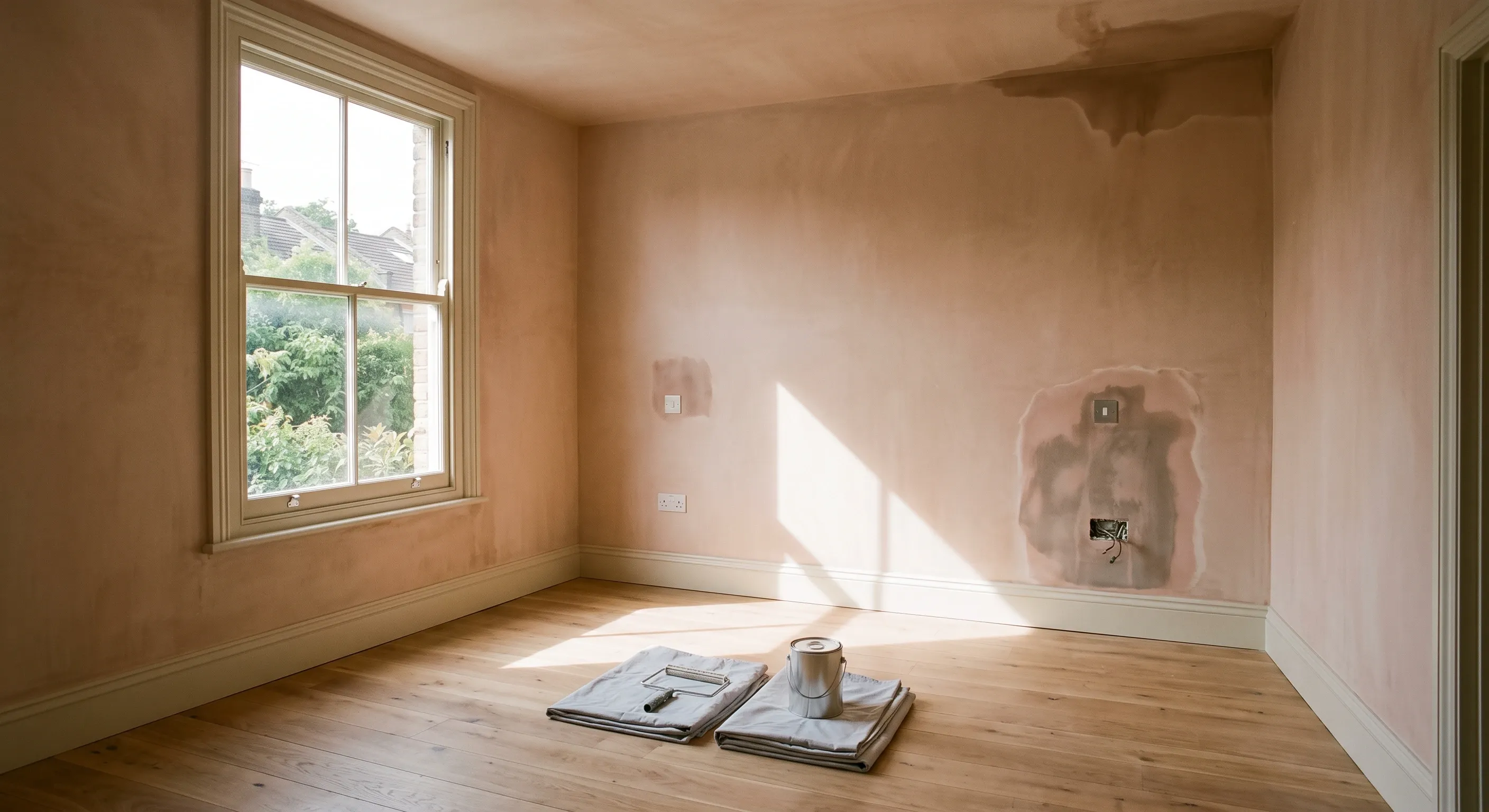
How a Beams decorating project works
Step 1: Get your estimate
Tell us the rooms, the property age and whether there is new plaster or period detail. Your planner gives you an estimate range before any commitment.
Step 2: Agree the scope
Coats, cutting in, filling, woodwork, paint supply and who moves the furniture. Written down against the checklist, so the quotes are comparable.
Step 3: Painted by your vetted decorator
Under a fixed-price contract, with milestone payments held securely until you approve each stage. 12-month workmanship warranty included.
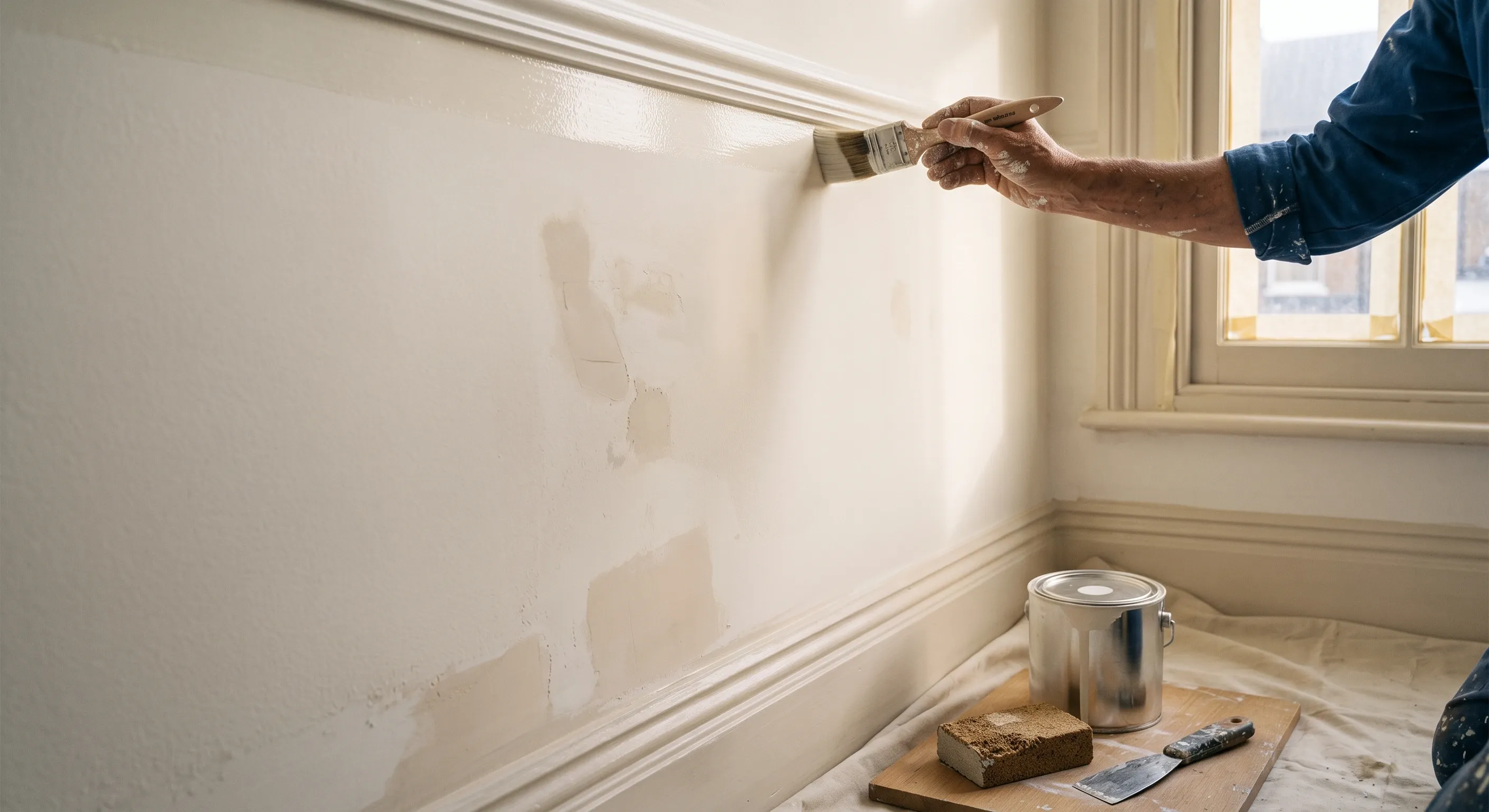
Decorating across London
We work with vetted decorators across all London postcodes, in North, South, East and West London. Cornice, panelled doors and sash windows are the normal case here, and they are the difference between a national cost guide and what a London quote actually says.
Good decorators are booked up and, as several homeowners have pointed out, the hard part is often getting one to turn up and quote at all.
Get your decorating quoted with the scope written down
Get an estimate with the preparation written down, because that is what the price actually turns on. No commitment, no sales pressure.