
How do building control inspections work?

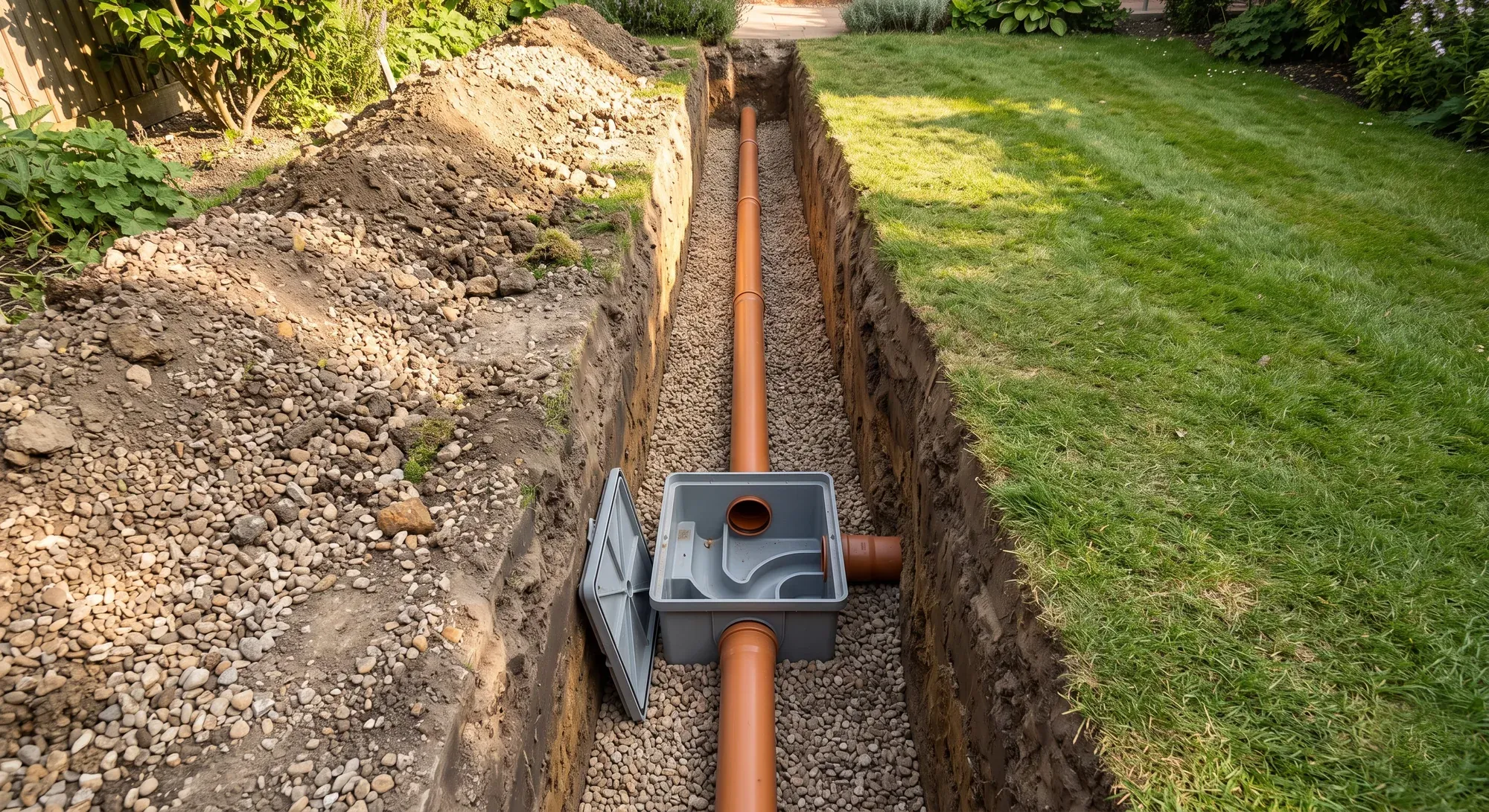
Building control inspects your work at stages it chooses, and this is the part almost every guide gets wrong. In England there is no longer a fixed statutory list of inspection stages. Under the current regulation 16 the authority tells you in writing which stages it wants notified, and only where it actually intends to inspect, based on its own assessment of the risk of a breach. So the honest answer to when they will visit is that they will tell you, and you should get that list at the start.
The old familiar sequence, excavation then foundations then damp-proof course then drains before covering, still exists in the Welsh version of the same regulation. It is not the English position.
The notices, and the statutory clocks
The process is built around notices rather than visits, and the periods are specific.
Stage | Requirement | Period |
|---|---|---|
Notice of intention to start | Given before work begins | At least two days must elapse from the end of the day the notice is given |
Commencement notice | Given after work starts | Within five days |
Authority response | May reject the commencement notice with reasons | Four weeks. Silence for four weeks means commencement is accepted |
Appeal | Against rejection, to the First-tier Tribunal | 21 days |
Stage notifications | As specified in writing by the authority | As specified. The authority may also state a period during which work must not be covered up |
Completion notice | Given after the work is finished | Within five days |
Completion certificate | Issued by the authority where satisfied | Within eight weeks of the completion notice |
Two things in that table are worth acting on.
The four-week rejection window on the commencement notice means silence is acceptance, which is unusual and useful. And the completion notice has to be accompanied by a compliance statement signed by the client, meaning you, plus signed statements from the principal contractor and the principal designer. That is not something your builder can quietly do on your behalf without your involvement.
Getting the stage list in writing
Because the stages are set by the authority rather than by statute, the first practical thing to do is ask for them.
Where the authority intends to inspect, it will specify in writing which stages you must notify, and it may specify how much notice to give and a period during which the work must not be covered up. That last power is the one that catches builders out, because it means a foundation or a drain can be required to stay open until someone has looked at it.
So the question to put to your builder at the start is straightforward: what has building control asked us to notify, and what are we not allowed to cover up. If nobody can answer, nobody has read the letter.
The risk-based approach also means two similar jobs can get different lists. A straightforward extension for an experienced contractor may be inspected lightly. Structural work in an older property, or a builder the authority has not dealt with, may attract more. It is not personal and it is not negotiable.
What they are actually looking at
Whatever the stage list says, the substance being checked is the same: compliance with the requirements in Schedule 1, which is where the Parts live. Building control checks the regulations, not your planning consent, and we cover building regulations and planning permission, the difference, in a separate guide.
On a typical renovation that means structure under Part A, fire safety and escape under Part B, drainage under Part H, ventilation under Part F, insulation under Part L, stairs and glazing under Part K, sanitation under Part G, and electrical safety under Part P. Which of those get looked at depends entirely on what you are building. Our guide to building regulations for renovation work sets out the mapping.
Two categories usually bypass site inspection altogether. Electrical work by an installer registered under a Part P competent person scheme is self-certified, and replacement windows through FENSA or CERTASS likewise. In both cases the certificate comes from the installer, not the council, and you should keep it.
The standard being applied to an existing house
Worth knowing before an inspection, because it changes what can reasonably be asked of you.
Regulation 4(3) sets the test for work to an existing building: where the building did not already comply, the work must not make it more unsatisfactory than before. An inspector cannot require you to upgrade parts of the house you are not touching, and the work you are doing is judged in the context of the building it sits in rather than against new build standards.
Part L is the exception that surprises people. Renovating a thermal element, which includes stripping an external wall back across more than half its area, brings an upgrade expectation with it.
When something fails
An inspection that finds a problem is not a disaster, it is the system working, and it is much cheaper at the foundation stage than at the sale.
The authority will tell you what does not comply and what is required. You put it right and it is looked at again. The expensive version is the one where work was covered up before it was inspected, because then the remedy involves opening it back up.
That is the real argument for taking the notification list seriously. A drain inspected before backfilling costs nothing. A drain inspected after a slab has been poured over it costs a slab.
The certificate at the end
On completion the authority issues a completion certificate. In England regulation 17 requires one in all cases where, after taking all reasonable steps, the authority is satisfied the relevant provisions have been complied with, and it must do so within eight weeks of your completion notice.
You should not have to ask for it as a favour, and you should not accept "we don't issue those on this route" as an answer, because in England the entitlement does not depend on whether you used a building notice or full plans.
Keep it with the deeds. It is the document a buyer's solicitor will ask for, and if it does not exist the route back is regularisation, which our guide to fixing work done without building regs covers.
Who is inspecting, and how to check them
Building control is either your local authority or a private registered building control approver, the term that replaced "approved inspector" under Part 3 of the Building Safety Act 2022. The people doing the inspecting are registered building inspectors, registered in one of four classes according to the work they are competent to oversee.
The registers are kept by the Building Safety Regulator, which since 27 January 2026 has been a standalone body sponsored by the Ministry of Housing, Communities and Local Government, having previously sat within the Health and Safety Executive.
Two reasonable questions to ask: which registered building control approver or local authority is our building control body, and who is the inspector. If a private approver is proposed, you can check them yourself on the GOV.UK register of registered building control approvers in England.
Separately, since 1 October 2023, Part 2A has required anyone carrying out design or building work to have the necessary skills, knowledge, experience and behaviours. On a domestic project the duty to check that competence sits with your builder rather than with you, which makes it a fair question to ask how they satisfied themselves.
How Beams helps
Inspections go wrong for scheduling reasons rather than technical ones. Work gets covered before someone looks at it, or a notice goes in late, and a two-day problem becomes a two-week one.
So on our house extension design and build projects, we make sure the notification list is obtained and understood at the start, that the stages sit in the programme rather than being remembered on the day, and that the completion notice and certificate are somebody's explicit job. Your builder runs the site, and the paperwork is not the thing left over at the end.
That is part of how a Beams project is set up: one agreed price, payments released against milestones, and 12 months on the workmanship.
Common questions
How much notice does building control need before an inspection?
It depends on what the authority specified in writing for your job, because the stages and the notice periods are set by them rather than fixed in the regulations. The statutory periods that are fixed are the two clear days before starting work, the five days for the commencement notice, and the five days for the completion notice.
How many inspections will there be?
There is no set number in England. The authority notifies you of the stages it intends to inspect based on its assessment of risk, so it varies by project.
Can I start work before building control have been?
You can start once notice of intention has been given and at least two days have elapsed from the end of that day. You then have five days to give the commencement notice. What you cannot do is cover up work the authority has told you to leave open. Planning permission is a separate consent on its own timetable, and it is worth knowing how much a planning application costs before you fix dates.
What happens if work fails an inspection?
You are told what does not comply and what is required, you correct it, and it is re-inspected. The cost problem arises only where the work was covered before inspection.
Do I get a certificate on a building notice job?
Yes, in England. Regulation 17 requires a completion certificate in all cases where the authority is satisfied the work complies, within eight weeks of the completion notice. The route you chose does not affect the entitlement.
Where this information comes from
Notices, the two-day period, commencement notices, the four-week rejection window, the 21-day appeal, stage notifications set by the authority, the power to require work to stay uncovered, and completion notices with signed statements: The Building Regulations 2010, regulation 16, as currently in force in England
Completion certificates, in all cases and within eight weeks: regulation 17(1) and 17(2)
Standard for work to existing buildings: regulation 4(3)
Requirements and Parts: Schedule 1, and the Approved Documents published on GOV.UK
Competence duties: Part 2A, in force 1 October 2023
Registered building control approvers and registered building inspectors: Building Safety Act 2022, Part 3, and the GOV.UK register of registered building control approvers in England
Building Safety Regulator as a standalone body from 27 January 2026: the Building Safety Regulator (Establishment of New Body and Transfer of Functions etc.) Regulations 2026
The inspection stage provisions differ in Wales, where the older fixed list of stages remains. This page describes England.
Find out what your project will cost
Tell us about your project and we will get you up to three comparable quotes from vetted London builders, with the inspection stages in the programme rather than remembered on the day.