







The Beams team removed all the stress and matched me with a wonderful contractor.
Teresa
Queen's Park

On time and on budget. A real pleasure.
Eleanor
Stoke Newington
Completed our renovation project within budget and on time.
Evelyn
Bow East
London's repointing specialists
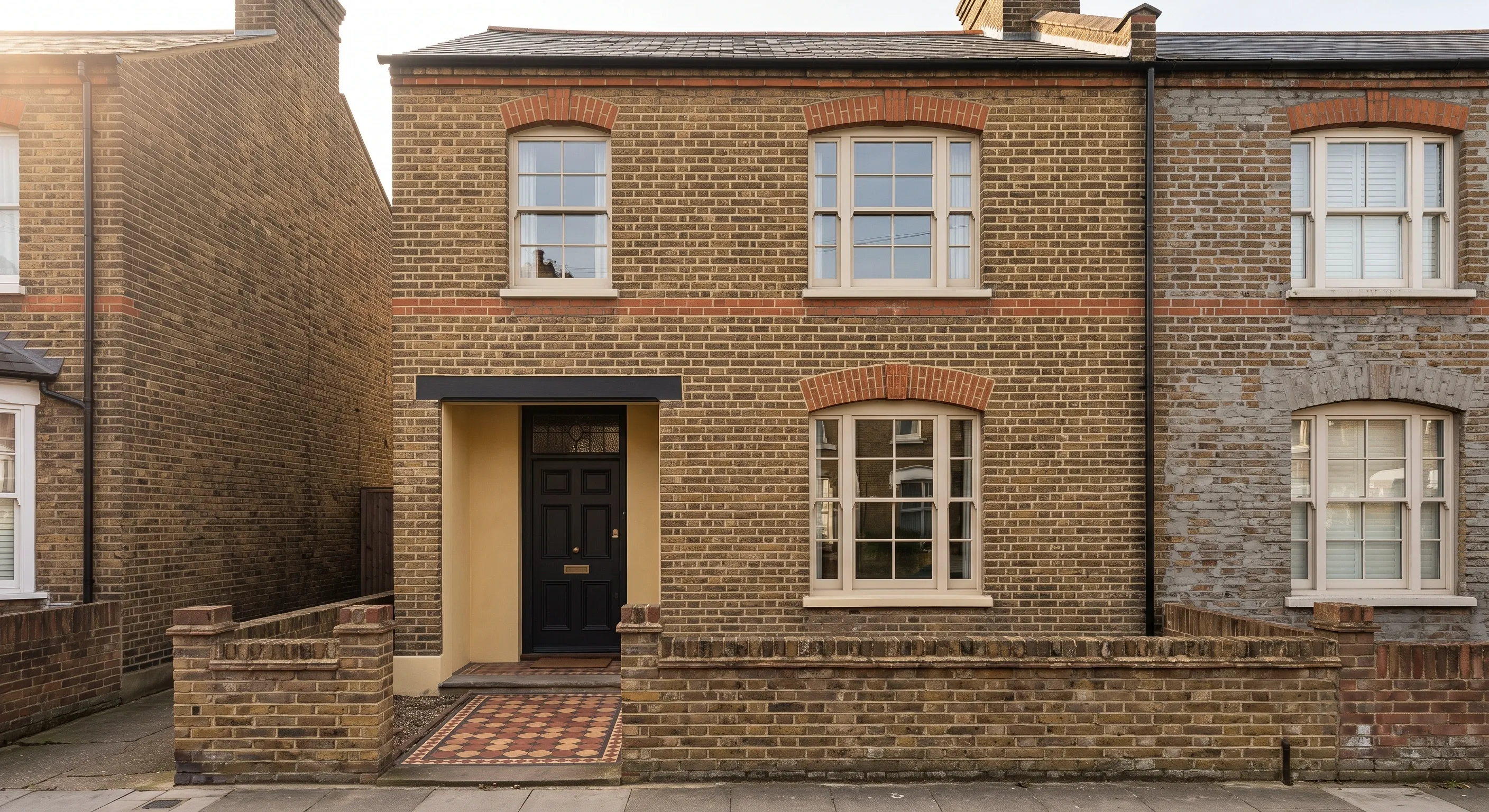
Repointing is the removal of failed mortar from brickwork joints and its replacement with fresh mortar, raked back and finished to a profile. On pre-1920 London brickwork the mortar should be lime, and lime repointing runs £60 to £90 per square metre of wall (Bark, 2026, VAT status not stated by the source).
Two things go wrong with repointing in London, and both cost money. The wrong mortar, which damages soft Victorian brick permanently. And too much scope, because raking out sound mortar damages brick as well. Beams scopes what the wall needs, in the right material, then up to three vetted London builders quote against the same specification.

Vetted builders, not one-size-fits-all
Every builder in the Beams network is personally vetted: visited in person, references checked, recent work inspected. You meet up to three before committing.
The right mortar for the wall
Lime where the brick is soft and the wall needs to breathe, cement where it does not. Specified before anyone quotes.
Fixed-price contracts
A fixed price agreed before work begins, with milestone payments held securely until you approve each stage, plus a 12-month workmanship warranty.
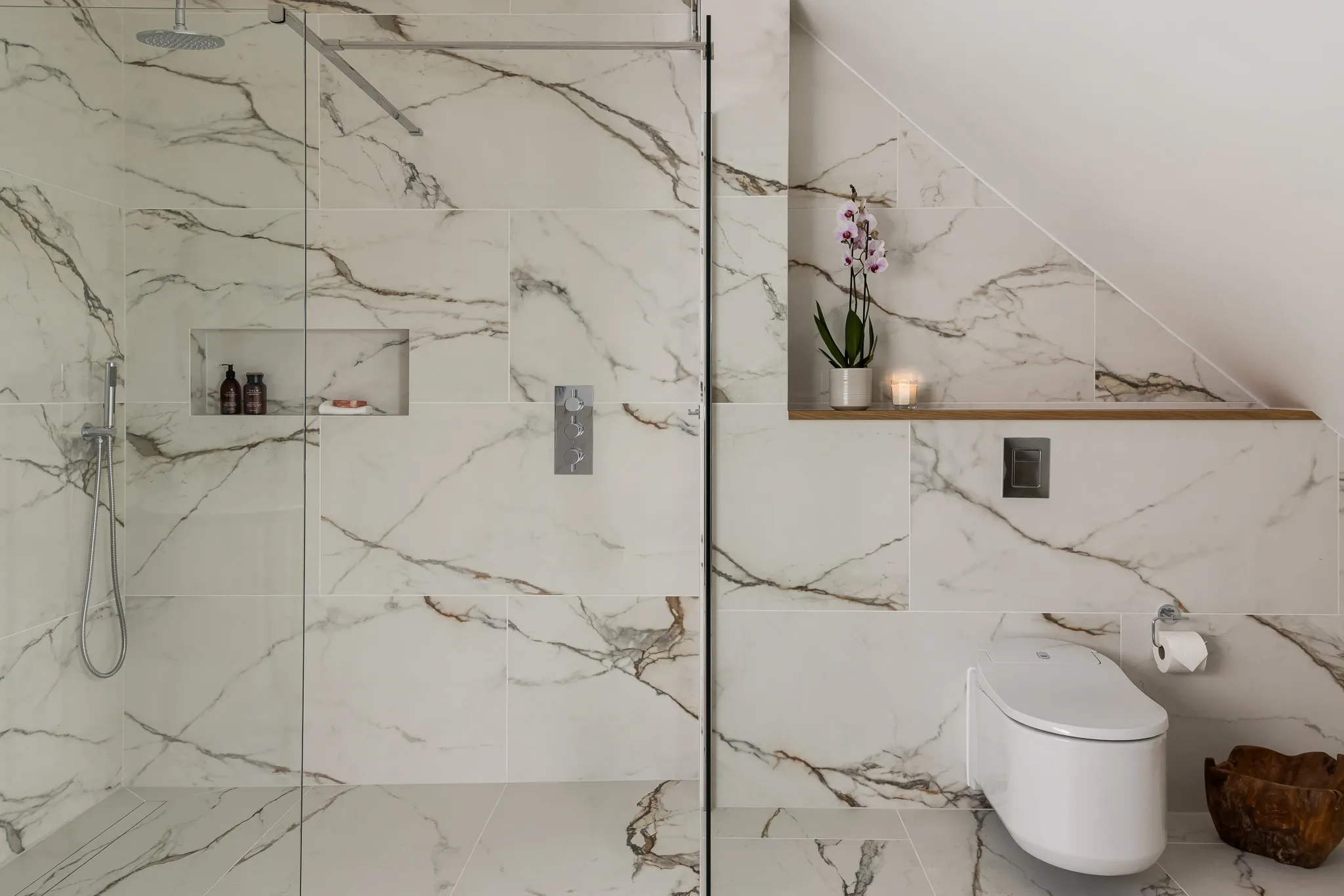
Recent London repointing projects
Explore completed renovations across London, from single rooms to whole houses.
Repointing costs in London
Repointing is priced per square metre of wall, and access is usually a bigger variable than the rate.
Published 2026 rates:
- Cement mortar: £25 to £60 per square metre (Bark, 2026, VAT status not stated by the source), £40 to £90 (BestBuilders, Q3 2026, VAT status not stated by the source), £40 to £60 UK average with the South East at £50 to £80 (Green's Brickwork, 2026, VAT status not stated by the source)
- Lime mortar, which is what most pre-1920 London brickwork needs: £60 to £90 per square metre (Bark, 2026, VAT status not stated by the source), the same range as Green's Brickwork and Bernard Andrews (2026, VAT status not stated by the source). Lime adds roughly £10 to £25 per square metre over cement (Costwise, 2026, VAT status not stated by the source), or £10 to £20 (Green's Brickwork, 2026, VAT status not stated by the source)
- Scaffolding: £500 to £1,500 on a typical terrace (Bernard Andrews, January 2026, VAT status not stated by the source), or £600 to £1,500 (Green's Brickwork, 2026, VAT status not stated by the source). On small jobs it can cost more than the pointing
No published source gives a London-specific rate for this work. London sits at the upper end of the national ranges above, and we would rather tell you that than publish a number we cannot source.
By property, in 2026:
- Terraced house, front elevation only: £1,200 to £2,500 (BookaBuilderUK, August 2026, VAT status not stated by the source)
- Full Victorian terrace: £2,500 to £4,000 in cement (Bernard Andrews, January 2026, VAT status not stated by the source), or £4,000 to £9,000 and above in lime once scaffolding and raking out are included (Green's Brickwork, 2026, VAT status not stated by the source)
- Semi-detached: £3,000 to £6,500 (BestBuilders, Q3 2026, VAT status not stated by the source)
A terraced front elevation is typically 30 to 40 square metres of wall (Bernard Andrews), which is a useful check on any quote priced per square metre.
At the specialist end, a heritage lime-pointing contractor publishes actual job costs of £245 to £360 per square metre for period properties including labour and scaffolded access (Bark, 2026, VAT status not stated by the source). There is no single published rate for natural hydraulic lime work on listed buildings, so get a conservation-accredited quote rather than applying a generic rate.
You may need less repointing than you are quoted for
This is the part nobody selling repointing tends to lead with.
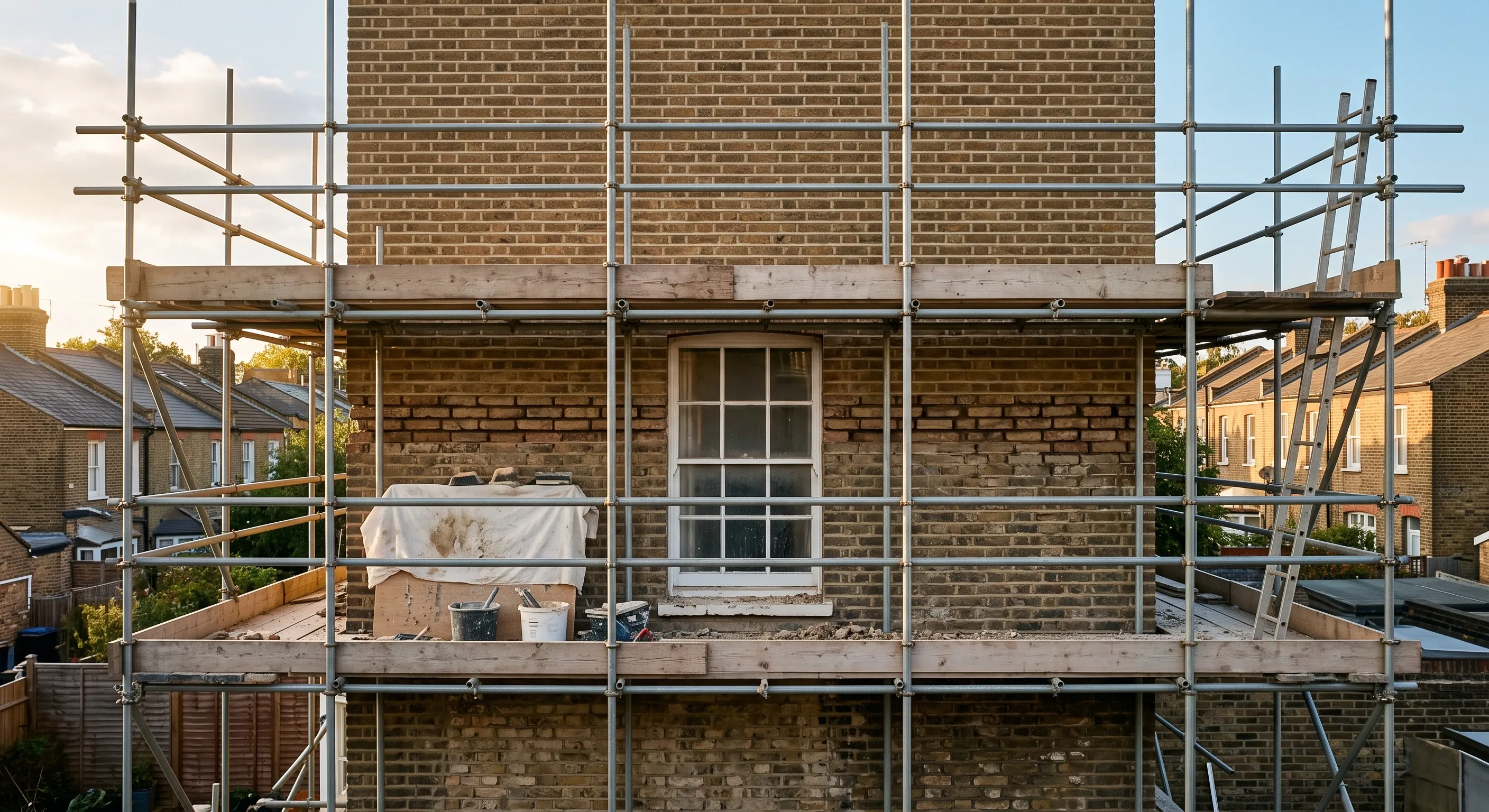
Raking out mortar that is still sound risks damaging the brick, so a full repoint is often the wrong specification. A London homeowner with a three-bedroom Edwardian semi was quoted £7,300 in 2020 for the front, flank and rear in lime, including VAT and scaffolding. She then had two more companies look at it. Both disagreed with repointing everything, on exactly that basis, and quoted around £3,000 for the loose and weathered areas only.
The same logic applies to old cement pointing. If cement was applied at some point and it is not causing the brick faces to spall, removing it can do more harm than leaving it. Sound cement is often better left alone until it fails.
So the first question is not what repointing costs. It is how much of the wall genuinely needs it. Ask any contractor to walk the elevations with you and point at what they are pricing.
Why lime, and why cement damages old brick
The rule is that the mortar should be softer than the brick. Victorian and Edwardian London bricks are generally soft, so lime is the correct material and cement is not.
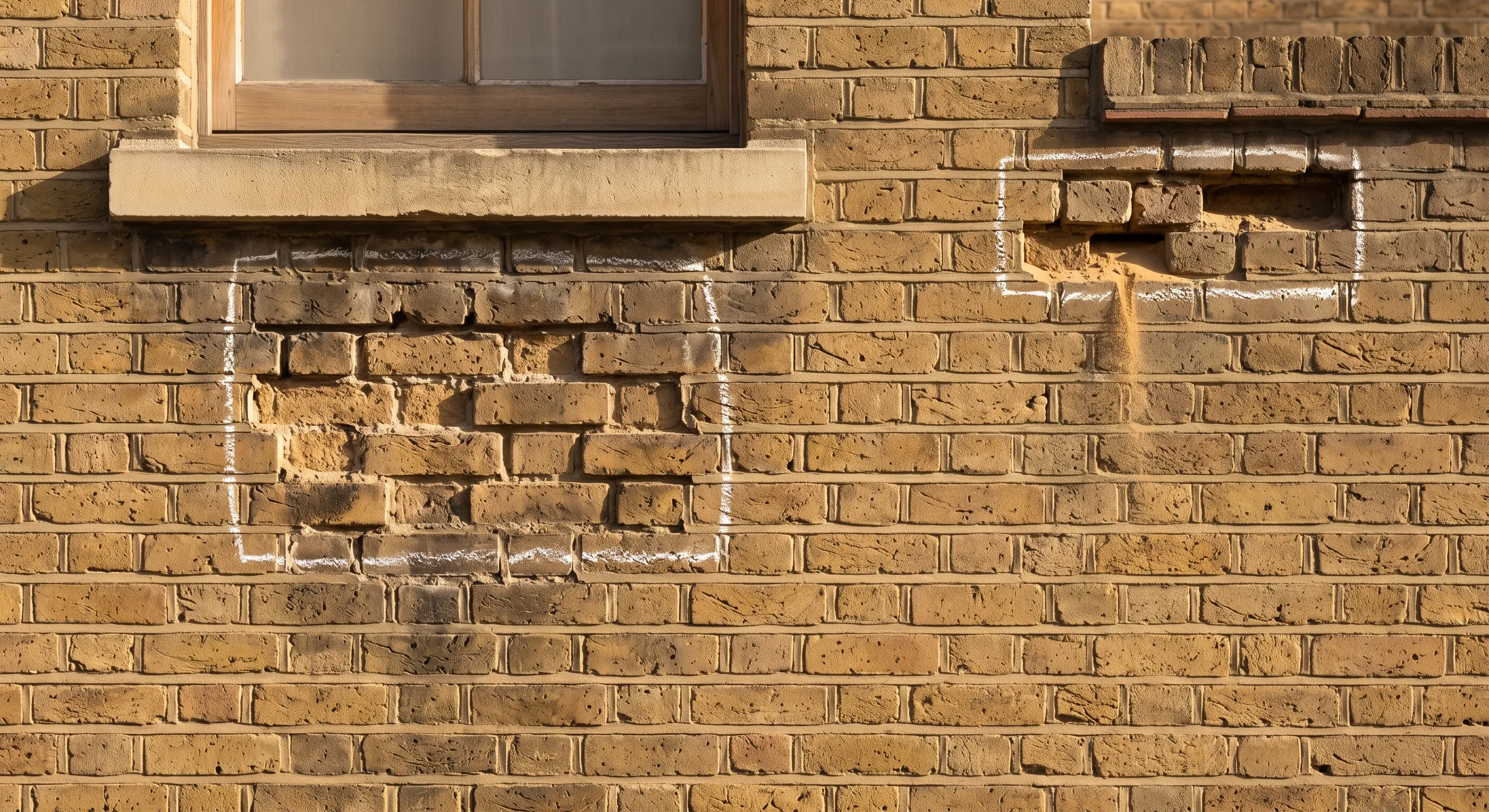
Cement mortar is harder than the surrounding brick and it is not breathable. Moisture that gets into the wall cannot escape through the joint, so it escapes through the brick face instead. In frost that moisture expands, and the brick face crumbles away. That is spalling, and it is permanent: you cannot repoint a spalled face back.
Lime does the opposite. It is softer, so the wall can move slightly without cracking the brick. It is breathable, so moisture leaves through the joint rather than the brick. And it partially self-heals, because small cracks reseal over time as the lime carbonates. Properties built before roughly 1920 need it.
One specific trap worth knowing. Surveys sometimes recommend repointing in lime on a house whose existing mortar is cement. Applying lime on top of cement achieves nothing, because the cement behind it still traps the moisture. If the survey means to remove the cement and expose the original lime, it should say so, and that is a bigger job.
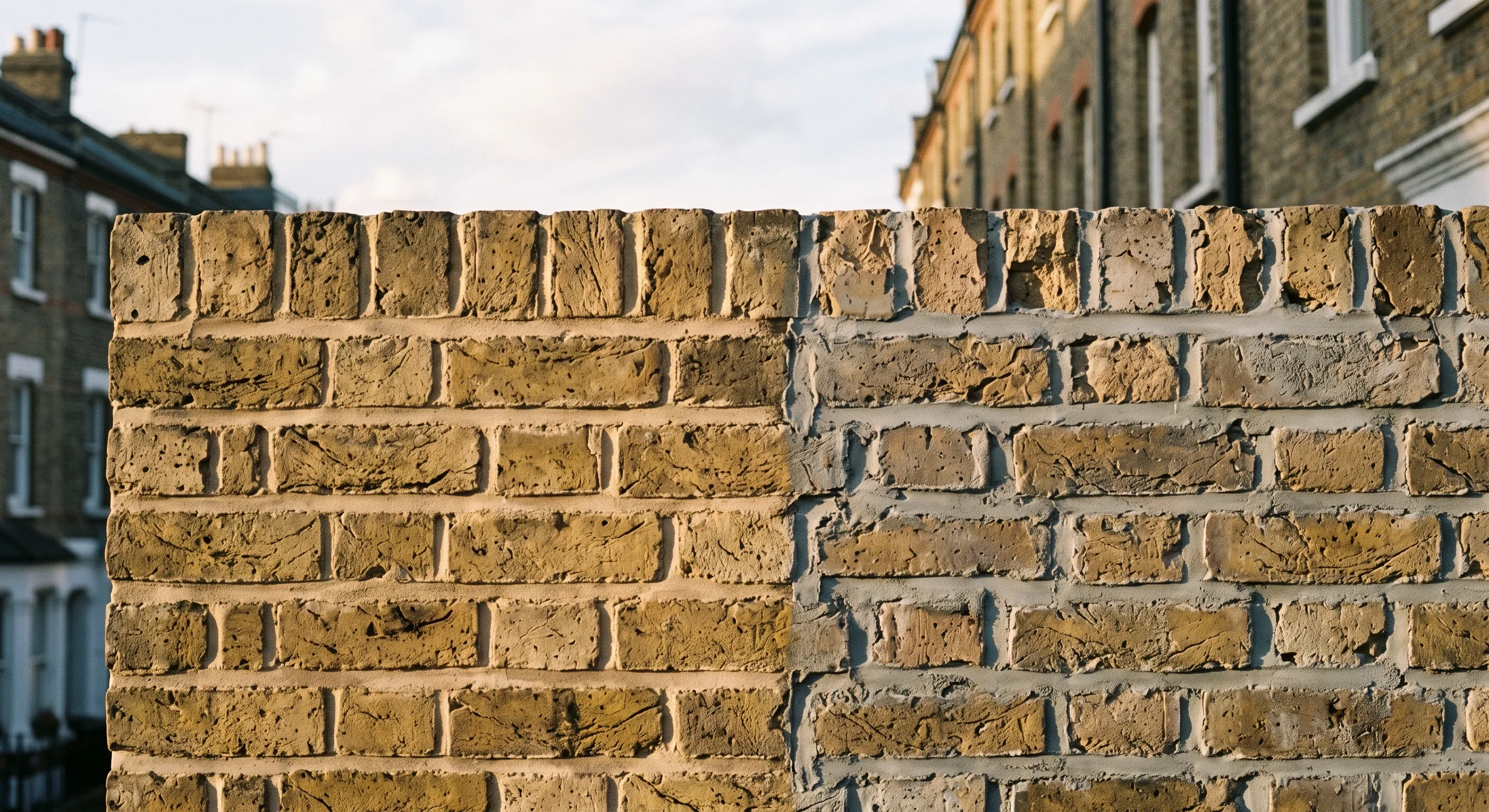
What a repointing quote should contain
Two published quotes on the same terrace can differ by three times. That is usually scope, not greed. A quote you can check names all of this:
- Which elevations, and how much of each: full repoint or patch repair to specific areas
- Mortar type and mix, and for lime the NHL grade
- Raking out depth, typically to at least twice the width of the joint, and around 15mm as a minimum
- Joint profile: flush, weather struck and cut, or bucket handle
- Scaffolding, and whether a pavement licence is needed
- Brick replacement where faces have already spalled
- Protection while lime cures, which takes weeks not days
Ask how the mortar will be removed. Carbide rakes on an angle grinder are fast and they ruin soft brick in inexperienced hands. On a period wall, hand raking is slower and it is the reason lime work costs more.
Output is a useful sanity check: a two or three person team typically covers 8 to 15 square metres a day (BookaBuilderUK), less where old cement has to come out.
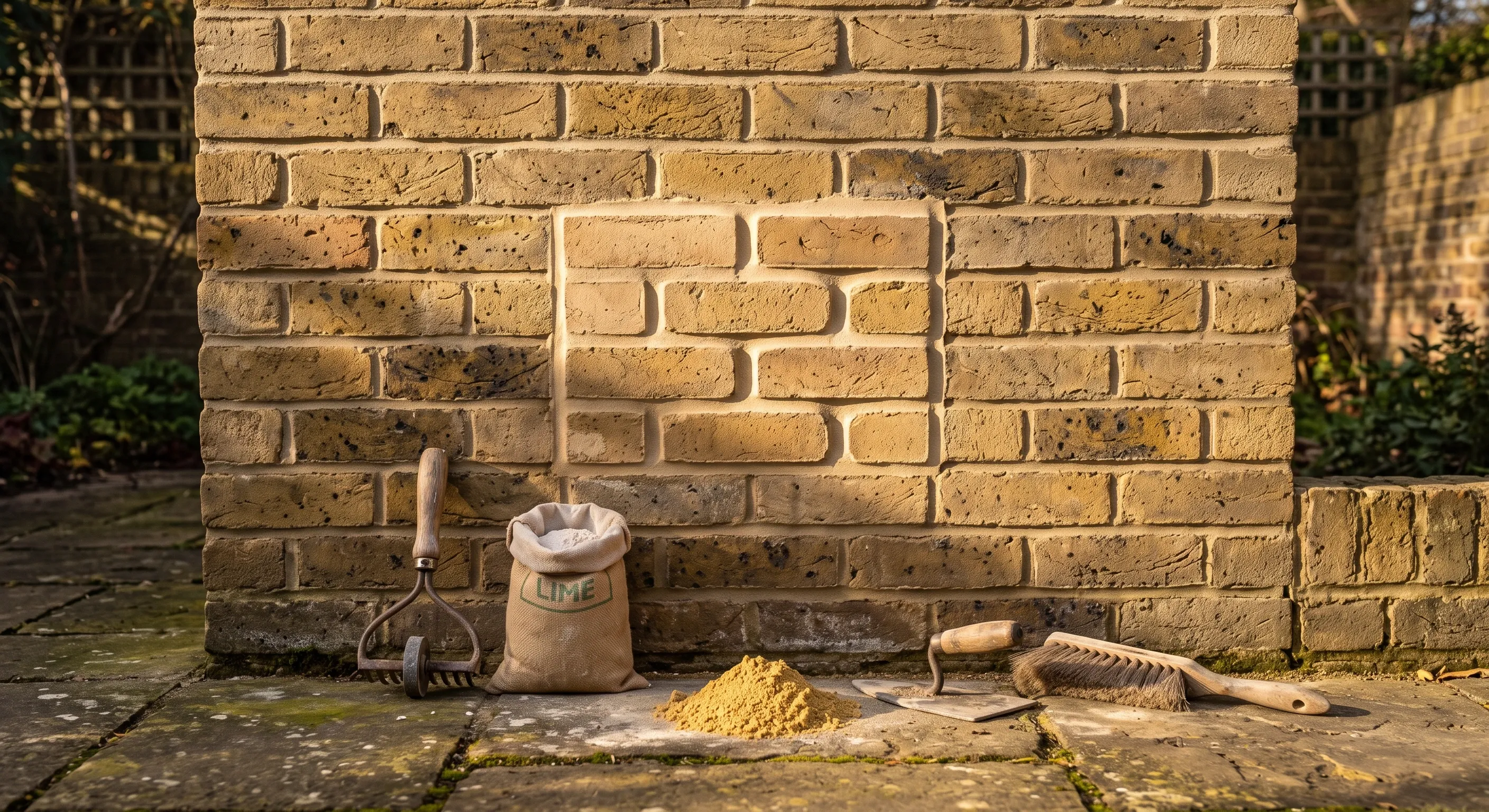
Does repointing stop damp?
Sometimes, and it is worth being clear about when.
Where mortar has fallen out and rain is getting into the wall through open joints, repointing that elevation will help, and homeowners describe exactly this: the mortar gone in places, and the damp appearing behind it. Where the mortar is sound and the damp is condensation, a leaking gutter or a failed downpipe, repointing will not fix it and it is money spent on the wrong thing.
Establish the source of the moisture before pricing a cure. That is true of every damp job and it is why the order matters.
One more honest point. Repointing is maintenance, not an improvement. It stops damp and frost damage and it makes a tired house present better, but buyers expect sound mortar rather than paying a premium for new joints. Do it because the wall needs it.
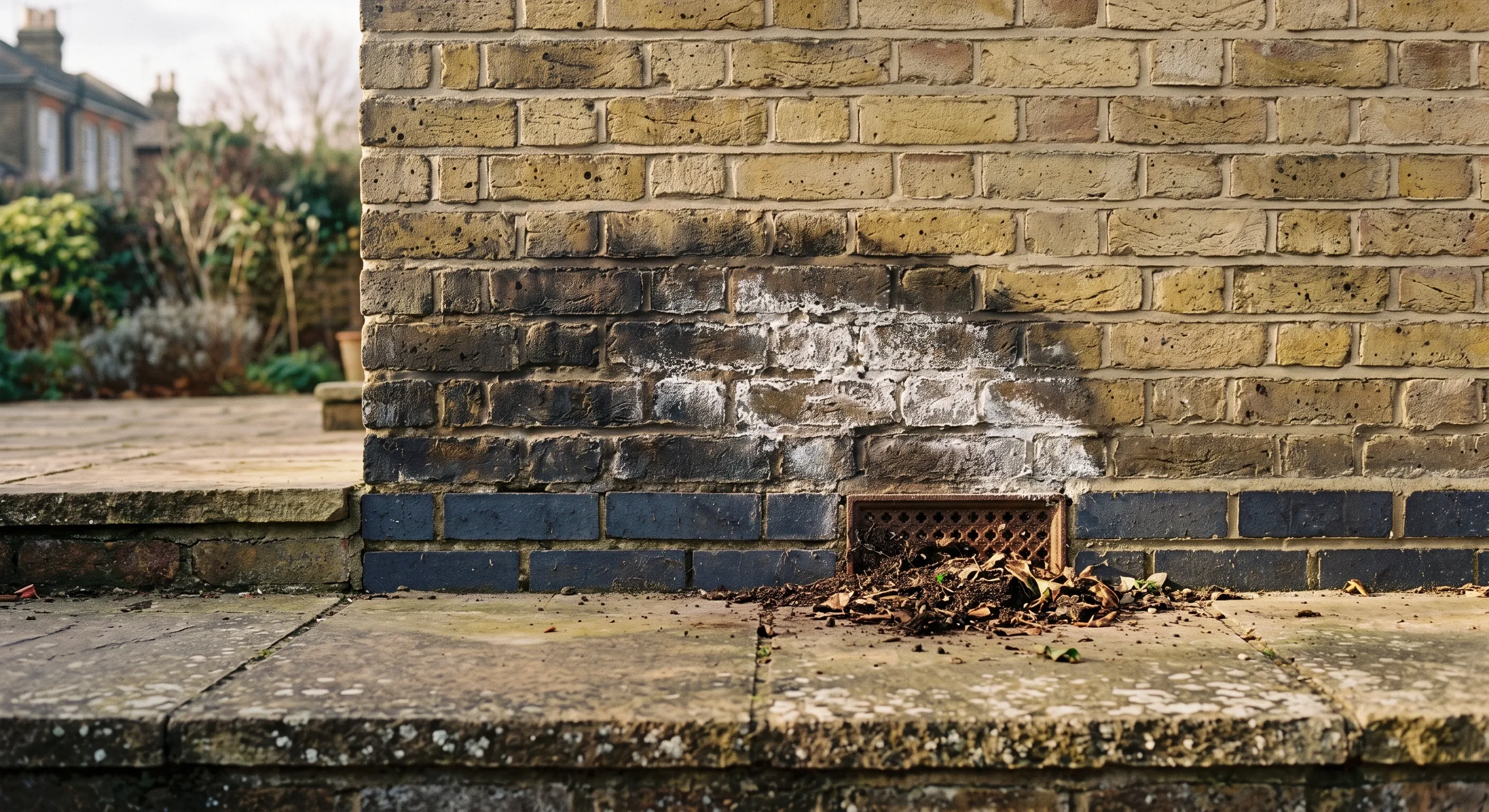
How a Beams repointing project works
A clear process from first conversation to finished wall.
Step 1: Get your estimate
Tell us the property, its age and which elevations concern you. Your planner gives you an estimate range before any commitment.
Step 2: Agree the specification
Which areas, which mortar, raking depth, joint profile and access. Written down, so the quotes are comparable rather than three different jobs.
Step 3: Built by your vetted builder
Your matched builder runs the work under a fixed-price contract, with milestone payments held securely until you approve each stage. 12-month workmanship warranty included.
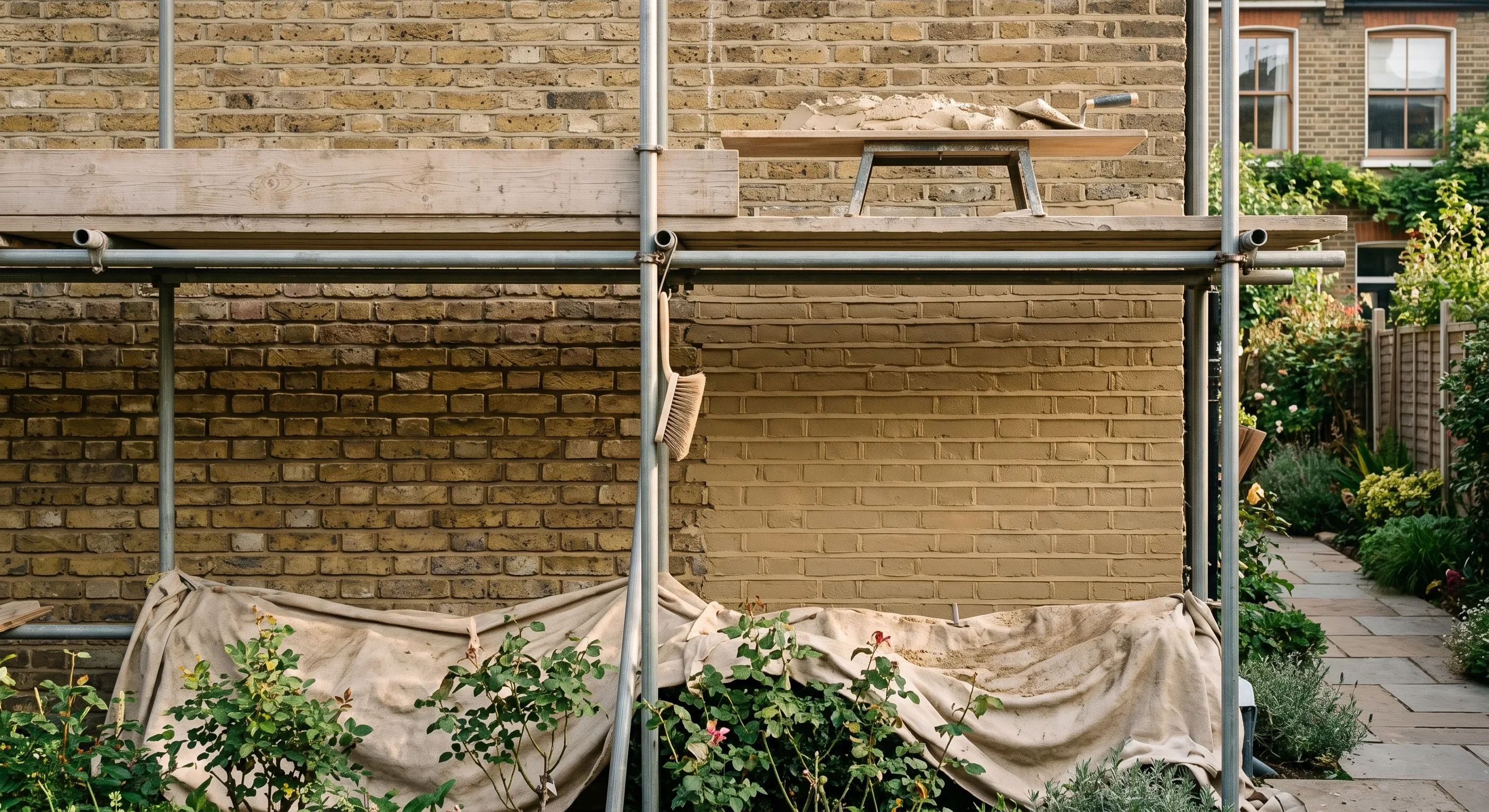
Repointing across London
We work with vetted builders across all London postcodes, in North, South, East and West London. London stock is overwhelmingly pre-1920, so lime is the norm rather than the exception here, and access is harder than almost anywhere: narrow streets, no parking, and pavement licences for scaffolding on a terrace.
In a conservation area or on a listed building, the mortar mix and joint profile may be conditioned, so check before work starts rather than after.
Repointing is often one part of a wider job on a period house, and it is usually cheaper to do it while the scaffolding is already up for something else.
Ready to repoint?
Get a free estimate and find out how much of your brickwork actually needs doing. No commitment, no sales pressure.