







The Beams team removed all the stress and matched me with a wonderful contractor.
Teresa
Queen's Park

On time and on budget. A real pleasure.
Eleanor
Stoke Newington
Completed our renovation project within budget and on time.
Evelyn
Bow East
London's dry lining specialists
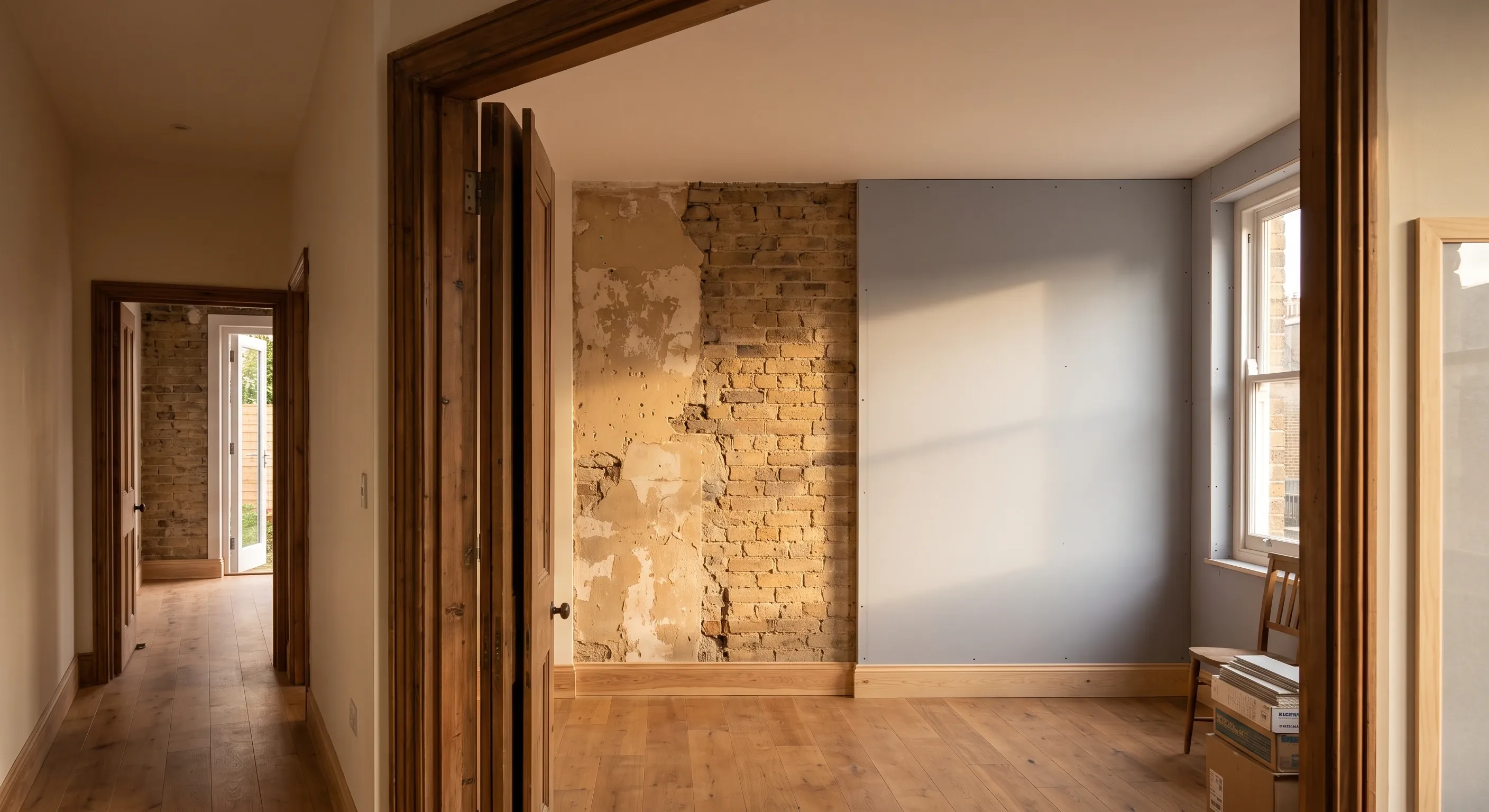
Dry lining fixes plasterboard to walls and ceilings, bonded straight onto masonry with adhesive dabs or screwed to timber battens or metal furring. Published UK rates put dot and dab with a skim finish at £25 to £40 per square metre (BestBuilders, 2026, VAT status not stated by the source), and London sits at the upper end.
Most dry lining quotes describe a price, not a specification. That is why two quotes for the same room can differ by thousands. Beams writes the scope first, so every builder prices the same board, the same fixing method and the same finish. Then up to three vetted London builders quote against the same specification.

Vetted builders, not one-size-fits-all
Every builder in the Beams network is personally vetted: visited in person, references checked, recent work inspected. You meet up to three before committing.
The specification written down first
Board type and thickness, fixing method, finish level, insulation and vapour control, all agreed before anyone prices it. That is what makes the quotes comparable.
Fixed-price contracts
A fixed price agreed before work begins, with milestone payments held securely until you approve each stage, plus a 12-month workmanship warranty.
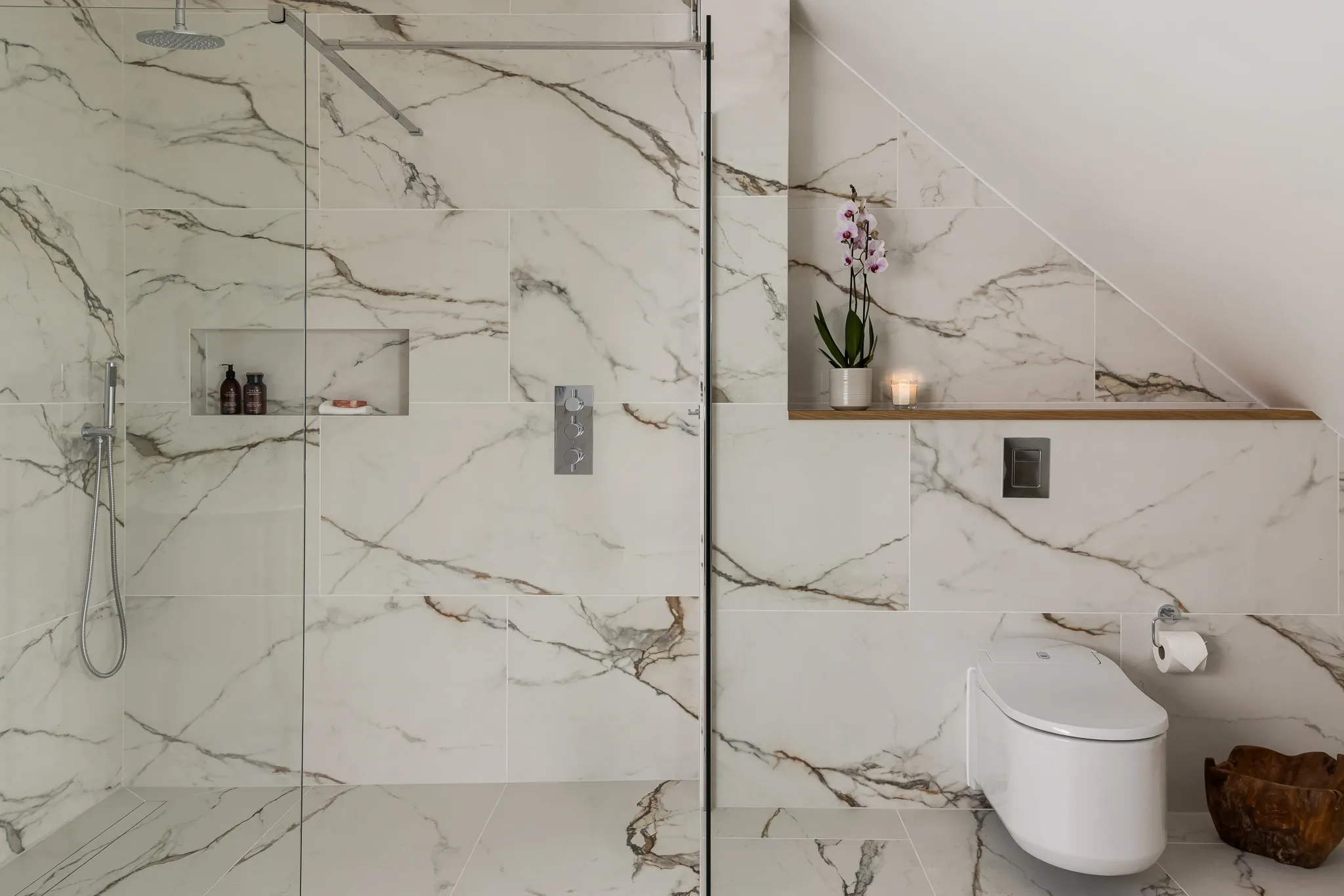
Recent London dry lining projects
Explore completed renovations across London, from single rooms to whole houses.
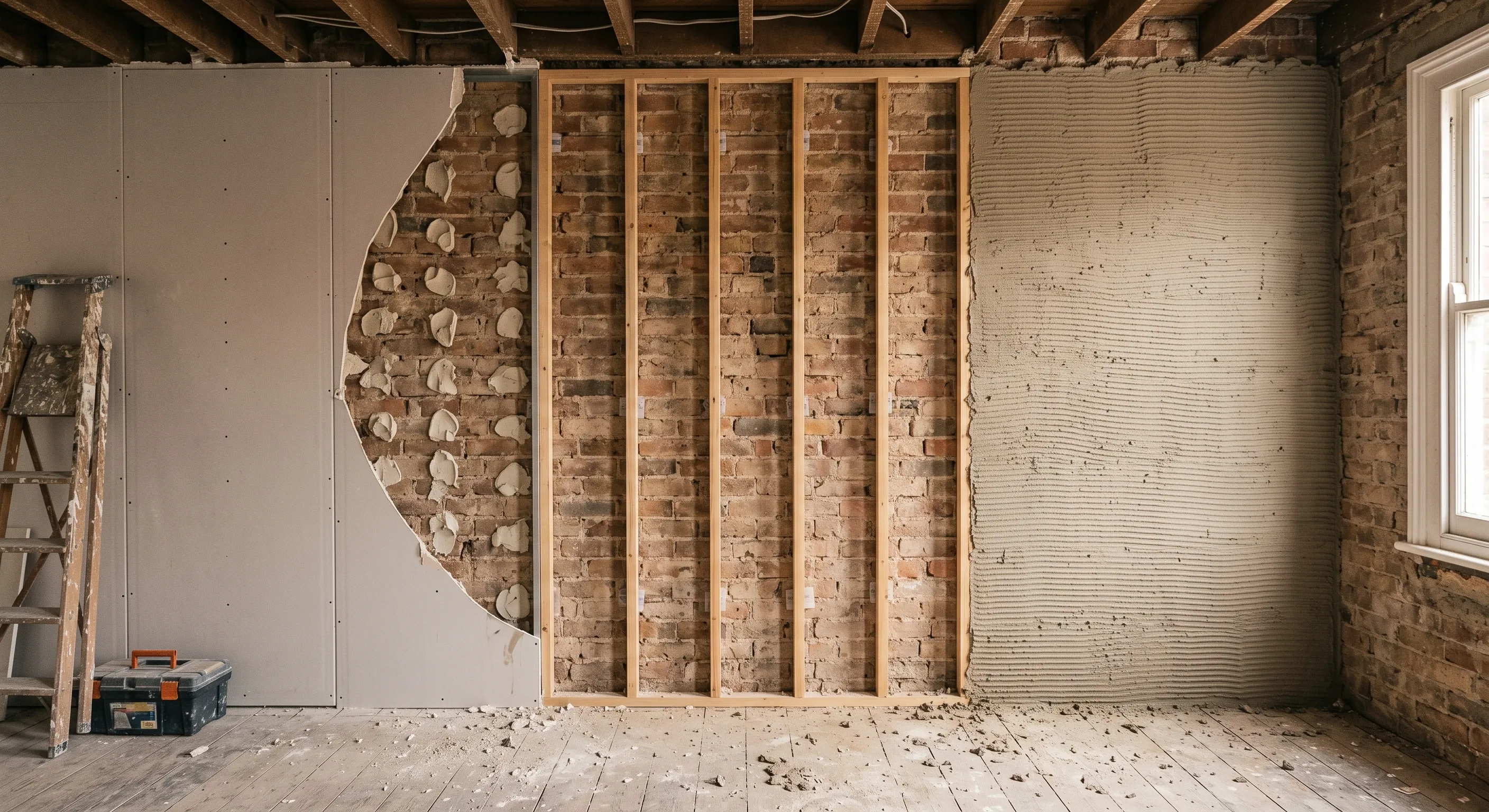
Dot and dab, a battened system, or wet plaster
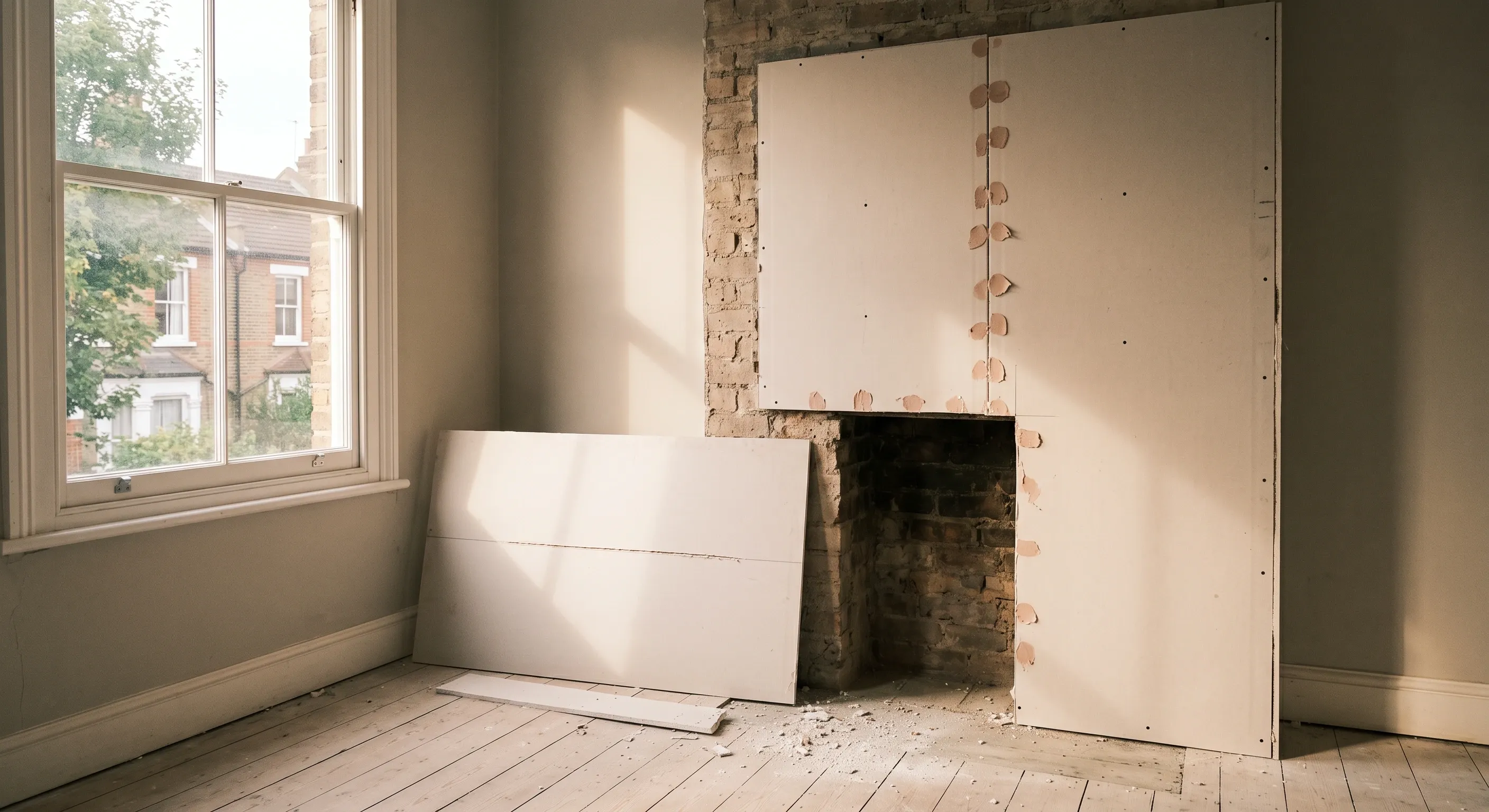
Dot and dab bonds plasterboard straight onto masonry with adhesive dabs. It is quick, it hides uneven brickwork, and on modern blockwork it is the obvious choice.
On a solid Victorian wall it is often the wrong one, and the manufacturer says so. British Gypsum specify their GypLyner Universal metal lining for backgrounds that are very uneven or out of plumb, and as a solution for backgrounds not suitable for bonded systems. A pre-war London terrace is frequently both.
A battened or metal furring system holds the board clear of the wall and leaves a ventilated void, with a vapour control layer where the design calls for one. It costs more and takes more depth off the room, but on solid walls it is the specification that lasts. Where the brickwork is sound and you want no build-up at all, wet plaster is still the better answer.
On room depth, using manufacturer figures rather than estimates: a bonded dot and dab lining is a 12.5mm board minimum plus the thickness of the adhesive dabs. A GypLyner Universal metal lining allows a cavity of up to 55mm between the wall surface and the lining channels, per its BBA certificate, with the board on top. Insulated thermal laminate board combines plasterboard and insulation in one product, so its stated thickness is the whole build-up: Gyproc ThermaLine PIR is made in thicknesses including 38mm and 78mm.
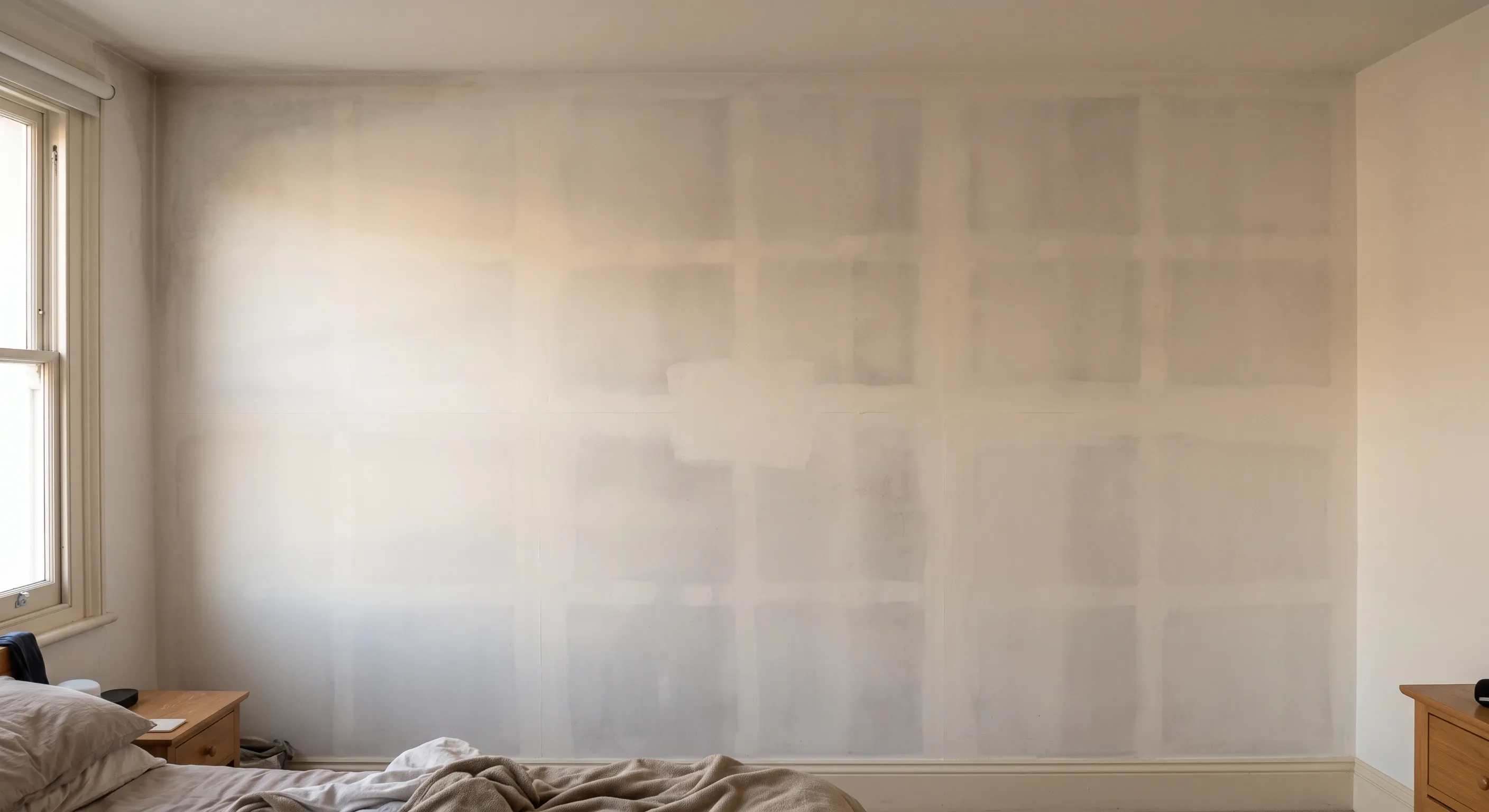
Why plasterboard develops dark patches
Dark marks on plasterboard are almost always the adhesive dabs behind a dot and dab lining. On a solid wall the dabs act as cold bridges, so warm moist air in the room condenses against those colder spots and marks the surface in the dab pattern. It can also be moisture travelling through the masonry and reaching the back of the board.
British Gypsum's own installation guidance for internal wall insulation says a U-value and dew point calculation should be carried out before the boards go on. It is the most useful check on this kind of work, and almost nobody offers it.
Dry lining costs in London
Dry lining is priced per square metre, supply and fit.
As a guide:
- Dot and dab including a skim finish: £25 to £40 per square metre (BestBuilders, UK, 2026, VAT status not stated by the source)
- Dot and dab lining, South East England benchmark: £20 to £35 per square metre (squote, 2025, VAT status not stated by the source)
- Stud-wall boarding: £30 to £50 per square metre (BestBuilders, UK, 2026, VAT status not stated by the source)
- Skimming over sound plaster: £15 to £25 per square metre (BestBuilders, UK, 2026, VAT status not stated by the source)
No published source gives a London-specific rate for this work. London sits at the upper end of the national ranges above, and we would rather tell you that than publish a number we cannot source.
These are published third-party figures and none of the sources states whether VAT is included, so ask before you compare quotes.
Building regulations for dry lining
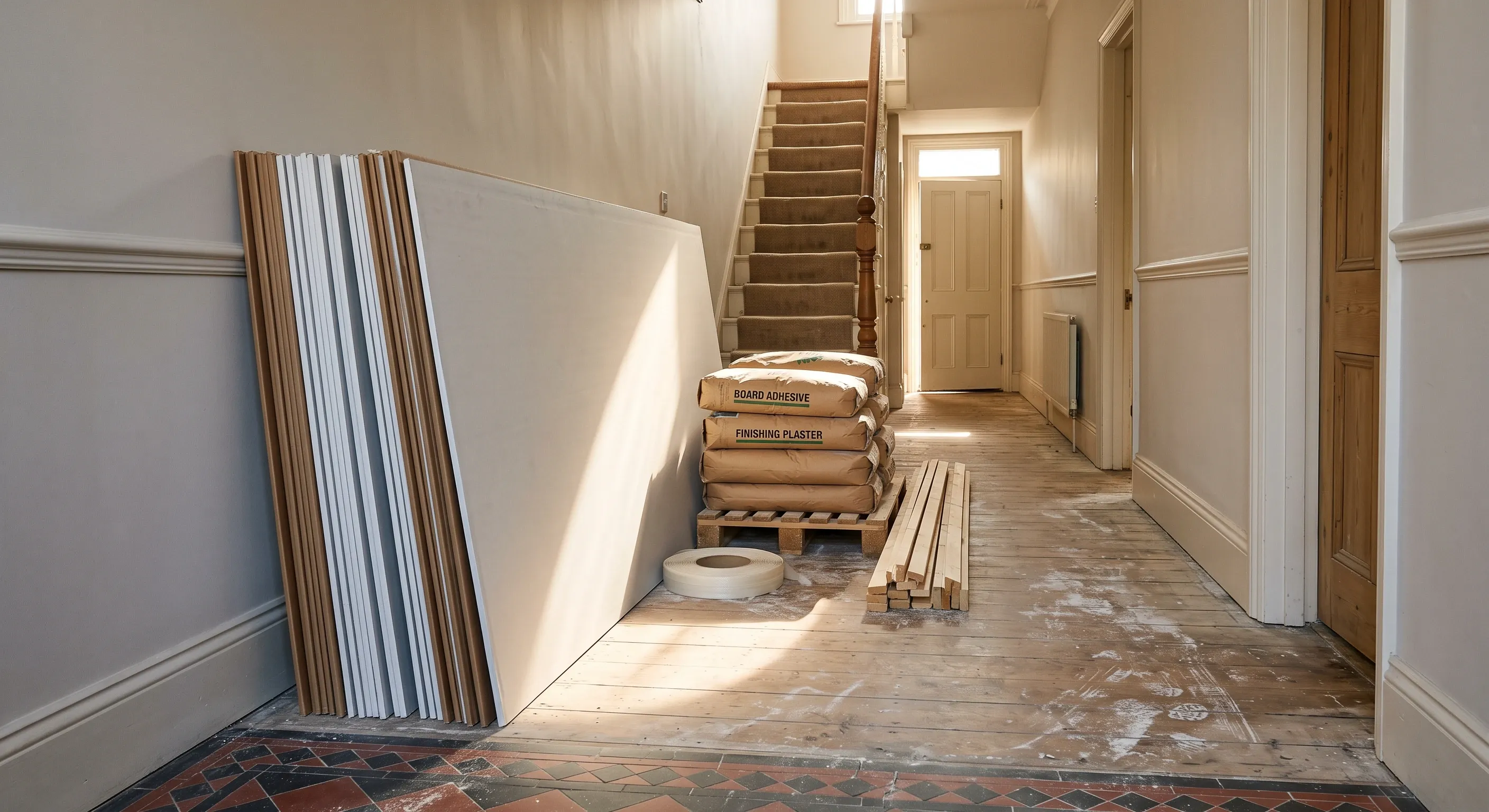
Straightforward dry lining in an existing room usually needs no approval. Three things change that.
Part L applies once you renovate more than half of an individual wall's surface, or more than a quarter of the whole building envelope. Renovation here means providing a new layer or replacing an existing one, and it specifically excludes decorative finishes, so whether stripping plaster back to brick counts is a judgement for building control. Where it applies, a wall insulated internally targets a U-value of 0.30 W/m²K.
Part B governs fire performance. Standard 12.5mm plasterboard typically gives 30 minutes' fire resistance when correctly jointed and sealed. Party walls between houses are a 60 minute requirement, and a loft conversion that adds a storey usually means upgrading the escape route through the existing house too.
Part E governs sound insulation between dwellings, which matters in a converted London flat.
What a dry lining quote should contain
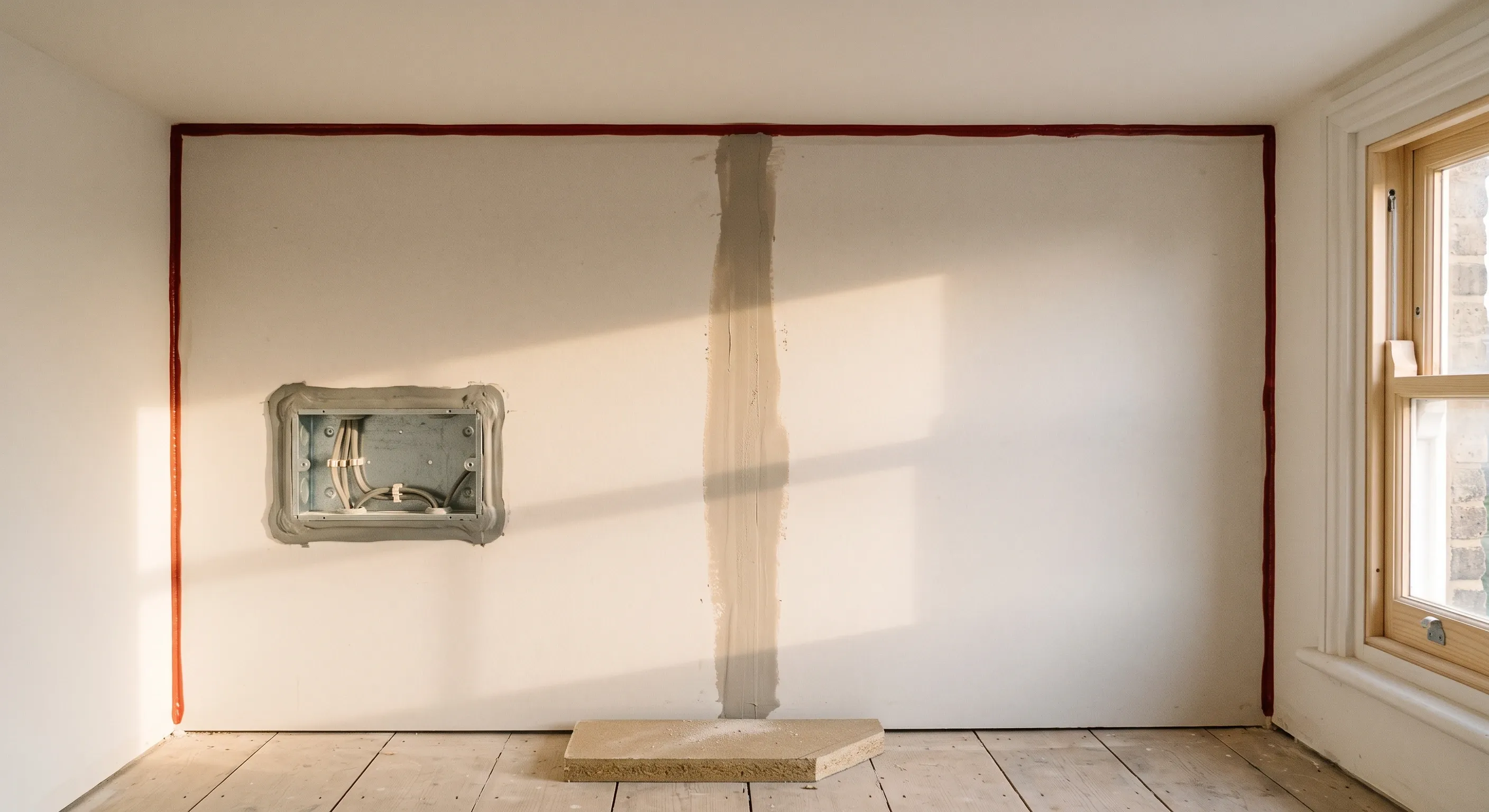
A quote you can actually check names all of this:
- Board type and thickness, for example British Gypsum Gyproc Wallboard 12.5mm
- Fixing method: dot and dab, timber batten, or metal furring
- Finish level: taped and jointed, or a full plaster skim
- Insulation and any vapour control layer, with the U-value it is designed to achieve
- Fire or acoustic board where the regulations require it
- Waste removal and protection of the rest of the house
- Estimated days on site
Ask about the two that are almost always missing. Waste removal is rarely its own line, and making good after an electrician or plumber has chased the walls almost never is.
How a Beams dry lining project works
A clear process from first conversation to finished walls.
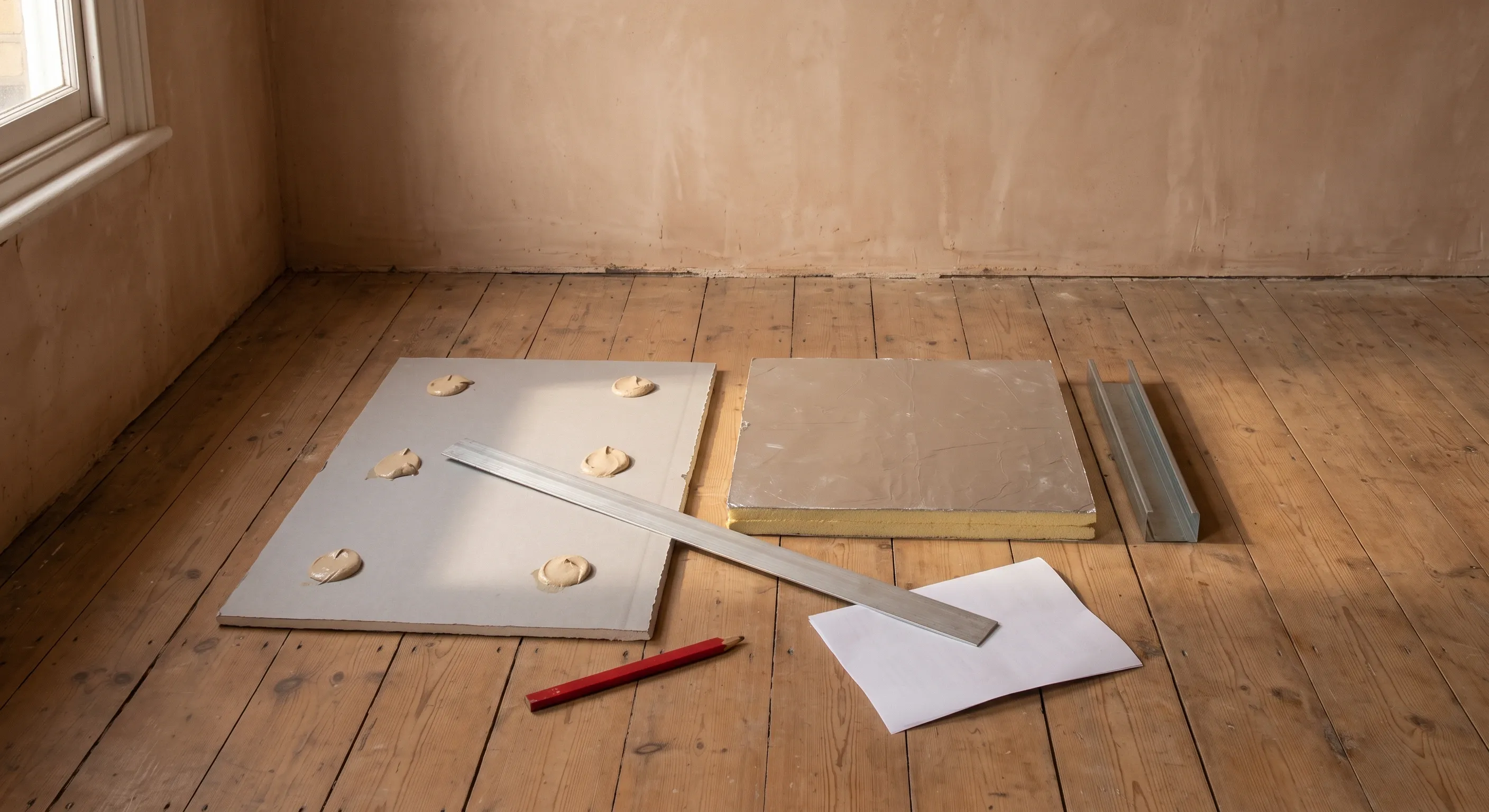
Step 1: Get your estimate
Tell us which rooms, what the walls are made of and what you want the finish to do. Your planner gives you an estimate range before any commitment.
Step 2: Agree the specification
Board, fixing method, finish level and insulation, written down. This is what makes the quotes comparable.
Step 3: Built by your vetted builder
Your matched builder runs the work under a fixed-price contract, with milestone payments held securely until you approve each stage. 12-month workmanship warranty included.
Dry lining across London
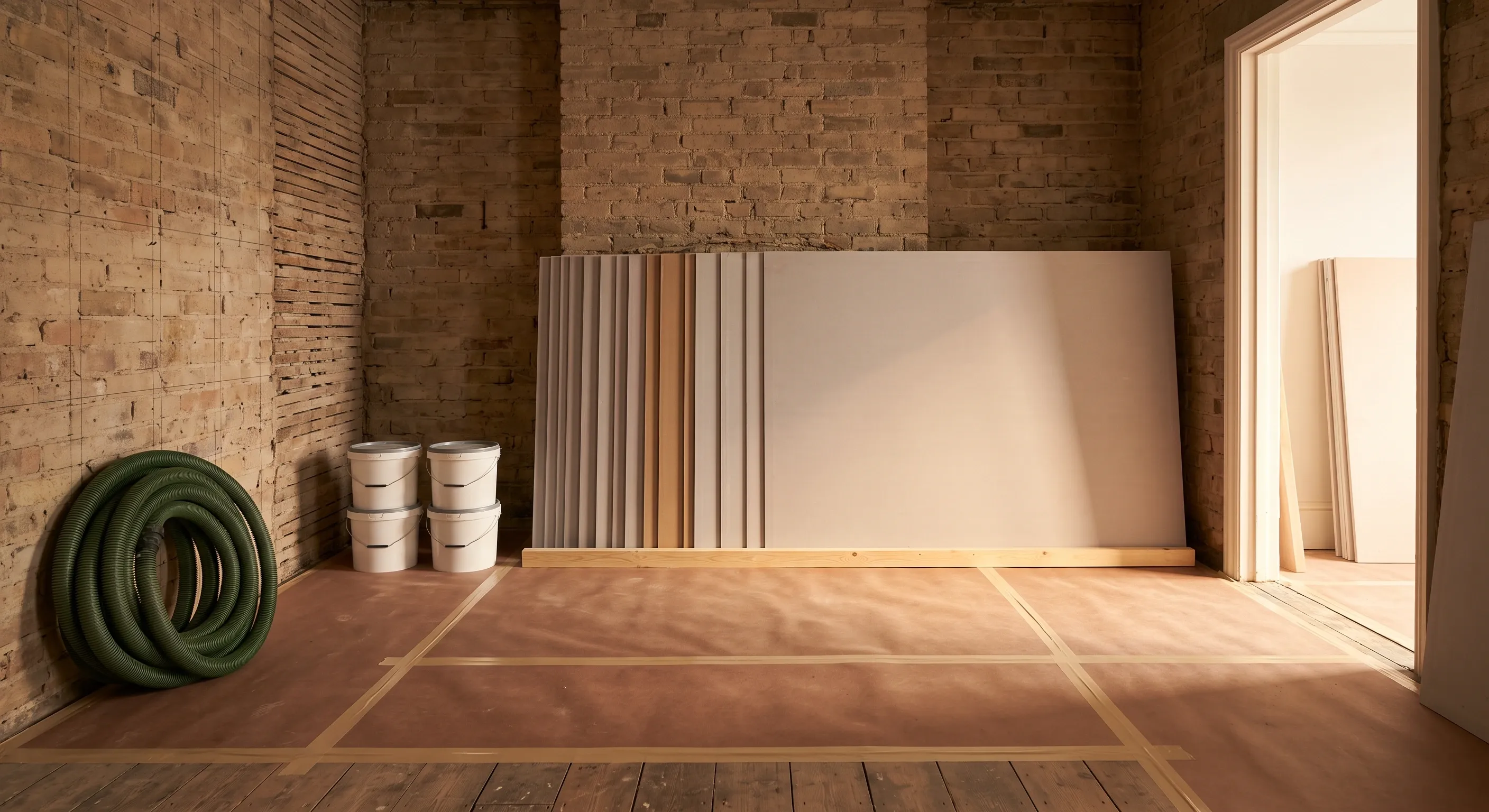
We work with vetted builders across all London postcodes, in North, South, East and West London. Solid-walled Victorian and Edwardian terraces need a different approach to a modern block, and our builders know which system suits which property, and where a bonded lining will cause trouble later.
Dry lining is often one part of a bigger job, so if you are lining walls as part of a wider renovation it is worth scoping the whole thing at once.
Ready to start your dry lining project?
Get a free estimate and find out what your walls actually need. No commitment, no sales pressure.