
Party wall notices and agreements: costs and process

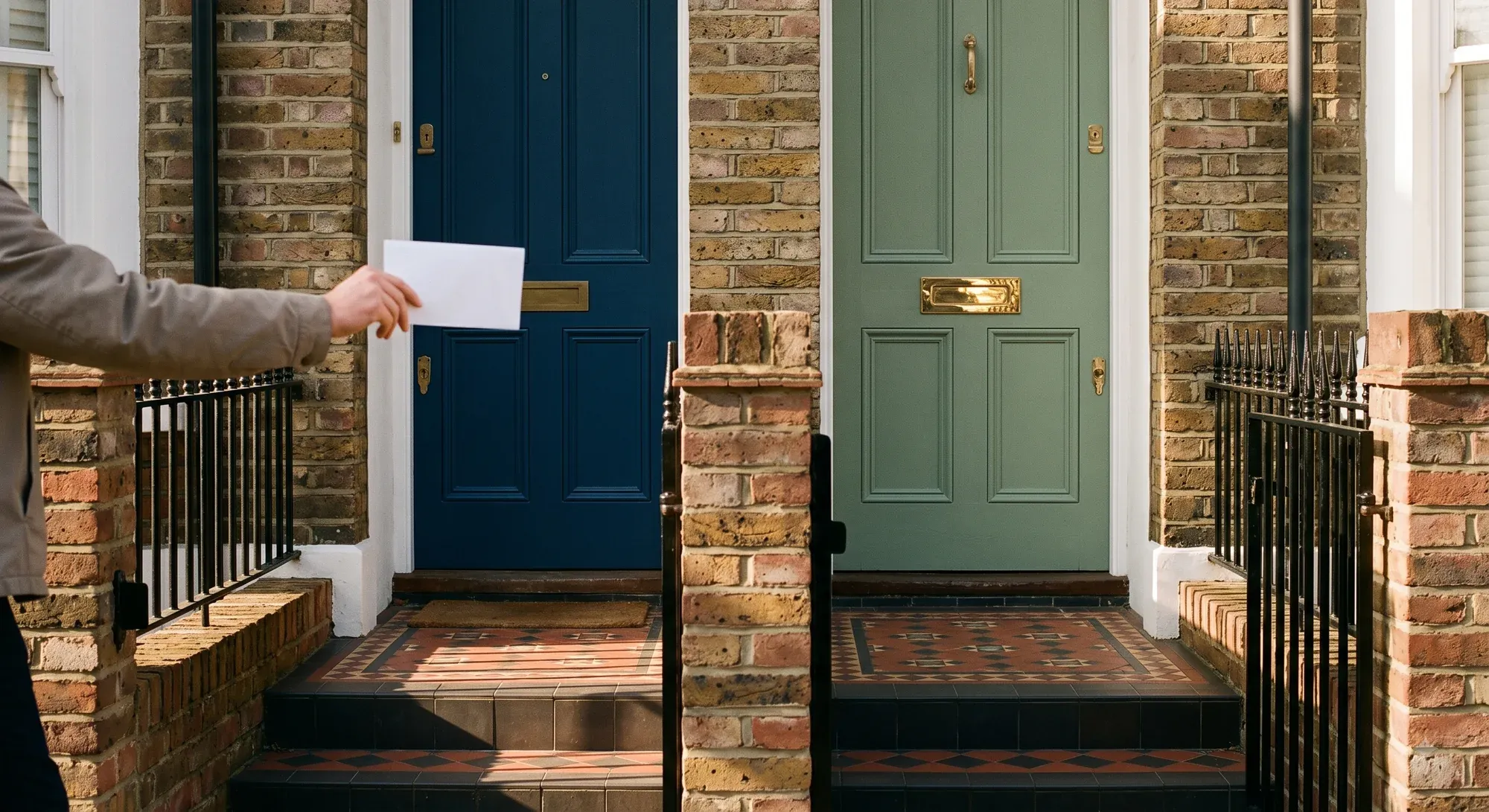
An agreed surveyor acting for both owners is published at £900 to £1,400 plus VAT in London, and by project type at £1,100 to £1,300 for a loft, £1,300 to £1,500 for a rear or side extension, £1,800 to £2,500 plus for a basement, and £800 to £1,000 for a chimney breast. Where each side appoints its own surveyor, expect roughly double. A standalone notice runs from £50 to £175 plus VAT, and a schedule of condition around £450 plus VAT.
Those figures all state a VAT basis, which is worth saying because almost none of the pages ranking for this search do.
Why there is no fixed price for any of this
There is no statutory fee scale for party wall surveyors. Section 10(13) of the Party Wall etc. Act 1996 leaves the costs of the award to be determined by the surveyors themselves, and the government's guidance says plainly that fees are a matter for individual surveyors with no set charges.
So every number below is one practice's published price, not a rate anyone is bound by. Two quotes for the same job can differ by a factor of two and both be legitimate.
That also explains the gap in the market. Surveying practices publish real price lists with VAT stated, because they are selling a service. The consumer cost guides that rank for "party wall agreement cost" tend to give a round average with no VAT basis and no source, which is worse than useless when the VAT alone is a fifth of the bill.
What it costs
All figures below are published prices from named UK practices, checked in August 2026. Each states its VAT position.
Item | Published price | VAT basis |
|---|---|---|
Agreed surveyor, London | £900 to £1,400 | Plus VAT |
Agreed surveyor, loft conversion | £1,100 to £1,300 | Plus VAT |
Agreed surveyor, rear or side extension | £1,300 to £1,500 | Plus VAT |
Agreed surveyor, basement | £1,800 to £2,500 and above | Plus VAT |
Agreed surveyor, chimney breast removal | £800 to £1,000 | Plus VAT |
Award, building owner's surveyor | From £699, excluding underpinning and basements | Plus VAT |
Award, simple minor works | From £450, excluding schedule of condition | Plus VAT |
Schedule of condition | £450 | Plus VAT |
Notice, prepared and served | £50 to £175 | Plus VAT |
Surveyor hourly rate, London | £190 to £350 | Plus VAT |
Surveyor hourly rate, national | £100 to £400 | Plus VAT |
Two things that table will not tell you.
Nobody publishes a numeric London premium. Practices in and outside London both assert that London costs more, and none of them quantifies it. So treat the London figures above as London figures rather than applying an uplift to a national one.
Watch what an award price excludes. One practice's £699 award explicitly excludes underpinning and basement work, and includes a schedule of condition. Another's £450 award excludes the schedule of condition, which is then £450 on its own. The headline number and the total are not the same thing, and the exclusions are where the difference lives.
One surveyor or two, and what that decision costs
This is the single biggest lever on the bill.
Once a dispute is deemed to have arisen, section 10 gives you two routes. Either both owners appoint one agreed surveyor to act impartially for both, or each appoints their own, and those two then select a third to hold in reserve in case they cannot agree.
One surveyor is materially cheaper. Published guidance from a London practice puts the saving from agreeing a single surveyor at up to £2,000, and suggests holding around £1,500 as a contingency in case your neighbour insists on their own.
The instinct to appoint your own is understandable and usually unnecessary. An agreed surveyor is not your neighbour's surveyor. The statutory duty runs to both owners, and the award has to be defensible to both. Where a relationship is already strained, or the work is genuinely high risk like a basement, two surveyors buys reassurance that is cheap next to what a basement conversion costs in the UK. On a chimney breast, it mostly buys a second invoice.
The conversation worth having early, before positions harden, is simply: shall we use one surveyor and split the process rather than duplicate it.
The process, and how long each step takes
Stage | What happens | Timing |
|---|---|---|
Establish which sections apply | Section 1 for building on the line, section 2 for work to the party wall, section 6 for excavation | Before anything else |
Serve notice | Section 3 notice for section 2 works. Section 6 notice needs plans and sections | Two months for section 2, one month for sections 1 and 6 |
Neighbour responds | Consent, or dissent, or silence | 14 days |
Appoint surveyors | Agreed surveyor, or one each plus a third in reserve | After dissent. Ten days before you can appoint on their behalf |
Schedule of condition | Their property recorded before work starts | Before the award is served |
Award served | Sets out the work, the method, the timing and who pays | Weeks, depending on the surveyors |
Work begins | Only once the notice period has run and the award is in place |
Realistically, budget three months from serving notice to being clear to start. The notice period alone is one or two months, and the surveyor process adds to it rather than running inside it.
Two timing traps. A section 6 notice lapses if you have not started within 12 months, so serving very early means serving again. And where a job triggers both section 2 and section 6, the two-month period governs, because you cannot begin any notifiable part until the longest applicable period has run.
For how this sits inside a whole project programme, the Party Wall Act, a complete guide sets out each section and what triggers it.
Who actually pays
The default is that the building owner, meaning the person doing the work, pays. That covers your own surveyor, your neighbour's surveyor where they appoint one, and the award itself.
But it is not automatic. Section 10(13) puts the decision with the surveyors, and there are circumstances where costs shift. If a neighbour behaves unreasonably, or requests work that benefits them, the allocation can change. Section 6(3) runs the other way: if your neighbour requires you to underpin or safeguard their foundations, that is at your expense.
Where your neighbour's own property benefits, for example if repairs to a shared wall were needed anyway, the surveyors can apportion accordingly.
What you are actually buying
Worth being clear, because "party wall agreement" sounds like paperwork and the useful part is not the paper.
The schedule of condition is the thing that protects you. It records the state of your neighbour's property, usually with photographs, before you start. Without it, any crack that appears during your build is arguably yours. With it, you have evidence. This is the item most worth insisting on, and it is also the item most often excluded from a headline award price.
The award sets out what work is permitted, how it will be done, the hours, access arrangements and the method. It is enforceable, and it protects both sides from the argument that would otherwise happen halfway through.
Neither of these is optional in practice, whatever the fee structure calls them.
The costs of not doing it
The Act contains no enforcement procedure for failure to serve notice. There is no penalty, no regulator and no council route.
That sounds like a saving and is not. Enforcement falls entirely to your neighbour, and their remedy is the courts. An injunction can stop a live site, which on a fixed-price build with trades booked is expensive in a way a surveyor's fee is not. You also lose the Act's protection, so you are exposed to ordinary trespass and nuisance claims, and you have no schedule of condition to point at when a pre-existing crack becomes your problem.
Then there is resale. A buyer's solicitor asking for the award and being told there isn't one is a delay, and sometimes a retention.
How Beams helps
Party wall is the item that most often moves a start date, and almost never for cost reasons. It moves because someone worked out in week one of the build that they needed two months of notice.
So on our managed home extensions, we identify which sections apply while the design is still moving, get notices out early enough that they never sit on the critical path, and make sure the schedule of condition exists before anyone touches a wall. Your builder then prices the work knowing what the award requires, rather than discovering it in month two.
That is part of what a Beams fixed price commits to: one agreed price, payments released against milestones, and 12 months on the workmanship.
If you are choosing a specialist for the basement dig itself, where party wall exposure on both sides of a London terrace is highest, see our roundup of the 9 best basement conversion companies in London for 2026.
Common questions about party wall costs
Is a party wall agreement a legal requirement?
Serving notice is, where the work engages sections 1, 2 or 6. The "agreement" is what results if your neighbour dissents, or is deemed to. If they consent in writing, no award is needed and your costs can be close to nothing.
Can I serve the notice myself?
Yes. There is no requirement to use a surveyor to serve notice, and published prices for the service run from around £50 to £175 plus VAT, which is mostly buying accuracy. A defective notice is worse than a late one, and a section 6 notice is invalid without plans and sections.
What if my neighbour appoints an expensive surveyor?
Their surveyor's fees are still determined under section 10(13) rather than being whatever they choose to charge. Unreasonable fees can be challenged through the third surveyor, and there is a 14-day right of appeal to the county court under section 10(17).
Does my neighbour pay anything?
Usually not, if the work is entirely for your benefit. Where they require additional protection, or where a shared wall needed repair anyway, the surveyors can apportion costs between you.
Do I need this for a loft conversion?
Only if the work touches the party wall. Steels bearing into it or raising it trigger section 2. Rooflights and a new floor that leave the wall alone trigger nothing, and cost nothing.
Is it different for an extension?
Usually yes, because foundations bring section 6 into play at one month rather than two. Our guide to whether you need a party wall agreement for an extension covers the depth and distance tests.
Does a terrace cost more?
It can, because the figures above are per neighbour and a terrace has a party wall on both sides. See what you need to know about party walls in London terraces.
Where these figures come from
All prices are published rates from named UK surveying practices, checked in August 2026, and each source states its own VAT position. They are what those practices charge, not a market average and not a statutory scale, because no scale exists.
Agreed surveyor London ranges, per-project figures, two-surveyor comparison and London hourly rates: Party Walls Limited, 2026
Award, schedule of condition, standalone notice and national hourly rate figures: Richard G Johnson, partywall.expert
Award, notice, agreed surveyor and hourly rate figures: Christopher Anthony, price list updated April 2026
Costs determined by the surveyors, and the absence of any statutory fee scale: Party Wall etc. Act 1996, section 10(13), and Ministry of Housing, Communities and Local Government explanatory guidance
Notice periods: sections 1(2), 3(2) and 6(5)
Underpinning at the building owner's expense: section 6(3)
No enforcement procedure for failure to serve notice: MHCLG explanatory booklet
No source publishes a numeric London premium, so none is stated here. Every project prices differently once the sections engaged and the number of surveyors are known.
Find out what your project will cost
Tell us about your project and we will get you up to three comparable quotes from vetted London builders, with notices served early enough to stay off the critical path.