
How much does a bathroom renovation cost in the UK?

A bathroom renovation in the UK typically costs £13,700 to £20,000 including VAT, with most projects landing near £15,700. In London it's closer to £17,200. The construction work is the bigger half of that, not the fittings, which is the single biggest difference between budgeting a bathroom and budgeting a kitchen.
Most guides get that backwards. They lead with the price of baths and basins, when the tiler and the plumber are what actually move your number.
What does a bathroom renovation cost in 2026?
Here's what Beams estimated for bathroom projects between January and July 2026, across 3,397 bathroom-only projects. Our work is London-weighted, so both columns are shown: what we see, and the UK-average equivalent once the regional labour difference is taken out.
UK average (derived) | London | |
|---|---|---|
Lower quartile | £13,687 | £14,974 |
Typical project | £15,687 | £17,215 |
Upper quartile | £20,044 | £22,290 |
Top 10% | £25,058 | £27,897 |
All figures include VAT at 20% and cover a finished bathroom: suite, shower, tiling, flooring, waterproofing, the plumbing and electrical work, and the labour to install all of it.
If you'd rather see the numbers the way a builder quotes them, divide by 1.2. A typical London bathroom is £14,346 before VAT.
Why is the work the bigger cost in a bathroom?
Because almost everything in the room is a trade rather than a product.
Typical (inc VAT) | Share of project | |
|---|---|---|
Construction: plumbing, tiling, electrics, waterproofing, plastering, making good | £10,710 | About 63% |
Materials: suite, shower, tiles, flooring, fittings | £6,278 | About 37% |
Those are separate medians, so they don't add precisely to the typical project figure above. That is the inverse of a kitchen, where materials are 57% and construction 43%. Same company, same estimating model, opposite split.
The reason is tiling. A kitchen has a run of units bolted to a wall and a worktop templated on top. A bathroom has every surface tiled, every joint sealed, and a shower area that has to be genuinely watertight before anything goes on top of it. Tiling is the largest single item inside that construction figure, and it's slow work in a small room where only one trade can operate at a time.
Which is why the fittings you're choosing in a showroom matter less to your final number than people expect. Doubling your spend on a bath moves the total by a few hundred pounds. Moving the bath moves it by thousands. If you want to see where tiling costs land specifically, our guide to what it costs to tile a bathroom breaks down materials and labour per square metre.
How much does a bathroom cost by layout?
Layout predicts cost better than floor area, because it determines how many fittings need servicing and how much of the room has to be waterproofed.
Layout | Typical cost, London (inc VAT) | Projects |
|---|---|---|
Shower only | £14,928 | 926 |
Bath only | £15,259 | 202 |
Combined shower over bath | £17,214 | 1,887 |
Separate bath and shower | £23,860 | 382 |
Same source: 3,397 Beams bathroom projects, January to July 2026.
The jump at the bottom of that table is the one worth understanding. Separating the bath and the shower adds around £9,000 over a shower-only room. You're paying for a second wet area with its own drainage, its own waterproofing, and enough floor space to make both usable, which in a typical UK bathroom of roughly four square metres usually means the room has to grow or the layout has to change.
A shower over the bath is the most common choice in our data by a wide margin, and it is also the most economical way to have both.
What drives the price up
Three things account for most of the variation, and only one of them is about taste.
Moving the soil pipe or the waste. This is the big one. Keeping the toilet where it is costs you nothing; moving it more than a metre means new falls, boxing in, and often floor up. Every guide tells you to keep the layout, and this is why. Our guide to changing the layout of a bathroom covers what's actually involved when you do.
Waterproofing. A tiled shower area needs tanking behind the tiles, not just grout and hope. Skipping it is the most expensive saving in renovation, because the failure shows up eighteen months later in the ceiling below.
What's behind the walls. Bathrooms in older housing hide more than kitchens do. Rotten floorboards under a leaking bath, lead or steel pipework, a soil stack that has been boxed in for forty years. Flats add another layer, since the stack often serves other homes and the lease dictates what you can touch, which is where renovating a London flat differs from a house.
Fittings matter, but less than the showroom suggests. The spread between a decent suite and a premium one is real, and it's smaller than one unplanned day of plumbing.
Does that price include VAT?
Every figure on this page does. Bathroom work in an occupied home is standard-rated at 20%, on labour and on the materials your builder supplies.
Three exceptions exist, and one of them is specific to bathrooms and genuinely valuable.
Adaptations for a disabled person can be zero-rated. HMRC's relief covers work on bathrooms, washrooms and lavatories where it's needed by a disabled person, which is a relief that has no equivalent for kitchens. It applies to bespoke work rather than off-the-shelf products: a level-access shower or a knee-space basin designed for the user can qualify, where a standard suite installed conventionally cannot. Charges have to be apportioned between the qualifying and non-qualifying parts, so the paperwork matters. If this might apply to you, raise it before the quote, not after.
If the property has been empty for two years or more, renovation qualifies for the reduced 5% rate. A letter from your local authority's Empty Property Officer confirming two years empty is sufficient evidence on its own. Occasional use kills it, so a visited second home doesn't qualify.
If the work changes the number of dwellings, converting a house into flats or two flats back into one, the 5% rate applies to the qualifying work.
One trap worth knowing on any reduced-rate job. That rate applies to materials your builder supplies. Buy the same suite yourself from a retailer and you pay 20% on it with no way to reclaim the difference, because the DIY reclaim scheme covers new builds and conversions rather than the renovation of an empty home.
Is a bathroom cheaper outside London?
Yes, by about 9%. More than a kitchen, less than you've been told.
The reason is the split above. Because construction is 63% of a bathroom, the London premium on labour bites harder here than it does on a kitchen, where it only touches 43% of the project. Tiles cost the same in Leeds as in Lambeth; the tiler doesn't.
BCIS publishes regional location factors indexed to a UK average of 100, which is the right tool and sits behind a subscription. The best free equivalent, from cost consultancy Costmodelling, puts Inner London at 117 and Outer London at 111 on tender prices as at Q2 2024, describing its own table as indicative. Apply that to the construction portion and a typical London bathroom at £17,215 becomes £15,687 at the UK average.
You will see much larger claims. One cost index currently leads with London paying "up to 43% more", which is a figure about a starting price rather than a finished project. On a whole bathroom, the gap is single digits.
Why do published bathroom costs disagree so wildly?
Search this and you'll find anything from £3,000 to £25,000. Four different things are being measured and almost nobody says which.
Scope. Some figures price a suite supply-only. Some price fitting. Some price the finished room including tiling, flooring and electrics.
VAT. At 20% this moves a £15,000 bathroom by £3,000, and almost no published figure says whether it's in or out.
Room size and type. A cloakroom and a family bathroom are both called "a bathroom". One has a basin and a WC; the other has a bath, a shower, a heated towel rail and every wall tiled.
Geography. London labour genuinely costs more, but it only lifts the construction share.
Then there's the thing nobody mentions.
There is no official UK statistic for what a bathroom renovation costs. The Office for National Statistics publishes a construction output price index, which tracks what contractors charge across the industry and explicitly excludes VAT, and separately publishes the volume of repair and maintenance work done. Neither is a homeowner's cost. Its household spending survey excludes capital improvements by design. The English Housing Survey records how old your bathroom is, not what replacing it costs. BCIS holds the right figures and sells them by subscription.
So every "average UK bathroom costs £X" in circulation is a commercial estimate. Almost none disclose how many projects they're based on, which is why every cost figure on this page carries the number behind it.
The hidden extras nobody warns you about
Bathrooms uncover more than most rooms, because the wet areas have been quietly working against the building for years. Here's what these items cost across Beams projects, on the same basis as everything else on this page.
Item | Typical (inc VAT) | Usual range | Projects |
|---|---|---|---|
Skip and waste removal | £919 | £490 to £1,469 | 19,540 |
Rewiring | £1,224 | £864 to £1,836 | 5,957 |
Floor levelling or screed | £1,224 | £681 to £2,275 | 1,639 |
Asbestos survey or removal | £1,346 | £1,003 to £1,814 | 164 |
Consumer unit upgrade | £1,728 | £1,102 to £2,570 | 391 |
Damp treatment or tanking | £2,203 | £1,164 to £3,060 | 5,843 |
Replastering | £2,439 | £1,469 to £3,293 | 2,991 |
Electrics catch people out. Bathroom circuits are notifiable under Part P of the Building Regulations, and bathrooms have zones governing what fitting can go where in relation to the bath and shower, so it needs a registered electrician and a certificate at the end. Extraction is a requirement too, not a nicety, under Part F. Anything still running a consumer unit that predates 2008 tends to need replacing rather than extending.
Then the small things. The floor that isn't level. The plaster that comes off with the old tiles. The pipe run nobody could see until the bath came out.
Which is why we hold 10% to 15% back as contingency on every project. Hiscox surveyed 2,003 UK adults who had renovated and found two in five overspent, by an average of 20%. Houzz's UK study, now a few years old but the best available, put 12% of homeowners over budget by a quarter to a half.
A buffer turns a crisis into a decision.
Why do two quotes for the same bathroom differ by thousands?
Most of the time, builders quoting wildly different numbers are pricing genuinely different jobs. Scope isn't defined, fittings aren't specified, and each of them fills the gaps with their own assumptions. One has allowed for tanking and one hasn't. One priced the large-format porcelain you described and one priced the ceramic they usually fit.
So the cheapest quote isn't automatically the keen one. Across Beams projects, 60% of customers don't choose the lowest quote. Price alone tells you very little, which is why our roundup of the best bathroom renovation companies in London looks at more than the number at the bottom of a quote.
The fix is making everyone price the same job, from the same drawings, with the same fittings named. Our guide on how to compare quotes from renovation contractors sets out how to get three numbers you can put side by side.
Check one thing first: whether the trader is VAT-registered. Registration is compulsory above £90,000 of taxable turnover. A trader below that threshold charges no VAT, which looks like a 20% saving, but they can't reclaim the VAT on their own materials either, so that cost already sits inside their price.
How long does a bathroom renovation take?
Two to three weeks on site for a straightforward refit, and three to five where the layout changes or a wet room is involved. The room is small, which sounds like an advantage and isn't: only one trade can work in it at a time, so the programme is almost entirely sequential.
Tiling is the long pole. Walls and floor, then grouting, then silicone, with drying time between each. Rushing that is how you get a shower that leaks in a year.
Start to finish is longer than the site time, because tiles and sanitaryware have lead times and a specified item that turns up late holds up everything behind it. Our guide to how long a bathroom renovation takes sets out the stages properly.
Order everything before anyone lifts a tile.
Smart ways to save without compromising
Keep the soil pipe where it is. That single decision saves more than every fitting downgrade combined.
After that: tile to a sensible height rather than floor to ceiling on every wall, because full-height tiling on four walls is a lot of material and a lot of labour for a wall you'll put a cabinet against. Choose a larger format tile, which covers ground faster and costs less to lay per square metre. And buy the suite where it's cheapest rather than as part of a package, as long as your builder is happy to fit supplied goods.
Spend on the things that get wet and the things you touch. Skimp on the things nobody sees.
How to budget for your bathroom renovation
Four steps, in this order.
Set a realistic range. Find your layout in the table above, then adjust for specification.
Lock the layout first. Decide whether anything moves before you speak to a builder, because it's the single largest variable in the price.
Allow contingency. 10% to 15%, held separately.
Compare properly. Same drawings, same fittings, same assumptions, or the comparison means nothing.
Does a new bathroom add value?
You'll find confident percentages for this. Treat them carefully, because there's no reliable UK dataset behind most of them and the studies that exist measure buyer preference rather than realised sale prices.
What holds up is the direction. A tired bathroom is one of the two rooms that gives a buyer a reason to offer less, and a second bathroom or en-suite changes how a house is described rather than just how it looks. Over-specifying for your street rarely returns the money.
How Beams helps
Bathroom decisions are tightly connected, more so than in any other room, because everything is competing for the same four square metres. Move the shower and you change the drainage, the waterproofing, the tiling area and the programme with it.
So we define the scope first: layout, fittings, tiling, level of finish. Then we set a realistic cost expectation, match you with builders suited to the job, and line up as many as three site visits. Every builder quotes from the same information, so the numbers are comparable and the fixed price holds.
That's what a fully managed bathroom renovation with Beams looks like: one agreed price, payments released against milestones, and a 12-month workmanship warranty behind it.
Common questions about bathroom renovation costs
Can I supply the suite myself and only pay for fitting?
Yes, and it's more common in bathrooms than kitchens because sanitaryware is easy to buy well. You lose your builder's trade discount and you take on the risk of ordering the wrong waste position or a tray that doesn't fit the recess. Agree it upfront, because some builders won't warrant goods they didn't supply.
Is a wet room more expensive than a shower enclosure?
Usually, yes. The tanking, the floor former and the drainage all cost more than dropping a tray in, and the tiling area is larger. The gap narrows in a small room where a tray would waste space you can't spare.
Do I need building regulations approval for a bathroom?
Not usually for a like-for-like refit, but the electrical work is notifiable under Part P and needs certifying, and ventilation has to meet Part F. Adding a bathroom where there wasn't one, or moving drainage, brings more of the regulations into play.
Is it cheaper to renovate the bathroom or move house?
Renovating wins comfortably on cost. Stamp duty and moving costs on an average home are several times a mid-range bathroom. Moving makes sense where the problem is the house.
Where these figures come from
The Beams project figures come from 3,397 bathroom-only estimates produced between January and July 2026. They cover the whole project: suite, shower, tiling, flooring and fittings at retail price, plus construction work at the price a customer pays for it. VAT at 20% is included throughout. Layout figures come from the same set. The hidden-extras table is drawn from priced work items across all Beams projects rather than bathrooms alone, with sample sizes shown. Median and quartile values are used rather than averages, because a handful of very large projects would otherwise distort the picture.
Our projects are in London and the surrounding area. The UK-average column is derived rather than observed: it applies the Costmodelling Inner London factor of 117 against a UK average of 100 to the construction portion only, leaving materials unchanged. It represents what an equivalent project on our specification would cost at the UK average, so lower-cost regions would sit below it. The adjustment is applied to each project individually and the median taken afterwards, so applying the factor to the summary figures on this page will give a slightly different answer.
Independent sources used elsewhere on this page:
Office for National Statistics, Construction Output Price Indices, January to March 2026
HM Revenue and Customs, VAT Notice 708: Buildings and construction, sections 7 and 8
HMRC internal manual VRDP23000, on zero-rating for disabled adaptations to bathrooms
Costmodelling Ltd, regional variation table, Q2 2024
Hiscox Renovations and Extensions Report, survey of 2,003 UK adults
Houzz & Home UK study, 2022
Every project prices differently once the layout, specification and property are known. These figures are a starting point for a conversation rather than a quote.
Find out what your new bathroom would cost
Answer a few questions about your project and we'll give you a realistic range. No commitment, no sales pressure.
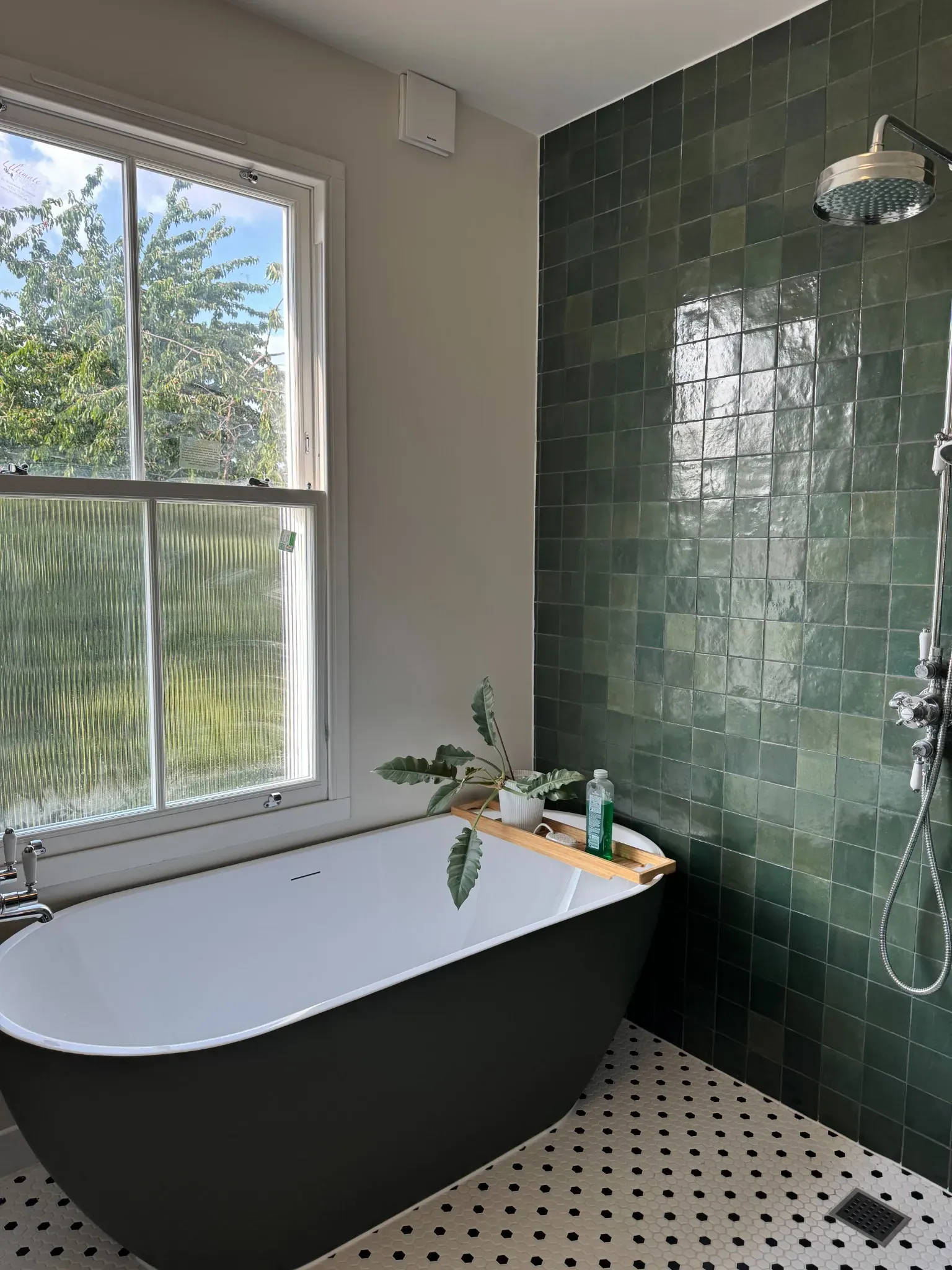
UK bathroom renovation timelines explained. Most projects take 3 to 5 weeks on site. What drives the schedule, common delays, and how to plan properly
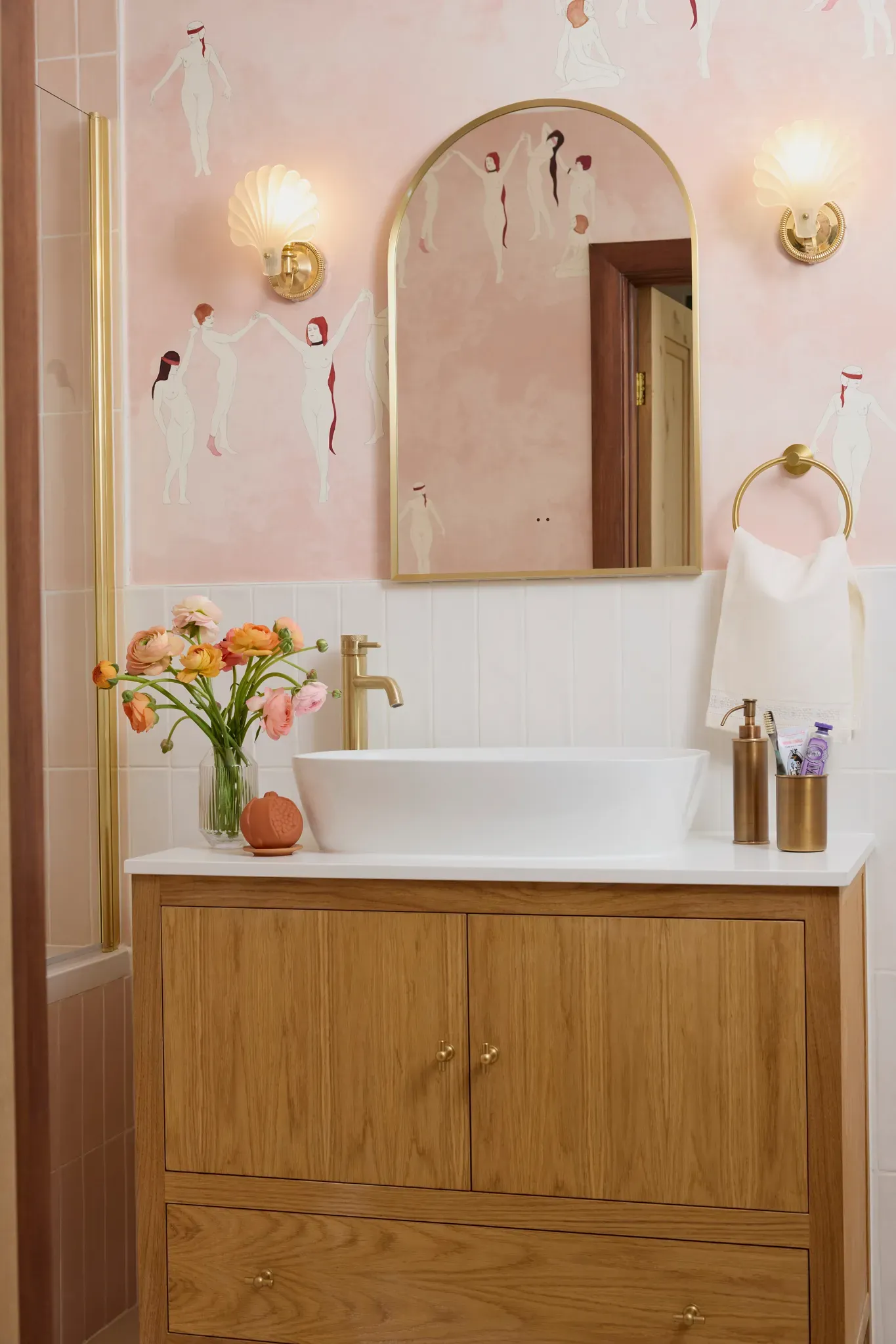
What it costs to tile a bathroom in the UK, labour per m2, tiler day rates, tile prices and what drives the total. A clear cost guide from Beams.
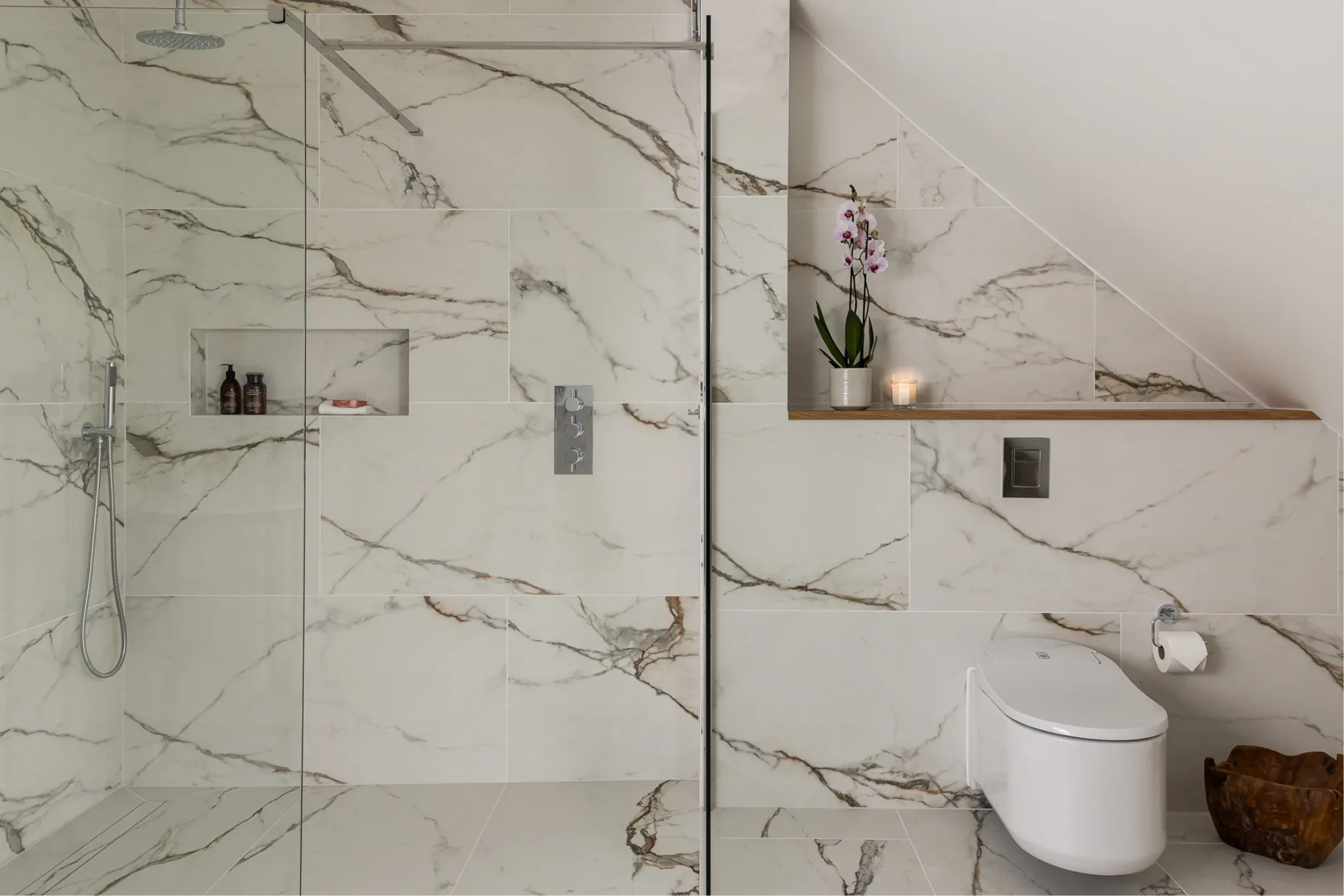
What a wet room costs to install in the UK, including tanking, labour and size, plus whether it adds value. A clear cost guide from Beams.
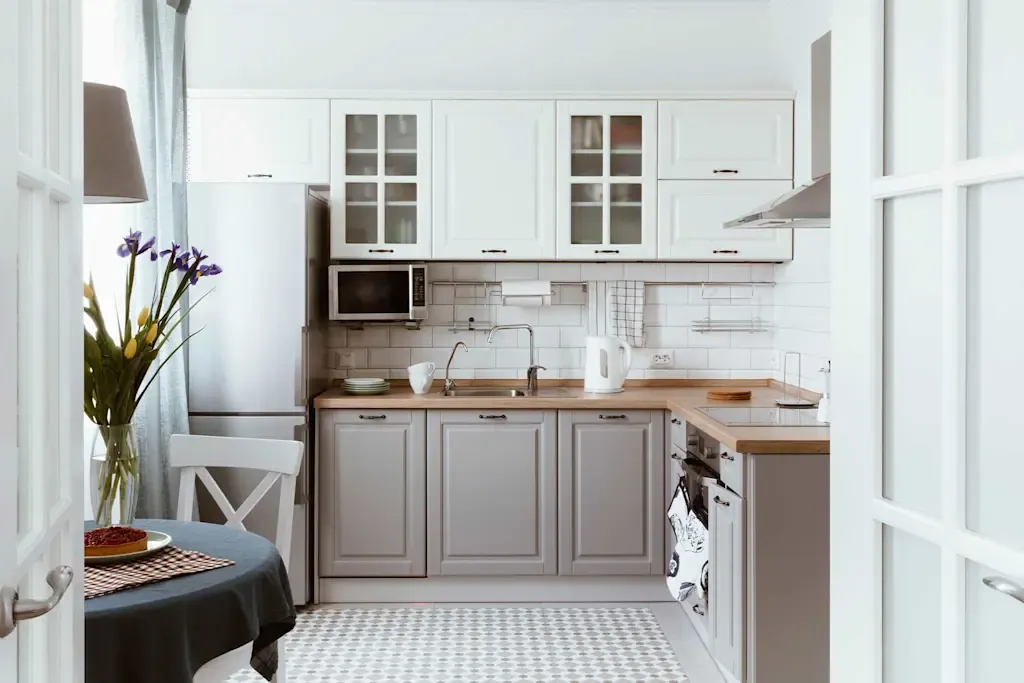
A UK kitchen renovation costs £30,000 to £40,000 inc VAT, typically £34,400. Cost by layout and size, plus the VAT reliefs most people miss.