
Cowboy builders: red flags to spot before you sign

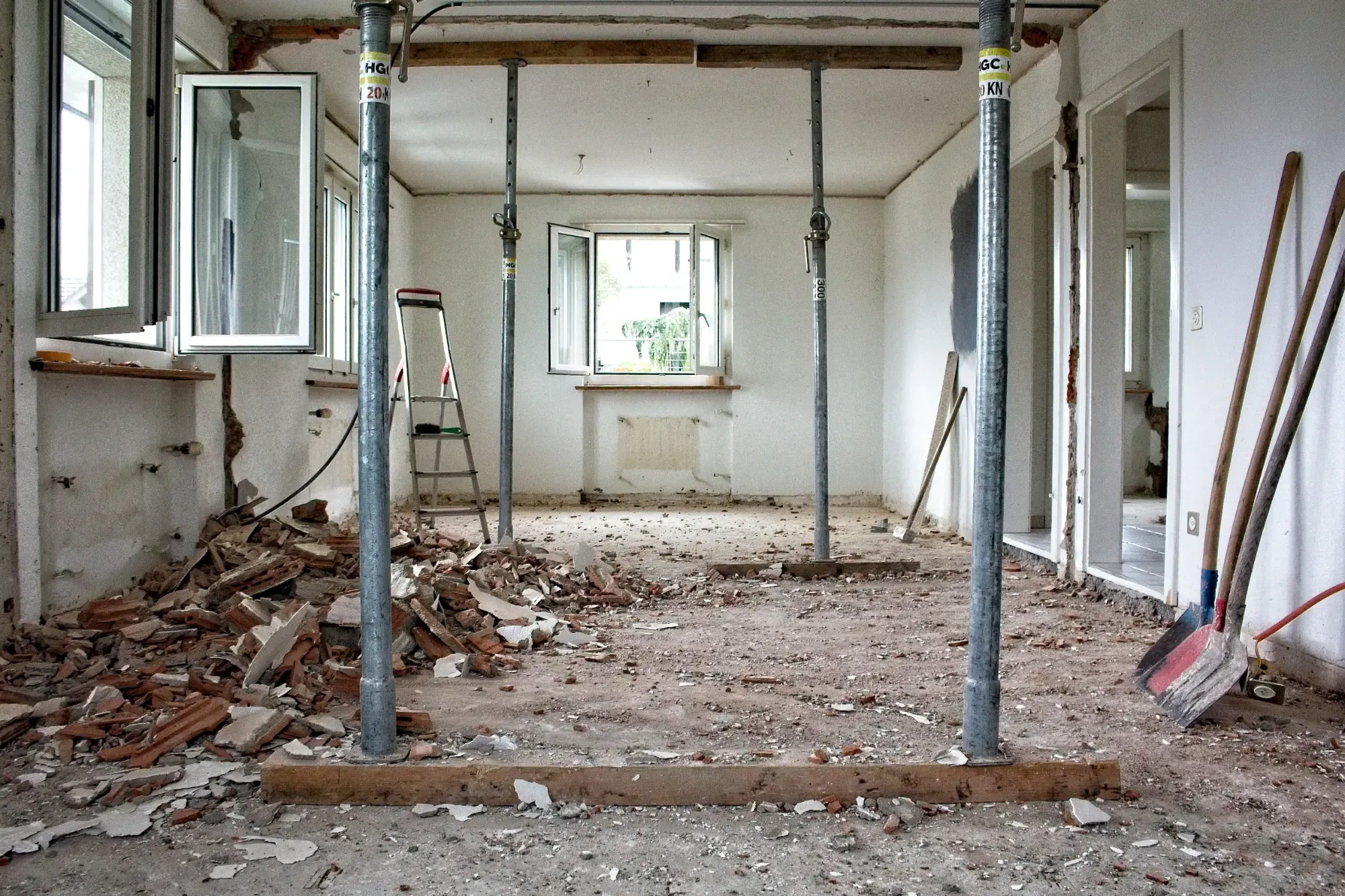
Cowboy builders, also called rogue traders, are tradespeople who take on work they lack the skill, intention or finances to complete properly. Research from the Federation of Master Builders puts the damage at £14.3 billion lost by UK homeowners in five years, with victims losing £1,759 each on average [1].
The same research found 37% of British adults have hired a builder who turned out to be unreliable or unqualified.
Sit with that number for a second. This isn't a rare disaster that happens to unlucky people. It's a coin-flip-adjacent risk that happens to unprepared ones.
There is a straightforward reason cowboys exist. In England and Wales, anyone can call themselves a builder. No licence is required and no register has to be joined before someone takes your money for structural work on your home. Gas work needs Gas Safe registration and most electrical work needs a competent person scheme, but general building is unregulated at the point of entry. Parliament debated the licensing gap in late 2025 and did not legislate, so the checking is still yours to do.
Some perspective, because it matters. The overwhelming majority of UK builders are skilled professionals who do good work and stand behind it. Cowboys are the minority, but they trade on that good name, undercut the honest firms who quote a fair price, and tar the whole trade every time they disappear with a deposit. Learning to spot them protects you, and it protects the good builders they hide among.
The other piece of good news is that cowboys are surprisingly consistent. We hear the same stories from homeowners over and over, and they use the same moves, in roughly the same order. Every one of them is visible before you sign anything.
Here are the ten that matter, including the exact lines you'll hear.
What are the 10 red flags of a cowboy builder?
The 10 red flags of a cowboy builder are: cash-only payments, a large upfront deposit, no written quote, no proof of insurance, no traceable address or company record, pressure to decide fast, a quote far below the others, no references or completed work to view, vagueness about building regulations, and an unsolicited approach.
- Cash-only payments. Cash leaves no trail, and no trail is the point. A legitimate business has a bank account and wants to be paid into it. The line you'll hear: "I can knock a bit off for cash." What it means: no VAT, no records, no comeback.
- Large upfront deposits. Rogue traders front-load payment because the money is the project. Knowing how much deposit to pay a builder makes this flag easy to read: 5% to 10% of the contract price is reasonable and written into the contract, anything from 25% upwards is a walk-away, and 50% before anyone lifts a tool is not a deposit at all.
- No written quote. A verbal price can't be held against anyone, which is exactly why some builders prefer them. No written quote, no start.
- No proof of insurance. Every professional builder carries public liability insurance and can produce the certificate the same day you ask. "It's with my accountant" is a no.
- No traceable address or company record. A mobile number and a first name is not a business. Two minutes on Companies House either finds a trading record or finds your answer. Search the director names as well as the company, then look for dissolved companies at the same address or with the same directors behind them. Serial dissolution, with a new firm rising each time the last one closes, is the phoenix company pattern.
- Pressure to decide fast. "This price is only good today" and "we've got scaffolding coming off a job round the corner" are the two classics. Both have one honest translation: don't give me time to be checked.
- A quote far below the others. A quote 30% or more under the rest of the field usually means something has been left out of the scope, not that you have found a bargain. If three quotes say £30,000 and one says £18,000, ask what the missing £12,000 was for. Suspiciously low quotes are how 35% of homeowners in that research ended up with unexpected extra costs, because the real price arrives later, mid-project, when walking away means living with a hole.
- No references or completed work to view. Good builders are proud of their last job. Cowboys are between references, permanently.
- Vagueness about building regulations. "You don't need building control for this" is sometimes true and often a £15,000 problem you discover when you sell.
- An unsolicited approach. Doorstep callers who happened to notice your roof from the road, and traders reachable only through a social media profile with no company details behind it. Trading Standards warns about both. You did not go looking for this builder, which means the urgency belongs to them rather than to you.
Which brings us to structural work.
Why is structural work where cowboys do the most damage?
Structural projects attract cowboy builders because the work is high-value, hidden behind finishes, and expensive to inspect after the fact. Bad tiling announces itself in a week. Bad steelwork waits inside a wall for years, then costs more than the original project to put right.
A loft conversion is the classic case.
Done properly, it's structural calculations, building regulations sign-off, fire safety compliance and party wall awareness stacked on top of each other. Done by a cowboy, it's a bedroom that fails its survey, can't legally be called a bedroom, and drops the sale price of the house it was supposed to raise.
And unwinding it is brutal. Retrospective approval means opening up finished work so an inspector can see what's inside, paying for the application, and paying again to fix whatever's found. It routinely costs more than doing it correctly would have.
The premium you pay a vetted builder for structural work isn't margin. It's the certificate that makes the room real.
What tricks do cowboy builders use to look legitimate?
The modern cowboy doesn't look like one. The van is clean, the website is decent, and the logos along the bottom of it belong to trade bodies they've never joined. Borrowed legitimacy is the whole act, and it works because almost nobody checks.
So check. It takes minutes.
Trade body logos can be verified on the bodies' own public registers, FMB and TrustMark both have search pages, and "member since" claims either appear there or they don't. Reviews can be gamed, so read the oldest ones and the worst ones rather than the freshest five stars. And "guarantees" are only worth the company behind them: a 10-year guarantee from a business that dissolves next spring is a bookmark. If a guarantee matters to you, ask whether it's insurance-backed, meaning it survives even if the builder doesn't.
One more for doorstep approaches: work agreed at your door usually comes with a 14-day cooling-off right under UK consumer contract rules, and a trader who starts immediately and "forgets" to mention it is telling you something.
How do you avoid cowboy builders?
Avoiding cowboys takes verification, not instinct: check insurance documents, company records and references, see finished work in person, insist on a written itemised quote, and never let payment run ahead of completed work. Every flag on this list fails at least one of those tests.
The full process is in our guide on how to vet a builder, and it takes about two hours end to end.
Cowboys rely on nobody spending those two hours.
Most of their victims didn't do anything wrong beyond trusting a nice bloke with a clean van, which is precisely why the checks have to be boring and procedural rather than a judgement of character. Charm is not a credential.
Staged payments are the structural defence. When money is only released as work completes, the "take the deposit and vanish" business model stops working, and the cowboys self-select out of your project. It's also worth understanding why renovation projects go wrong more broadly, because rogue traders are only one of the failure modes, and the paperwork that stops them stops most of the others too.
What should you do if you have already hired a cowboy builder?
If you think you have hired a cowboy builder, stop releasing money, put every concern in writing, and photograph the work as it stands. Under the Consumer Rights Act 2015, building work must be carried out with reasonable care and skill, and your paper trail is what makes that right enforceable.
Stopping payment is the most useful thing you can do in the first week. Money still in your account is money you can negotiate with, and once it has gone the conversation changes completely. Cancel any standing order or scheduled transfer the same day.
Then document, and document dully. Dated photographs of every affected area, a written note of what was promised and when, saved texts and voice notes, copies of the quote and any variations, and a log of who said what on site. Raise your concerns by email or letter rather than in conversation, so there is a record that the builder was given a reasonable opportunity to put things right.
If any part of the payment went on a credit card, Section 75 of the Consumer Credit Act 1974 makes the card provider jointly liable with the builder for a breach of contract. It applies where the cash price of the contract sits between £100 and £30,000, and you can claim the whole loss even if only the deposit went on the card. Claim with the card provider directly. Treat it as your first route rather than your last.
Debit cards carry no Section 75 protection, but chargeback often works instead. It is a card scheme rule rather than a legal right, and the window is typically 120 days from the payment or from the date the work should have been completed. Ask your bank in writing, name the dates, and state plainly that the service was not provided as agreed.
If the money is not coming back voluntarily, send a letter before action. It sets out what went wrong, what you want and a deadline, usually 14 days, and courts expect to see one before a claim is issued. After that the small claims track is the normal route for domestic building disputes. The limit is £10,000 in England and Wales and £5,000 in Scotland and Northern Ireland, and you do not need a solicitor to bring a claim.
Report the trader as well as chasing the money. Complaints reach Trading Standards through the Citizens Advice consumer service on 0808 223 1133, and reporting does not slow your own claim down.
The full escalation ladder, from first written complaint through to mediation, adjudication and court, is set out in our guide on how to handle a dispute with your builder.
It's rarely a quick road back. That's the honest argument for spending two hours on checks instead of two years on remedies.
Cowboy builder FAQs
How do I report a cowboy builder?
Report a cowboy builder to Trading Standards through the Citizens Advice consumer service, on 0808 223 1133 or through its online form, and Citizens Advice passes the case to the Trading Standards team covering the trader's area. Report unsafe gas work to the Health and Safety Executive, and unregistered electrical work to your local authority building control team. If you believe you were deliberately defrauded, report it to Action Fraud as well.
How do I get my money back from a cowboy builder?
Start with how you paid. Credit card payments on contracts priced between £100 and £30,000 fall under Section 75 of the Consumer Credit Act, which makes the card provider jointly liable with the builder. Debit card payments may qualify for chargeback, usually within 120 days. Cash and bank transfers carry no built-in protection, so the route there is a letter before action followed by a small claims court claim.
Can a cowboy builder be prosecuted?
Yes, although prosecution is less common than homeowners expect. Trading Standards can prosecute misleading practices, such as inventing trade body membership or lying about qualifications, under the unfair commercial practices rules in the Digital Markets, Competition and Consumers Act 2024, which replaced the Consumer Protection from Unfair Trading Regulations 2008 in April 2025. Serious cases have led to prison sentences. Poor workmanship on its own is usually a civil matter, because bad building is a breach of contract rather than a crime.
Is there an official UK list of cowboy builders?
No. There is no government blacklist and no central register of banned builders. The check has to run the other way round, through the public registers of TrustMark, the Federation of Master Builders and the relevant competent person schemes, and through company and director history at Companies House. Trading Standards prosecutions are sometimes reported locally, but they are not gathered anywhere searchable.
What deposit is normal for a builder?
A deposit of 5% to 10% of the contract price is normal on domestic work, and it should be written into the contract against a stated purpose such as ordering materials. Anything from 25% upwards is a warning sign, and a request for half the money before work starts is a reason to stop. Larger projects should run on staged payments, released as each stage is finished and approved.
How does Beams keep cowboys out?
Beams removes the openings cowboys need.
Every builder in the network is vetted in person before they can quote: £5m minimum public liability insurance verified, business records checked, references called, and a recently finished project inspected by our team. Every project runs on a fixed-price written contract, and your money sits in your Beams account, released milestone by milestone as you approve completed work, never handed over on promises.
Cash up front has nowhere to live in that system. Neither do the people who ask for it. And the honest builders who were being undercut by cowboys get to compete on the thing they're actually good at.
Get your free estimate and build with people who've already been checked.
[1] Federation of Master Builders research (published July 2025, survey of 2,051 UK adults) – £14.3bn lost to cowboy builders in five years; 15% of UK adults reported a financial loss (average £1,758.80); 37% have hired an unreliable or unqualified builder; 35% faced unexpected extra costs. https://www.fmb.org.uk/resource/cowboy-builders-could-be-costing-brits-a-staggering-14-3-billion.html
Ready to start your renovation?
Tell us about your project and get a free estimate. A Beams planner will talk you through what's realistic for your home, with no obligation and no sales pressure.

The full escalation path for a builder dispute: formal complaint, ADR, Trading Standards, small claims. Plus how to recover money via Section 75 or chargeback.
How to vet a UK builder: £5m public liability cover, Companies House director history, phoned references, a site visit, and sensible deposit terms.
How much deposit should you pay a builder? What's normal, when 10% is the ceiling, staged payments, and what to do if your builder goes bust holding your money.
20 questions to ask a builder before you hire them, covering track record, insurance, quotes, payment, timeline and snagging, with the benchmarks to expect.
Where to find a builder in London, the party wall and borough rules that apply, London day rates, and the checks to make before you sign a contract.