
20 questions to ask a builder before you hire them

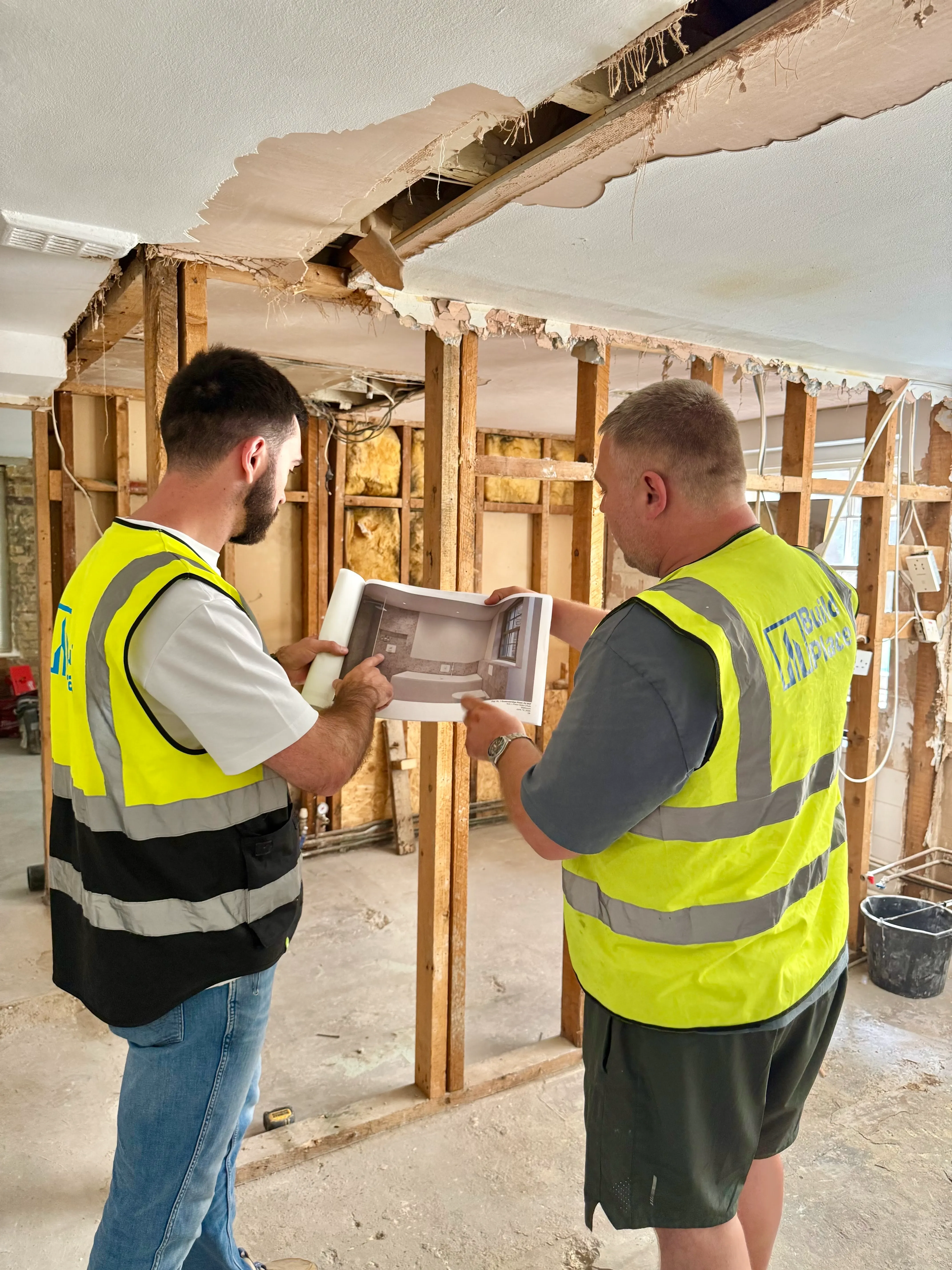
The twenty questions worth asking a builder before you hire them cover seven areas: track record, who actually does the work, insurance and certification, the quote, the programme and living through it, payment, and snagging and warranties. Asked at the first meeting, they tell you more than any review page.
- What projects like mine have you finished this year?
- Can I speak to two or three of those clients?
- Can I visit a live or recently finished site?
- How long have you traded under this company name?
- Who runs the site each day, and who do I call?
- Which trades are in-house and which are subcontracted?
- How many other jobs will you run alongside mine?
- What insurance do you carry, and can I see the certificates?
- Who certifies the gas and electrical work?
- Will I get building control sign-off and certificates?
- Is this a fixed quote or an estimate?
- What is excluded from the price?
- How do you price variations and extra work?
- What is the stage-by-stage programme, and what causes delay?
- What are your working hours, and how will you protect the house?
- What deposit do you ask for, and what is it for?
- Can we agree a milestone payment schedule?
- What contract will we sign?
- Will we agree a snagging list and a retention?
- What workmanship warranty do you give in writing?
Good builders answer all of these comfortably, because they have been asked them a hundred times. Hesitation or irritation is itself an answer. They sit inside the bigger job of finding a good builder in London, and below each one is what a solid reply sounds like.
What should you ask about their track record?
Ask what similar projects they have completed recently, whether you can speak to those clients, and whether you can see a current or recently finished site. Recent, relevant, checkable work is the strongest evidence a builder can offer.
1. What projects like mine have you finished in the last year? Like yours matters: a brilliant bathroom fitter is not automatically the right lead for a structural renovation.
2. Can I speak to two or three of those clients? Then actually call them, and ask what went wrong rather than what went right. Every project hits problems, and you are listening for how they were handled.
3. Can I visit a live or recently finished site? A tidy, organised site with protected floors and sequenced trades tells you more than a portfolio ever will.
4. How long have you been trading under this company name? Cross-check on Companies House. A long, unbroken history matters. Serial dissolutions with the same faces behind new company names are the classic pattern of builders who fold to escape liabilities. If they mention membership of the Federation of Master Builders or TrustMark, verify it on the FMB and TrustMark registers instead of trusting the logo printed on the quote.
What should you ask about who does the work?
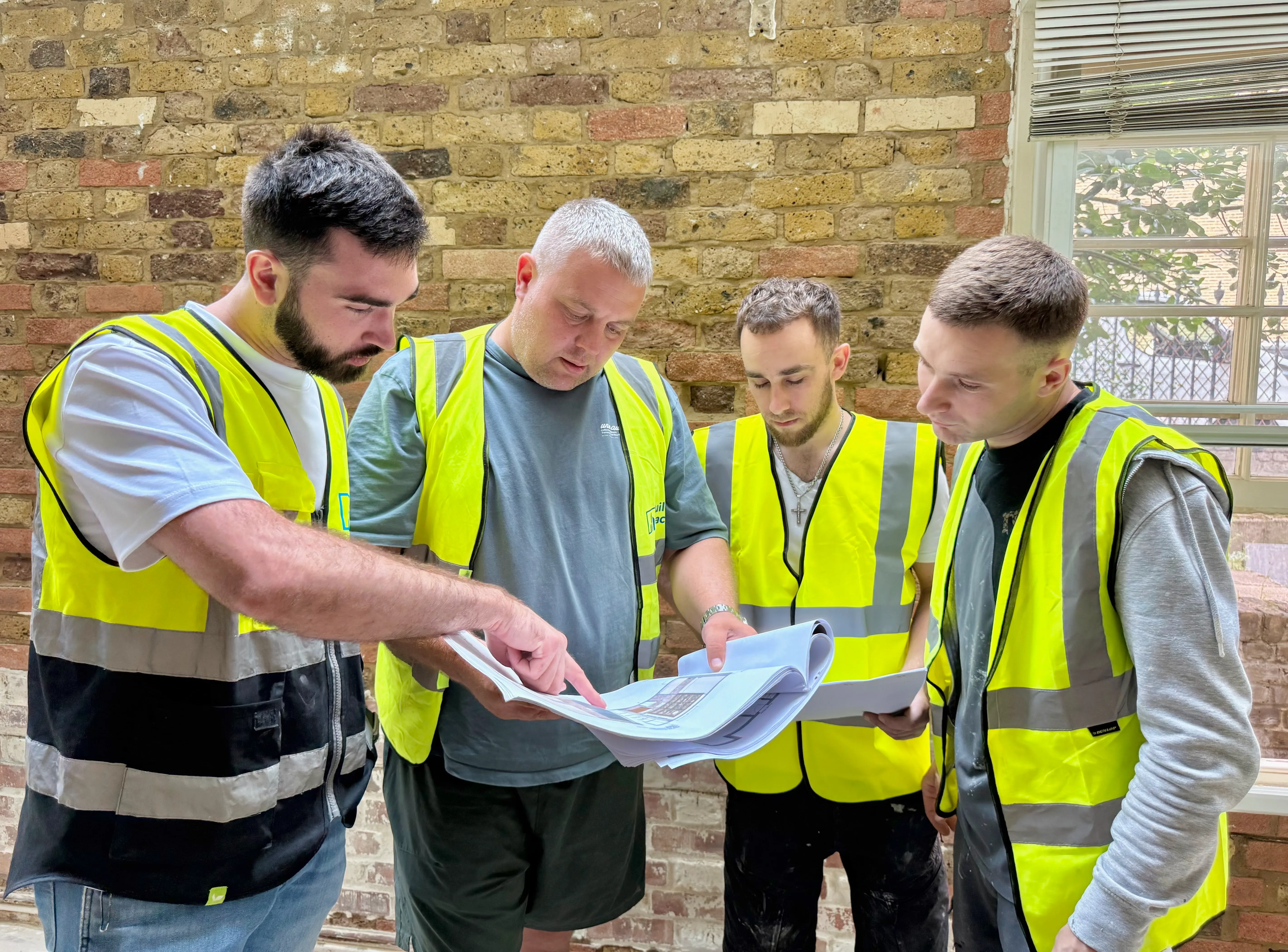
Ask who will be on site day to day, which trades are employed rather than subcontracted, and how many other projects run alongside yours. The person quoting is often not the person building.
5. Who runs the site each day, and who do I call? You want a name for the supervisor, a single point of contact for questions, and a realistic response time. Agree the channel before a problem tests it.
6. Which trades are in-house and which are subcontracted? Subcontracting is normal. Not knowing who their electrician is, is not.
7. How many other jobs will you be running at the same time? Overstretched builders create the classic stop-start project, where your kitchen waits a fortnight because a bigger site has swallowed the labour.
What should you ask about insurance and certification?
Ask for certificates, not assurances. Three policies matter on a domestic renovation: public liability, employer's liability and contractors' all-risk. Certification covers the gas and electrical work, and building control signs off the rest.
8. What insurance do you carry, and can I see the certificates? £2 million of public liability is the sensible minimum for residential work. Employer's liability is a legal requirement the moment they have staff, with £5 million the statutory minimum. Contractors' all-risk is the one homeowners rarely ask for and most need, because it covers the works themselves along with materials and plant on site, so a half-built extension damaged by fire or a storm is not your problem alone. Check the dates on all three.
9. Who certifies the gas and electrical work? Notifiable electrical work needs an electrician registered with a competent person scheme such as NICEIC or NAPIT. Gas work needs Gas Safe registration, checkable on the register, no exceptions. Ask for the name of the person signing, and whether they are in-house or subbed in.
10. Will I get building control sign-off and certificates at the end? Completion certificates, electrical installation certificates and gas safety records are what your buyer's solicitor asks for years later. A missing certificate can stall a sale long after the builder has moved on.
What should you ask about the quote?
Ask whether the price is a fixed quote or an estimate, what exactly it includes and excludes, and how changes get priced once work starts. Most disputes are born in a vague quote.
11. Is this a fixed quote or an estimate? They are legally and practically different things, and the difference between a builder's quote and an estimate decides who carries the risk when costs move. A single figure on one page is an estimate wearing a quote's clothing.
12. What is excluded from the price? Skips, scaffolding, making good, decoration and VAT are the usual quiet omissions. Ask for the exclusions in writing, then price them yourself so you know the real number.
13. How do you price variations and extra work? Agreed day rates or itemised pricing for changes, in writing, before the first change happens. Ask how long the quote itself stays valid too, because material prices move and a three-month-old figure may not hold.

What should you ask about the programme and living through it?
Ask for a stage-by-stage programme rather than a single end date, and ask what daily life looks like while the work runs. Nobody regrets asking about dust, skips and water.
14. What is the stage-by-stage programme, and what usually causes delay? You want dates against each phase: strip-out, structure, first fix, plaster, second fix, then snagging. A builder who cannot break the job into stages has not planned it. Then ask what typically slips, and listen for honest answers: structural surprises once the floors come up, waiting on building control inspections, party wall agreements, and long-lead items. Windows, structural steel and bespoke joinery routinely run six to twelve weeks, so ask when those get ordered rather than when they get fitted.
15. What are your working hours, and how will you protect the house? Most London boroughs permit noisy work from 8am to 6pm on weekdays and 8am to 1pm on Saturdays, with nothing on Sundays or bank holidays. Check their hours against your council's. Then get specifics: who orders the skip and any skip permit, how waste leaves the property, where dust screens and floor protection go, how the house is secured each night, and how much notice you get before water, gas or power is isolated. A day without water that nobody warned you about is how goodwill disappears.
What should you ask about payment?
Ask what deposit they expect, how payments are staged, and whether money follows completed work rather than the calendar. How a builder wants paying tells you a lot about how they run.
16. What deposit do you ask for, and what is it for? 5 to 10% towards materials on smaller jobs is reasonable, and they should be able to say which materials. A demand for 25% or more before anyone lifts a tool is a warning, and often a symptom of cash-flow trouble on somebody else's site.
17. Can we agree a milestone payment schedule? Staged payments tied to signed-off work protect both sides. It is how construction payments work on every Beams project, with funds held securely and released stage by stage.
What should you ask about the contract, snagging and warranty?
Ask what you will both sign, how the end of the job is defined, and what cover survives it. These are the questions people most regret skipping.
18. What contract will we sign? On most domestic renovations that means a JCT Minor Works Building Contract, the shorter JCT Homeowner Contract on smaller jobs, or the RIBA Domestic Building Contract where an architect is running the work. Any of the three puts written variations, an agreed programme and a dispute route in place before you need them. A builder who wants to proceed on a quote and a handshake is asking you to carry the risk of both.
19. Will we agree a snagging list and a retention? Agree now that final inspection produces a written list of defects with a deadline for putting them right. Retention is the leverage behind it: 2.5 to 5% of the contract value held back and released once the snags are signed off, typically somewhere between three and twelve months after completion. Our guide to what snagging is and how a snagging list works sets out what belongs on the list and what is really a variation.
20. What warranty do you give on your workmanship, and is it in writing? Twelve months on workmanship is a reasonable baseline. Every Beams builder provides it as standard, backed by up to £10,000 of cover from Beams if that builder leaves the network or stops trading within those 12 months.
Or skip the interrogation altogether
Twenty questions is what proper vetting takes when you are doing it alone. The alternative is starting with builders who have already answered them. Beams' builder vetting visits every builder in person, checks references, verifies insurance and inspects recent work before they join.
They then quote against a detailed scope, with the contract, staged payments and cover already built in. Get a free estimate and meet up to three of them.
Where this guidance comes from
These questions reflect independent UK consumer and industry guidance rather than Beams' commercial terms: hiring guidance from the Federation of Master Builders, the government-endorsed TrustMark scheme, the HomeOwners Alliance, Citizens Advice on consumer rights around building work, and the JCT and RIBA standard forms of domestic building contract.
Sources
[1] Federation of Master Builders, hiring a builder: https://www.fmb.org.uk
[2] TrustMark, government-endorsed quality scheme: https://www.trustmark.org.uk
[3] HomeOwners Alliance, builder guidance: https://hoa.org.uk
[4] Citizens Advice, problems with building work: https://www.citizensadvice.org.uk
[5] Gas Safe Register: https://www.gassaferegister.co.uk
[6] Joint Contracts Tribunal, domestic and minor works contracts: https://www.jctltd.co.uk
Ready to start your renovation?
Tell us about your project and get a free estimate. A Beams planner will talk you through what's realistic for your home, with no obligation and no sales pressure.
Where to find a builder in London, the party wall and borough rules that apply, London day rates, and the checks to make before you sign a contract.

How to compare renovation quotes from contractors. What to check, hidden costs, payment terms. Get the best value for your kitchen or bathroom renovation.

Learn how construction payments work with Beams. See how funds are held safely, released by milestone, and tracked in your dashboard so your renovation stays clear, secure and predictable from day one.

Builders in London charge £300 to £450 a day in 2026, or £40 to £60 an hour, labour only. Regional rates, hourly rates, what is excluded and FAQs.