
How much deposit should you pay a builder?

A reasonable builder deposit is small relative to the project: around 5 to 10% of the value is fair, up to 15% is common on smaller jobs, and industry guidance advises real caution beyond 10% [1]. Treat anything over 25% as a walk-away signal. On larger projects, staged payments tied to completed work should carry the cost, not an upfront lump sum.
Deposits sit at the exact point where trust and money meet, which is why they're worth getting right.
Pay too much and you've handed over your leverage with the kettle still cold. Refuse everything and you'll lose good builders who quite reasonably want commitment before blocking out three months of their diary.
Here's where the line actually sits, and how to protect every pound that crosses it.
What's a normal deposit for building work?
Normal is single digits as a percentage, documented in writing, and clearly tied to something: securing your slot in the diary or ordering materials. Around 5 to 10% of the project value is the common range, and past 10% you should be asking exactly what the money is for.
Context moves the number a little.
A joinery-heavy job where cabinetry is fabricated before installation carries real upfront cost for the builder, and a modest materials payment is fair. Bespoke orders are the one place 20 to 25% can be justified, because the workshop is buying timber and booking bench time months before anything arrives on site. A general build where materials arrive stage by stage doesn't need your money in advance, because there's nothing yet for it to pay for.
There's also a fair alternative worth suggesting when a builder asks for a big materials deposit: pay the merchant directly. The builder specs the order, you settle the invoice, the materials are yours from day one. Their cashflow problem is solved without your money disappearing into someone else's. It's worth knowing, too, that established builders hold trade accounts with merchants, usually on 30 or 60 days' credit, so "I need the money for materials" rarely survives much scrutiny on a standard build.
Whatever the figure, it goes in the quote or contract before it leaves your account. A deposit that only exists in a text message is a donation with better branding.
Why do builders ask for deposits at all?
Legitimate builders ask for deposits for two reasons: commitment and cashflow on materials. A deposit signals your project is real, lets them decline other work for your dates, and covers early orders with long lead times.
Both reasons are honest. And both have a natural size.
Neither requires half the contract value. A good working test: the deposit should sting slightly and threaten nothing. If losing it entirely would be annoying rather than financially serious, it's sized correctly.
When is a big deposit a red flag?
A big deposit becomes a red flag when it's large, urgent and vague: 25 to 50% of the project, needed before anything is scheduled, with no line-item explanation. That pattern usually means your money is paying for the last job's problems, not your project's materials.
Here's how that spiral works.
Builders in financial trouble use new deposits to plug old holes, and the honest-looking version of that spiral is indistinguishable from the fraudulent one until it's your unfinished kitchen in the photographs. Cash-only requests compound the risk, since untraceable money is unrecoverable money. The industry guidance is unambiguous on that point: never pay a deposit in cash [1].
Oversized deposits are the second flag on our list of cowboy builder red flags for a reason: it's the one move that funds the entire rogue-trader business model. Take away advance money and most of the con collapses.
How do you protect the money you do pay?
Protect deposit money four ways: never pay cash, get the deposit stated in a written contract, pay by card where you can, and use a structure where funds are held rather than handed over.
The card detail is the one most people don't know, and it comes with a catch most articles skip.
Pay any part of a job on a credit card, even just the deposit, and Section 75 of the Consumer Credit Act makes the card provider jointly liable if the builder breaches contract or vanishes. It's statutory, not goodwill. The catch: it only applies where the contract price sits between £100 and £30,000, which covers most kitchens and bathrooms but not many full renovations. Above that, a related rule (Section 75A) can help up to £60,260, but only where the credit is specifically tied to the purchase. On big contracts, the payment structure protects you far more than the card does. Debit cards have a weaker cousin in chargeback, typically claimed within 120 days. Cash has nothing.
The contract is the part people skip, and homemade ones are barely better than none. Use a recognised form: a JCT Homeowner Contract or the FMB's domestic building contract records the deposit, the payment schedule, the scope and what happens if either side walks away, which turns a dispute from an argument into a process. On larger jobs it's also normal to agree a retention, 2.5 to 5% held back for a defects period of three to twelve months after completion, released once snags are fixed.
How should payments be structured on a bigger project?
Bigger projects should run on milestone payments: money released in stages, each stage paid only when its work is complete and inspected. A typical structure holds back meaningful sums for completion, so the incentive to finish properly survives to the final week.
On Beams projects, construction payments follow four milestones. Here's what that looks like on an £80,000 extension:
Milestone | Share | On an £80,000 project |
|---|---|---|
Break ground | 20% | £16,000 |
First fix complete | 30% | £24,000 |
Practical completion | 20% | £16,000 |
Final sign-off | 30% | £24,000 |
Notice the shape of that. Half the money is still unpaid when the project is visibly "nearly done", which is exactly the stretch where unprotected homeowners historically get abandoned. Our guide to how construction payments work breaks the mechanics down stage by stage.
The bigger the budget, the more this structure matters. A basement conversion is among the largest single projects a London homeowner takes on, with long programmes and serious structural spend. Nobody should fund months of that work straight into a builder's account on trust; money held safely and released stage by stage is what makes a six-figure project financially survivable if anything goes wrong at week twelve.
What happens if your builder goes bust holding your money?
You become an unsecured creditor, which in practice usually means pennies in the pound, years later, if anything. Around 4,000 construction firms go under in a typical year, so this is a real scenario to plan for rather than a scare story. The deposit you can afford to lose is the only deposit you should ever pay.
If it happens, move in this order. Stop any further payments immediately. Gather your contract, invoices and proof of every payment. Claim through your card provider first, since Section 75 or chargeback recovers money faster than any insolvency process. Check whether the work carries an insurance-backed guarantee or a warranty through a scheme like FMB or TrustMark. Register your claim with the insolvency practitioner handling the company. Then get a new builder to document the state of the work before anyone touches it, because that record is what protects you in every conversation that follows.
How does the deposit work on a Beams project?
Beams asks for a £1,000 payment when you choose your builder, and it's refundable during the statutory cooling-off period, before any work has started. It isn't an extra fee, either: it's the first part of your construction cost, so it comes off the total you pay rather than adding to it.
Notice what that flat figure does. On an £80,000 project, a "10% deposit" would be £8,000 handed to a builder on trust. A £1,000 payment, refundable, and credited straight to your build cost, is commitment priced like commitment rather than a loan to someone else's business.
After that, no lump sums to the builder and no leaps of faith. Your construction funds sit in your Beams account, not the builder's, and only move when you approve completed milestones. The builder gets paid promptly for real progress. You never have more at risk than the work you can already see.
That's what a deposit should be: commitment, not exposure.
Get your free estimate and see the numbers for your project, deposit included, before you commit to anything.
Common questions about builder deposits
Is a 50% deposit normal for a builder?
No. 10 to 15% is the realistic ceiling for legitimate work, and most established builders ask for less. A 50% demand means cashflow trouble or worse, and either one becomes your problem the moment you pay.
Should you pay a builder anything before work starts?
Only a small, documented deposit tied to something real, like securing dates or ordering long-lead materials. Never fund the job itself in advance. That's what staged payments are for.
Is it ever OK to pay a builder's deposit in cash?
No. Cash is untraceable and unrecoverable, and industry guidance is unambiguous about it [1]. A builder who insists on cash is telling you something. Believe them.
What if a builder won't start without a big deposit?
Offer to pay the merchant directly for materials, or to shorten the first milestone so they're paid within days of starting. A good builder accepts either. One who refuses both wanted your money rather than your project, and our guide to the checks that matter when vetting a builder covers what else to confirm before signing anything.
Sources
[1] Checkatrade, deposits guidance for hiring tradespeople – advises being "extra cautious of paying anything over 10% of the project value" and never paying deposits in cash.
Ready to start your renovation?
Tell us about your project and get a free estimate. A Beams planner will talk you through what's realistic for your home, with no obligation and no sales pressure.
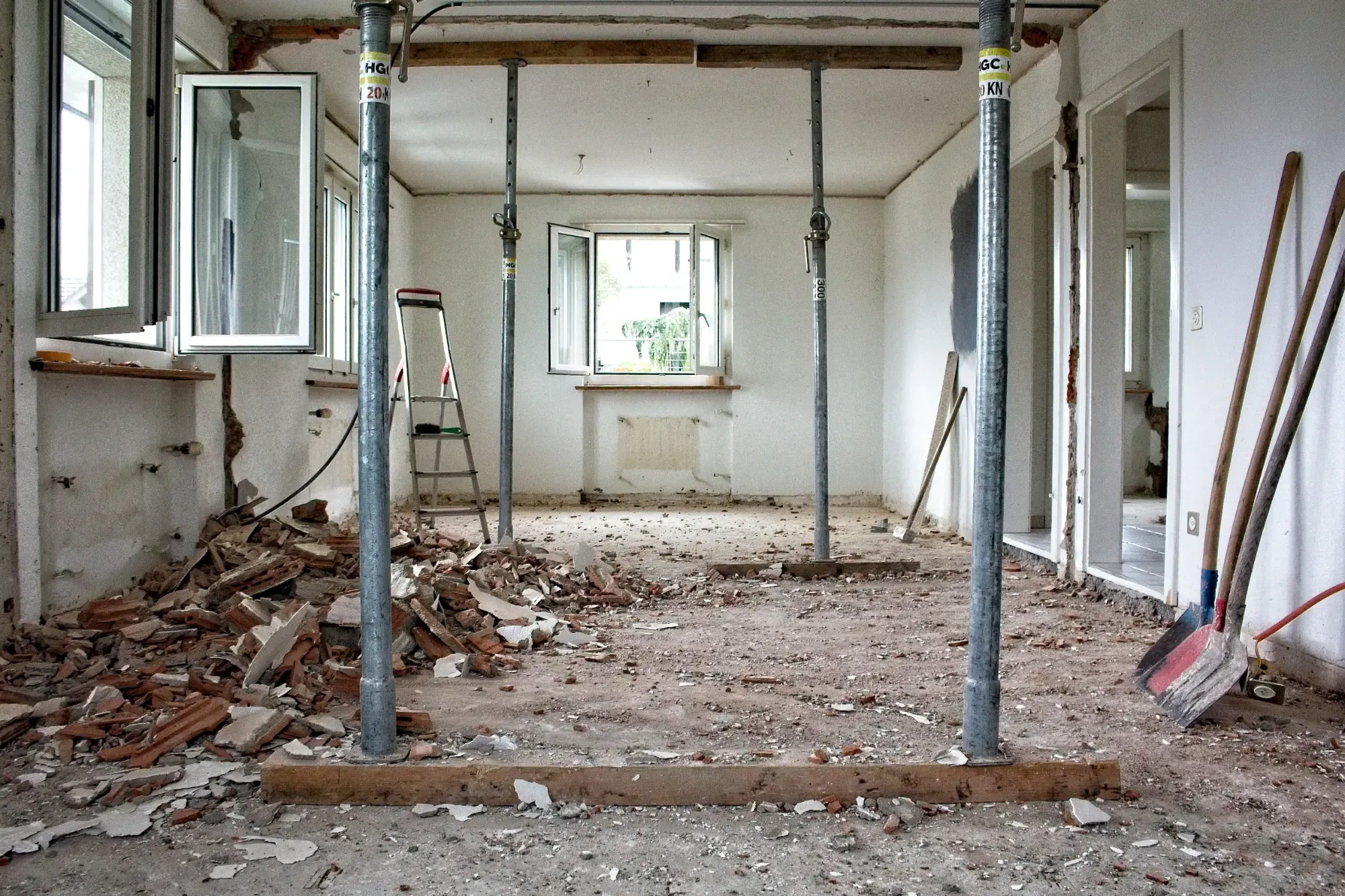
Cowboy builders cost UK homeowners £14.3bn in five years. The 10 red flags that give them away, plus how to get your money back if you have already paid.

Learn how construction payments work with Beams. See how funds are held safely, released by milestone, and tracked in your dashboard so your renovation stays clear, secure and predictable from day one.

How to vet a UK builder: £5m public liability cover, Companies House director history, phoned references, a site visit, and sensible deposit terms.
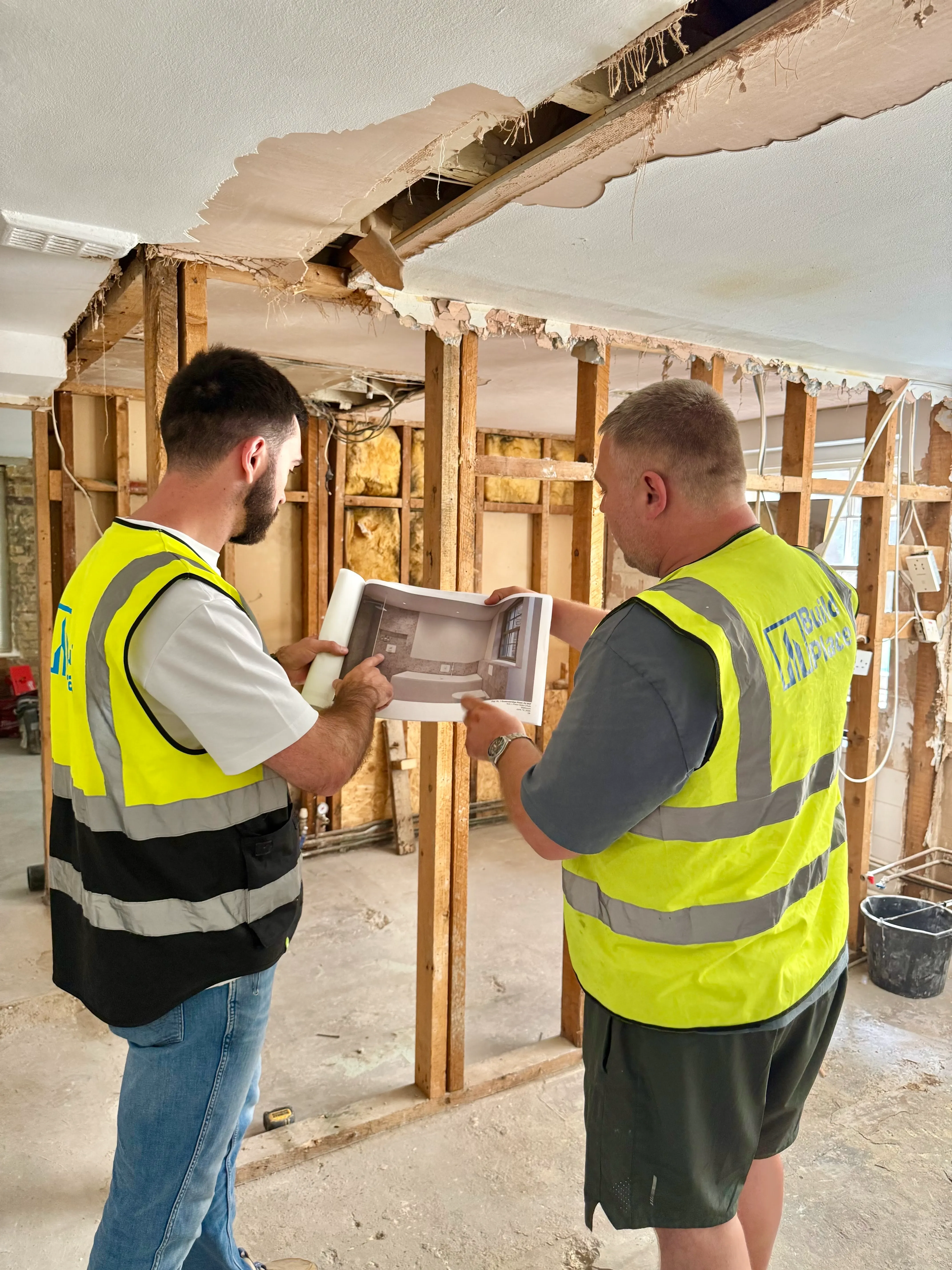
20 questions to ask a builder before you hire them, covering track record, insurance, quotes, payment, timeline and snagging, with the benchmarks to expect.