
How to handle a dispute with your builder


Handle a builder dispute by raising the problem early and specifically, putting it in writing, documenting the work with photographs, and keeping unpaid money aligned with unfinished work. Escalate through a formal complaint and alternative dispute resolution before considering court, which is the slowest and most expensive room in the building.
- Raise the problem early and specifically, face to face, then confirm it in writing the same day.
- Document everything: dated photographs, the contract and quote, every message and every invoice.
- Send a formal written complaint setting out the defects, the remedy you want and a 14 day deadline.
- Try alternative dispute resolution, either mediation or your builder's trade body scheme.
- Report the trader to Trading Standards through Citizens Advice if the problem is serious.
- Claim through the small claims court as a last resort, up to £10,000 in England and Wales.
Disputes are common enough to plan for.
Citizens Advice logged 36,534 complaints about home maintenance and improvement work in a single year to June 2025, more than 700 every week, with major renovations among the top categories [1].
Most of those disputes follow the same arc. And most are winnable, or avoidable entirely, if you handle the first fortnight well.
The rest of this guide takes each step in turn, including how to recover money through your card provider when the builder will not pay it back.
What are the most common builder disputes?
The most common builder disputes involve quality of finished work, costs rising beyond what was agreed, timelines slipping without explanation, and jobs left unfinished. In the Citizens Advice data, low-quality service alone accounted for 19,281 complaints, over half the annual total.
Underneath most of them sits the same thing: ambiguity.
Work that was never specified in writing, changes agreed on the stairs, payments that ran ahead of progress. Disputes are rarely born the day the argument starts. They're born weeks earlier, in the gap between what two people each assumed.
What should you do first when something goes wrong?
Raise the problem with your builder directly, early, and in specifics: what's wrong, where, and what you'd like done about it. Most builders would rather fix a tiling issue in week two than read about it in a solicitor's letter in week ten.
Talk first. Then confirm in writing the same day.
A short, calm email ("as discussed this morning, the shower tray isn't level and we've agreed it'll be re-set before tiling continues") does two jobs: it keeps things human and starts the paper trail.
Tone matters more than people expect. The relationship usually survives a defect. It rarely survives an ambush. You're aiming for the register of a colleague flagging a problem, not a prosecutor opening a case, because nine times out of ten this person is still finishing your house.
How do you document a dispute properly?
Document a dispute with dated photographs of the work, copies of the contract and quote, every relevant message and invoice, and a written record of what was agreed verbally and when. Evidence gathered while things are civil is worth ten times evidence reconstructed after they aren't.
Pay special attention to changes.
Mid-project alterations agreed in a doorway are where costs and expectations drift apart fastest, and they're precisely why written change orders exist.
For defects at the end of a job rather than during it, the format already exists. A snagging list gives every item a location, a description and a date, which is the structure a complaint letter or a claim form needs anyway.
If the dispute is about workmanship quality and the sums are serious, an independent report changes everything. A surveyor or relevant specialist will inspect and write up defects for a few hundred pounds, and their letterhead does what your photographs can't: it turns "I think this is wrong" into "a professional says this is wrong". Builders settle quickly against reports.
When should you withhold payment, and when shouldn't you?
Withhold payment only for work that's genuinely incomplete or defective, and in proportion to the problem. Unpaid money tied to unfinished work is a legitimate bargaining position. Refusing to pay for completed stages because of a dispute elsewhere turns your strongest position into their best argument.
The law backs the reasonable version of this.
Under the Consumer Rights Act 2015, building work must be carried out with reasonable care and skill, and you're entitled to have substandard work repeated or remedied. But the Act protects proportionate responses, and a payment strike on everything, everywhere, all at once reads very differently in front of a judge.
How much is proportionate? The practical answer is the cost to remedy: get a price for fixing the specific problem, and hold roughly that. It's defensible, it's explainable in one sentence, and it leaves the rest of the relationship intact.
This is also the strongest argument for milestone payments generally: they build proportionality in from day one. Understanding how construction payments work before you sign is what keeps that position available to you, rather than something you have to manufacture mid-argument.
What if your builder charges more than the quote?
A quote is a fixed price and your builder cannot raise it unless you agreed to extra work along the way. An estimate can move, but only within reason. Where no price was ever fixed, the Consumer Rights Act 2015 entitles you to pay no more than a reasonable price, judged against what similar tradespeople charge for similar work.
So the first question is which of the two you actually received.
The label on the document matters less than what it says. A single figure presented as the cost of the job behaves like a quote even if the builder later calls it a guide. The difference between a quote and an estimate decides how much room they have to move, so check what you were given before you argue about the figure.
Then separate the bill into three kinds of money: work in the original scope, extras you asked for, and increases nobody agreed. Genuine extras are chargeable. Cost rises the builder should have foreseen when pricing the job usually are not, and neither are unexplained overheads that appear only on the final invoice.
Ask for the bill in writing, broken down line by line, with each extra tied to the date it was agreed and by whom. Pay the part you accept, promptly, so nobody can claim you are simply refusing to pay. Dispute the rest in writing, on the same evidence you would use for defective work.
Genuine unforeseen discoveries do happen on renovations. Rotten joists under a floor are real. A builder who found them in week three and mentioned the cost in week twelve has a much weaker case than one who told you the day it happened.
How do you escalate if you can't agree?
Escalate in steps: a formal written complaint with a deadline for response, then alternative dispute resolution such as mediation or an ombudsman scheme if the builder belongs to one, then Trading Standards via Citizens Advice for serious cases, with court as the final step rather than the third one.
The formal letter matters because it changes the register.
Structure it in five short parts: the facts with dates, the specific defects or breaches, the evidence you hold, the remedy you want, and a reasonable deadline, usually 14 days, with a plain statement of what happens next if it passes. Many disputes end here, because a documented complaint signals you'll follow through.
If that deadline passes with nothing useful in return, the next letter has a name: a letter before action. Use the term. It states the claim, the amount, the evidence and a final deadline, and it says explicitly that you will issue court proceedings if it is ignored. Courts expect to see one, and builders recognise it.
Alternative dispute resolution is cheaper and faster than legal action, and courts expect you to have tried it. Whether it is open to you usually depends on which scheme your builder belongs to, because membership normally binds them to use it.
The Federation of Master Builders runs a dispute resolution service for work carried out by its members, starting with conciliation and moving to independent adjudication if that fails. TrustMark, the government-endorsed quality scheme, requires every registered business to operate a complaints procedure and to offer a route to dispute resolution, and will investigate where a firm does not. Which? Trusted Traders endorses traders who agree in advance to alternative dispute resolution, provided through Dispute Resolution Ombudsman. Check the scheme's own website rather than the builder's, since logos outlive memberships.
Trading Standards is a different instrument. It does not recover your money and it will not manage your dispute, but it does act on traders who mislead or pressure people, and reports go in through Citizens Advice. Use it where the behaviour is the problem rather than the plastering.
Court is the backstop, not the plan. The small claims track handles claims up to £10,000 in England and Wales, £5,000 under Scotland's simple procedure, and £5,000 in Northern Ireland, and it is designed to be used without a solicitor. Fees scale with the claim size. Contract claims carry a six-year limitation period in England, Wales and Northern Ireland, and five years in Scotland, so you are not racing a clock.
Before a hearing is listed in England and Wales, the court will normally offer the Small Claims Mediation Service. It is free on the small claims track, runs by telephone in about an hour, and settles a large share of the cases that reach it. Take it. Even a win costs months, and enforcing a judgment against a reluctant builder is its own second project.
Can you get your money back?
If you paid by credit card, Section 75 of the Consumer Credit Act 1974 makes your card provider equally liable with the builder for breach of contract or misrepresentation, so you can claim the money from the provider directly. The contract price has to be between £100 and £30,000. Debit card payments go through chargeback instead, typically within 120 days.
That £30,000 ceiling catches a lot of renovations, and the detail of it matters.
The limit applies to the cash price of the goods or services, not to the amount you put on the card. So a £3,000 deposit paid by credit card towards a £45,000 extension falls outside Section 75, because the contract price is above the cap, even though the card payment is well within it. Where the work is genuinely made up of separate contracts, each priced under £30,000, the position can be different, which is one more reason contract structure is worth getting right at the start.
The flip side is more generous than people expect. If the contract price sits inside the range, you can claim the full loss from the card provider even if you only paid a small deposit on the card. A £200 deposit on a £12,000 bathroom can support a claim for the whole £12,000.
Above £30,000, look at Section 75A. It covers linked credit agreements, meaning credit arranged specifically to fund the work, where the cash price is over £30,000 and the credit does not exceed £60,260. It is narrower than Section 75: you have to have tried to get a remedy from the builder first and got nowhere, and it applies to goods rather than services, so it fits kitchens and windows better than labour.
Debit cards have no statutory equivalent. Chargeback is a card scheme rule rather than a law, but it works in practice: you ask your bank to reverse the payment because the service was not provided as agreed. The time limits are set by Visa and Mastercard, usually 120 days from the transaction or from the date the work should have been completed, so this route closes faster than any other. Credit card payments under £100 can often be reclaimed the same way.
Write the claim the way you wrote the complaint. Card providers want the contract, the payment record, dated photographs of the work, your correspondence with the builder and a clear figure. Vague claims get refused.
If the provider refuses, take it to the Financial Ombudsman Service. It is free to use, you have six months from the provider's final response letter, and its decisions bind the provider. The complaint at that stage is about how the provider handled your claim, so send the ombudsman the same evidence pack plus the refusal.
These routes run alongside everything else. Opening one does not stop you pursuing the builder.
What if your builder disappears or ignores you?
If your builder stops answering, put the complaint in writing to their registered or home address, set a 14 day deadline, and use that time to establish who you are actually dealing with. A sole trader, an active limited company and a dissolved company each need a different next step, and the Companies House register will tell you which one you have for free.
Start there, before you spend anything.
Search the company name on the register. It shows the registered office, the directors, and whether the company is active, in liquidation or already dissolved. If it is active, the registered office is where formal correspondence belongs, and a letter properly sent there counts as served even if nobody replies. Send it by a method that gives you proof of delivery.
If the company has been dissolved or is in liquidation, there is little point issuing a claim against it. Card recovery, an insurance-backed guarantee on the work, or a claim in the liquidation become the realistic routes, in that order of usefulness.
A sole trader is usually better news than it feels. The person is personally liable and their assets are not shielded behind a company, so a judgment has something to bite on. Their name and address should be on the quote, the contract or the invoice, and if the paperwork is thin, the bank details you paid into and the vehicle registration you photographed are both traceable.
Watch for the pattern where a director dissolves one company and reappears under a new name a few weeks later. The register makes it visible, and it is exactly the sort of thing Trading Standards want reported, separately and plainly, as conduct rather than as a complaint about workmanship.
Meanwhile, protect the house. If the site has been abandoned mid-job, photograph the state of it, make it weathertight and safe, and tell your insurer. Get a second builder to price the completion works in writing, because that figure becomes the value of your claim. Keep the receipts for anything you spend making good.
Silence does not stall the process. Court claims proceed whether the defendant engages or not, and an undefended claim can be entered as a default judgment, which is quicker and cheaper than a contested one. Enforcement is the harder half, so before you pay the fee, think honestly about what the builder has left to pay with.
How do disputes work on a Beams project?
Beams projects are structured so disputes start small and stay resolvable. Your construction money is held securely and only releases when you approve each milestone, so the pressure to put things right is built in rather than argued for. When your builder marks a stage complete, you get the evidence in your dashboard and seven days to review it. If the work is right, you approve it and the payment is released. If it isn't, you reject it with a note that goes straight to the builder to put right, and nothing moves. The one thing to know is that the seven days is a deadline, not a pause: leave it untouched and the milestone auto-approves and pays out, so the window is there to be used.
Picture the classic case: a bathroom renovation where the shower leaks at the final walkthrough.
On an unprotected project, that's a cheque already cashed and a phone that rings out. On a Beams project it's a Sign Off milestone you haven't approved, a snagging list still open, and the final payment still held, so the reason to come back and fix it stays fully intact. Behind that sits a 12-month workmanship warranty from sign-off: report a defect inside that window and your builder is responsible for returning to remedy it, with Beams on hand to make sure it happens. And if your builder leaves the network or stops trading during those 12 months, Beams steps in with up to £10,000 of cover. In the rarer case where a builder can't finish the job at all, Beams arranges a qualified replacement at no extra cost, so a breakdown never leaves you stranded mid-project.
You can read the protections in full, including the limits and what falls outside them.
The best dispute is the one that never escalates. The structure decides that long before the tiling does.
Get a free estimate and start a project where the protections are already in place.
Frequently asked questions
Can I withhold payment from my builder?
Yes, but only in proportion to the problem. Holding back roughly the cost of putting the specific defect right is defensible. Refusing to pay for stages that were completed properly is not, and it hands your builder a claim against you. Get a price for the remedy, hold that figure, and say in writing exactly what you are holding and why.
How long do I have to make a claim?
Six years from the breach of contract in England, Wales and Northern Ireland, and five years in Scotland. The card routes are far shorter: around 120 days for a debit card chargeback, and six months to take a rejected card claim to the Financial Ombudsman Service. Trade body schemes set their own limits, sometimes as little as 12 months from completion, so check the scheme rules early even if you plan to negotiate first.
What if my builder is ignoring me?
Write to the registered or home address with a 14 day deadline and proof of delivery, then check the Companies House register to see whether you are dealing with a sole trader, an active company or a dissolved one. Report the trader to Trading Standards through Citizens Advice. If you paid by card, start a Section 75 claim or a chargeback at the same time, because those deadlines run whether the builder replies or not.
Do I need a solicitor?
Not for most disputes. The small claims track is built to be used without one, and legal costs are not usually recoverable there even if you win. Get proper legal advice where the sums run past the small claims limit, where the builder has counterclaimed against you, or where there is structural damage or an injury involved. Those are the situations where the cost of getting it wrong is larger than the fee.
Sources
[1] Citizens Advice press release (data period July 2024 to June 2025): 36,534 complaints about home maintenance and improvements (700+ per week); 19,281 concerned low-quality service; major renovations including lofts, conversions and extensions accounted for 4,365 complaints.
Ready to start your renovation?
Tell us about your project and get a free estimate. A Beams planner will talk you through what's realistic for your home, with no obligation and no sales pressure.

A quote is legally binding once accepted. An estimate is not. What a written quote must contain, how long it stays valid, and your rights if the bill exceeds it.

Learn how construction payments work with Beams. See how funds are held safely, released by milestone, and tracked in your dashboard so your renovation stays clear, secure and predictable from day one.
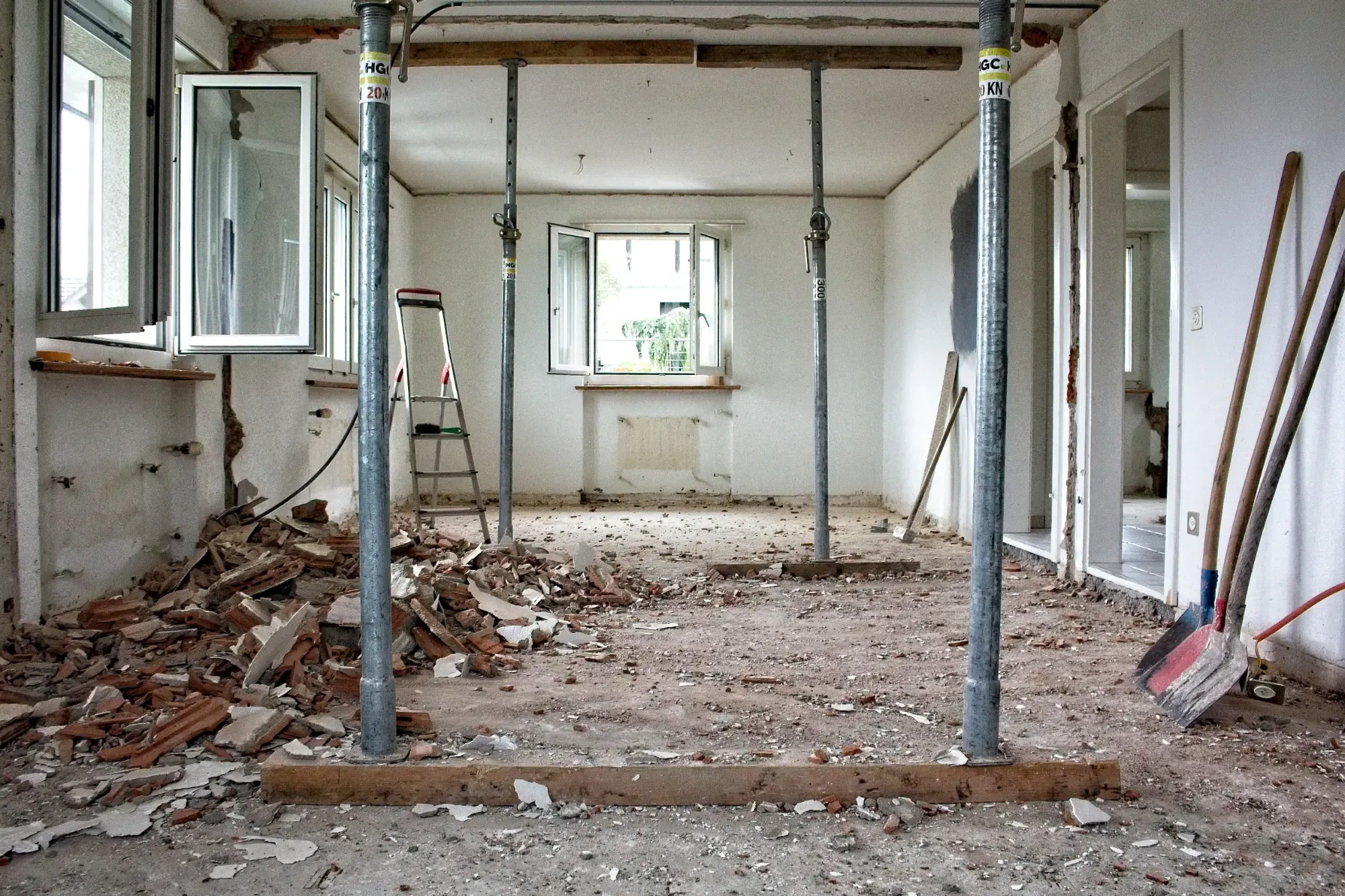
Cowboy builders cost UK homeowners £14.3bn in five years. The 10 red flags that give them away, plus how to get your money back if you have already paid.
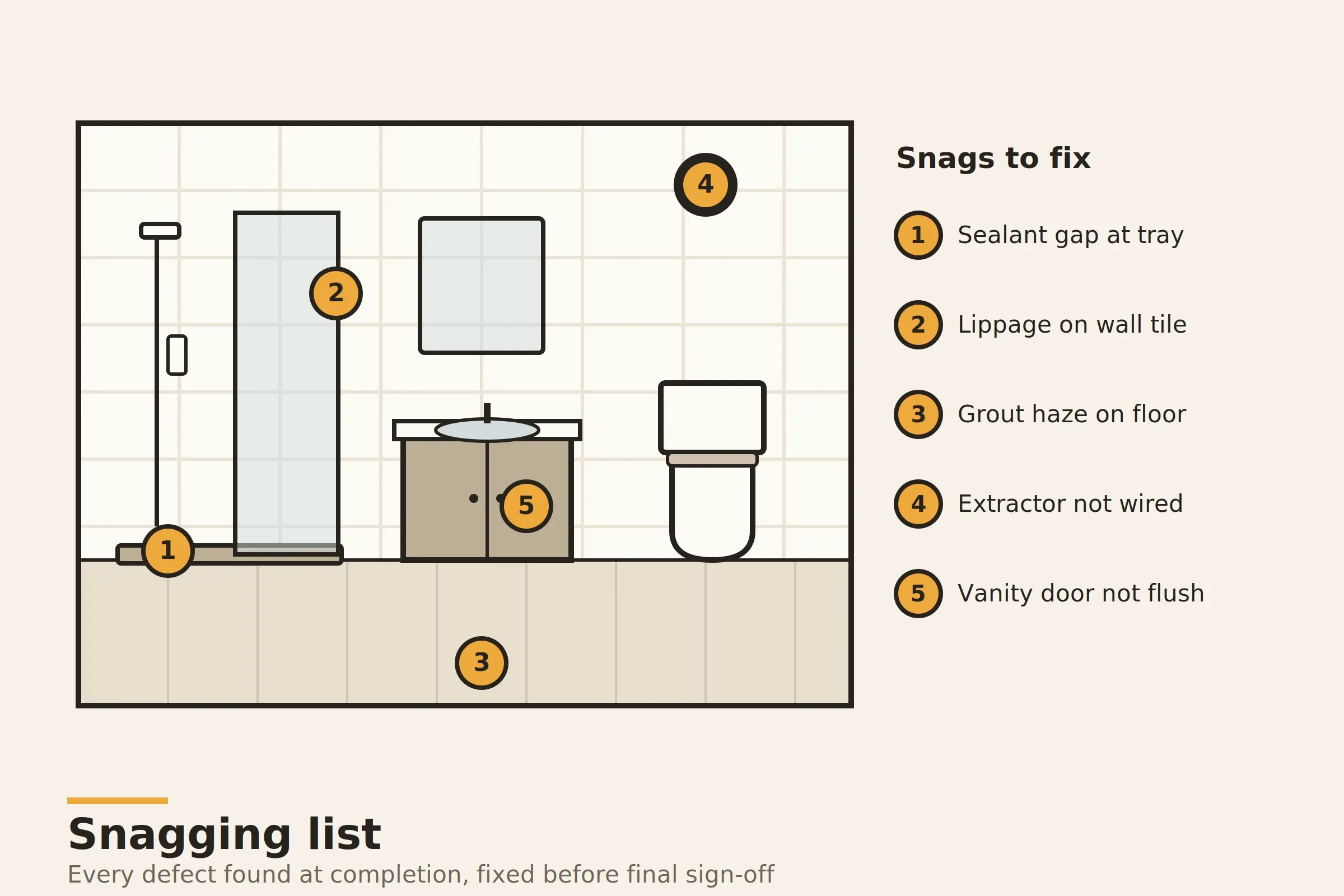
Snagging means finding and fixing the small defects left at the end of building work. What counts as a snag, a room-by-room checklist, and when to inspect.