
Builder's quote vs estimate: why the difference matters


A quote is a fixed, itemised price for a defined scope of work, and accepting it forms a contract. An estimate is an educated guess and is not legally binding. Confusing the two is one of the most expensive vocabulary mistakes in renovation.
The words get used interchangeably on driveways and in WhatsApp messages every day.
But when the final bill arrives 40% above the number you agreed in your head, the difference between those two documents decides whether you have a case or just a lesson.
Here's what each one actually is, how the trade uses them, and how to move safely from one to the other.
What is a builder's estimate?
A builder's estimate is an informed approximation of what a project might cost, produced before the details are pinned down. It is not legally binding, it can change, and industry guidance from the Federation of Master Builders is blunt about the consequence: the final cost of a project can be significantly higher than the estimate that started it [1].
Estimates aren't dishonest. They're early.
A builder standing in your kitchen for twenty minutes can't price plasterwork they haven't opened up or a specification you haven't chosen yet, so they give you a sensible bracket to plan around.
There is still a standard to hold an estimate to. One given by someone who has walked the property and understood the scope should land within 10 to 20% of the final cost. A £30,000 estimate that settles at £34,000 did its job. The same estimate arriving at £48,000 means the scope was never defined tightly enough to price, and nothing was set aside for the unknown.
The problem is never the estimate itself. It's treating one like a price.
What is a builder's quote?
A builder's quote is a detailed, written, fixed price for a defined specification of work. Once you accept it, you've formed a contract at that price, and it holds unless you change the specification it was built on.
That word "contract" is worth pausing on.
Accepting a written quote isn't a pleasantry, it's the legal moment the price stops being a conversation. Which is exactly why builders take days over real quotes, and why anyone offering you a "quote" on the spot, from the doorway, is really offering an estimate with better posture.
A real quote is itemised: labour, materials, plant, waste, VAT, and what's excluded. That last part matters as much as the totals. "Excludes making good" is a sentence that costs four figures if you only read it after the walls are open.
The length of the document is a rough honesty test. A genuine quote for a £40,000 project takes days to prepare and runs to pages. A single number on one page, whatever it's called at the top, is an estimate in fancy dress.
What must a written quote contain?
Eight things. If any of them are missing, you are holding an estimate on a quote's letterhead, and the right move is to ask for the rest before you sign.
- Itemised scope of works, broken down task by task rather than given as one total
- Materials specified by make, model or range, never as "quality units" or "good tiles"
- Exclusions written down, covering making good, decoration, scaffolding, skips and building control fees
- Payment schedule tied to completed stages, with the deposit and every instalment named
- Validity date, so you know when the price expires
- VAT position, stating whether the figures include or exclude VAT, plus the VAT registration number
- Company details: registered name, company number and trading address, matching Companies House
- Insurance: public liability cover with its limit stated, and contract works cover where the job warrants it
The payment schedule is the item most often left vague, and it decides how exposed you are if the job stalls halfway. Our guide to how much deposit you should pay a builder sets out which figures are normal and which should stop you.
How long is a builder's quote valid for?
Most builders' quotes are valid for 30 to 90 days from the date of issue, and 30 days is common where materials carry most of the price. The validity period exists because timber, insulation, steel and copper all move, and no builder can hold a fixed price against a supplier who will not hold theirs.
If a quote carries no expiry date, ask for one in writing.
A lapsed quote is no longer a price. It is an old estimate, and a builder is entitled to reprice it. Where planning permission or a party wall award will take longer than the validity period, say so before the quote is written and agree how the figure gets reviewed, rather than meeting the increase the week before work starts.
What are the key differences between a quote and an estimate?
The differences come down to commitment, detail, timing and shelf life:
Estimate | Quote | |
|---|---|---|
Binding? | No, not legally binding | Yes, binding once you accept it in writing |
Detail | A figure or bracket | Itemised breakdown of labour, materials, exclusions |
Stage | Early, before design decisions | After scope and specification are fixed |
Changes | Can move freely | Only moves if the specification moves |
Shelf life | No expiry, because there is no fixed price to expire | Typically 30 to 90 days from the date of issue |
Best used for | Budgeting and feasibility | Contracts and commitments |
One habit protects you across both: get everything in writing.
A verbal quote isn't a quote. It's a memory, and memories negotiate badly.
What are provisional sums and prime cost sums?
A provisional sum is a placeholder inside a quote for work that can't be priced yet, like "allow £2,000 for unknown floor repairs". A prime cost sum, written on most quotes as a PC sum, is an allowance for an item you haven't chosen yet, like "£120 per square metre for floor tiles". Both are the legitimate way a fixed quote stays honest about uncertainty, and both are where fixed prices quietly leak if you don't read them.
The difference is which part is unknown.
With a provisional sum, the extent of the work is unknown, because nobody can see under the floor. With a PC sum, the work is fully understood and only the product is open, so the tiler's labour is priced and the tile is an allowance. Both get reconciled at final account against what was actually spent, which means both can move down as well as up. A builder whose allowances only ever reconcile upwards is telling you something about the allowances.
A quote can be 90% fixed and 10% provisional, and that's fine, old buildings keep secrets. What you're checking is scale and specificity. One or two named provisional sums with realistic figures is professional. A quote where half the value sits in vague allowances is an estimate that's borrowed a quote's title page.
Ask two questions about every provisional sum: what exactly triggers it, and what happens to the money if the problem isn't there? The right answers are specific, and "we'll sort it as we go" isn't one of them.
For a PC sum, ask a different question: what does that allowance actually buy at today's prices? An allowance of £25 per square metre for tiles is a number, not a floor anyone would choose, and the gap between the two lands on your final account.
What happens if the final bill exceeds the quote?
If you accepted a fixed written quote and the specification didn't change, you owe the quoted price and nothing more. A builder can only charge above a quote for a variation you agreed, work that fell outside the quoted scope, or a provisional or PC sum reconciled against real cost. An overrun caused by the job taking longer than they allowed is their risk, not a debt of yours.
It cuts both ways. If you asked for the marble instead of the quartz, that extra is yours, and a variation you signed is exactly as binding as the quote it altered.
The law sitting behind all of this is the Consumer Rights Act 2015, which governs contracts between a trader and a consumer. Section 49 requires any service to be performed with reasonable care and skill. Section 51 covers the position most homeowners actually end up in: where no price was fixed in advance, you have to pay a reasonable price and no more, which is what turns a runaway estimate from an invoice into an argument you can win [2]. Where the work itself is defective, the same Act gives you the right to have it performed again, or to a price reduction if repeating it isn't practical.
Five steps, in this order.
- Pay the part of the bill that isn't in dispute and hold back only the contested amount. Withholding everything hands the argument back to the builder.
- Ask in writing for a line-by-line breakdown of the difference between the quote and the invoice.
- Set every extra against three documents: the quote, its written exclusions, and any variation you approved. Extras you were never told about before the work happened are the weakest ground a builder can stand on.
- Put your position in a single letter or email, state the figure you accept and why, and give a date for a reply. Keep the paper trail.
- Call the Citizens Advice consumer service on 0808 223 1133. They advise on where you stand under the Act and can pass the case to Trading Standards [3].
Beyond that point, alternative dispute resolution through the builder's trade body normally comes before court, and money claims up to £10,000 are heard in the small claims track. Our guide to handling a dispute with your builder takes the escalation route from there.
Why do estimates and final costs end up so far apart?
Estimates drift for three reasons: the scope wasn't defined, the specification changed, or the building revealed something nobody had priced. The first two are preventable. The third is why good projects carry a 10 to 15% contingency.
Undefined scope is the big one.
"Renovate the kitchen" means different things to you, your builder and your bank account, and every unmade decision gets estimated optimistically. Specification changes do the same damage mid-project, when swapping to the nicer worktop quietly reprices three other line items around it.
Open-ended pricing structures amplify all of this, which is why it pays to know what builders charge per day in London before agreeing to one: a day rate is essentially an estimate that renews itself every morning, with no ceiling unless you build one in.
How do you turn an estimate into a reliable quote?
You turn an estimate into a quote by removing the guesswork: a written scope of works, finished drawings where the project needs them, and every specification decision made before pricing rather than after. Identical information out, comparable prices back.
Take a kitchen renovation as the worked example.
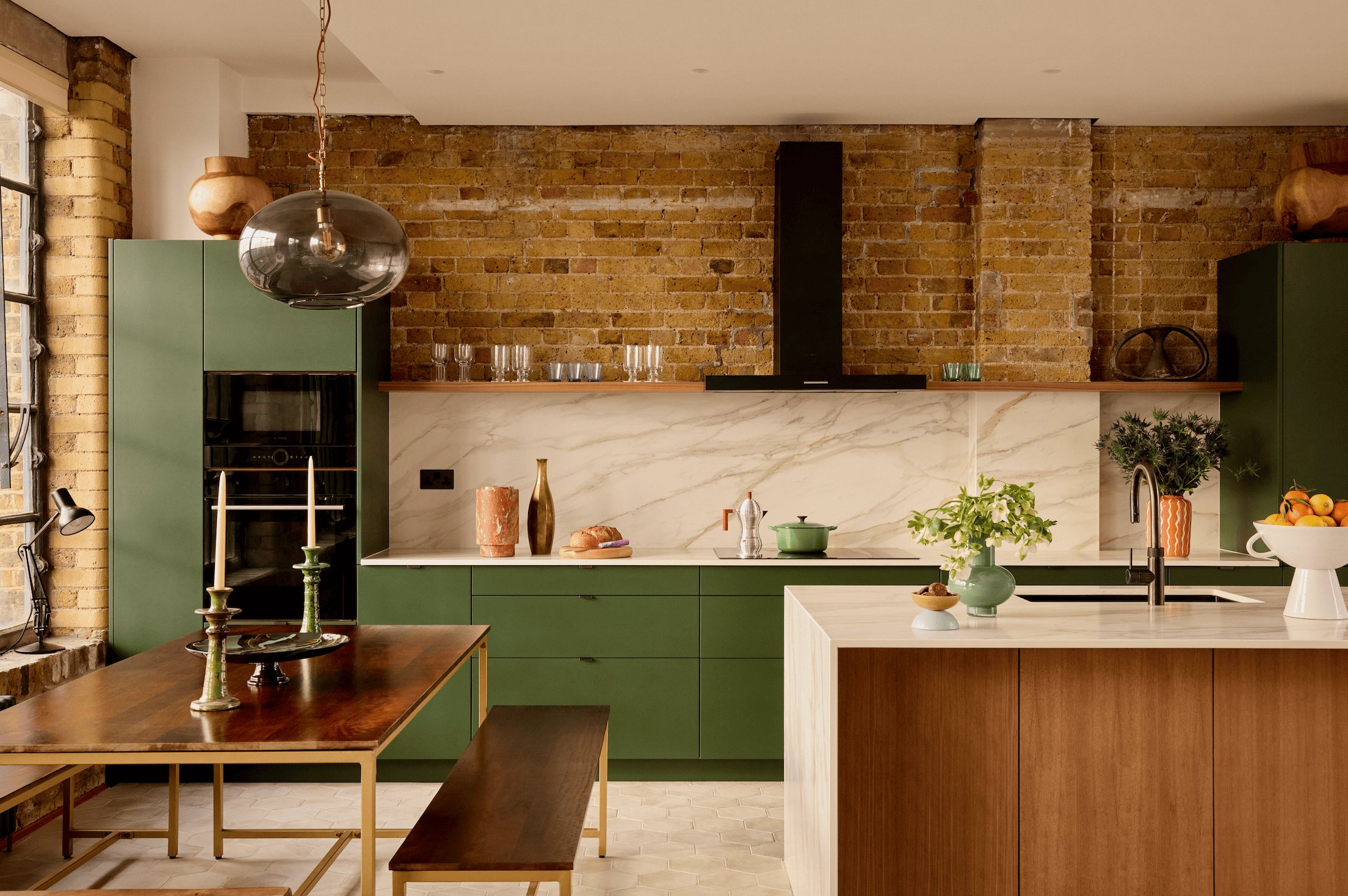
An estimate says £25,000 to £35,000, and it's honest at that stage. Then the decisions get made: layout stays, one wall opens with a structural beam, mid-range units, quartz worktops, two appliance upgrades. Now the quote can exist, and it comes back at, say, £31,400: £14,200 labour, £9,800 units and worktops, £3,100 appliances, £2,300 electrics and plumbing, £2,000 provisional for floor levelling, exclusions listed.
Same project. But one of those numbers you can plan a life around, and the other you can only hope at.
Builders need time to do this properly. A thorough quote can take a few weeks to produce, and that wait is the cheap part of the project.
How should you compare quotes from different builders?
Compare quotes on identical scope, itemised the same way, from three or four builders at most. Different scopes make comparison meaningless, and more than four quotes wastes everyone's time, including yours.
Then read past the bottom line, line by line.
Check five things on each: does it include scaffolding, skips and waste; does it include making good and decoration; are building control fees in or out; how big are the provisional and PC sums; and is VAT included in the figure you're comparing. Two quotes £3,000 apart are often £3,000 apart because one includes those items and the other has quietly left them for later.
The lowest number wins the spreadsheet and loses the project.
There's a full method in our guide to comparing multiple quotes for a home renovation, including the questions that expose what a cheap quote left out.
How does it work on a Beams project?
Beams runs the sequence in the right order.
You start with a free estimate built from real project data, so the guess is at least an informed one. Then design and scope get locked. Then up to three vetted builders quote against the same detailed specification, like for like, and the price you accept is fixed in a written Home Improvement Contract before anyone breaks ground.
You can also read our prices before you commit to anything, so the fee side of the project is settled before the building side starts.
Estimate for planning. Quote for commitment. Contract before tools.
Get your free estimate and see what your project should cost, before the guessing games start.
Quote vs estimate: common questions
Is an estimate legally binding?
No. An estimate is not legally binding, and the builder who gave it to you has committed to nothing. It is an informed approximation, which is why the Federation of Master Builders warns that the final cost can be significantly higher than the estimate. Where no price was ever fixed, section 51 of the Consumer Rights Act 2015 entitles you to pay a reasonable price rather than whatever the invoice says.
Can a builder charge more than the quote?
Only in defined circumstances: you agreed a variation, the work fell outside the quoted scope, or a provisional or prime cost sum has been reconciled against actual spend. A builder cannot lawfully lift a fixed quote because the job ran long or because materials cost more than they allowed. Ask for the extras itemised and check each one against the quote you accepted.
How long is a quote valid for?
Usually 30 to 90 days from the date of issue. Thirty days is common where materials make up most of the price, since suppliers rarely hold their own prices longer than that. If no validity date appears on the document, ask for one in writing, and expect a repriced quote if you come back several months later.
Should a quote include VAT?
It must state the VAT position either way. A builder registered for VAT, which applies above £90,000 of taxable turnover, charges 20% on most domestic building work, so a total that doesn't say whether VAT is in or out is 20% ambiguous. Some work qualifies for the reduced 5% rate, including residential conversions and homes empty for two years or more, so ask which rate applies to yours.
Is a quote the same as a bid?
Close, but the words come from different places. Bid is tendering language, used where several contractors price the same package of work, and it belongs mainly to commercial construction and to American usage. In UK domestic renovation the document you receive is a quote, and once you accept it in writing it becomes the binding price. Treat a bid as a quote only if it is itemised, dated and fixed.
Sources
[1] Federation of Master Builders, "Five things you need to know about getting a quote for building work" (2023 guidance), which defines an estimate as non-binding ("the final cost of a project can be significantly higher") and a quote as an agreed price providing the specification doesn't change. https://www.fmb.org.uk/resource/five-things-you-need-to-know-about-getting-a-quote-for-building-work.html
[2] Consumer Rights Act 2015, Part 1 Chapter 4, sections 49 (reasonable care and skill), 51 (reasonable price where none is fixed) and 55 to 56 (repeat performance and price reduction), legislation.gov.uk. https://www.legislation.gov.uk/ukpga/2015/15/part/1/chapter/4
[3] Citizens Advice consumer service, advice on problems with a trader and referral to Trading Standards, helpline 0808 223 1133. https://www.citizensadvice.org.uk/consumer/
Ready to start your renovation?
Tell us about your project and get a free estimate. A Beams planner will talk you through what's realistic for your home, with no obligation and no sales pressure.
Builders in London charge £300 to £450 a day in 2026, or £40 to £60 an hour, labour only. Regional rates, hourly rates, what is excluded and FAQs.
How to compare renovation quotes from contractors. What to check, hidden costs, payment terms. Get the best value for your kitchen or bathroom renovation.

The full escalation path for a builder dispute: formal complaint, ADR, Trading Standards, small claims. Plus how to recover money via Section 75 or chargeback.

How much deposit should you pay a builder? What's normal, when 10% is the ceiling, staged payments, and what to do if your builder goes bust holding your money.